

On January 15th, the Ministry of Foreign Affairs released a Joint Communiqué on the results of the official visit to Vietnam by Prime Minister of the Russian Federation MV Mishustin, which was signed by Prime Minister Pham Minh Chinh and Russian Prime Minister Mikhail Mishustin on the afternoon of January 14th.
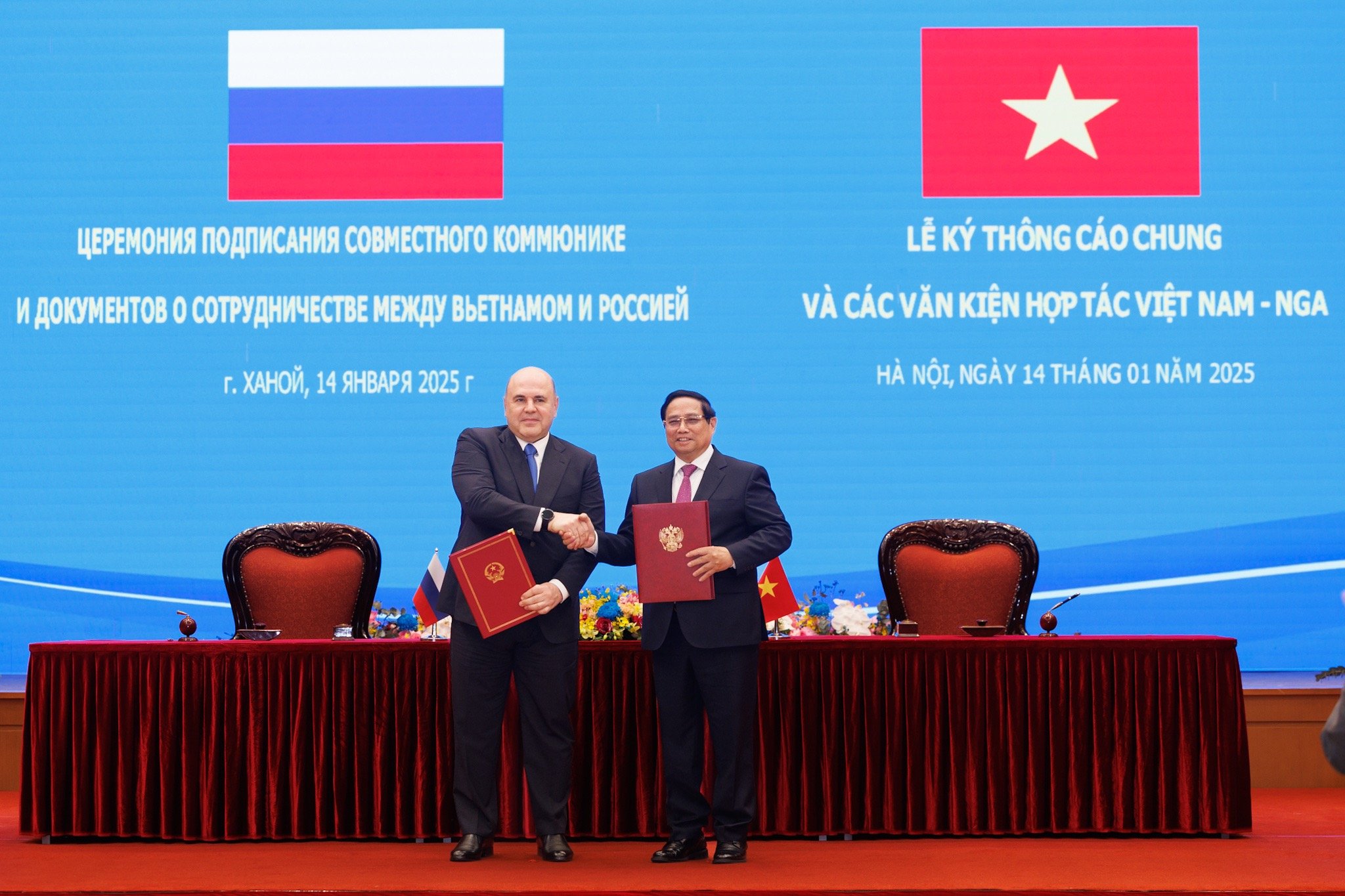
Prime Minister Pham Minh Chinh and Russian Prime Minister Mikhail Mishustin sign a Joint Communiqué on the results of Prime Minister Mishustin's official visit to Vietnam. Photo: Huu Hung
According to the Joint Communiqué, during the visit, the two sides had extensive discussions on various issues and directions for promoting Vietnam-Russia relations in the fields of politics , economy and trade, science and technology and humanities, defense and security, education and training, transport, tourism and other areas. The two sides also exchanged views on international and regional issues of common interest. Both sides supported strengthening exchanges through party-to-party and parliamentary channels, between ministries and agencies, and promoting cooperation between localities.
The two sides exchanged views and agreed on measures to strengthen bilateral trade cooperation, including further leveraging the benefits of the Free Trade Agreement between Vietnam and the Eurasian Economic Union and its member states, which the two sides will celebrate the 10th anniversary of this year (May 29, 2015 – May 29, 2025), as well as increasing the supply of goods to each other's markets.
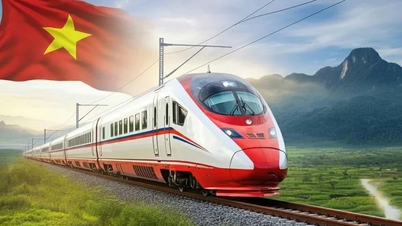
Both sides agreed on the need to develop rail and sea transport systems and multimodal freight transport. Both sides acknowledge the need to study payment methods to facilitate bilateral trade and other transactions.
Both sides agreed on the need to further improve the bilateral legal framework to promote cooperation in various fields. Both sides acknowledged the efforts of the Vietnam-Russia Intergovernmental Committee on Economic, Trade and Scientific- Technical Cooperation and the ministries and agencies of the two countries in agreeing on and signing cooperation documents during the visit, and welcomed the continued exchange and negotiation of new cooperation documents in the future.
Both sides agreed to continue facilitating the implementation of joint oil and gas projects on the Vietnamese continental shelf and in Russian territory, in accordance with the laws of both countries and international law, including the 1982 United Nations Convention on the Law of the Sea (UNCLOS 1982).
Both sides acknowledged that Russia's supply of oil and liquefied natural gas to Vietnam, as well as the processing of finished products and the development of new power projects, including renewable energy projects, are promising areas for cooperation.
The two sides will continue to cooperate in the implementation of the project to build a Nuclear Science and Technology Research Center in Vietnam. Russia is ready to participate in building Vietnam's national nuclear power industry.
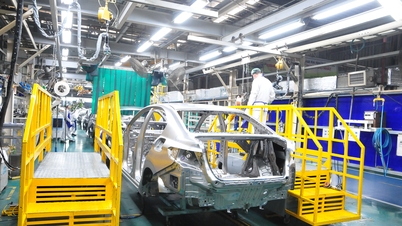
Both sides noted the stable operation of the Russian GAZ vehicle assembly joint venture in Da Nang, with a portion of its products being exported to neighboring countries.
Both sides agreed to continue supporting all aspects of the activities of the Vietnam-Russia Joint Tropical Science and Technology Research Center, an institution that plays an important role in developing bilateral scientific and technological cooperation.
Both sides acknowledged the importance of continued cooperation in the field of education and training, including the training of Vietnamese citizens at Russian universities within the framework of quotas granted by the Russian Government and the activities of the Vietnam-Russia Network of Technical Universities; and decided to accelerate the implementation of the project to establish a general education institution teaching in Russian in Hanoi. Both sides agreed to continue supporting research and teaching of the Russian language in Vietnam, including the use of the Pushkin Institute of Russian Language in Hanoi, while simultaneously strengthening and expanding research and teaching of the Vietnamese language in Russia.
Both sides attach great importance to developing cooperation in the field of healthcare, including the provision of medical equipment, pharmaceuticals, personnel training, nuclear medicine, and other areas of mutual interest.
Both sides acknowledged the role of people-to-people exchanges in developing the traditional friendship between Vietnam and Russia; welcomed the strengthening of cultural exchanges, the regular organization of national cultural days, art performances, film screenings, and activities to enhance mutual understanding between the people of the two countries through friendship organizations, media, and social organizations. Both sides supported continued efforts to simplify travel procedures for citizens of both countries.
Both sides are pleased to note the resumption of regular direct and charter flights. This has contributed to increasing tourist traffic between the two countries. Both sides believe that cooperation in adding more destinations and increasing the number of flights is in line with the travel needs of the people of both countries. Both sides welcome the relevant agencies of the two countries to strengthen exchanges to promote cooperation in transport connectivity between Vietnam and Russia, as well as the development of Vietnam's transport system.
Both sides acknowledged that relations between localities have great potential and always play an important role in cooperation between Vietnam and Russia. Strengthening cooperation between localities will meet the aspirations and interests of the people of both countries and should be translated into concrete bilateral cooperation projects.
Both Parties oppose the use of unilateral restrictive measures, interference in the internal affairs of sovereign states, protectionism and the application of extra-legal rule, which violate the principles and rules of international law, including the United Nations Charter.
Both sides emphasized the universality and comprehensiveness of UNCLOS 1982, which serves as the legal foundation for all activities in the seas and oceans, and affirmed the need to maintain the integrity of the Convention. Both sides will cooperate to ensure the security, safety, and freedom of navigation, overflight, and unimpeded commercial activities.
Both sides support restraint, the non-use of force or the threat of force, and the settlement of disputes by peaceful means, in accordance with the principles of international law, including The United Nations Charter and UNCLOS 1982. Support for the full and effective implementation of the 2002 Declaration on the Conduct of Parties in the South China Sea (DOC). and welcome efforts to achieve a substantive and effective Code of Conduct in the South China Sea (COC) as soon as possible.
Both sides support the formation of a comprehensive and sustainable structure in relations among Asian nations, based on the principles of equality, sovereignty, independence, non-alignment, and international law. They emphasize the importance of and support for strengthening the central role of the Association of Southeast Asian Nations (ASEAN) in regional affairs and reaffirm their commitment to the 1976 Treaty of Friendship and Cooperation in Southeast Asia.
Both sides welcomed enhanced exchanges, cooperation, and mutual support in multilateral forums, including the United Nations, the Asia-Pacific Economic Cooperation (APEC) Forum, and ASEAN mechanisms such as the East Asia Summit, the ASEAN Regional Forum, and the ASEAN Expanded Defence Ministers' Meeting. They also welcomed initiatives within these frameworks aimed at promoting a multipolar, equitable, and sustainable world order based on the fundamental principles of international law and the UN Charter, expanding the space and opportunities for the free and successful development of states and associations.
Both sides expressed their readiness to cooperate for mutual benefit and effectiveness within the APEC framework, focusing on implementing APEC's visions and priorities, addressing practical issues, and paying particular attention to promoting and supporting each other's initiatives, including when Vietnam assumes the chairmanship of this forum in 2027.
Both sides emphasized the importance of the first ASEAN-Russia Summit (held in Kuala Lumpur in 2005) and welcomed the significance of the 20th anniversary of the ASEAN-Russia Summit this year. They agreed to strengthen and deepen the ASEAN-Russia Strategic Partnership, while continuing to effectively implement the ASEAN-Russia Comprehensive Action Plan 2021-2025 and preparing to jointly draft new cooperation documents for the next five years, as well as a strategic program on trade and investment cooperation between ASEAN and Russia, focusing on the fields of energy, high-tech manufacturing, digital transformation, and smart cities. Both sides agreed to continue close cooperation at leading economic forums in Asia such as the ASEAN Business and Investment Summit and the Eastern Economic Forum.
Both sides welcomed the strengthening of ASEAN's partnership with the Eurasian Economic Union and the Shanghai Cooperation Organization (SCO) based on the 2018 Memorandum of Understanding on Economic Cooperation between ASEAN and the Eurasian Economic Commission, as well as the 2005 Memorandum of Understanding between the ASEAN Secretariat and the SCO Secretariat, promoting the formation of a space of peace, stability, security, equality and indivisibility, trust, development and prosperity in the Eurasian continent.
The Russian side welcomed Vietnam's active participation in BRICS events in 2024 and expressed its readiness to facilitate Vietnam's participation as a partner country.
View the full text of the Joint Communiqué here:


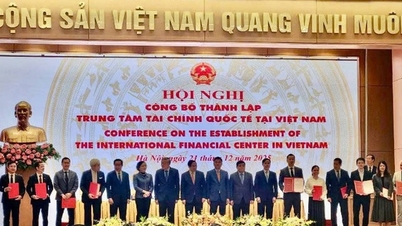
![[Photo] Prime Minister Pham Minh Chinh presides over the conference announcing the establishment of the International Finance Centre in Vietnam.](/_next/image?url=https%3A%2F%2Fvphoto.vietnam.vn%2Fthumb%2F1200x675%2Fvietnam%2Fresource%2FIMAGE%2F2025%2F12%2F21%2F1766309817714_ndo_br_dsc-3400-jpg.webp&w=3840&q=75)

![[Photo] Prime Minister Pham Minh Chinh presides over a meeting on private sector economic development.](/_next/image?url=https%3A%2F%2Fvphoto.vietnam.vn%2Fthumb%2F1200x675%2Fvietnam%2Fresource%2FIMAGE%2F2025%2F12%2F20%2F1766237501876_thiet-ke-chua-co-ten-40-png.webp&w=3840&q=75)



![[Photo] President Luong Cuong receives heads of delegations from countries attending the opening ceremony of the Hanoi Convention.](https://vphoto.vietnam.vn/thumb/402x226/vietnam/resource/IMAGE/2025/10/25/1761377309951_ndo_br_1-7006-jpg.webp)













































Comment (0)