

Ancient traces of the mountain town
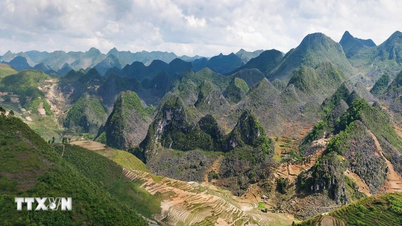
I returned to Pho Bang on a sweltering summer day in the city, but the temperature seemed unable to penetrate the towering, jagged mountain ranges because Pho Bang, being higher than the surrounding communes, enjoys cool weather year-round. The road leading to Pho Bang is winding, with clouds descending in swathes from the mountaintops, obscuring the old brown tiled roofs of the traditional houses. The elders of Pho Bang recount that this place holds within it a history full of ups and downs, clearly reflecting the cultural and historical intermingling across many periods.
From the late 19th century, this place began to develop as an important trading post between the mountainous northern regions of Vietnam and southern China. Merchants from all over flocked here, creating a vibrant trading atmosphere and transforming Pho Bang into a crucial commercial hub in the region. By the early 20th century, Pho Bang entered a period of prosperity with the strong development of shops, merchants, and bustling commercial activities.
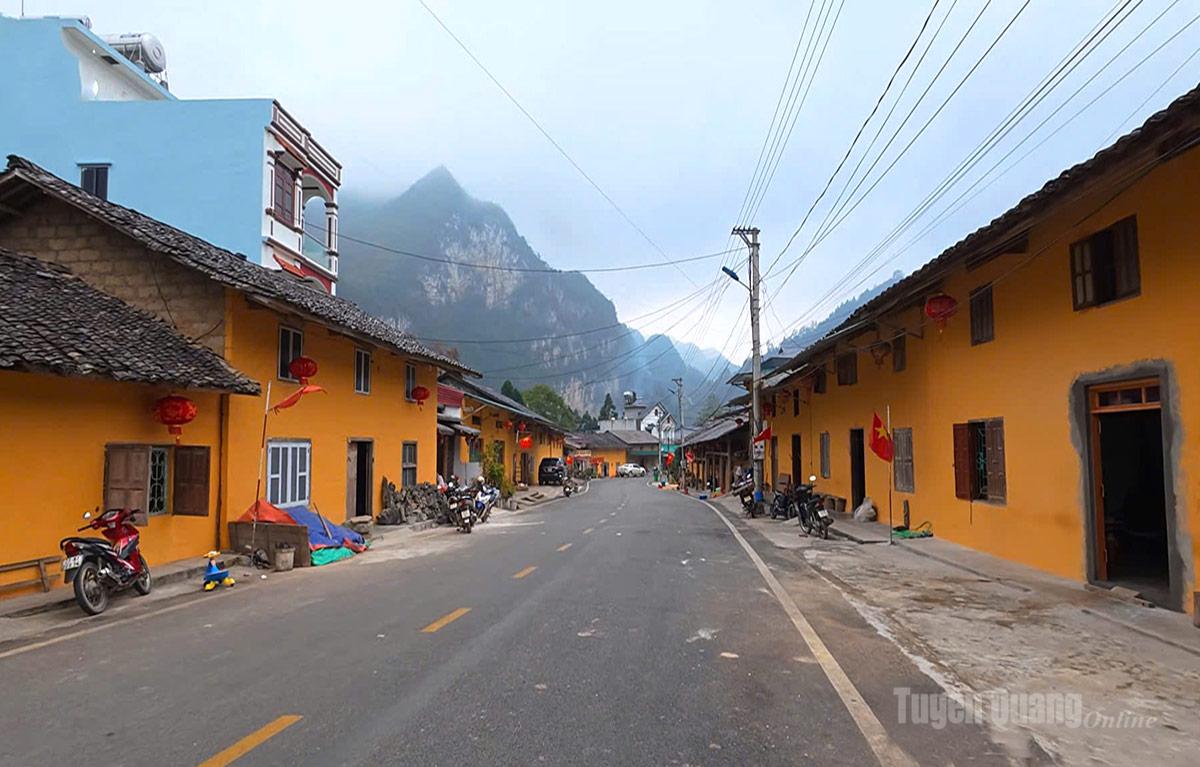 |
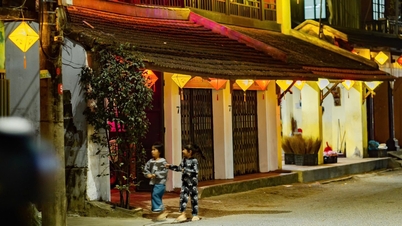
| The traditional rammed-earth houses of the once bustling Pho Bang street have been preserved almost intact. |
From early morning, caravans of pack horses from across the border crossed the mountains, carrying fabrics, traditional medicine, salt, and groceries. In return, they received mint honey, cardamom, corn, linen, and other highland products, creating a unique rhythm of life in this border region. More than just a trading center, Pho Bang is also a place where the cultures of the Mong, Hoa Han, Pu Peo, and Tay ethnic groups intersect, creating a diverse, rich, and distinctive cultural space.
To this day, many old houses in Pho Bang still retain almost their original architecture with thick, light yellow earthen walls, moss-covered yin-yang tiled roofs, and dark wooden door frames weathered by time, enduring countless winters of frost and dew as witnesses to history. Distinguished Artisan Vang Cha Thao shared: "Since I was born, I've heard my grandparents tell stories about the bustling markets in Pho Bang. Even though today's generation didn't live through those prosperous times, we still consider it a proud part of the memories of this border region."
When the district's administrative center was built in the Old Town of Dong Van, the trade routes that had once brought prosperity to Pho Bang gradually changed direction. From then on, this small border town slowly faded from its golden age; the once bustling shops closed one by one, and many families quietly left to find new lands. Pho Bang gradually retreated into the rocky mountains, its old moss covering it with the passage of time. The former hustle and bustle faded into silence, leaving only the row of houses with their solemn earthen walls guarding the border.
New rhythm of life
After merging with the communes of Pho La, Pho Cao, and Lung Thau, Pho Bang town was renamed Pho Bang commune, covering an area of over 77 km² and with a population of nearly 16,000 people. No longer the quiet, remote border town of the past, Pho Bang today is gradually opening up a diverse economic development direction linked to the advantages of its highland region, with tourism identified as a key focus. The town still preserves almost intact the traditional houses with yellow earthen walls and moss-covered yin-yang tiled roofs of the Hoa and Mong people in the villages of Pho Bang 1, Pho Bang 2, Lan Xi A, etc., creating a rare, ancient and tranquil beauty.
Furthermore, Pho Bang boasts a rich cultural heritage, including the highland backward market, the Gau Tao Festival, the Hoa Le Festival, and the Forest God Worship Ceremony and the Rice Planting Ceremony of the Pu Peo ethnic group, all recognized as national intangible cultural heritage. Located on the famous tourist route through Tham Ma Pass and Chin Khoanh Pass, near the Vuong Family Mansion and Lung Cu Flagpole, with a cool climate year-round, Pho Bang has many advantages for developing community tourism, resorts, and cultural experiences.
 |
| The Pu Péo people's rice planting ceremony in Phố Bảng commune is a National Intangible Cultural Heritage. |
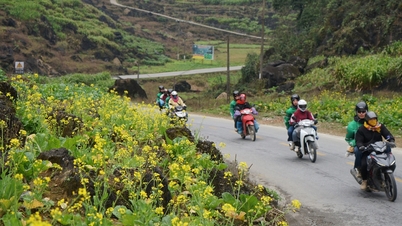
In recent years, along with the allure of the Dong Van Karst Plateau, images of Pho Bang have spread increasingly strongly on social media. From the beginning of the year until now, the commune has attracted nearly 50,000 tourists. In winter, clouds cover the moss-covered roofs, and buckwheat flowers bloom all along the road to the village; in spring, peach and pear blossoms are vibrant by the old houses; and in summer, Pho Bang seems to "sleep" amidst the sweltering heat of the city.
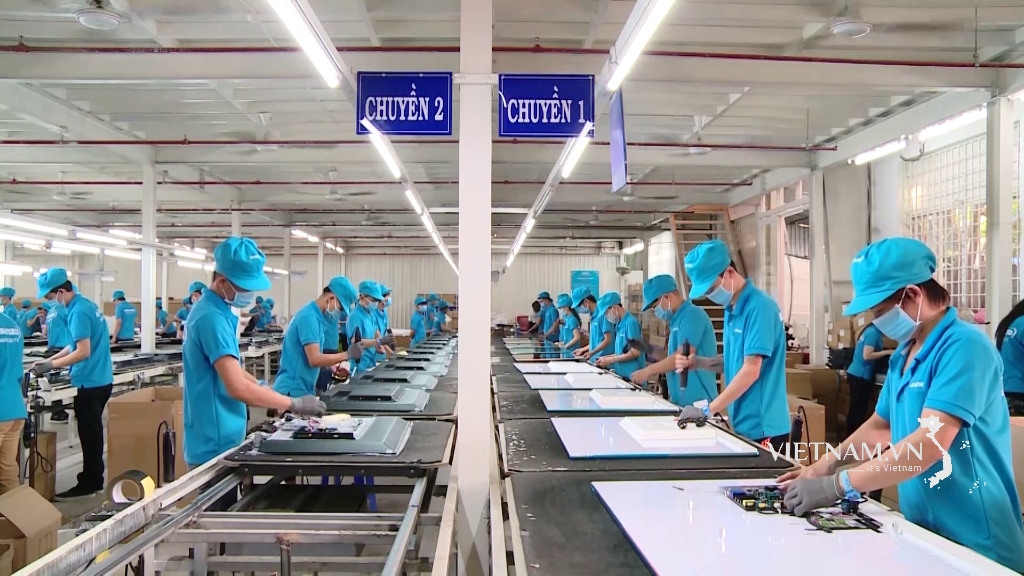
Tourism in Pho Bang takes a gentle approach, preserving the inherent tranquility of the mountain town, allowing visitors to find peace and serenity. This is what sets Pho Bang apart from many destinations that are gradually becoming commercialized. In addition, several businesses producing electronic components, numerous homestay models, experiential agriculture , and commercial livestock farming are creating new impetus for development in this border region.
Locals are boldly introducing economically valuable medicinal plants such as Angelica sinensis, Ngoc Linh ginseng, and seven-leaved one-branched flower for experimental cultivation; developing safe vegetable farming combined with the scenic beauty of pear, plum, and peach blossoms in Xom Moi village, Ward 2, to serve experiential tourism. These economic models, suited to the climate and soil, are creating more jobs, increasing income, and opening up sustainable livelihoods for the people in the highlands.
Mr. Vi Hoc Lan, from Lan Si B village, shared: "Highland tourism is developing rapidly with a high number of tourists and a large demand for food. I invested in raising over 500 native black chickens, supplying the market inside and outside the commune. I sell them in multiple batches each year, earning about 100 million VND." These new directions are awakening Pho Bang after a long slumber, but those who have visited Pho Bang carry with them a very special memory – a memory of peace, simplicity, tranquility, the fresh air of the forest, the mountain breeze… things that have made Pho Bang uniquely proud over time.
An Giang
Source: https://baotuyenquang.com.vn/van-hoa/202605/nho-thuong-pho-bang-04049fa/
![[Photo] General Secretary and President To Lam receives Amazon's Senior Vice President David Zapolsky](https://vphoto.vietnam.vn/thumb/1200x675/vietnam/resource/IMAGE/2026/05/22/1779466547770_a1-bnd-3513-6601-jpg.webp)





































































Comment (0)