

The name "Cù Lao Hot Pot" likely originates from the container used to hold the dish. The "Cù Lao" is a cylindrical container with a hollow bottom to hold charcoal ash; a large, open ring in the center holds the food, and a lid covers it; and a central pillar holds the burning charcoal, ensuring the food stays hot at all times.
In the past, whenever there was a party or holiday, and all the family members were together, my grandmother would often cook "cù lao" (a type of hot pot dish) for everyone. Back then, "cù lao" was considered a luxury dish because cooking it was expensive and elaborate, requiring meticulous presentation, which is why it had a unique and incredibly appealing flavor.
When there's a family gathering or celebration, people in the countryside often slaughter a whole pig. The head is boiled for offerings or used as cold meat, while the rest of the meat is divided into many dishes such as stuffed bitter melon, braised pork, boiled pork wrapped in rice paper, and, of course, the indispensable "cù lao" dish. Cù lao includes pig's heart, liver, minced pork balls, and lean pork. Many factors contribute to making a delicious "cù lao," but perhaps the broth is the most important; the broth must be clear and have a subtly sweet flavor.

A country feast always features a steaming, delicious hot pot placed in the center.
In those days, the countryside was far from the market, so if people wanted to eat something, they could just go to their gardens and pick enough ingredients to prepare a delicious dish. Familiar trees like coconut trees were common; every household had dozens of them. The coconuts would dry out and fall to the ground, sometimes even sprouting new ones. Whenever they cooked "cù lao" (a type of Vietnamese stew), they would cut down entire coconut groves to get the water, mix it with rainwater, and combine it with the sweet, rich flavor of the bone marrow from pork bones simmered for a long time, along with the savory seasoning according to the taste of the people of the Mekong Delta, making the "cù lao" dish truly special.
The women skillfully peel and trim vegetables into many eye-catching shapes, such as five-petaled flowers made from carrots and white radishes; fringed flowers made from scallion stalks; and striking red chili peppers as decorations, making the dish even more appealing.
The central part of the islet, enclosed in aluminum, serves as a charcoal stove to keep the broth hot. When eating islet-style hotpot, people usually scoop up the piping hot broth, blowing on it before slurping to savor the sweet, rich flavor on their tongues, enjoying it with rice wine and traditional folk music to add to the festive atmosphere and the authentic Mekong Delta flavor.

The hot pot is beautifully presented, delicious, and piping hot thanks to the glowing red charcoal in the center.
As society develops, restaurants and markets are everywhere, and many new and attractive hot pot dishes such as seafood hot pot, Thai hot pot, Korean hot pot, and mushroom hot pot are popular among young people. Modern and convenient cooking utensils no longer require burning charcoal to maintain a fire while eating hot pot.
Although it's been a while since the popular "cù lao" hotpot dish faded, with the increasing number of new and exotic dishes, many people are turning back to the flavors of the past. Like me, even after years of working in the city and trying countless new dishes, I can't forget the taste of being from a rural area by the river, where I once savored a steaming bowl of "cù lao" hotpot. The unique flavor of the "cù lao" hotpot, infused with rainwater and coconut water from my hometown, remains etched in my memory.
That's how people from the countryside are; no matter how many delicious and exotic dishes there are, the taste of home always lingers in their memories. Just like the rich flavor of the old-fashioned hot pot from the countryside, it remains the taste of the soul of the homeland, forever etched in the memories of many.
Text and photos: HONG MUI
Source

![[Image] Close-up view of the interchange connecting the two expressways and Long Thanh Airport.](https://vphoto.vietnam.vn/thumb/1200x675/vietnam/resource/IMAGE/2026/05/25/1779703378210_ndo_br_z7863716673926-224453a31600126cce10622af6290afd-4549-jpg.webp)
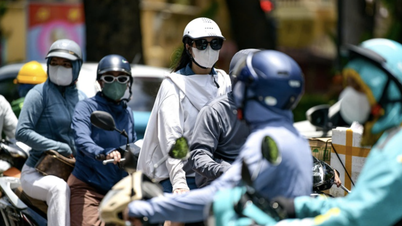
![[Image] Hanoi's urban life under the challenge of a "scorching hot" environment](https://vphoto.vietnam.vn/thumb/1200x675/vietnam/resource/IMAGE/2026/05/25/1779706979265_nang-nong-t5-2026-minh-duy-7-4636-jpg.webp)






















































Comment (0)