

According to the International Labour Organization, "green jobs" are sustainable jobs in all economic sectors such as agriculture, industry, services, administration, etc., that contribute to preserving and improving environmental quality.
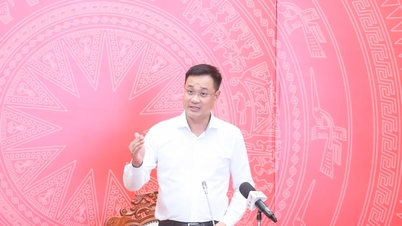
At the recent forum "Leveraging Resources to Promote Green Growth," Dr. Vu Van Doanh shared insights on the current situation and solutions for developing environmental human resources in the context of green transformation and sustainable development.
Citing data from the World Bank, experts say that currently, green jobs in Vietnam account for only about 3.6% of total jobs across 39 sectors. However, in the future, this figure could increase to around 40-41% when expanded to 88 sectors.
In reality, the demand for green workforce is increasing rapidly. Statistics from ManpowerGroup Vietnam for the period 2023–2024 show a strong increase in green jobs, concentrated most heavily in the manufacturing sector (33%).
However, the labor supply has not kept pace. Currently, more than 60% of curricula related to sustainable development and green energy are lacking. While the number of graduates is high, they do not yet meet the requirements for green skills.

"Currently, the percentage of trained workers in Vietnam is still below 29%. Meanwhile, the demand for green labor is projected to reach approximately 40% in the near future," stated Dr. Vu Van Doanh.
According to Mr. Doanh, this is a significant gap between the demand for and supply of human resources, requiring comprehensive solutions ranging from training to policy.
From an educational perspective, Dr. Vu Van Doanh believes that content on green economy, circular economy, and sustainable development should be integrated into training programs as soon as possible.
According to information from the Ministry of Education and Training, in the near future, these contents will be integrated into many academic disciplines, not just the environmental field, in order to form a green workforce on a large scale. The goal is not only to train personnel for the environmental sector, but also to create a green workforce in many other fields to meet the requirements of transformation.
Regarding the goal of increasing the proportion of green workers to around 40%, Dr. Vu Van Doanh believes this is an inevitable trend, but difficult to achieve in the short term.
Currently, the number of industries with new green jobs is just over 30, but this is expected to expand to 88 in the future. Consequently, the proportion of green workers will increase accordingly. However, reaching 30-40% will take more time and cannot be achieved in the short term.
To meet the requirements of green transformation, Dr. Vu Van Doanh proposed the effective implementation of the Program to support the development of the labor market until 2030, with a vision to 2050.
Furthermore, it is necessary to concretize policies on human resource development, closely linking training and research with business needs through a "contracting" mechanism. Strengthen cooperation between universities, research institutes, and businesses. Build strong research groups and increase the proportion of staff trained, educated, and updated on green skills.
"Only by improving the quality of its human resources can Vietnam seize the opportunities from green growth and sustainable development in the future," the expert emphasized.
Source: https://doanhnghiepvn.vn/kinh-te/nhu-cau-viec-lam-xanh-tang-manh/20260428111313150
![[Image] Hanoi's urban life under the challenge of a "scorching hot" environment](https://vphoto.vietnam.vn/thumb/1200x675/vietnam/resource/IMAGE/2026/05/25/1779706979265_nang-nong-t5-2026-minh-duy-7-4636-jpg.webp)

![[Image] Close-up view of the interchange connecting the two expressways and Long Thanh Airport.](https://vphoto.vietnam.vn/thumb/1200x675/vietnam/resource/IMAGE/2026/05/25/1779703378210_ndo_br_z7863716673926-224453a31600126cce10622af6290afd-4549-jpg.webp)
















































































Comment (0)