

 |
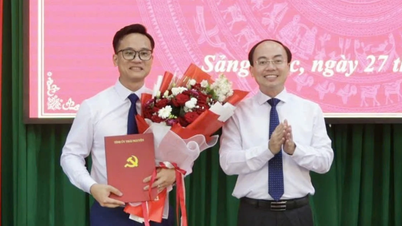
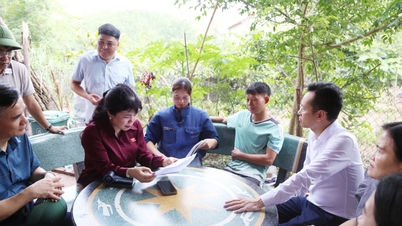
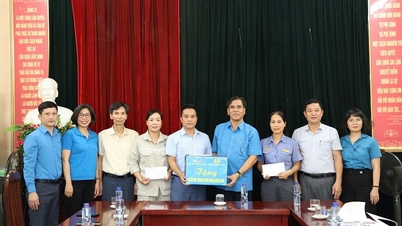
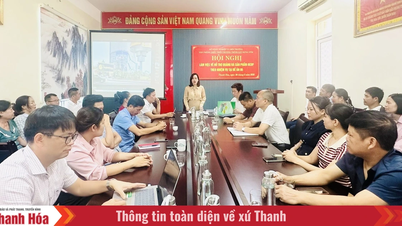
| Comrade Ma Thi Man (far left), Secretary of the Party Committee and Chairwoman of the People's Council of Bach Thong commune, presents certificates of recognition to 14 exemplary models associated with studying and following President Ho Chi Minh's teachings. |
Through the revolutionary base area
The journey from Pac Bo to Tan Trao began with a difficult trek through the Ngan Son area. On May 10th and 11th, 1945, the delegation led by President Ho Chi Minh passed through the Lung Sao area, Bang Van commune, overcoming steep slopes, dense forests, sudden mountain rains, and intense enemy pursuit.
On the afternoon of May 11, 1945, President Ho Chi Minh stopped at Hoang Phai, now a national historical site commemorating the place where President Ho Chi Minh stopped on his way from Pac Bo to Tan Trao. At that time, Hoang Phai was just a small village inhabited by ethnic minorities in a mountainous region facing many difficulties. The locals still recount the story of "Old Man Ke," a simple man in old Nung clothes, wearing a conical hat, who accompanied a few revolutionary cadres.
Uncle Ho stayed at Mr. Dong Phuc Chuong's house, met with the villagers, inquired about their lives, encouraged them to unite, learn to read and write, and have faith in the revolutionary path of national liberation.
In Hoang Phai, we were fortunate to meet Mrs. Dong Thi So, nearly 90 years old, one of the few people who had met President Ho Chi Minh when she was a child. In her simple house near the historical banyan tree, she slowly recounted memories that have stayed with her for decades: “I was very young then, I just thought it was a traveler passing through the village, I didn't know it was President Ho Chi Minh. He spoke with the militia in the village and then visited the children's classroom. He told us to study hard so that we could contribute to building our homeland and country in the future.”
In 2011, the memorial site where President Ho Chi Minh stopped in Hoang Phai was recognized as a National Historical Monument.
From Ngan Son, Uncle Ho's journey continued through the mountains and forests into the old Ba Be area, a land rich in cultural identity and playing an important role in the Viet Minh's communication corridor.
At Khuoi Man (Phuc Loc commune), on May 12, 1945, President Ho Chi Minh spent the night during this special journey. Later, in the Coc Lung area (Phuc Loc commune), the group stopped for a short rest amidst the rugged mountainous terrain.
Uncle Ho's footsteps continued towards Cho Don, the important base center of Viet Bac during May 13-15, 1945. At Ban Ca, Nghia Ta commune, Uncle Ho stayed and worked in small huts in the forest, directly leading the local revolutionary movement, consolidating the Viet Minh base system, and contributing to strengthening the power of the base area.
During that particular historical period, the former Cho Don district was not only a stopping point but also played a crucial role in the Viet Bac base system, where the Central Party Committee, the Government, and President Ho Chi Minh directly led, formulated strategic guidelines, and directed many major campaigns such as the Viet Bac Autumn-Winter Campaign of 1947, the Border Campaign of 1950, and simultaneously prepared the conditions for the Second National Congress of the Party held in Chiem Hoa, Tuyen Quang in February 1951.
Today, historical relics, remnants of revolutionary bases, and the values of the Cho Don Revolutionary Base Area continue to be preserved with great care. The entire area currently has 25 sites belonging to the Special National Relic Complex, including 6 national-level relics and more than 40 sites that are being continuously cataloged, documented, and classified, affirming the special value of this historically rich revolutionary base area.
In 1951, still during the resistance war against French colonialism, President Ho Chi Minh returned to the area north of present-day Thai Nguyen province and visited Na Tu, Cam Giang commune, where the Youth Volunteer Force was carrying out road construction work to support the campaign. There, he instructed the Youth Volunteer Force: “Nothing is difficult/Only fear of a lack of perseverance/Digging mountains and filling seas/With determination, success will be achieved.”
Ms. Hoang Thi Thu Hoai, Secretary of the Youth Union of Cam Giang commune, said: "Through many investments, restorations, and renovations, the historical site has become increasingly spacious with a stilt house commemorating President Ho Chi Minh, green spaces, and traditional living areas serving the people and tourists who come to visit and offer incense."
"Red address" for traditional education
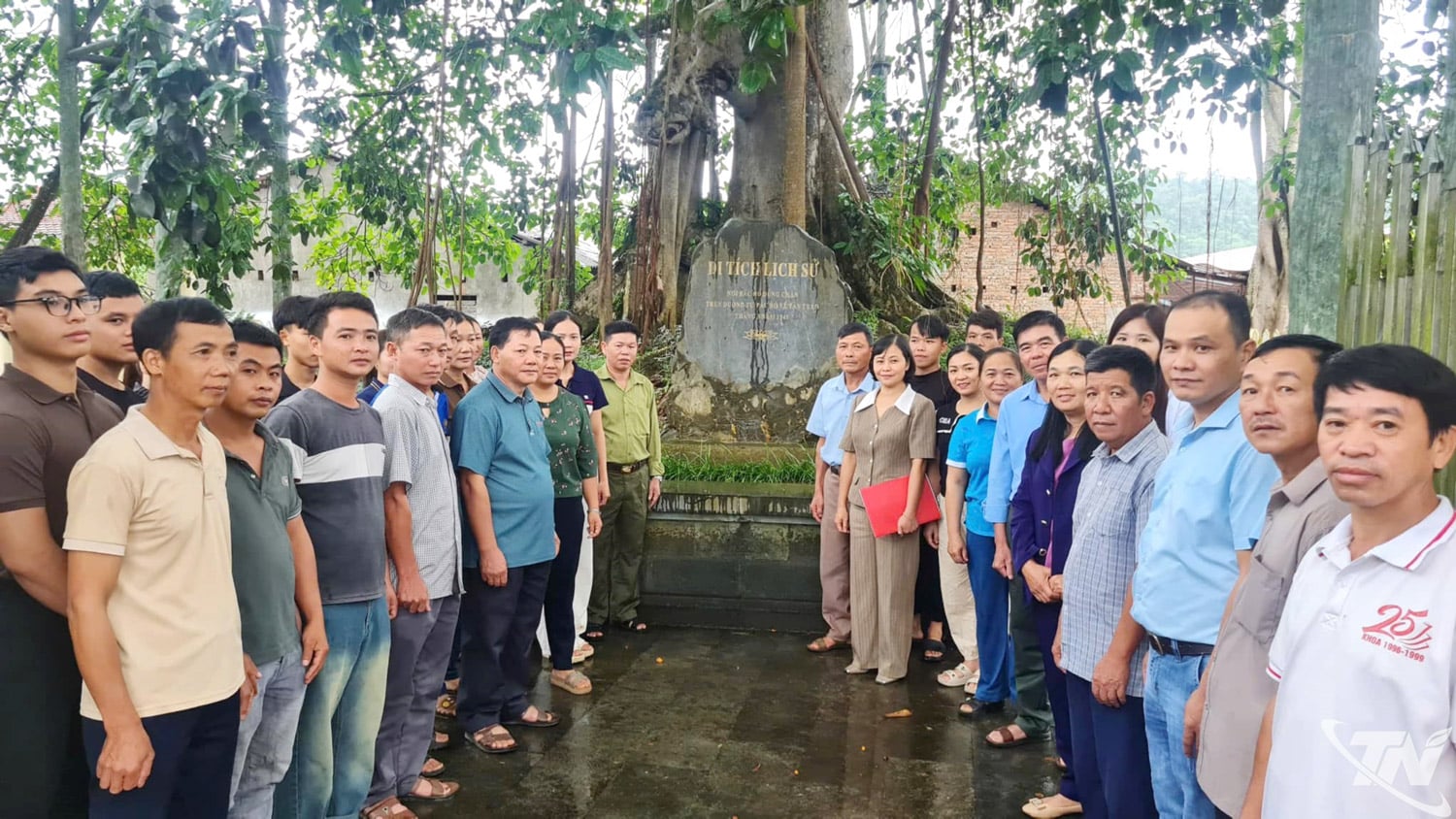 |
| In 2011, the memorial site where President Ho Chi Minh stayed in Hoang Phai, Ngan Son commune, was recognized as a National Historical Monument. |
Today, historical sites associated with President Ho Chi Minh's revolutionary activities are carefully preserved and restored, becoming significant "red addresses" for educating future generations about revolutionary traditions. These sites allow cadres, Party members, Youth Union members, and young people to learn about history, express gratitude for President Ho Chi Minh's contributions, and serve as meaningful political and cultural spaces for the local community.
For example, on the morning of May 16th, at the Na Tu Historical Site in Cam Giang commune, the Party Committee of Bach Thong commune organized a thematic meeting related to studying and following the ideology, ethics, and style of Ho Chi Minh. During the program, delegates offered incense to commemorate President Ho Chi Minh and reviewed the revolutionary traditions at the Na Tu historical site.
Comrade Ma Thi Man, Secretary of the Party Committee and Chairwoman of the People's Council of Bach Thong commune, emphasized: Every cadre and Party member needs to engrave in their hearts Uncle Ho's teachings at Na Tu, promote the spirit of pioneering and exemplary conduct, and transform willpower into concrete actions in fulfilling their duties.
On this occasion, the Party Committee of the commune recognized 14 exemplary models associated with studying and following President Ho Chi Minh's teachings, and also provided financial support to a student in difficult circumstances to further motivate them to excel in their studies.
To date, the province has 45 recognized intangible cultural heritage sites and 323 recognized historical revolutionary relics, many of which are associated with President Ho Chi Minh's revolutionary activities. This is an important foundation for Thai Nguyen to develop cultural tourism and community tourism associated with preserving ethnic identity.
Mr. Nguyen Tung Lam, Head of the Tourism Management Department (Department of Culture, Sports and Tourism), said: Thai Nguyen is focusing on promoting traditional cultural values, linking revolutionary historical relics with heritage tourism to create attraction for tourists. In the coming time, the locality will continue to restore and preserve relics in the direction of developing green and sustainable tourism.
Following in Uncle Ho's footsteps in the northern part of the province today, we clearly feel that each place carries within it heroic historical stories. It is not only a journey to rediscover the roots of the revolution but also an opportunity for each person to better understand and be proud of the patriotic tradition and indomitable will of the Vietnamese people.
Source: https://baothainguyen.vn/chinh-polit/202605/nhung-dia-danh-in-dau-chan-nguoi-29270b6/
![[Photo] The courage of new recruits of Brigade 144 on the training ground.](https://vphoto.vietnam.vn/thumb/1200x675/vietnam/resource/IMAGE/2026/05/27/1779881651341_anh-man-hinh-2026-05-27-luc-18-32-52.png)

![[Photo] The heat at the fireworks display site on the opening night of the Da Nang International Fireworks Festival 2026](https://vphoto.vietnam.vn/thumb/1200x675/vietnam/resource/IMAGE/2026/05/27/1779889741485_ndo_br_z7872039145157-fecaba5112f39e8352544099d7ef4738-5140-jpg.webp)




































![[Photo] The courage of new recruits of Brigade 144 on the training ground.](https://vphoto.vietnam.vn/thumb/402x226/vietnam/resource/IMAGE/2026/05/27/1779881651341_anh-man-hinh-2026-05-27-luc-18-32-52.png)
















Comment (0)