

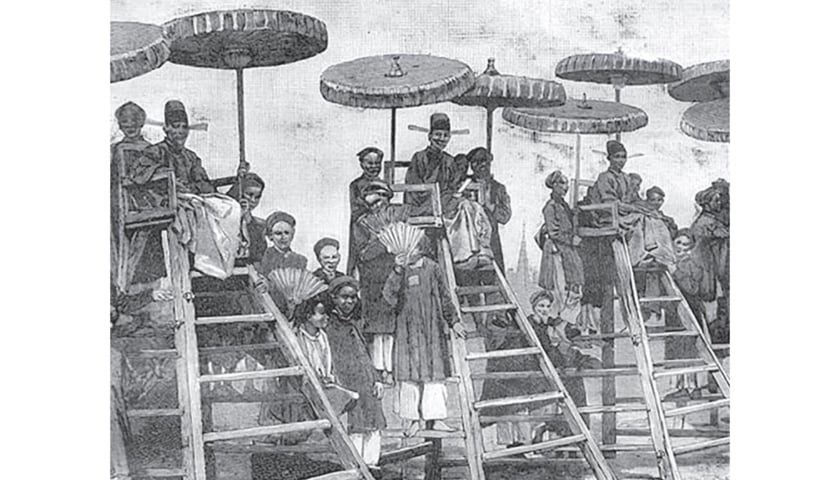
Scene from the announcement ceremony at the Nam Dinh examination center in the year Mau Ty (1888) for candidates who passed the Bachelor's degree examination. Archival photo.
Families recognized as scholarly lineages often have generations of grandfathers and grandsons, fathers and sons, uncles and nephews, and brothers all achieving high academic honors such as First-place winner (Trạng nguyên), Second-place winner (Bảng nhãn), Third-place winner (Thám hoa), Fourth-place winner (Hoàng giáp), Doctor of Philosophy (Tiến sĩ), and Vice-Doctor of Philosophy (Phó bảng). It is a source of great pride that most of the highly accomplished scholars from these scholarly families in Thai Binh province achieved lasting fame, success, and virtue. Upon their death, they are worshipped as benevolent deities in their villages, and many are honored in historical records as "scholars who rendered meritorious service" or "loyal and loyal subjects."
The pioneer of the scholarly tradition in Thai Binh, and also the founder of a scholarly family tradition in An De village (Vu Thu district), was Doctor Dang Nghiem (1155 - 1236), who passed the Bing Thin examination (1185). His grandson was the Imperial Scholar Dang Dien, who passed the Nham Thin examination (1232). From the Ly-Tran dynasties onwards, although no descendants of this family passed the highest imperial examinations, their scholarly tradition continued to flourish from generation to generation.
The Quách family ancestral temple in Phúc Khê village (Thái Thụy district) still preserves the large inscription "Family Tradition of Poetry and Rituals" bestowed by the Lê dynasty. In the 15th century, the Quách family was renowned for having two brothers who passed the imperial examinations and both became high-ranking and respected officials in the early Lê dynasty. Quách Đình Bảo (1440 - 1507) passed the Thám Hoa examination in the Quý Mùi year (1463), serving as Minister of Rites and Minister of Justice. Upon retirement, he was granted the title of Thái Phó (Grand Tutor). Quách Hữu Nghiêm (1445 - 1505) passed the Hoàng Giáp examination in the Bính Tuất year (1466), serving as Thái Thường Tự Khanh (Minister of the Imperial Court). Remarkably, both brothers were sent as envoys to the Ming dynasty and became famous for their excellent poetry and diplomatic skills.
Perhaps the most outstanding among the scholarly families of Thai Binh and Vietnam as a whole is the Do family in An Bai village (Quynh Phu), where for five consecutive generations, six fathers, sons, brothers, and grandsons successively passed the imperial examinations. The Do family ancestral temple in An Bai still preserves a couplet: “The entire family has six consecutive imperial examinations in five generations / One family has three Imperial Scholars and one who won the top three prizes.” This means: “The entire family has six people who passed the imperial examinations in five consecutive generations / One family has three Imperial Scholars and one who won the top three prizes.” The founder of this family was Do Hoan, also known as Do Due, who was an Imperial Scholar in the year of the Goat (1475), serving as a high-ranking official in Son Nam province, and was greatly favored by the enlightened King Le Thanh Tong. Do Hoan's son, Do Toai, was a Doctor of Philosophy in the year of the Dragon (1496), serving as a Left Minister of the Ministry of Rites, and undertaking three diplomatic missions to the Ming Dynasty. Upon his death, he was posthumously granted the title of Thai Bao. Do Toai's son, Do Canh, was a scholar who passed the Imperial Examination in the year of Giap Tuat (1514), served as the Left Vice Minister of the Ministry of War, and went on an embassy to the Ming Dynasty. Do Canh's son, Do Nhan An, was a Doctor of Philosophy in the year of Giap Thin (1544), served as the Left Vice Minister of the Ministry of Rites, and went on an embassy to the Ming Dynasty... In his later years, he opened a school in his hometown, where many people achieved success, including his two sons, Do Cung, who passed the Tham Hoa examination, and Do Dien, who passed the Imperial Examination in the year of Canh Than (1580).
In the history of the Confucian examination system in Thai Binh province, there were two top scholars (Trạng nguyên) who both pioneered the academic achievements of their families. Pham Don Le (1454 - ?), from Hai Trieu village (Hung Ha), was the top scholar in the Tan Suu examination (1481). In 1484, he served as the chief envoy to the Ming dynasty. During this trip, he learned advanced mat weaving techniques. Upon returning to Vietnam, he taught them to the villagers. The people revered him as the "Mat Weaving Scholar." After his death, the people erected a temple in his honor called the Quan Trang Temple. Pham Nguyen Chan (1470 - 1530), Pham Don Le's nephew, was the top scholar in the Ky Mui examination (1499). He rose to the position of Thiêm Đô Ngự Sử and was also sent as an envoy to the Ming dynasty. He was renowned at the time as a scholar with great integrity.
Do Ly Khiem (? - 1512), a top scholar in the Ky Mui examination (1499), was from Ngoai Lang village (Vu Thu district). He served as Deputy Censor-in-Chief. He was a man of integrity and strategic talent. In 1509, he served as the chief envoy to the Ming Dynasty. When the delegation arrived at Bang Tuong, they encountered bandits. He bravely fought back, was seriously wounded, and died on the way back. The King posthumously bestowed upon him the title of Thai Bao, the rank of Minister, and honored him as the guardian deity of Ngoai Lang village. His temple still bears the inscription: "The top scholar of the Canh Thong era, his fame was as high as the North Star / He died as an envoy in Bang Tuong, his spirit and integrity as cold as ice." Do Ly Khiem's younger brother, Do Oanh (some books record him as Do Dung or Do Vinh), was a top scholar in the Mau Thin examination (1508) and served as Deputy Censor-in-Chief. In 1516, Trinh Duy San killed King Le Tuong Duc, and Tran Cao rebelled and seized the capital. Do Oanh served under Emperor Chieu Tong in battle against Tran Cao's army at Hong Dam, now in Hoang Mai district, Hanoi , and died in battle. Emperor Chieu Tong posthumously bestowed upon him the title of Thai Bao and appointed him as the patron deity of Van Lang village. His temple still bears the inscription: "In the battle at Hong Dam, he was a valiant loyal minister / For a thousand years, Van Lang will still have a temple dedicated to this righteous hero." The Do family ancestral temple in Song Lang village also preserves the couplet: "The top scholar of the Canh Thong era and the top scholar of the Doan Khanh era were both loyal and righteous / The Bang Tuong envoy's banner, the Hong Dam battle banner, were noble and lofty."
In the early 16th century, the Nguyen family in Dong Dia Linh village, now Dong Linh hamlet, An Bai town (Quynh Phu district), had a scholar named Nguyen Doan Kham, who passed the Giap Tuat examination (1514) and served as a high-ranking official in the Ministry of Personnel. He was appointed as the chief envoy to the Ming Dynasty. Upon his return, he was promoted to Minister of Rites. His nephew, Nguyen Quy Luong, a Doctor of Philosophy from the Ky Suu examination (1529), served as the Tham Chinh (Chief Administrator) of Cao Bang. Together with his elder brother, Nguyen Duy Hoa, a scholar named Hoang Giap from the At Mui examination (1535), who served as the General Commander and Governor of Cao Bang, he made significant contributions to the development of education in the border region. A descendant of this family was Nguyen Duy Hop (1744-1803), a Doctor of Philosophy from the Nham Thin examination (1772), who served as a high-ranking official with the title of Dong Nhac Marquis.
Also in the 16th century, in Nham Lang village (Hung Ha), there was Nguyen Uyen (1525 - 1580), a Doctor of Philosophy in the Bing Thin year (1556), who served as the Left Vice Minister of the Ministry of Personnel and as the Chief Envoy to the Ming Dynasty. Nguyen Uyen's son, Nguyen Trach, a Doctor of Philosophy in the Mau Thin year (1628), served as the Deputy Minister of the Ministry of Personnel.
During the Mạc dynasty (16th century), in Vang Thượng village (Quỳnh Phụ district), there was Nguyễn Viết Hoành (1516 - ?), a Doctor of Philosophy in the Bính Thìn year (1556), who held the position of Chancellor of the National Academy. His nephew, Nguyễn Duy Hằng, was a Hoàng Giáp (second-highest degree) in the Kỷ Mùi year (1559) and served as an envoy to the Ming dynasty. Towards the end of the Mạc dynasty, in Tri Lai village, now part of Thái Bình city, there was Khiếu Đình Tuân, a Doctor of Philosophy in the Nhâm Thìn year (1592). Exactly 300 years later, in the Nhâm Thìn year (1892), this family had Khiếu Hữu Sử, who passed the Phó Bảng (second-highest degree) examination.
In the 18th century, during the Le Dynasty's restoration period, Thai Binh province saw the emergence of many scholarly families with highly talented and virtuous intellectuals, some of whom became famous figures in Vietnam. Notable examples include the Le family in Dien Ha village (Hung Ha district), with the father and son, Le Trong Thu (Doctorate holder in the year of Giap Thin, 1724) and Le Quy Don (Third-ranked scholar in the year of Nham Than, 1752). Also noteworthy are the father and son, Doan Nguyen Thuc (Hoang Giap, 1752) and Doan Nguyen Tuan (Bachelor of Arts), from Hai An village (Quynh Phu district). Furthermore, there are the father and son, Uong Si Doan (Doctorate holder in the year of Tan Suu, 1721) and Uong Si Dien (Doctorate holder in the year of Binh Tuat, 1766), from Van Han village (Thai Thuy district)...
During the Nguyen Dynasty (19th century), although the doctoral examinations were held in the capital Hue , many scholarly families emerged in Thai Binh. It is a source of pride that most of the scholars from these families became patriotic intellectuals who fought against the French, their names recorded in history. Typical examples include the Pham family of Luyen Khuyet village (Thai Thuy district) with the two brothers Pham The Hien (Doctorate in the Ky Suu year, 1829) and Pham The Huc (Associate Doctorate in the Quy Mao year, 1843). Similarly, the Doan family of Ngoai Lang village (Vu Thu district) with the two brothers Nguyen Doan Uan (Bachelor of Arts, 1828) and Doan Khue (Doctorate in the Mau Tuat year, 1838) were two outstanding figures of virtue and achievement. The Ngo-Nguyen family of Trinh Pho village (Tien Hai district), with the two brothers Ngo Duc Trach (1855), who was a Bachelor of Arts, and Nguyen Quang Bich (1869), who was a First-Rank Scholar and Imperial Scholar, were pioneers in the royalist movement against the French. The Nguyen Doan family of Hanh Dung Nghia village (Vu Thu district), from the 18th century, had Nguyen Doan Trung, a Bachelor of Arts who served as a high-ranking official in the Han Lam Vien (Academy of Scholars). He had six children, including three Bachelors of Arts, two Tu Tai (Bachelor of Arts), and one Nhi Truong (Second-Rank Scholar). All six were successful educators. The three Bachelors of Arts were Nguyen Doan Vong (1867), Nguyen Doan Cu (1863), and Nguyen Doan Tuu (1870). All three brothers were enthusiastic and patriotic educators and scholars who steadfastly resisted the French.
Besides the prominent scholarly families mentioned above, there are dozens of other families whose scholarly traditions have flourished for generations. The scholarly traditions of these families have been inherited and developed by their descendants in the modern era, contributing to the glorious tradition of studiousness and achievement in Thai Binh.
Source: https://sovhttdl.thaibinh.gov.vn/tin-tuc/trao-doi-nghiep-vu/nhung-dong-ho-khoa-bang-tieu-bieu-o-thai-binh.html

![[Image] Hanoi's urban life under the challenge of a "scorching hot" environment](https://vphoto.vietnam.vn/thumb/1200x675/vietnam/resource/IMAGE/2026/05/25/1779706979265_nang-nong-t5-2026-minh-duy-7-4636-jpg.webp)


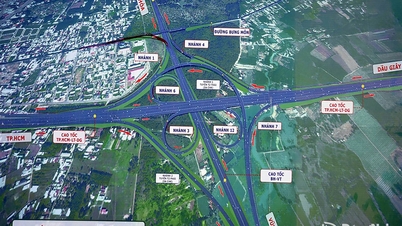
![[Image] Close-up view of the interchange connecting the two expressways and Long Thanh Airport.](https://vphoto.vietnam.vn/thumb/1200x675/vietnam/resource/IMAGE/2026/05/25/1779703378210_ndo_br_z7863716673926-224453a31600126cce10622af6290afd-4549-jpg.webp)































































Comment (0)