

For many children, summer arrives with the sound of cicadas, playgrounds, and trips away. But for many children of factory workers and poor urban laborers, summer sometimes begins with a locked door, an old telephone, and the worries of their parents on their way to work.
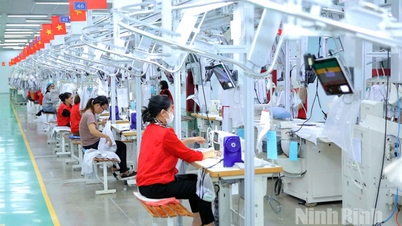
At 6 a.m., the boarding house in the small alley had long since woken up. The sound of motorbikes starting up. The hurried shuffling of sandals on the cement floor. The voices of adults calling out to each other as they went to work. Ms. Mai, a worker at a garment factory in the suburbs, placed her lunchbox on a low plastic table, then turned to instruct her 8-year-old son: "Eat your lunch, okay? Don't open the door if anyone knocks. I've left my phone here; call me if anything happens."
The child nodded, still sleepy. On the small bed, the thin blanket was kicked to the foot of the bed. Mai closed the door, locked it from the outside, and paused for a few seconds. She said nothing more, just pressed her ear against the door as if trying to hear her child stir inside. Then, she got in her car and hurried to the end of the alley to be on time for her shift.
The rented room was just over ten square meters. An old fan, a small study desk, a few sets of clothes hanging against the wall. On the desk were a lunchbox, a bottle of water, and the phone her mother had left behind so she "had something to watch to keep her from getting bored." That's how the child's summer began. No blue sea. No summer camp. No skills classes. No grandparents nearby. Just four walls, a slowly cooling lunchbox, and her mother's repeated instructions every morning.
In the neighboring boarding house, a father working as a ride-hailing driver stopped by at lunchtime to give his child a loaf of bread. He parked his motorbike in front of the door and called out, "Eat this, son, Dad'll be back this afternoon." The child opened the door slightly, reached out to take the bread, and closed it again. Less than a minute later, the father was back on his motorbike.
There's a grandmother from the countryside looking after her grandchildren, fanning herself in the sweltering room. Some children follow their mothers to the market, dozing off beside a vegetable stall. A slightly older child is tasked with looking after the younger ones. For these children, summer isn't really a vacation. It's more like a long, slow-moving period, often so quiet that adults passing by don't even notice.
When the school bell rings, signaling the end of the school year, many families feel relieved. But in workers' dormitories, the worries take a different turn. Schools are closed, but factories remain lit. Classrooms are shut, but parents' shifts are still on schedule. At the end of the month, rent, electricity, water, food, and tuition fees still await. If they don't work, they don't have money. But if they do work, who will the children live with?
For well-off families, summer might be filled with swimming lessons, music lessons, English classes, a few trips, or a few weeks at summer camp. For working-class families, finding safe and affordable childcare is already a difficult task.
High schools are on summer break. Extracurricular classes, skills training, and private summer camps are often beyond our means. Grandparents in the countryside are far away, and their work with crops, houses, and health don't always allow them to come to the city to look after the grandchildren.
So many children have to fend for themselves during the summer. They eat by themselves. They play by themselves. They avoid danger by themselves. They keep themselves company with their phones. The doors of their dorm rooms close for safety, but they also close off the playground, the sounds of friends, the sunshine, and the very normal games of childhood. Adults say "staying home is safer," but in reality, few people feel safe. It's just that there's no other option.
Summer days are also when accidents involving children are more likely to happen. A loose electrical outlet. A mini gas stove. A large bucket of water. A ditch behind the boarding house. An accidental press of a button on a phone. Things that seem insignificant to adults can become major risks for children.
For children living in boarding houses, that risk is even greater, due to cramped living spaces, lack of playgrounds, lack of supervision, and lack of healthy activities.
Not all localities are indifferent. Many still have summer activities, youth union members, children's centers, swimming lessons, and skills training classes. But between the enormous needs of thousands of working families and what is already available, there is still a gap.
That empty space wasn't noisy. It lay behind the locked doors of the rented rooms. It lay in the sighs of a mother before her shift. It lay in the gaze of a child standing behind the bars, watching their friends in the neighborhood being taken somewhere by their families while they were left behind.
Perhaps we don't need to start with grand plans. A community center open a few times a week. A school classroom repurposed during the summer. A reading nook in the neighborhood. A small playground in the apartment complex. Low-cost swimming lessons. A session teaching children how to call for help in case of danger, how to avoid strangers, and how to use phones more safely.
These things aren't too far-fetched if wards, communes, youth unions, women's associations, trade unions, schools, businesses, and even landlords all sit down together. Those who have space contribute space. Those who have time contribute time. Those who have books contribute books. Those with expertise contribute a guidance session.
A "safe summer destination," if properly managed, with someone in charge and a clear schedule, could alleviate the anxiety many parents feel each morning as they leave their rented rooms.
Poor children don't need luxurious summers. They need a place with trustworthy adults, friends to play with, books to read, a yard to run and jump in, someone to teach them how to swim... Most of all, they need to feel that they are not being forgotten during school holidays.
As evening fell, Mai returned home after her shift. Unlocking her rented room, she found her son asleep, his phone beside him. The lunchbox on the table was half empty. She sighed softly. Another day had passed peacefully. But tomorrow, and the day after, everything would start the same way again.
No mother wants her child's summer to be confined to a lock and four walls. No child deserves to grow up in such quiet summer days.
The city would be much warmer if, behind each row of boarding houses, there wasn't just the sound of motorbikes leaving in the early morning, but also an open door for children to step into their summer.
Source: https://nld.com.vn/nhung-dua-tre-khong-co-mua-he-196260602201628664.htm



![[Photo] Delegation attending the 14th Congress of the Vietnam Trade Union visits the Mausoleum of President Ho Chi Minh.](https://vphoto.vietnam.vn/thumb/1200x675/vietnam/resource/IMAGE/2026/06/03/1780451842301_ndo_br_img-3824-jpg.webp)























































































Comment (0)