

If long noodles symbolize longevity, and rice cakes represent aspirations for advancement, then fish signifies abundance. These traditions are maintained as an interesting cultural belief at the beginning of the year.
Fish - a symbol of abundance and prosperity.
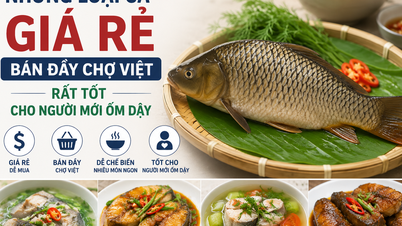
Fish is considered an indispensable dish in the New Year's feast in many East Asian cultures. Fish is often steamed or grilled, symbolizing completeness, abundance, and prosperity.

Chinese people often eat fish during the New Year because in Chinese and some East Asian languages, the word for "fish" is a homonym for "abundance" or "prosperity," implying that one will always have plenty to eat and drink.
Keeping the whole fish intact when serving it at the dinner table also symbolizes family unity and the hope for a peaceful and smooth new year from beginning to end. Because everything we do must have a beginning and an end. Whatever we start, we must finish.
Additionally, in some families' New Year's Eve celebrations, fish is always the last dish to be enjoyed. This signifies that the family will always have plenty of food left over after the new year has arrived.
Long noodles - a wish for longevity
Long, uncut noodles are a familiar sight on New Year's Day in many Asian countries. In Chinese culture, longevity noodles (Changshou Mian) symbolize a long and healthy life, as the continuous length of the noodles is likened to the thread of life.
According to historical records, the custom of eating longevity noodles originated during the Tang Dynasty in China. Noodles were considered a luxury food, usually only appearing on important occasions such as festivals or banquets.

During the New Year, people often eat a bowl of hot noodles or stir-fried noodles with vegetables and meat. A taboo is not to cut or break the noodles before eating.
The long, continuous shape of the noodles gradually evoked symbolic associations. Under the influence of ancient Chinese philosophy, especially Taoism with its emphasis on harmony and continuity of all things, the long noodle came to be seen as a metaphor for the unbroken flow of life, for enduring and eternal existence.
This concept gradually spread to several countries with cultures similar to China. A warm bowl of noodles at the beginning of the year thus became a simple yet profound wish for lasting happiness.
Steamed buns and dumplings - symbols of wealth.
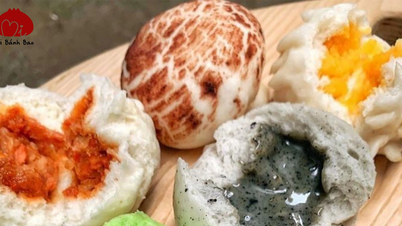
Resembling ancient gold bars, dumplings and steamed buns are considered symbols of wealth and good fortune. They often appear at New Year's Eve or New Year's Day celebrations as a wish for a prosperous year ahead.
According to CBC , the origin of the name "dumpling" is still debated, but a popular theory suggests it originated during the Song Dynasty, a period when China experienced remarkable economic and commercial growth. This was also the time when one of the earliest forms of paper money in human history, called jiaozi, was created. Over time, the name came to refer to dumplings shaped like gold or silver ingots, symbolizing wealth and fortune.
Researcher EN Anderson wrote in his book *The Food of China *: "In northern China, food is often extremely scarce at the end of winter. At that time, people have very little meat and flour left, so they have to find ways to use flour to make the most of the filling."

Dumplings symbolize wealth and good fortune because they resemble gold and silver ingots.
It is this skillful combination that creates these small, beautiful dumplings, full of both flavor and meaning. During New Year's gatherings, the whole family makes dumplings together. According to folklore, sometimes a coin is hidden inside the filling, and whoever finds it will have good luck in the new year.
Like dumplings and steamed buns, round fruits such as oranges, tangerines, apples, and grapes are very popular during Tet and the New Year. Their round shape symbolizes completeness, while their vibrant yellow and orange colors evoke feelings of vitality, wealth, and good fortune.
Rice cakes - good fortune is on the rise.
In Japan and Korea, rice cakes are associated with the concept of "advancement." Their sticky texture symbolizes strong bonds, while their smooth appearance represents purity, new beginnings, and rapid progress.
In Korea, the Lunar New Year is associated with tteokguk – a soup made with sliced rice cakes. The clear, white broth, usually made with beef, is considered a symbol of purity and a fresh start for the new year.
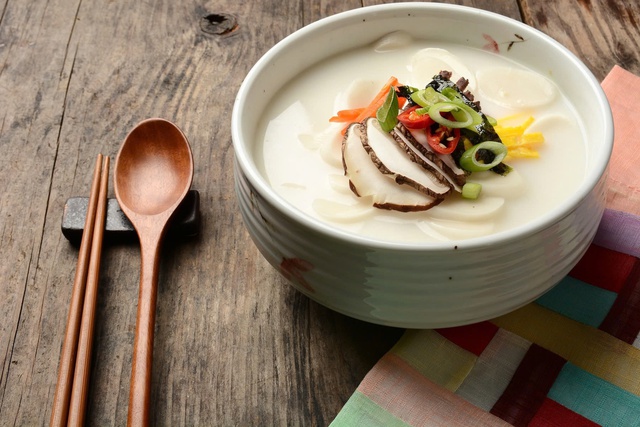
Thin, round slices of white rice cake symbolize coins, conveying wishes for wealth and prosperity. Depending on the region and family, rice cake soup may include shredded eggs, green onions, or seaweed.
According to traditional beliefs, eating a bowl of rice cake soup on New Year's Day also symbolizes "adding another year to one's age," marking maturity and the beginning of a new life cycle.
In Japan, mochi is a familiar food year-round, but it holds special significance during the Gregorian New Year. Among the various traditional Japanese mochi varieties, kagami mochi stands out as a ceremonial symbol.
This type of cake is made from two round mochi cakes, a smaller one placed on top of a larger one. A Japanese bitter orange is placed on top. This cake is often displayed on family altars on December 28th and eaten on January 11th, symbolizing receiving energy from the gods.

Kagami mochi is a type of rice cake commonly eaten during the Japanese New Year celebration.
Source: https://phunuvietnam.vn/nhung-mon-an-nao-mang-lai-may-man-trong-nam-moi-238260101131035076.htm

![[Photo] Secretary of the National Assembly Party Committee, Chairman of the National Assembly presides over the meeting of the Standing Committee and Executive Committee of the National Assembly Party Committee.](https://vphoto.vietnam.vn/thumb/1200x675/vietnam/resource/IMAGE/2026/06/03/1780480353201_ndo_br_bnd-2585-jpg.webp)

![[Photo] General Secretary and President To Lam presides over a meeting with the Central Organizing Committee.](https://vphoto.vietnam.vn/thumb/1200x675/vietnam/resource/IMAGE/2026/06/03/1780482764658_a1-bnd-4741-3342-jpg.webp)
































![[Video] Sunset at Lap An Lagoon – Where the sun sets over the fishing nets](https://vphoto.vietnam.vn/thumb/1200x675/vietnam/resource/IMAGE/2026/05/31/1780192137701_beach-landscape-sea-water-nature-grass-745871-pxhere-com.jpeg)




















Comment (0)