

Many times, after going to bed, Sophie Jaffe (42) receives a mischievous video from her 13-year-old son. Jaffe doesn't know where her children go to play, but as long as her two sons (13 and 15 years old) come home on time, they have complete control over their schedules.
I've witnessed the negative consequences of over-controlling children. I'd rather let my children go outside and have real-world experiences than sit around playing video games.
Sophie Jaffe, a 42-year-old mother in California.
Jaffe, a psychologist in Los Angeles, California, is famous on Instagram for her parenting style. Instead of strict control, she gives her children freedom as they enter their teenage years. While acknowledging the risks of letting them ride bikes around the city or play parkour , Jaffe remains steadfast in her approach.

Leo, Sophie Jaffe's son, performed a jump from the outdoor dining table.
The "beta mom" wave and the decision to let go.
Sophie Jaffe is one of those who follow the "beta mom" trend. Jaffe accepts her children getting B grades and doesn't pressure them to attend prestigious schools or selective classes. Her goal is to raise children who discover their passions, communicate confidently, and don't resent their parents.
Although the labor force participation rate of mothers in the US reached a record high of 74% between 2023 and 2025, the time they spend with their children has not decreased but has actually increased. Compared to 1975, the time spent helping children with homework has increased fivefold, from 14 minutes to nearly 70 minutes per week; infant care has increased from just over an hour to nearly four hours, while playtime with children has also jumped from 36 minutes to nearly three hours per day.
Since the 1990s, the rise of the knowledge economy has transformed motherhood into a "race" where mothers not only raise their children but also manage their future, leading to trends like "helicopter parenting" (a term referring to a parenting style where parents are overly protective and closely supervise their children) and "tiger mom" (a term referring to strict mothers who place high expectations on their children's success).
The emergence of the "beta mom" generation is seen as an attempt to free women from the pressure of "having it all." This stems from two factors: firstly, an awareness of mental health, as many women are gradually rejecting the glamorous image of the perfect mother in favor of inner peace.
Furthermore, the volatile economic landscape and the rise of artificial intelligence (AI) have made the "return on investment" from a pre-programmed childhood uncertain. With traditional office jobs under threat, forcing children to conform to old success models is no longer a safe option.
Jessica Tyson, 40, from Connecticut, embraced motherhood with the mindset of a "warrior," applying her progressive thinking and discipline from college to raising her children. She built her "Type A" motherhood around weaning courses, sleep training books, and meticulously prepared organic menus, turning every aspect of motherhood into a challenge to be conquered.
However, this "model parenting project" collapsed after her second child was born during the height of the Covid-19 pandemic, plunging Tyson into anxiety and prolonged sleep deprivation. On the verge of exhaustion, she decided to embark on a personal revolution: abandoning strict cooking recipes and time-consuming games prepared just for Instagram photos. Instead of trying to be an all-around mother, Tyson accepted a messy home and began involving her children in housework and gardening.
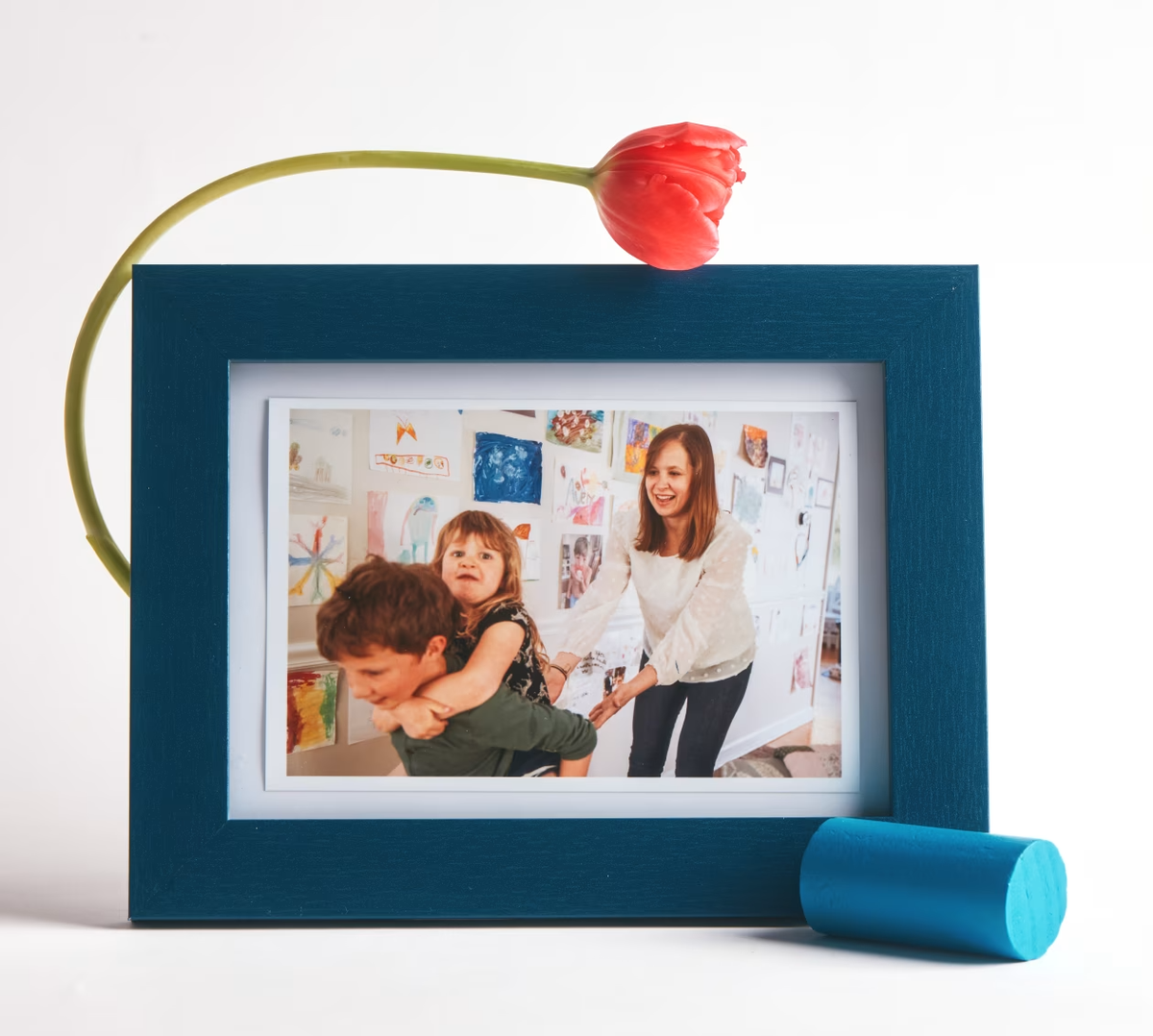
Jessica Tyson spends time with her two daughters, Avery and Gemma.
I want to help other mothers see that it's okay not to be perfect."
Casey Neal, a 33-year-old mother
Casey Neal (33), a mother of four young children, often shares videos of her daily life. Not appearing polished, she describes herself as a "Type B" mom, sharing humorous and sometimes embarrassing moments like leaving her suitcase right outside her door or being nagged by her daughter for leaving her expensive school uniform in the back of the car for weeks. For Neal, publicly acknowledging these shortcomings is not only a way to relieve personal stress but also a reassuring message to the parenting community.
In Houston, Ashleigh Surratt, 28, chooses to be a "Type C" mom – a combination of "Type A" perfectionism and "Type B" realism. With three young children close in age (1, 3, and 4 years old), Surratt chooses to focus her energy on the important things and overlook the tiring details.
To simplify things, she uses the same size diaper for all three children. Their shoes can be left scattered on the floor instead of neatly arranged on a shelf. And if the children refuse to get dressed for daycare in the morning, she'll put them in the car first and then coax them to get dressed later. For bedtime, Surratt chooses to follow her children's circadian rhythms, allowing sleep to come naturally when the whole family is relaxed.
Relieving pressure for both mother and child.
The growing trend of "beta moms" has also helped women like Adrian Knowles (35) feel less lonely when their homes are messy. Instead of obsessing over neatly arranged sofa cushions, she chooses to spend time reading or meeting with loved ones.

This is Danielle Antosz's sock basket.
Meanwhile, Danielle Antosz (42 years old) argues that children should not be forced to sacrifice their childhood just to get into a prestigious university.
After spending years paying off her $30,000 student loan, she didn't believe that attending an Ivy League university (a group of eight top universities in the US) equated to success or happiness.
With two children aged 8 and 10, Antosz chose a less stressful parenting approach. She doesn't enroll them in too many extracurricular activities, doesn't force them to eat vegetables, and doesn't worry about sorting socks. Every morning, the children randomly pick two socks from a wicker basket, sometimes mixed in with old toys.
In the past, many parents, especially mothers, often viewed their sacrifices as a measure of their parenting success. Driving five hours to take their child to a soccer game might have been seen as a way to prove they were a "successful parent."
But according to clinical psychologist Claire Nicogossian, that parenting style backfires. Overly perfectionist parents not only exhaust themselves but also put pressure on their children. In over 20 years of work, Nicogossian says she has encountered many talented teenagers, from performing with orchestras to achieving great success in regional sports competitions, who then unexpectedly quit at age 15 or 16. For many, it was the only way to regain autonomy in a life of overly controlling parents.
Source: https://phunuvietnam.vn/nhung-nguoi-me-beta-tu-bo-hinh-mau-hoan-hao-238260517230901706.htm

![[Image] Hanoi's urban life under the challenge of a "scorching hot" environment](https://vphoto.vietnam.vn/thumb/1200x675/vietnam/resource/IMAGE/2026/05/25/1779706979265_nang-nong-t5-2026-minh-duy-7-4636-jpg.webp)





































































































Comment (0)