

When a couple "runs out of things to talk about".
Every evening, after dinner, Thu Ha finds her house enveloped in a strange silence. Her husband sits on the sofa, his eyes glued to his phone. Their child studies in their room. She quietly cleans the kitchen, waters the plants, and then goes to bed. Some nights they spend the whole evening together, yet they don't even exchange ten words in total.
"Do you want more rice?"; "No!"; "Are you coming home early tomorrow?"; "I don't know yet"... These brief conversations continued for almost three years after the children grew older, work became busier, and life began to operate on a routine.
She used to think that a marriage without arguments was ideal. But then she realized that the most terrifying thing in a marriage is sometimes not the noise of conflict, but the prolonged silence between two people who were once very close.
One evening, as she excitedly recounted the story of a colleague who had just divorced, her husband simply mumbled "hmm" and continued scrolling through his phone. Annoyed, she asked, "Are you even listening to me?" He replied softly, "You tell me the same stories every day. I don't know what to say." His words hurt her deeply. Not because he was insensitive, but because she was beginning to realize that they were truly no longer finding common ground to talk about.
When husband and wife live in two different worlds .
Many couples who were once deeply in love find themselves in a state of "not knowing what to say to each other" after a few years of marriage. The wife is concerned with children, emotions, and family relationships. The husband is busy with work, finances, and social pressures. One person wants to share their feelings. The other just wants peace and quiet after a long, tiring day. Initially, they speak little. Then they become hesitant to speak. Finally, they no longer want to talk at all.
Many people mistakenly believe that this means the love is gone. But in reality, many marriages break down not because of infidelity or major conflicts, but because the two people gradually lose the ability to connect through dialogue. There are couples who live in the same house, eat at the same table, sleep in the same bed every day, but their hearts grow increasingly distant. They don't understand what the other person is thinking, worrying, or feeling happy or sad.
Sadly, the less people talk to each other, the easier it is for them to seek empathy from friends, social media, colleagues, etc., while the people closest to them become the most distant strangers.
Sometimes it's because both of them are completely exhausted.
Cong Minh, 42, once confided that he dreaded the feeling of his wife asking, "What are you thinking about?" It wasn't that he was cold, but rather that he was too tired. "When I get home from work, all I want is to rest. My wife wants to talk about the children's studies, the neighbors, or work. I don't know how to react properly, so I usually stay silent."

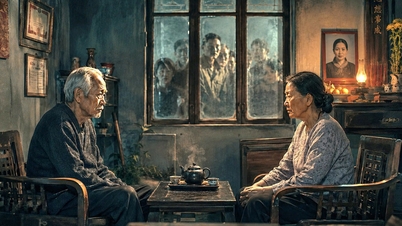
Many marriages quietly cool down because husbands and wives have nothing to say to each other - Illustration photo
Meanwhile, his wife thinks he's indifferent to her. Many couples fall into this vicious cycle: one person needs to be listened to. The other lacks the energy to respond. The more frustrated one becomes, the more pressured the other feels. Gradually, dialogue becomes an obligation instead of a natural need.
In reality, after many years of marriage, people change a lot. Interests change. The pace of life changes. If spouses don't proactively keep each other updated, it's easy for them to become two strangers living under the same roof.
It's not about always having interesting stories to tell. It's about whether you still want to be a part of each other's world.
Ask about something that touches their emotions.
Many people complain that they and their spouses have nothing left to talk about, but in reality, they are just repeating the same routine questions. "How was work today?"; "Normal"; "Did the kids finish school?"; "Yes!"… These kinds of "work-reporting" conversations make it difficult to create emotional connection.
One evening, instead of asking her husband, "Have you eaten yet?", Thu Ha tried asking, "What's been tiring you the most lately?" Her husband was silent for quite a while before unexpectedly telling her that his company was downsizing. He was worried but didn't want to tell her because he was afraid of putting pressure on her. That night, the two of them talked until almost midnight.
Sometimes, what a partner needs isn't a perfect conversation, but simply the feeling that someone genuinely cares about their inner world. To have common ground, there must first be mutual curiosity. People are often curious about new people, but forget to get to know the person they live with every day.
Marriage cannot function solely on a sense of responsibility.
Many couples, after having children, begin to focus solely on their roles as "parents." Every conversation revolves around money, education, and daily schedules. They forget that before becoming parents, they were once two people in love.
A wife once said tearfully, "We talk all day, but it's always about: 'Have you paid the electricity bill? Who's picking up the kids tomorrow?' 'Have you bought the milk yet?'... I can't remember the last time my husband asked me if I was happy."
When marriage becomes merely a matter of obligation, dialogue gradually becomes dry. Many people wait for a major event to talk to each other, while true connection is nurtured by small things: watching a movie together, sharing childhood stories, asking each other about their favorite music, taking a short walk after dinner. Not every conversation needs to be profound. What matters is maintaining the feeling that "I still want to share with this person."
Learn to listen without rushing to judgment.
One reason couples are hesitant to talk is the fear of being dismissed. When the wife tells her husband about work, he might say, "Why are you even thinking about that?" When the husband complains about being tired, the wife might reply, "Everyone's tired!" Gradually, people choose silence to avoid feeling misunderstood.
In marital communication, often what's most needed isn't advice, but presence. There are evenings when simply sitting next to each other, listening to the other person finish a story without interrupting or arguing, is enough to bridge the gap. Connection doesn't come from how long the conversations are, but from the feeling of safety in being yourself.
3 essential things to help couples reconnect.
Marriage isn't always filled with the exciting conversations of the early days of dating. There are periods when people are busy, tired, emotionally distant, and emotionally detached. But the important thing is not to let the silence drag on to the point where neither of you wants to move towards the other anymore. Listen to each other, share with each other, and feel that you still matter in his/her heart.
1. Dedicate "device-free time" each day.
At least 20-30 minutes without phones, TV, or social media. Just focus on each other. Small conversations need a quiet space to begin.
2. Talk about feelings instead of just talking about work.
Don't just ask, "What did you do today?". Try asking, "What made you/your spouse happiest today?", "What are you worried about lately?"... Emotions are the bridge that brings people closer together.
3. Let's create new experiences together.
Many couples run out of things to talk about because their lives are too repetitive. Try learning a new dish together, taking a walk in a place you've never been before, watching a movie together, doing a sport together… Shared experiences will create shared stories.
Source: https://phunuvietnam.vn/khi-nhung-cuoc-noi-chuyen-giua-vo-chong-bien-mat-238260526102934764.htm

![[Photo] Ba Lang An Lighthouse - the "eye of the sea" amidst the "rock museum" of Quang Ngai province.](https://vphoto.vietnam.vn/thumb/1200x675/vietnam/resource/IMAGE/2026/05/29/1780038698840_anh-man-hinh-2026-05-29-luc-14-10-42.png)


![[Image] Pleasant weather helps students enter the 10th grade entrance exam with confidence.](https://vphoto.vietnam.vn/thumb/1200x675/vietnam/resource/IMAGE/2026/05/29/1780034401612_ngay-1-thi-lop-10-minh-duy-8-5009-jpg.webp)



















































































Comment (0)