

 |
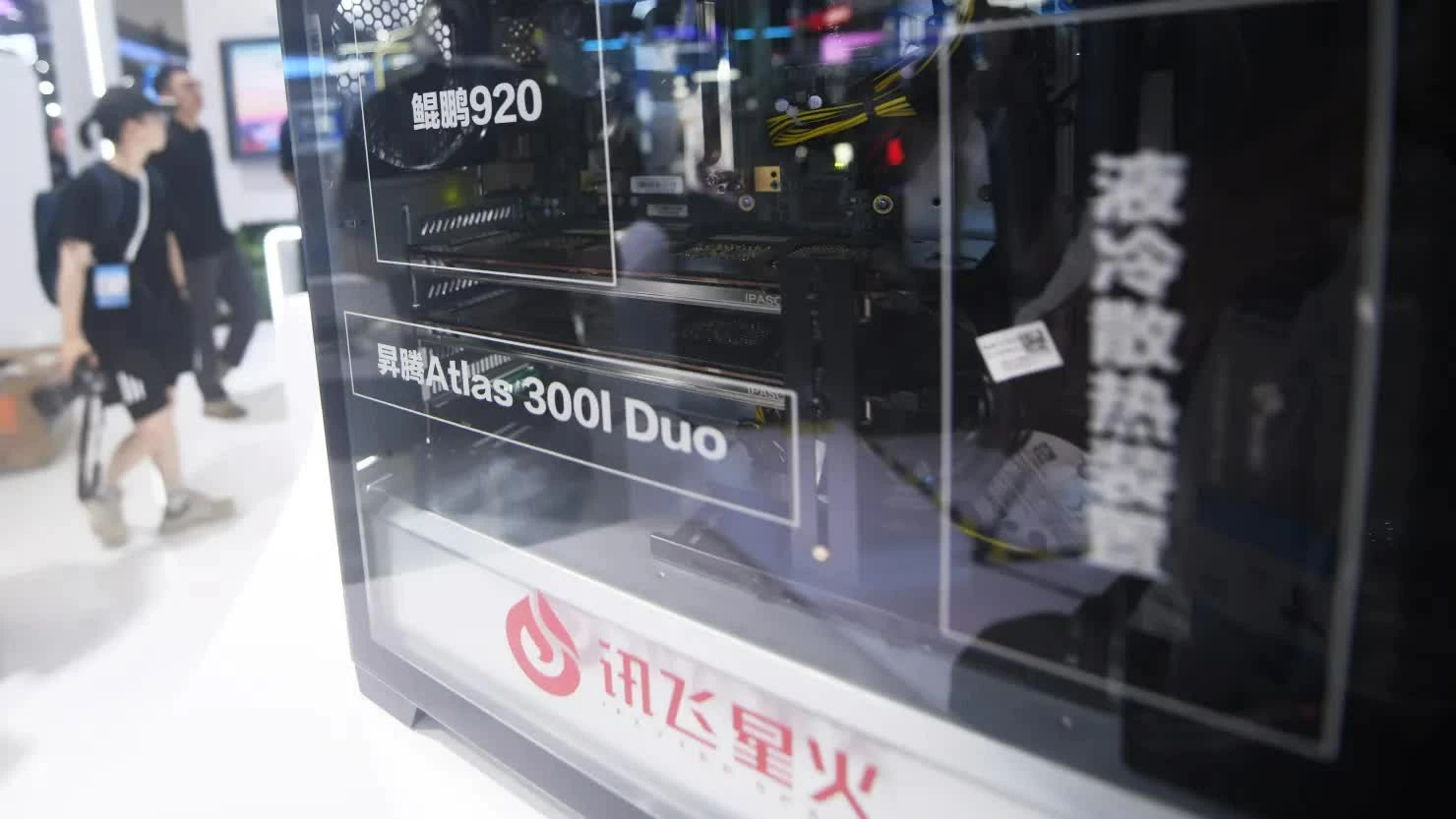
| iFlytek's liquid-cooled server, equipped with the Huawei Kunpeng 920 chip and Ascend AI chip, was showcased at the World Artificial Intelligence Conference in Shanghai, China, in July 2025. (Source: Getty Images) |
According to Goldman Sachs analysts, China's shift toward domestically produced chips will accelerate between 2026 and 2028, as the world's second-largest economy 's leading artificial intelligence (AI) models increasingly expand their compatibility with domestically manufactured chips.
Zelostech's cost problem
Zelostech, a startup developing autonomous, driverless transport vehicles, says it will switch to using products from multiple chip suppliers in China and other countries within the next one to two years, instead of relying entirely on Nvidia.
Shi Yunjian, Chief Financial Officer and Investment Officer of Zelostech, said cost was a key factor in this decision. Using domestically produced chips significantly reduces costs compared to using the two Nvidia Orin chipsets the company currently installs on each vehicle.
This is crucial in the context of economies of scale becoming a competitive advantage in the autonomous vehicle market. The larger the number of autonomous vehicles in operation, the more operational data is collected, and the greater the ability to convince regulators of the technology's readiness.
Zelostech says it currently operates over 25,000 vehicles in more than 20 countries and plans to expand further in the future. The majority of these are small, non-passenger vehicles (smaller than postal vehicles), primarily concentrated in mainland China and serving logistics companies that deliver goods.
This number far surpasses many competitors: Waymo – backed by Alphabet – currently has around 4,000 vehicles on the road, while Chinese rivals such as Baidu, WeRide, and Pony.ai have not deployed a fleet of a comparable scale.
The "Nvidia exit" wave
Zelostech isn't the only company looking for alternatives to Nvidia.
Waymo uses its own custom chips, while electric vehicle giants BYD, Nio, and Xpeng have also announced they will develop their own semiconductor chips for their driver assistance systems.
Nio announced plans to increase its investment in chip computing power development fivefold this year. When asked if this plan included Nvidia chips, CEO William Li said the company is no longer buying chips but is instead leasing computing power from a variety of different processors.
An Xpeng model, developed in collaboration with Volkswagen (Germany), is also using the company's "Turing chip," while the German automaker has partnered with Horizon Robotics (China) to develop a driver assistance system for the domestic market without using Nvidia.
Notably, Nvidia's driver assistance chips are not subject to US export restrictions like the more advanced semiconductors used to train and operate AI models.
However, even after Nvidia CEO Jensen Huang accompanied US President Donald Trump on his visit to China in May, Beijing showed no signs of wanting to import more Nvidia chips.
This trend has spread to the field of AI as well. Chinese AI developers are increasingly optimizing their models to run on domestic hardware, rather than Nvidia's CUDA ecosystem. The latest MiniMax and Kimi models, along with DeepSeek V4, are all compatible with domestically produced chips.
"We believe the trend toward domestically produced chips will accelerate between 2026 and 2028," Goldman Sachs analysts stated in a May 5 report, noting that DeepSeek V4 is compatible with eight types of chips manufactured in China, including chips from Huawei and Alibaba's T-Head division.
"Opportunity" for China's chip manufacturing industry
Last week, Huawei also announced new scientific methods for chip development and plans to integrate them into upcoming products. This is the latest sign of the Chinese telecommunications giant's recovery after years of restrictions imposed by the US.
Kevin Xu, founder of the hedge fund Interconnected Capital, predicts that Chinese companies will still need Nvidia chips for the next 3-5 years.
However, he argued that China has an incentive to reduce this dependence as soon as possible, because domestic chips can only improve when used in real-world environments, generating the necessary feedback to perfect the technology. In other words, the deeper Nvidia penetrates the Chinese technology ecosystem, the more limited the development space for domestically produced chips becomes.
Nvidia's revenue in mainland China and Hong Kong is shrinking, even as the company ramps up investment in Taiwan with plans to spend up to $150 billion annually.
Chris Cottorone, President of TriOrient Investments, believes this investment is likely to reverse Taiwan's (China) original plan to limit AI data centers and nuclear power, and encourage more local businesses to adopt AI.
Meanwhile, Nvidia is still trying to maintain its foothold in the "physical AI" field in China through a partnership with the humanoid robot startup Unittree to build a research robot product that will be sold globally.
For his part, CEO Jensen Huang is also actively recruiting talent, reportedly having joined the board of directors at Tsinghua University in Beijing.
These signs indicate that "the wind is changing." China's technological ambitions are gradually becoming less dependent on access to Nvidia and relying more on the capabilities of domestic corporations.
Source: https://baoquocte.vn/no-luc-giam-phu-thuoc-vao-chip-nvidia-cua-trung-quoc-gio-da-doi-chieu-401201.html
![[Photo] Secretary of the National Assembly Party Committee, Chairman of the National Assembly presides over the meeting of the Standing Committee and Executive Committee of the National Assembly Party Committee.](https://vphoto.vietnam.vn/thumb/1200x675/vietnam/resource/IMAGE/2026/06/03/1780480353201_ndo_br_bnd-2585-jpg.webp)


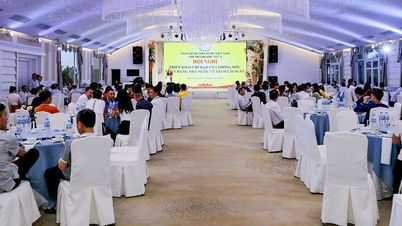
![[Photo] First session of the 14th Congress of the Vietnam Trade Union](https://vphoto.vietnam.vn/thumb/1200x675/vietnam/resource/IMAGE/2026/06/03/1780465947883_ndo_br_img-3852-jpg.webp)
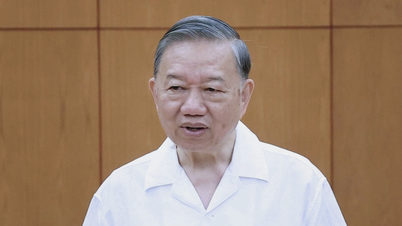
![[Photo] General Secretary and President To Lam presides over a meeting with the Central Organizing Committee.](https://vphoto.vietnam.vn/thumb/1200x675/vietnam/resource/IMAGE/2026/06/03/1780482764658_a1-bnd-4741-3342-jpg.webp)

















































![[Video] Sunset at Lap An Lagoon – Where the sun sets over the fishing nets](https://vphoto.vietnam.vn/thumb/1200x675/vietnam/resource/IMAGE/2026/05/31/1780192137701_beach-landscape-sea-water-nature-grass-745871-pxhere-com.jpeg)



























Comment (0)