

.jpg)
Lack of a nurturing and growth environment.
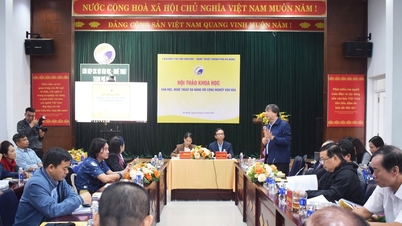
According to researcher Dinh Thi Trang, President of the Da Nang City Folk Arts Association, in contemporary life, folk songs are increasingly fading away due to changes in social structure, aesthetic thinking, and the rise of modern forms of entertainment. The natural performance environment of folk songs was originally linked to community life and productive labor. As labor methods change, folk songs are no longer sung naturally in the fields and on the rivers. Folk songs are gradually losing their original "living space." The public, especially young people, often prioritize flashy, fast-paced, and easily accessible cultural products, while folk songs require depth and a deep understanding of traditional culture.
Meanwhile, the number of experts researching folk art is still small; some new works are limited to collection, lacking interdisciplinary analysis and academic depth. The application of research results to practice, especially to the cultural industry, remains quite modest. The number of older artisans knowledgeable about folk melodies is dwindling, while the younger generation shows little interest in indigenous knowledge. Furthermore, digital resources have not been systematized, leading to difficulties in sharing and utilizing them.
Transforming heritage into new value.
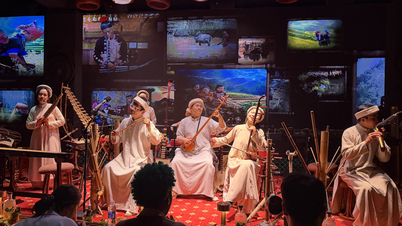
According to artist Huyen Tan, head of the Song Han Bài Chòi Club, the folk songs are usually smooth, deeply meaningful, and reflect the diligence, patience, and resilience of the local people. Besides the songs sung in rice fields, mulberry plantations, or along rivers, there are also songs originating from folk plays such as "Dat Ho Long Han," "Ve Quang," "Lia Phau," and "Lia Phon"... In particular, folk songs are used extensively in folk plays. This provides a good environment for artists to continue maintaining and developing them.
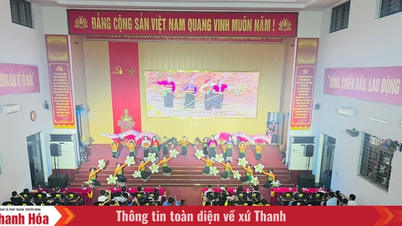
Despite the efforts of artisans to preserve it over time, the process of its decline continues silently amidst the rapid changes of modern society. Today, the Quang Nam folk song is mainly performed during folk festivals and celebrations. It is not just music , but also a "cultural thread" connecting the lifestyles and ways of speaking of the people of Quang Nam and Da Nang.
Therefore, the city needs policies and incentives for artisans to encourage the preservation and promotion of this unique folk music genre. The melodies should be adapted, staged, or combined with modern music to suit contemporary aesthetics. Preservation requires a combination of policies, education , and the creation of new performance spaces so that the melodies can "live" instead of just being "on display."
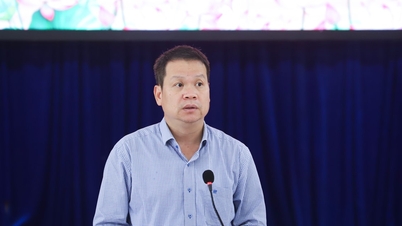
According to Mr. Le Hung Tien, lecturer at the University of Education (Da Nang University), throughout history, the music of Central Vietnam has formed a distinct identity, a blend of scholarly court music, rustic folk music, and the mystical beauty of indigenous cultures. Each folk melody of Central Vietnam is not only a means of entertainment but also a living museum of memories. For artists in Central Vietnam, folk music is not just academic material but a part of their personal identity. From the chants on the rivers of Quang Nam to the lyrical songs of the Co Tu people, they all become a source of self-created inspiration. The impact of folk music on the consciousness of the people of Central Vietnam is multifaceted; it both soothes the pain of natural disasters and war (post-war memories) and evokes national pride. This is the most important material for contemporary artists to create musical "cuts," transforming heritage into new values that resonate with the spirit of the times.
Source: https://baodanang.vn/noi-lo-mai-mot-3336897.html
![[Image] "Journey of Hope" promotes the organ and tissue donation movement in Vietnam.](https://vphoto.vietnam.vn/thumb/1200x675/vietnam/resource/IMAGE/2026/05/20/1779294400833_1-8910-jpg.webp)
![[Photo] General Secretary and President To Lam works with the Party Committee of the Ministry of Health on the work of Vietnamese traditional medicine.](https://vphoto.vietnam.vn/thumb/1200x675/vietnam/resource/IMAGE/2026/05/20/1779294323718_a1-bnd-2978-3319-jpg.webp)
![[Photo] National Assembly Chairman Tran Thanh Man working with the Standing Committee of the National Assembly's Delegation Affairs Committee.](https://vphoto.vietnam.vn/thumb/1200x675/vietnam/resource/IMAGE/2026/05/20/1779294340023_ndo_br_1-1691-jpg.webp)




















































Comment (0)