

In a small street in the village of Castrillo de Murcia, northern Spain, newborn babies lay neatly on white cushions covered with flowers. Around them, crowds lined the streets, waiting amidst the ringing of church bells and excited cheers. Then, suddenly, a man dressed in red and gold, wearing a devil mask, leaped over the long line of children. This wasn't a dangerous stunt, but an ancient ritual called El Colacho – where the "devil" is believed to take away sickness, bad luck, and evil from the children's lives.
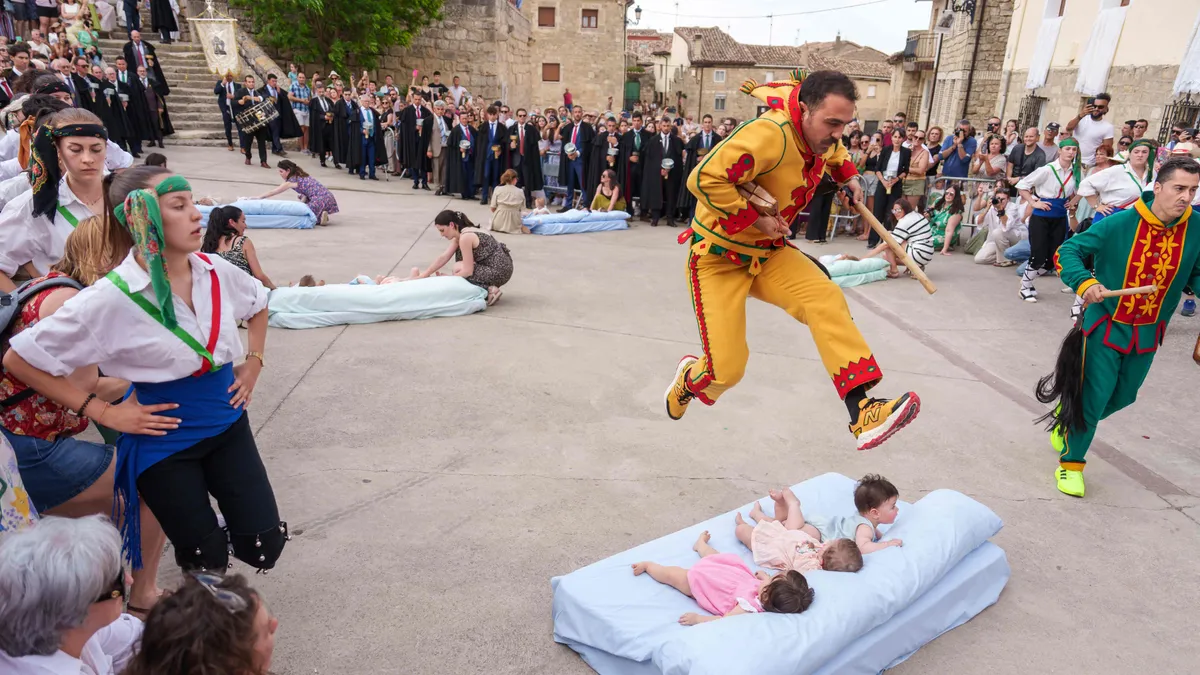
Photo: Wikipedia
A strange ritual has existed for over 400 years.
El Colacho takes place during the Catholic feast of Corpus Christi, usually celebrated in June each year. The festival originated in the early 17th century and is still maintained today in Castrillo de Murcia – a sparsely populated village in the Castilla y León region.
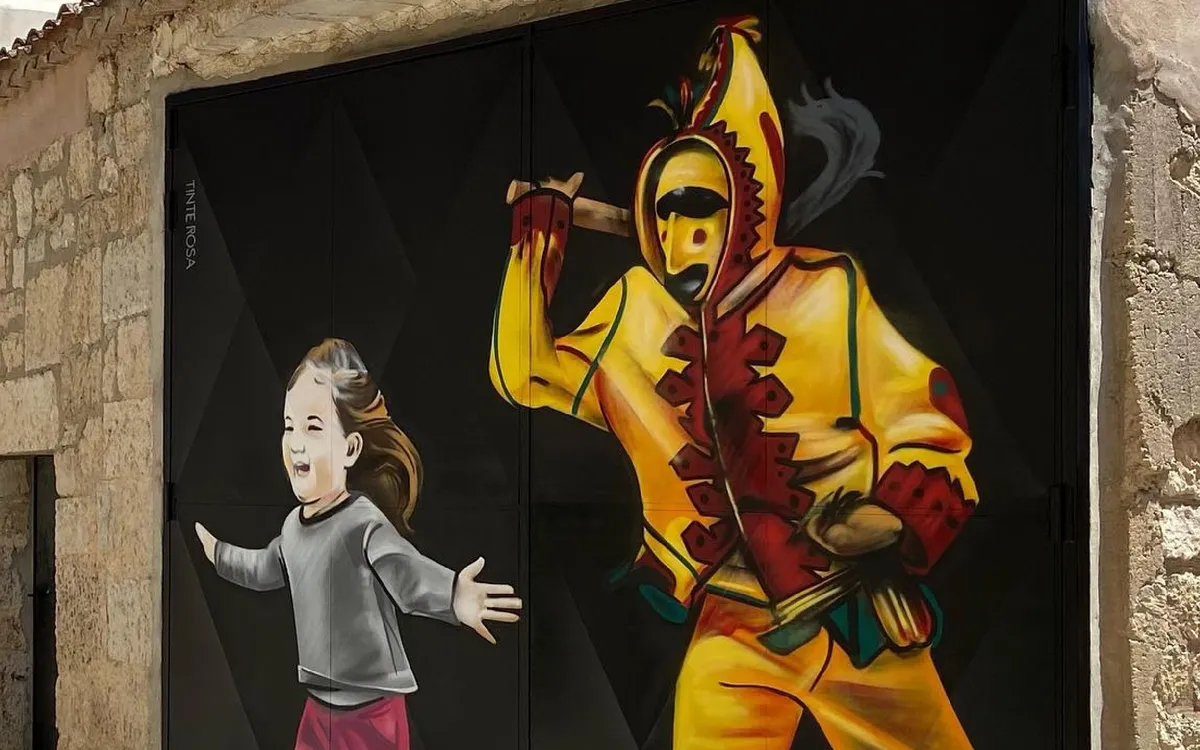
The central figure of the festival is El Colacho – the embodiment of the devil in Spanish folklore. Selected men, dressed in flamboyant red and yellow costumes and carrying whips or castanets, run through the streets taunting the crowds before performing the ritual of jumping over children.
The babies participating in the ritual are usually under one year old. Parents place their children on mats in the middle of the street, believing that the El Colacho jump will ward off evil spirits and diseases, protecting the child from future misfortune. After the ritual, the babies are often covered with flower petals and receive blessings from the community.
This may sound unbelievable in the modern world , but for the people here, El Colacho is part of their shared memory, a tradition preserved through generations.

Photo: Daily Sabah
Ancient cultural logic
Behind those astonishing jumps lies a very ancient cultural logic. In a time when medicine was not yet developed, infants were always considered the most vulnerable to disease and death. Many communities around the world created rituals to protect young children based on spiritual beliefs: wearing amulets, praying, burning incense, or performing purification rituals. And the El Colacho festival also originated from the desire to protect children from a world full of uncertainties.
From a symbolic perspective, the "devil" in the festival doesn't necessarily represent absolute evil. On the contrary, by jumping over children, El Colacho is believed to "take away" all evil. The image of the devil thus becomes part of the ritual of protecting the community.
Perhaps it is this very paradox that makes the festival so intriguing to the modern world: a figure traditionally symbolizing darkness is tasked with protecting the safety of children.
Although it takes place within the framework of Corpus Christi, El Colacho is not entirely an orthodox Catholic ritual. Many researchers believe that the festival bears strong traces of medieval European folk beliefs – where religious rituals and local beliefs often blended together.
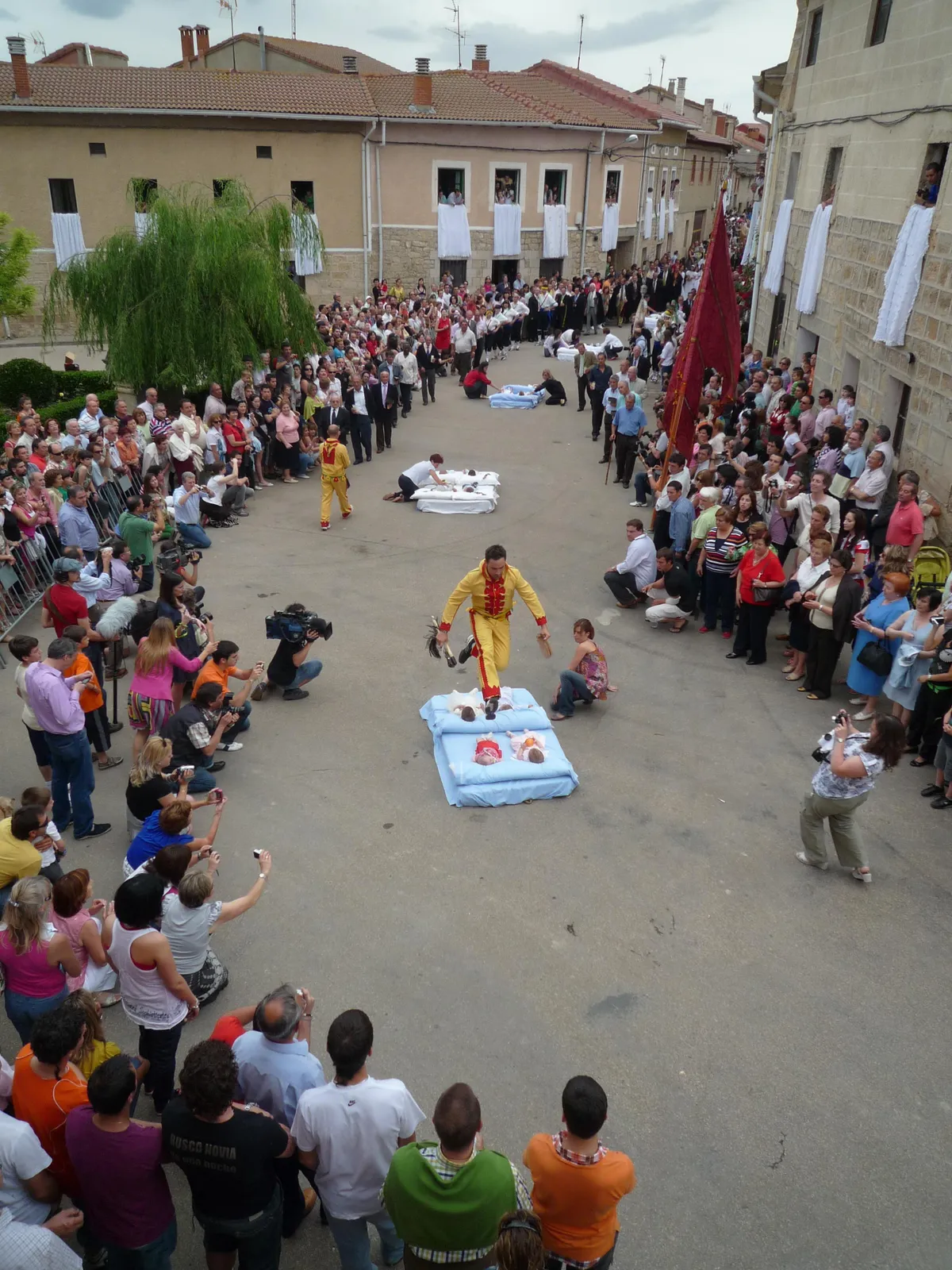
Photo: Wikipedia
For many years, the Catholic Church expressed reservations about this ritual because it was not part of official doctrine. Nevertheless, the people of Castrillo de Murcia have maintained the festival as part of their local cultural identity.
Interestingly, in small villages like Castrillo de Murcia, community traditions sometimes outshine even mainstream religious norms. For the locals, El Colacho is not simply a ritual, but a connecting thread between generations.
Many elderly people recount how they experienced "demons jumping over them" when they were children, and later brought their own children and grandchildren to participate in the festival. These jumps, therefore, besides their spiritual significance, are also a continuation of community memory.
From village rituals to a global phenomenon.
For centuries, El Colacho was known almost exclusively within its local area. But the internet age has changed that.
Photographs capturing the moment the "devil" flew over a series of newborn babies quickly spread on social media and in international news outlets. Some tourists called it "the world's strangest festival."
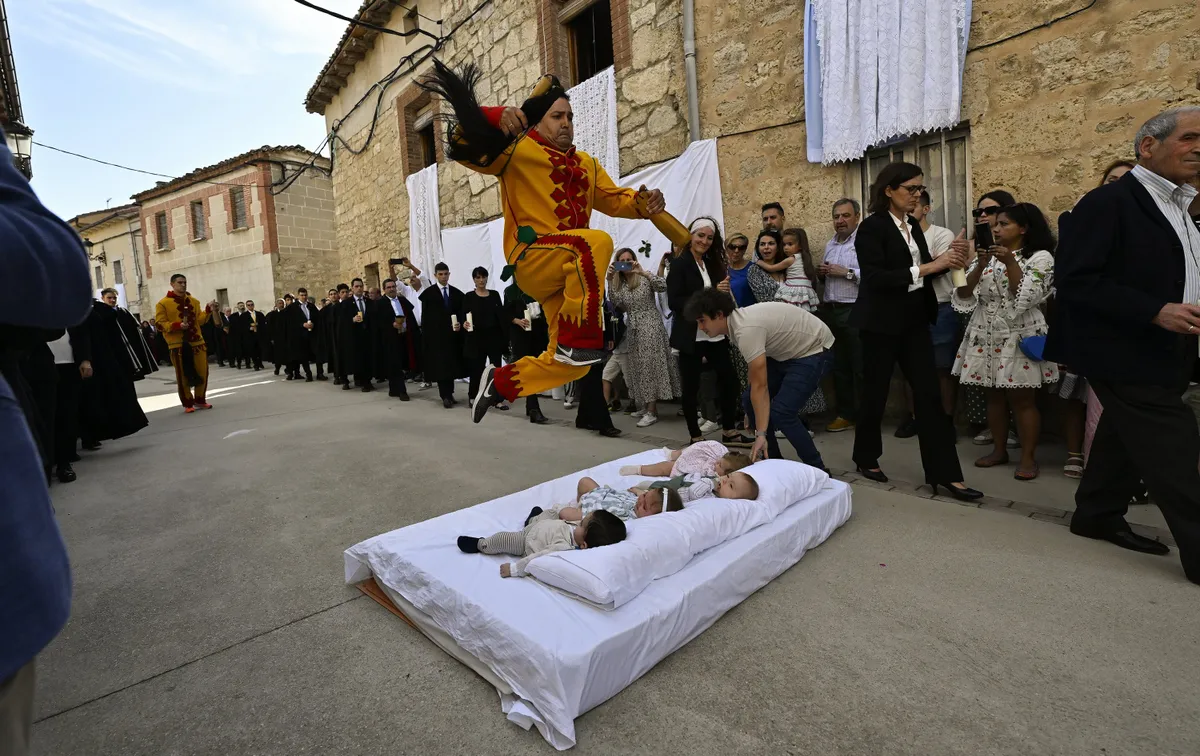
Photo: Wikipedia
International media outlets such as National Geographic, The Guardian, and the BBC have all reported on El Colacho. However, it's noteworthy that most articles don't portray the festival as a novelty, but rather attempt to explain the cultural significance behind this seemingly incomprehensible ritual.
It is at this point that El Colacho reflects a larger story: the clash between modern perspectives and ancient traditions. What outsiders perceive as dangerous or strange is sometimes a sacred symbol to the local community.
At first glance, this festival seems like a bizarre relic from the Middle Ages. But behind the devilish costumes and acrobatic jumps lies a very simple desire: to protect children from misfortune. Perhaps that is why rituals like El Colacho still exist in the modern world.
Source: https://vtv.vn/noi-quy-du-bao-ve-tre-em-10026052111040067.htm

























































































Comment (0)