

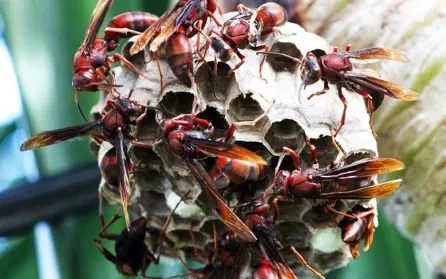
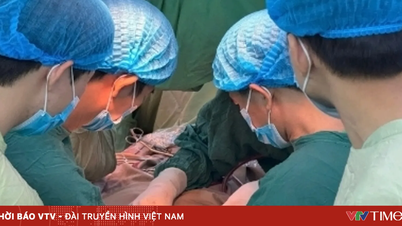
Illustration.
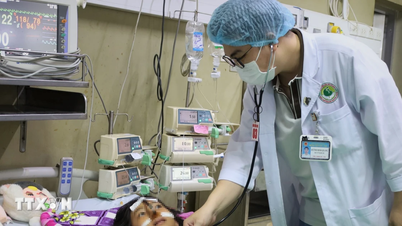
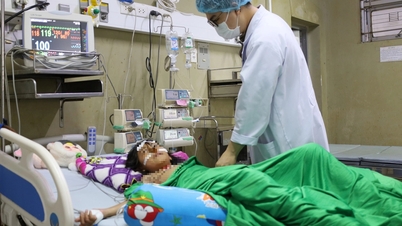
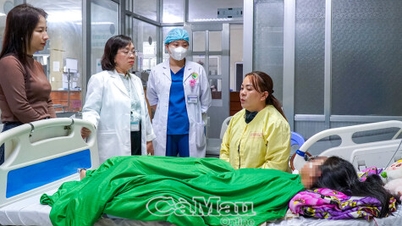
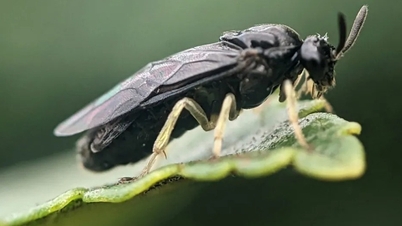
Recently, the Emergency Department - Stroke Unit of Cao Bang Provincial General Hospital received a 71-year-old female patient who was admitted after being stung by bees. Within a short time, the patient developed a rash all over her body, difficulty breathing, frequent vomiting, and diarrhea. After examination, doctors diagnosed her with anaphylaxis grade II due to bee venom.
According to experts, anaphylaxis can occur just minutes to hours after exposure to an allergen. People with a history of bee venom allergy are at a higher risk of severe reactions in subsequent stings.
Warning signs of anaphylaxis include hives, intense itching, swelling of the lips, face, or eyelids; difficulty breathing, hoarseness, chest tightness; abdominal pain, vomiting, diarrhea; dizziness, fatigue, or low blood pressure. If these symptoms appear, the patient should be taken to a medical facility immediately.
Besides allergic reactions, bee venom can also cause rhabdomyolysis, liver and kidney damage, and many other dangerous complications, especially in people who are stung in multiple places or stung on the head, face, and neck.
Doctors advise that when stung by a bee, you should quickly leave the area where the bees are, remove the stinger from the skin if any remains, clean the sting site, disinfect it, and apply a cold compress to reduce swelling and pain. At the same time, you should closely monitor for any unusual signs and seek medical attention immediately if you experience difficulty breathing, a spreading rash, dizziness, or severe pain.
According to health authorities, people who experience anaphylaxis from bee stings should be monitored at a medical facility even if their symptoms have stabilized, because phase 2 anaphylaxis can reappear after several hours, even within 24-72 hours, with symptoms such as difficulty breathing, rash, or low blood pressure.
To prevent this, people should wear appropriate protective clothing when going into the forest, working in the fields, or visiting areas with many bees, avoid disturbing beehives, and proactively equip themselves with first aid knowledge to reduce the risk of serious complications.
Source: https://vtv.vn/ong-dot-co-the-gay-phan-ve-nguy-hiem-100260601204140254.htm
![[Photo] First session of the 14th Congress of the Vietnam Trade Union](https://vphoto.vietnam.vn/thumb/1200x675/vietnam/resource/IMAGE/2026/06/03/1780465947883_ndo_br_img-3852-jpg.webp)



![[Photo] Secretary of the National Assembly Party Committee, Chairman of the National Assembly presides over the meeting of the Standing Committee and Executive Committee of the National Assembly Party Committee.](https://vphoto.vietnam.vn/thumb/1200x675/vietnam/resource/IMAGE/2026/06/03/1780480353201_ndo_br_bnd-2585-jpg.webp)





















































![[Video] Sunset at Lap An Lagoon – Where the sun sets over the fishing nets](https://vphoto.vietnam.vn/thumb/1200x675/vietnam/resource/IMAGE/2026/05/31/1780192137701_beach-landscape-sea-water-nature-grass-745871-pxhere-com.jpeg)






































Comment (0)