This tiny city in northeastern South America has just over 240,000 inhabitants, but it accounts for more than half of the population of Suriname.
Nevertheless, Paramaribo boasts numerous historical sites and natural attractions that rival those of other major cities in South America.
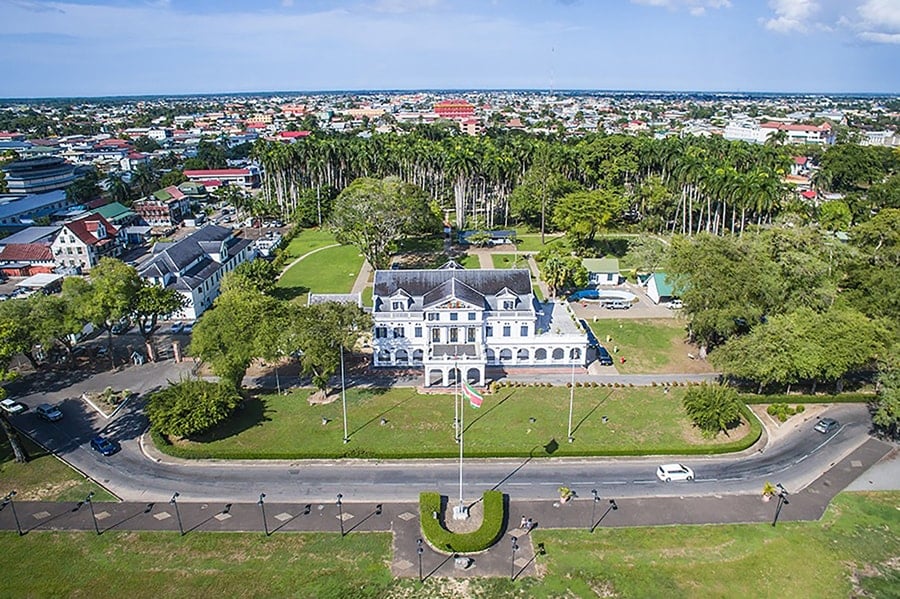
The Presidential Palace of Suriname and the palm garden.
Ancient city
The first destination in Suriname that visitors should visit is the old town in the city center. This area has been recognized as a UNESCO World Heritage Site since 2002 for its invaluable architectural and historical treasures. Visitors here feel as if they have stepped back in time to 19th-century Europe.
This neighborhood was built for Dutch officials and officers who governed the colony of Suriname. However, the architects did not simply transfer European architecture to South America, but instead sought to harmoniously combine distinctive Dutch architectural features with local techniques, creating an old town with charming, quaint wooden houses.
Furthermore, they also brought many tree species from other Dutch colonies, such as the Sri Lankan fig tree, to plant here. The ancient trees casting their shadows over the quiet street create an incredibly serene and charming scene.
Paramaribo was Suriname's only "gateway" to the sea. The French, British, and Dutch vied for this colony largely because of Paramaribo's maritime value. Therefore, it's no surprise that the Zeelandia fortress in Paramaribo is among the most famous fortresses in South America.
Today, only the brick ramparts and some cannons remain; but many artifacts and historical documents have been collected and displayed at the Fort Museum. Visitors have the opportunity to learn about the history of battles with pirates on the Paramaribo coast, or about the sacrifices of democratic revolutionaries who were imprisoned and executed at Zeelandia Fort.
Surrounding Independence Square in the heart of Paramaribo are important government buildings, the most famous of which is the Suriname Presidential Palace, with its magnificent 18th-century Western European palace architecture. Behind the palace is the royal palm garden, where many visitors come to escape the summer heat and play with the capuchin monkeys.
The people of Suriname are so passionate about birdkeeping that they consider it a cultural identity. Every Sunday, bird owners bring their beloved birds to the palm groves to hold a "concert."
Enjoy life
Suriname is small in both size and population, but it is by no means "poor" in terms of material wealth or culture. Just look at its cuisine . In Paramaribo, visitors can easily find Chinese, Indian, Indonesian restaurants side by side. Each dish is a blend of ingredients and cooking methods from various culinary traditions.
For example, pomtajer, originally made from potatoes by the Dutch, is made with taro and shredded chicken in Suriname. Or moksi alesi, a mixed rice dish, is essentially a "modified" version of the famous nasi goreng from Southeast Asia, consisting of rice cooked with coconut milk, black beans, dried shrimp, and pork – simple yet irresistibly delicious.
The busiest eateries and restaurants in Paramaribo are concentrated along the Suriname River in an area called Waterkant. This is the center of the city's vibrant nightlife. Every afternoon, Waterkant comes alive. Children play, and adults chat over a beer.
Visitors should spend an afternoon at Waterkant enjoying a pint of djogo (a popular local beer) with some salted cod, and watching the Goslar shipwreck rise from the river.
When World War II broke out in 1939, the German ship Goslar docked in Suriname for shelter. Germany invaded the Netherlands on May 10, 1945. The Dutch colonial authorities in Suriname decided to imprison the Goslar's crew and then scutt the ship. Today, the wreck of the ship is a striking feature of the Suriname River landscape.
Tourists looking for souvenirs should visit the Centrale Markt market east of Waterkant. The stalls there sell everything from local produce to imported goods.
The market also has many good restaurants with affordable prices. Many male tourists visit Centrale Markt to buy bottles of 90% rum from Mariënburg as souvenirs – one of the strongest rums in the world. Female tourists, on the other hand, often visit the Maagdenstraat district, home to many centuries-old jewelry shops. The ancestors of these jewelers migrated here from Indonesia, and their descendants continue to preserve their family's traditional craft.
Visitors who love exploration have plenty of options when visiting Paramaribo. Day trip destinations include Galibi Beach – famous for its leatherback turtle nesting grounds; the Bigi Pan nature resort, which combines tourism with the preservation of rice cultivation; and most famously, the Suriname rainforest tour. Approximately three-quarters of Suriname's area is covered by rainforest.
Visitors may need several weeks to explore all the scenic spots and nature reserves in the forest. That's not including the villages, where visitors have the opportunity to discover and interact with some of the world's most remote tribes.
Source: https://hanoimoi.vn/paramaribo-mot-goc-nam-my-697307.html











































































Comment (0)