

 |
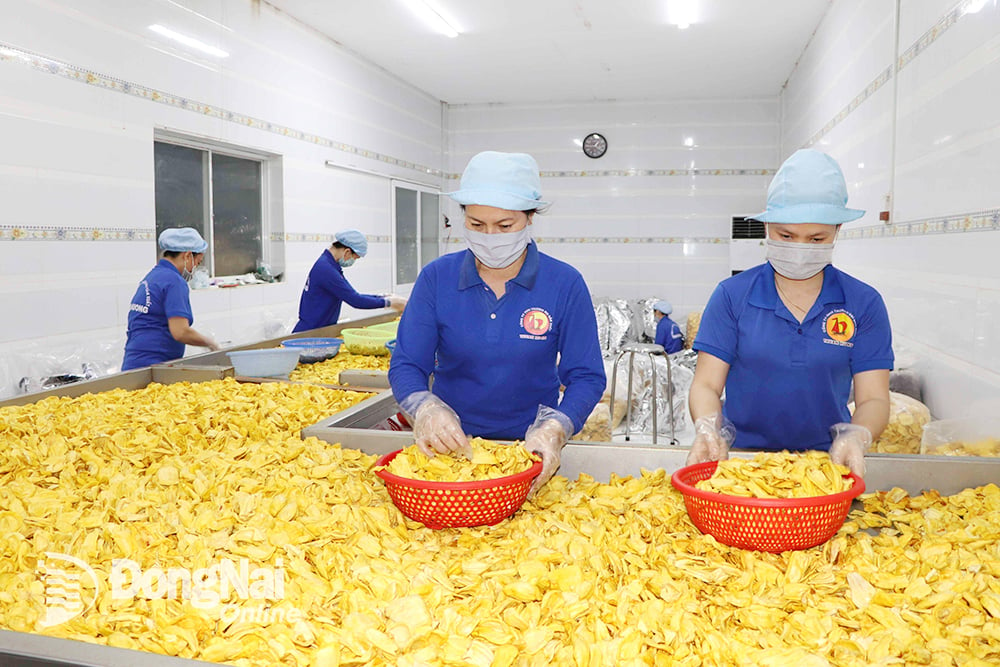
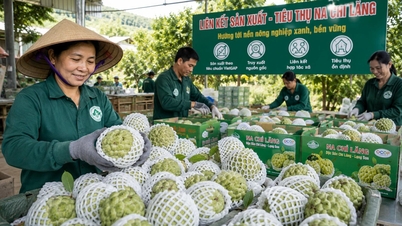
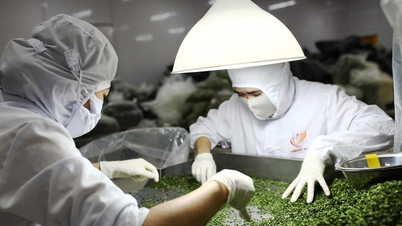
| Processing fresh fruit at a business in Dinh Quan district. Photo: B. Nguyen |
Located in a dynamic economic development region, the Southeast region is also among the top in the country for obtaining planting area codes, attracting businesses to invest in export packaging factories and deep processing, contributing to the development of Vietnam's fruit industry.
Rapidly increase the area of high-value fruit trees.
By the end of 2024, the total area of fruit trees in the Southeast region was 142,200 hectares, ranking 4th in terms of area among all regions nationwide. According to the Ministry of Agriculture and Environment 's Project on the Development of Key Fruit Trees until 2025 and 2030, the country has 14 key fruit tree species including: dragon fruit, mango, banana, lychee, longan, orange, pomelo, pineapple, rambutan, durian, jackfruit, passion fruit, avocado... These are also the fruit species with strong development potential in the Southeast region such as: mango (concentrated mainly in Dong Nai and Tay Ninh); rambutan and banana (Dong Nai); longan (Tay Ninh and Ba Ria - Vung Tau); jackfruit (Dong Nai, Binh Phuoc, and Tay Ninh); and durian (Dong Nai and Binh Phuoc).
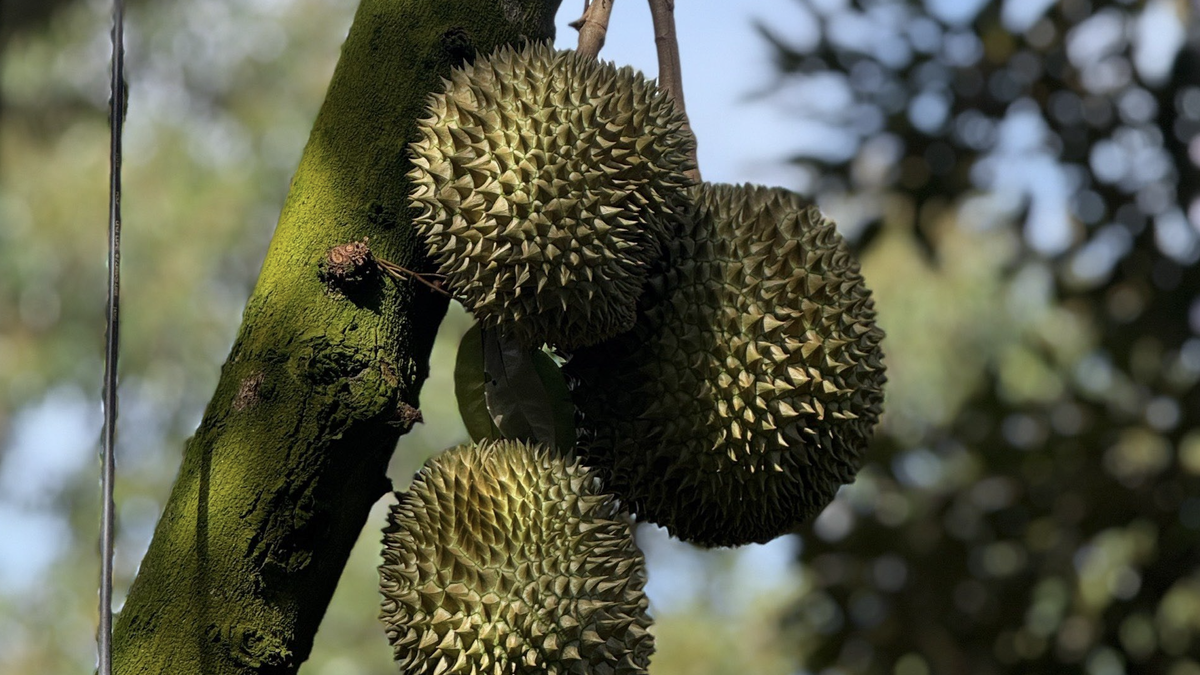
Many specialty crops and export fruits have high economic value, such as Hoa Loc mangoes, Thai mango varieties, Dona durians, and green-skinned pomelos... Specifically, fruit trees with export potential have large cultivation areas, such as durian with an area of 25.4 thousand hectares; tissue-cultured bananas with an area of 23.5 thousand hectares; and mangoes with an area of 15.4 thousand hectares...
Dong Nai province has a large area of fruit trees in the Southeast region, with a total area of nearly 81,800 hectares, an increase of thousands of hectares compared to 2020. Some of these crops have areas among the largest in the country. Currently, Dong Nai has the largest area of tissue-cultured banana cultivation in the country, with a total area of nearly 16,700 hectares and a production of over 186,700 tons. The area of durian cultivation has reached over 12,600 hectares, almost double compared to a few years ago.
Implementing the restructuring policy, the agricultural sector in the Southeast region has achieved many important accomplishments, maintaining high growth rates. In particular, fruit trees have not only seen rapid increases in area and yield, but also a continuous rise in production thanks to the application of scientific and technological advancements, increased investment in intensive farming, and the selection and use of new varieties.
The provinces and cities in the Southeast region are focusing on developing large-scale specialized farming areas, applying high-tech techniques and technologies to production to meet export market standards. Local authorities are very interested in providing support in terms of mechanisms and policies to expand the area granted export-oriented farming zone codes to increase the competitiveness of the region's key fruit crops. As a result, the fruit sector has formed effective supply chains, exporting to many countries around the world, including demanding markets such as the United States, Europe, Japan, and South Korea.
Dong Nai is a leader in building a supply chain for the fresh fruit industry. Currently, the province has 844 cooperatives with the participation of nearly 31,700 members; the area participating in production linkages through cooperatives reaches nearly 23,400 hectares. These cooperatives serve as a focal point to support members in applying scientific and technological advancements to production. Among them, 35 cooperatives have products certified VietGAP with an area of over 908 hectares; 2 cooperatives have been certified organic with an area of 4.3 hectares, and 21 cooperatives have been granted planting area codes for export purposes with an area of over 654 hectares.
According to Deputy Director of the Department of Agriculture and Environment Tran Lam Sinh, the province has 275 linked supply chains, an increase of 43 chains compared to 2023, with the participation of 127 enterprises, 70 cooperatives, 39 cooperative groups, and 15,300 households. The percentage of the value of the province's key agricultural, forestry, and aquatic products consumed through cooperation and linkages reached over 47.6%. The province is very interested in implementing policies to support the linkage of agricultural production and consumption in the province, such as: supporting the cost of consulting on building linkages; supporting infrastructure serving linkages; supporting the construction of agricultural extension models; supporting 50% of the cost of purchasing seeds, equipment, and essential materials to build demonstration models; supporting technical training and education; supporting vocational training; supporting seeds, materials, and product packaging design…
Taking advantage of its many specialized fruit-growing regions, numerous provinces and cities in the Southeast region are strongly developing garden tourism and ecotourism associated with these fruit-growing areas. The region boasts several localities famous for fruit-growing tourism during the ripening season, such as Long Khanh city (Dong Nai province) and Lai Thieu (Binh Duong province)... This model contributes to increasing the economic value of these fruit-growing regions.
Attracting investment in processing
The Southeast region is the economic engine of the country, with strong development in industry and services, and also serves as a hub for domestic and international trade. In particular, most agricultural and aquatic products from the South are primarily collected and exported through ports in Ho Chi Minh City.
Leveraging these advantages, localities in the Southeast region are strengthening investment in synchronized technical infrastructure, transferring technology, and reorganizing production towards large-scale commodity production; forming cooperative relationships along the value chain of the industry, attracting facilities for purchasing, preserving, processing, and exporting fresh and processed fruits. The goal is to reduce the pressure of seasonality on fresh fruit and improve the economic efficiency of this model.
Since the beginning of the year, the functional agencies of Dong Nai province have continued to strengthen guidance for businesses and people in establishing codes for growing areas and packaging facilities to serve exports. To date, the province has 189 codes for growing areas covering more than 27.9 hectares; 46 codes for domestic growing areas covering 453 hectares; and 86 codes for packaging facilities exporting to markets such as the United States, China, Europe, Australia, and New Zealand. Activities connecting agricultural product consumption within the province have also received attention.
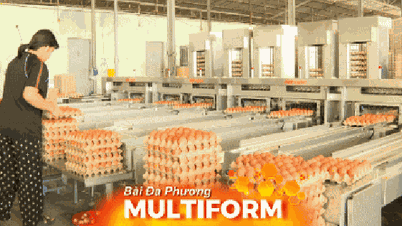
According to several businesses investing in banana processing and packaging plants for export in the province, the position of Vietnamese fresh bananas in the international market is increasing. Dong Nai, in particular, is the "capital" of tissue-cultured banana cultivation for export in the country. Many localities in the province have formed large-scale specialized cultivation areas, creating favorable conditions to attract businesses to invest in processing and packaging plants for export right in the growing regions.
Chairman of the Board of Directors of Luong Gia Food Technology Joint Stock Company (headquartered in Ho Chi Minh City), Ho Quoc Thai, shared that the company has invested in two fruit processing plants in Dong Nai. The company chose to invest in Dong Nai because of its extremely favorable geographical location for production, especially the Long Khanh area, which is a very good trading hub with expressways connecting from the Mekong Delta and linking to the Central and Central Highlands provinces. In addition, the very active support from the provincial and local authorities, as well as relevant departments and agencies in Dong Nai, also motivates the company to confidently commit to the business.
Typical provinces and cities in the Southeast region, such as Ho Chi Minh City, Dong Nai, Binh Duong, and Ba Ria - Vung Tau, are forming centers for supplying and processing agricultural products, as well as dedicated logistics chains connecting agricultural product consumption. In particular, these Southeast localities are cooperating closely in building and developing the agricultural product consumption market for the entire region.
Plains
Source: https://baodongnai.com.vn/dong-nam-bo/202504/phat-trien-cac-vung-chuyen-canh-cay-an-trai-ben-vung-73e3efd/

![[Photo] General Secretary and President To Lam presides over a meeting on preparations for the review of one year of operation of the three-tiered government system.](https://vphoto.vietnam.vn/thumb/1200x675/vietnam/resource/IMAGE/2026/06/02/1780391821195_a1-bnd-4595-9717-jpg.webp)





















































Comment (0)