

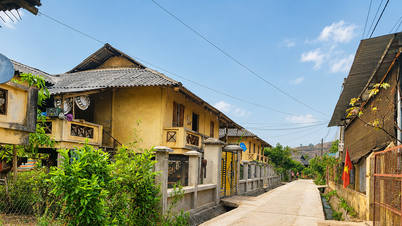
As a border commune in Son La province, bordering Laos, Phieng Pan has faced many difficulties due to harsh natural conditions, underdeveloped transportation infrastructure, and a high rate of poor and near-poor households.
Recognizing that reducing information poverty is a crucial solution for promoting socio-economic development, the Phiêng Pằn commune government has intensified its propaganda efforts through various forms such as loudspeakers, direct communication at the grassroots level, technical training, and via the Internet and social media. As a result, people have gradually changed their perceptions, proactively seeking knowledge about production, applying science and technology to economic development, and stabilizing their lives.
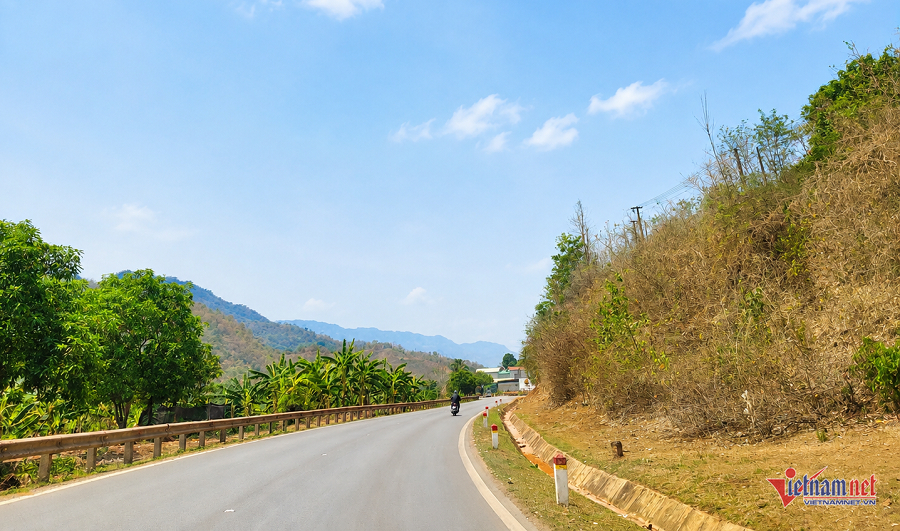
Thanks to the effectiveness of information dissemination and poverty reduction efforts in production and daily life, many households in Phiêng Pằn have boldly developed economic models suitable to local conditions.
Examples include coffee cultivation in the villages of Ot Cha, Xa Vit, Hin Don, Na Ha, and Xa Kia; passion fruit cultivation in the villages of Chi, Lan Quynh, Mon 1, Mon 2, Po In, and Na Hien; and raising bamboo rats, spotted deer for antlers, goats, and wild boars in the villages of Lo Den, Ot Cha, Y Luong, and Nam Lanh… Many of these models generate incomes of 200-300 million VND per year, creating motivation for people to expand production and increase their income.
Typically in Mon 2 village, the model of raising commercial bamboo rats in enclosed enclosures built by Mr. Ha Van Cuong's family is becoming a destination for many households to visit and learn from.
Previously, his family engaged in small-scale livestock farming, resulting in unstable income. After accessing information through public address systems, the internet, and local awareness campaigns, Mr. Cuong delved into researching the guinea pig farming model to develop his family's economy starting in 2024.
Thanks to the application of appropriate breeding techniques, after more than two years of development, the model has yielded stable economic results. Commercial bamboo rats sell for between 400,000 and 800,000 VND/kg, and the annual income from selling breeding and meat bamboo rats is approximately 200 million VND.
Currently, Phiêng Pằn commune has 3,357 hectares of grain crops; 2,083 hectares of perennial industrial crops; 2,553 hectares of annual crops and vegetables; 1,052 hectares of fruit trees and hawthorn; and a total livestock population of over 163,400 animals. The average per capita income is over 24.6 million VND/person/year.
In the coming period, Phiêng Pằn will continue to strengthen communication efforts, reduce poverty through information, and transfer scientific and technical knowledge, supporting people in accessing technology and effective production models. The commune strives to raise the average per capita income to 40.7 million VND/person/year by 2030, develop commercial agriculture linked to production, processing, and consumption of products, and gradually improve the lives of people in the border region.
Source: https://vietnamnet.vn/phieng-pan-doi-thay-tu-cong-tac-giam-ngheo-thong-tin-2519696.html
![[Photo] Standing Committee member of the Party Central Committee Tran Cam Tu working with the Central Inspection Committee](https://vphoto.vietnam.vn/thumb/1200x675/vietnam/resource/IMAGE/2026/05/28/1779969579668_ndo_br_bnd-2495-jpg.webp)































































































Comment (0)