

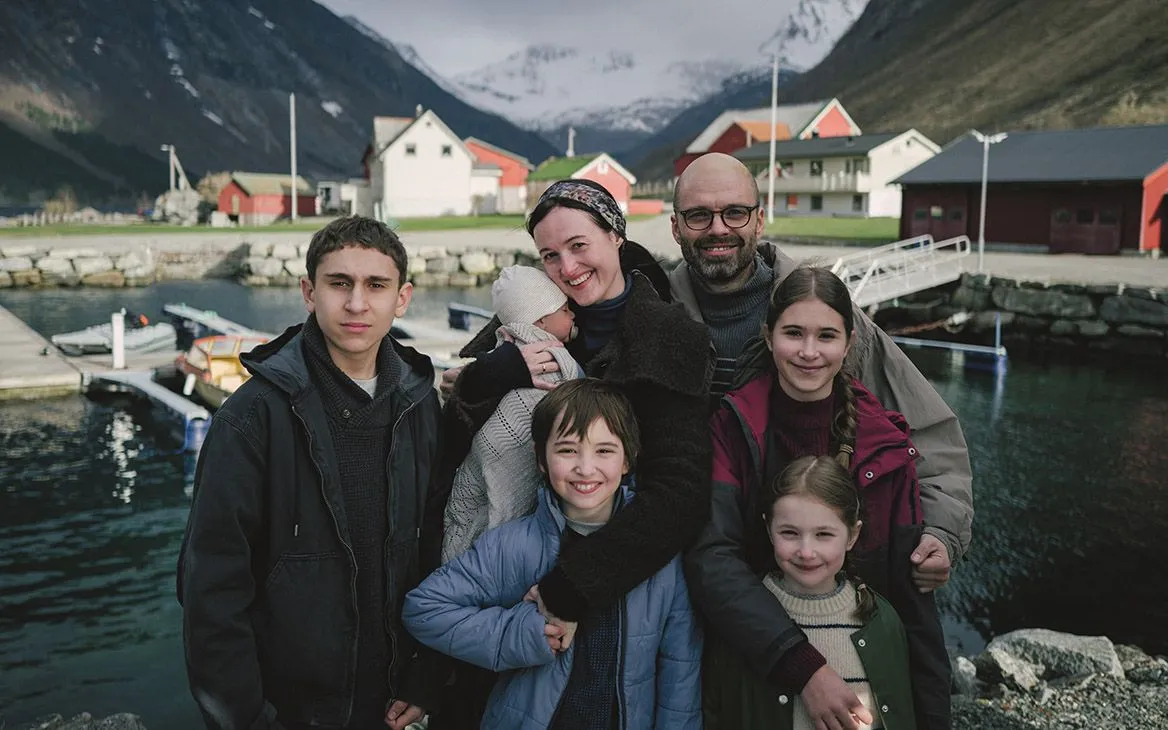
The film Fjord (Photo: Neon)
Previously, director Cristian Mungiu had made a big impact and won the Palme d'Or in 2007 with his groundbreaking film 4 Months, 3 Weeks and 2 Days .
The film Fjord was his English-language debut, starring two famous actors, Renate Reinsve and Sebastian Stan, as a devout Romanian couple who move to a small village in Norway and are accused of child abuse.
This also marks the seventh consecutive win at the Cannes Film Festival for North American film distributor Neon, further solidifying its excellent vision in discovering and showcasing films with the potential to win awards. Previously, there were expectations that other distributors like Netflix or Mubi might disrupt Neon's winning streak, but that did not happen in the 2026 awards season.

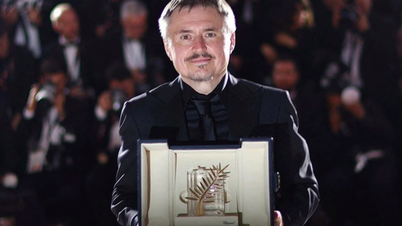
Director Cristian Mungiu won the top prize at the Cannes Film Festival - the Palme d'Or - for 'Fjord' (Photo: Scott A. Garfitt/Invision/AP)

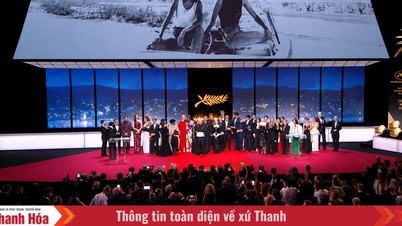
Actors Tilda Swinton, Renate Reinsve, Sebastian Stan, and director Cristian Mungiu celebrate receiving the Palme d'Or award for the film 'Fjord' (Photo: AP/Andreea Alexandru)
At the press conference immediately following the awards ceremony, South Korean director Park Chan-wook, head of the jury for the 2026 competition, jokingly said that he didn't want to give the Palme d'Or to anyone, "because it's an award I myself have never received."
The highly anticipated Palme d'Or-winning film Minotaur , directed by Andrei Zvyagintsev and set in contemporary Russia, won second place (Grand Prix).
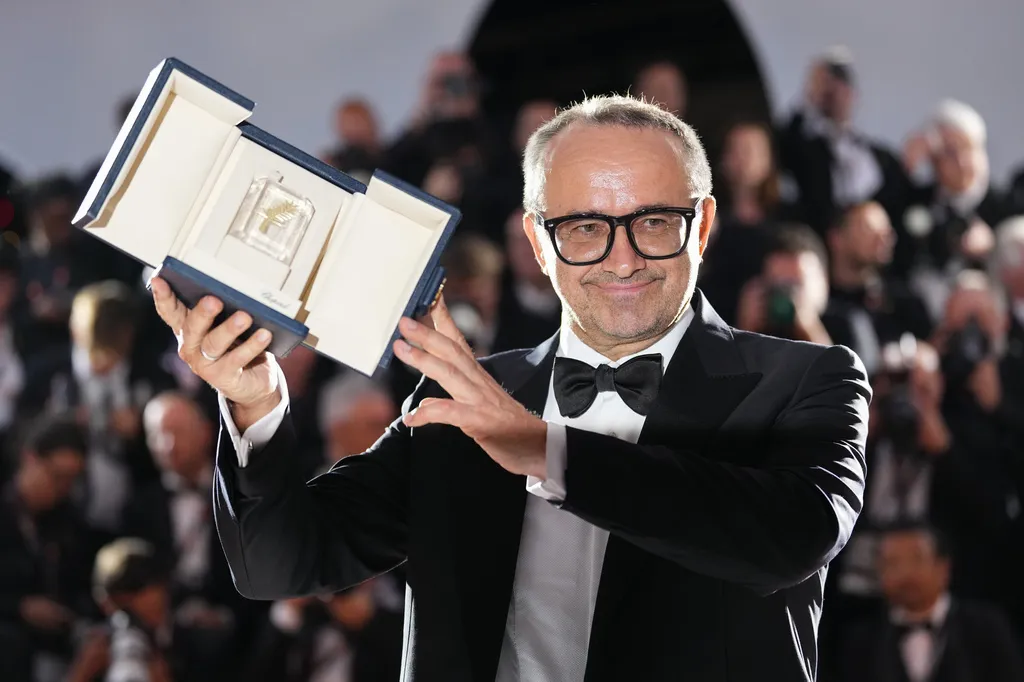
Renowned director Andrey Zvyagintsev wins the Grand Prize for his film 'Minotaur' (Photo: Scott A. Garfitt/Invision/AP)
The Best Director award was shared between Javier Calvo and Javier Ambrossi, co-directors of the gay-themed film La Bola Negra , which received a record-breaking standing ovation at the 2026 Cannes Film Festival, and Paweł Pawlikowski with Fatherland – a poignant film set in 1949 about writer Thomas Mann (Hanns Zischler) and his daughter Erika (Sandra Hüller) returning to a shattered post-war Germany after years of exile in America.
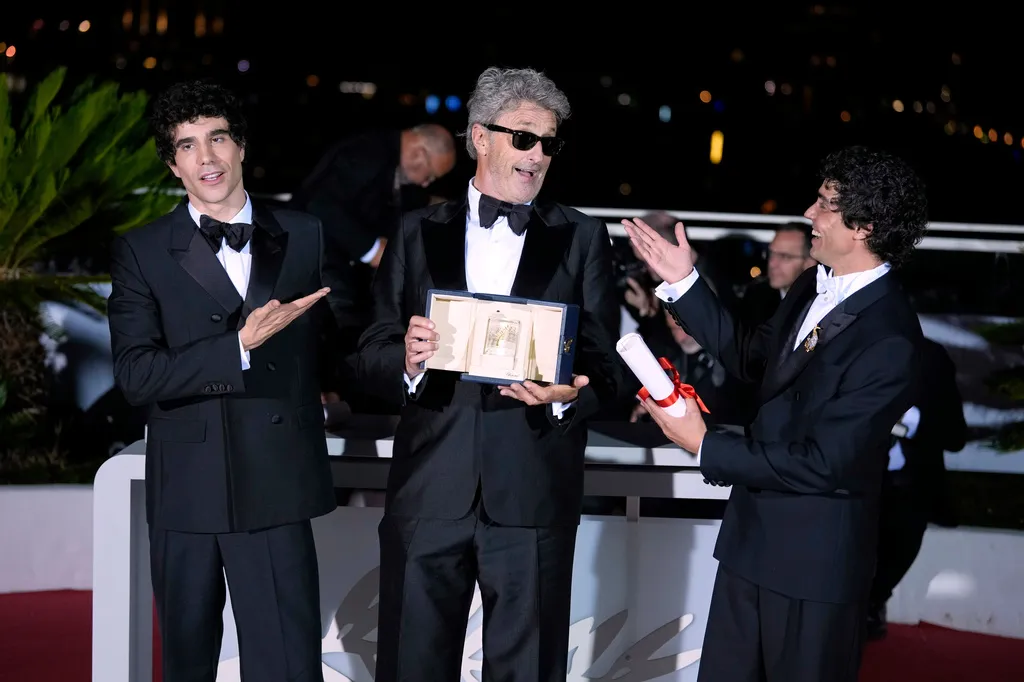
Paweł Pawlikowski (center) with the film 'Fatherland' alongside Javier Calvo and Javier Ambrossi - from La Bola Negra, won the Best Director award (Photo: AP/John Locher)
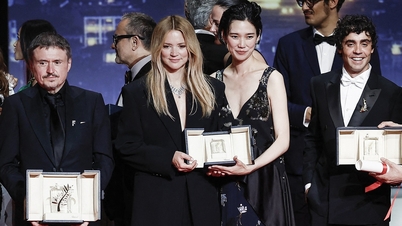
The Best Actress award was also given to both French actress Virginie Efira and Japanese actress Tao Okamoto, who starred in the romantic drama All of a Sudden directed by Ryusuke Hamaguchi.
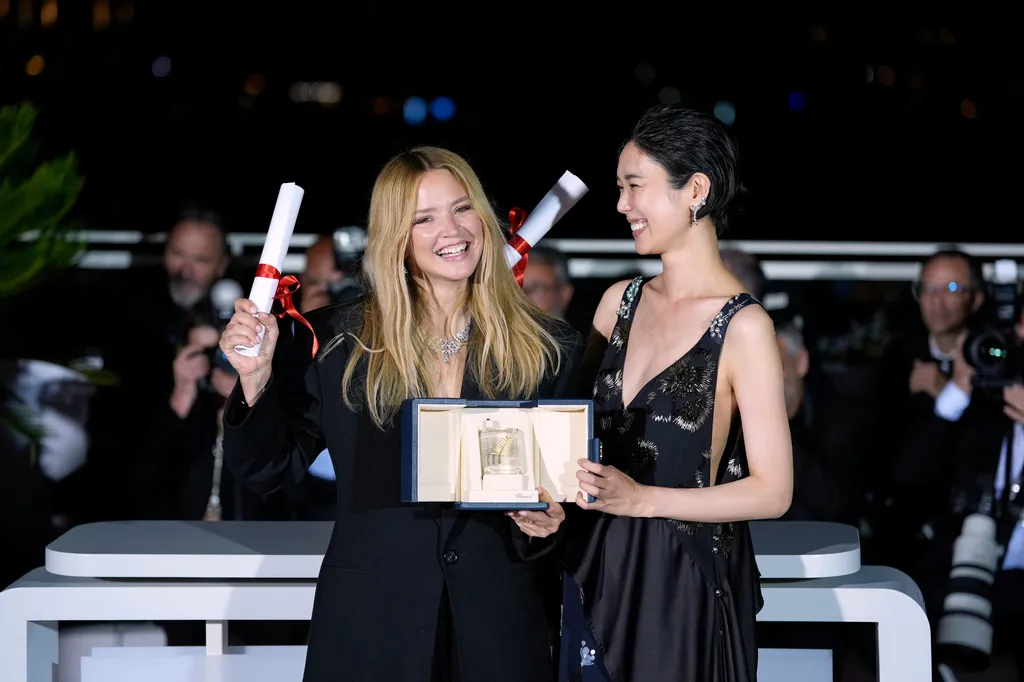
Virginie Efira (left) and Tao Okamoto jointly won the Best Actress award for their roles in 'All of a Sudden' (Photo: AP/John Locher)
The award for best actor went to two newcomers, Emmanuel Macchia and Valentin Campagne, who starred in Lukas Dhont's *Coward* – a World War I film about a homosexual love affair in the trenches.
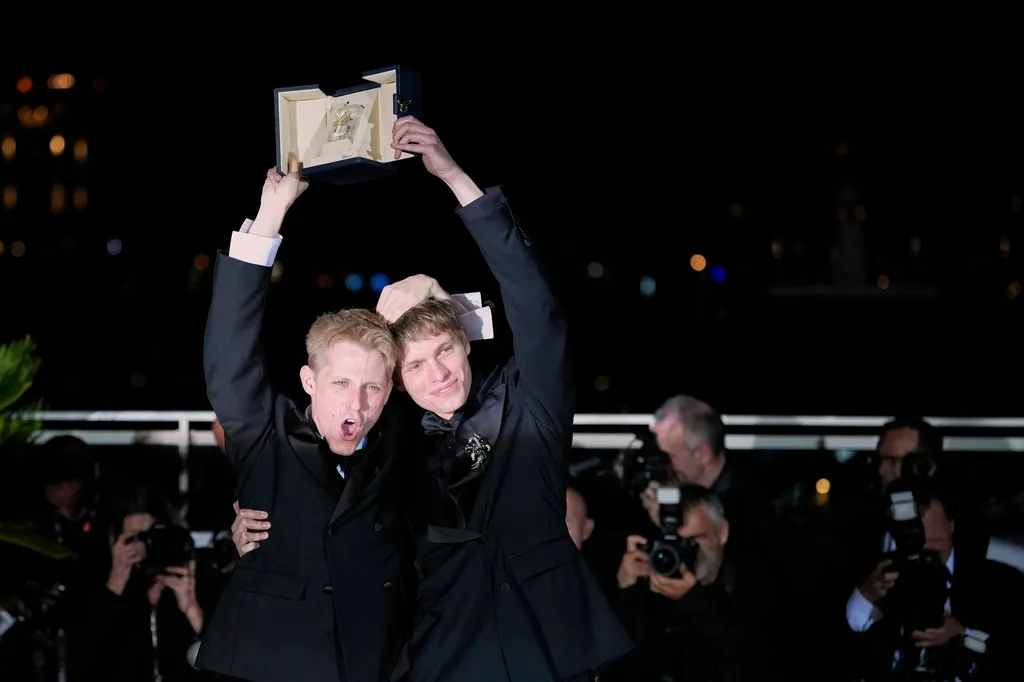
Valentin Campagne (left) and Emmanuel Macchia share the Best Actor award for their roles in 'Coward' (Photo: AP/John Locher)
Emmanuel Marre won the award for best screenplay for his film A Man of His Time. German director Valeska Grisebach won the Jury Prize for her film The Dreamed Adventure, which was screened on the final day of the film festival.
The Camera d'Or for Best First Film in the official category went to Ben' Imana by Clémentine Dusabejambo – the first Rwandan director to compete at Cannes. The film explores the journey of survivors of the genocide in their country in search of justice and reconciliation.
The closing ceremony of the 2026 Cannes Film Festival also included a moment of honor with the Lifetime Achievement Award, the Honorary Palme d'Or, for the legendary Barbra Streisand. Due to a knee injury, the actress was unable to attend, but the legendary French actress Isabelle Huppert delivered a speech paying tribute to her life and career. Following Huppert's speech was a compilation of highlights from Barbra Streisand's more than five decades of film career, from Funny Girl (1968) and A Star is Born (1976) to Yentl (1983) and Meet the Fockers (2004).
Source: https://vtv.vn/phim-fjord-thang-giai-canh-co-vang-2026-100260524072230114.htm

![[Image] Hanoi's urban life under the challenge of a "scorching hot" environment](https://vphoto.vietnam.vn/thumb/1200x675/vietnam/resource/IMAGE/2026/05/25/1779706979265_nang-nong-t5-2026-minh-duy-7-4636-jpg.webp)

















































































Comment (0)