

Since I had some free time today and a large castrated rooster from Tien Yen, weighing over 3kg, was ordered from a place I recently visited to try it out, I decided to cook Hanoi-style chicken pho. I already had sea worms, onions, coriander roots, ginger, and rock sugar at home, along with lime leaves that came with the chicken. I went to the supermarket to buy 20 chicken feet, two sets of chicken carcasses, a tray of chicken gizzards, eggs, pho noodles, spring onions, shallots, onions, coriander from Lang village, lime, and chili peppers.
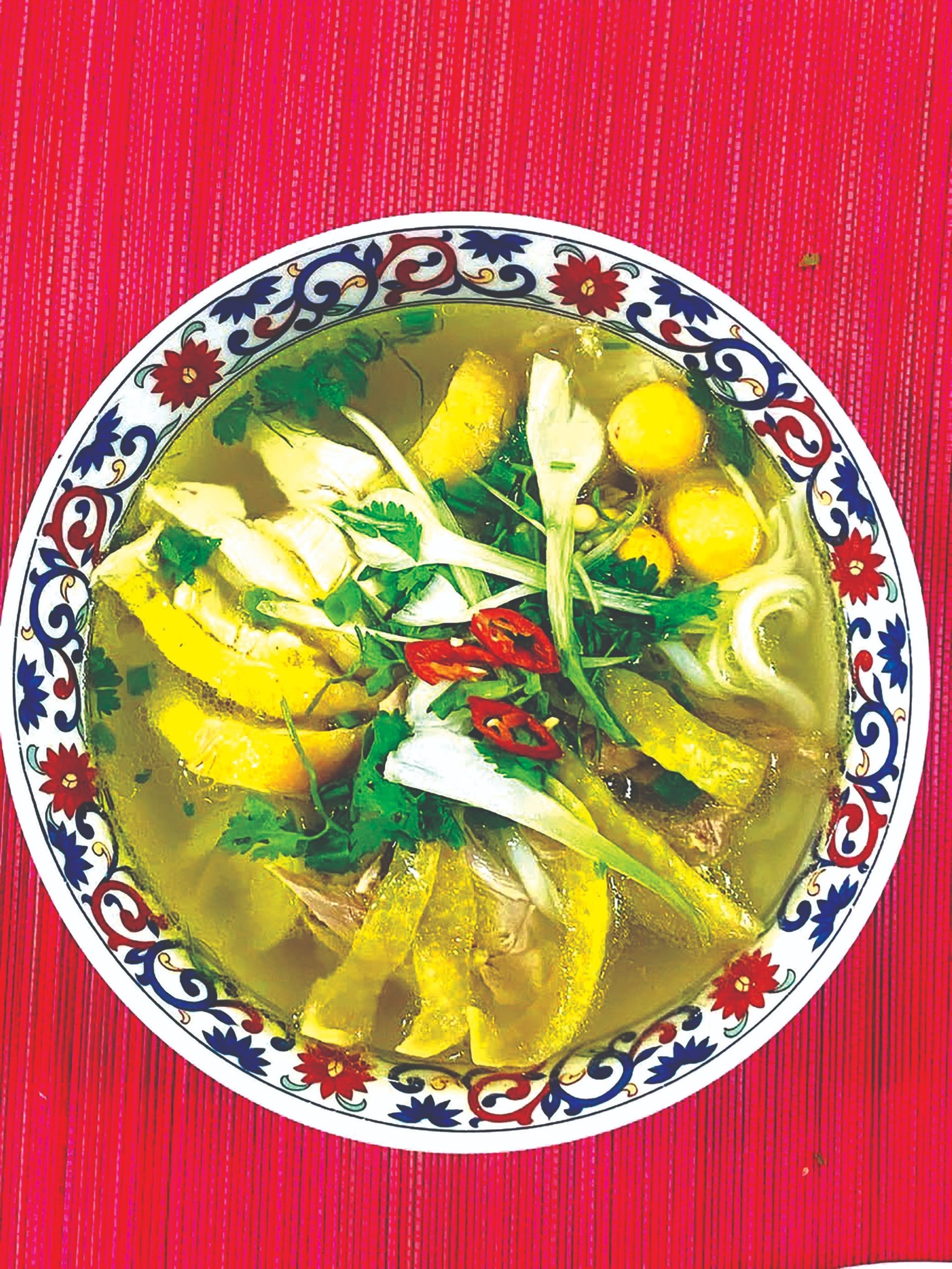
Here are the steps to cooking and enjoying Hanoi-style chicken pho:
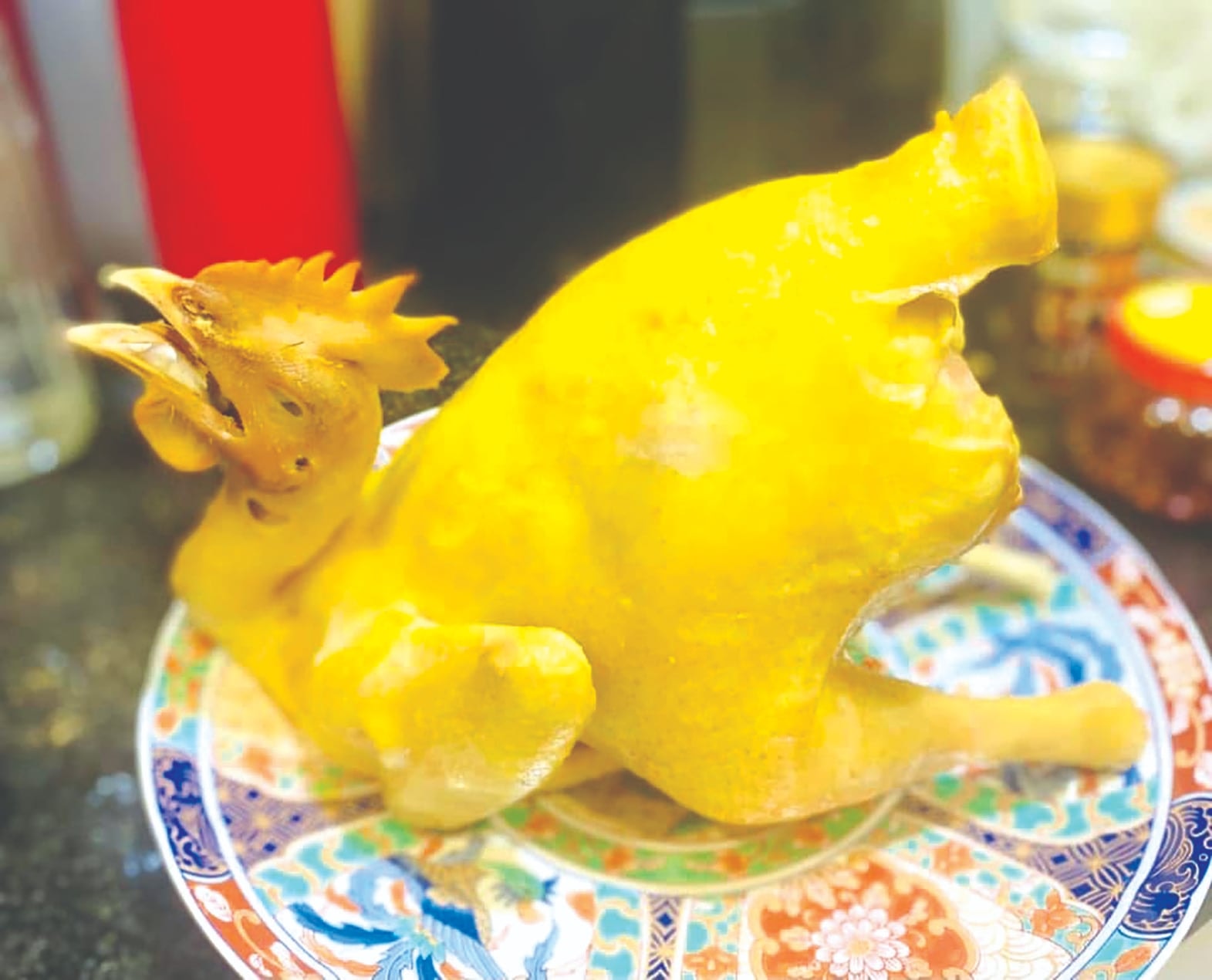
Boiling the chicken: Rub the chicken with salt and ginger for fragrance, then rinse thoroughly, checking to make sure all the lungs have been removed. Place a pot on the stove, add water and bring to a warm temperature, then add the chicken. When the water starts to bubble slightly, remove the chicken and rinse thoroughly. Place a thick-bottomed pot on the stove to boil the chicken. The water must completely cover the chicken, and the pot must be wide enough so the chicken isn't pressed to the bottom, which could easily cause it to burn. Add roasted ginger and shallots to the pot. When the pot starts to boil, reduce the heat and skim off the foam. Let the chicken simmer for about 10 minutes, then flip it over and turn off the heat. Cover and let it sit for 25-30 minutes to ensure the chicken is cooked through, preventing the bones from turning red and the skin from tearing when chopped. Remove the chicken and rinse it thoroughly with ice water to remove excess fat and make the skin crispy. Let the chicken firm up, then brush chicken fat all over for a shiny, beautiful skin. Tien Yen chicken already has very yellow skin, so there's no need to add turmeric. Boil the chicken giblets, intestines, and eggs separately.
Deboning chicken: For a nicer deboning result, refrigerate the chicken for about an hour before deboning and slicing. Today, my refrigerator is full and there's no room, so I had to leave it outside. Luckily, the cold weather has made the chicken meat slightly firm. Use a sharp knife to debone the chicken, but don't slice it yet. Wrap the deboned chicken on a plate to prevent it from drying out.
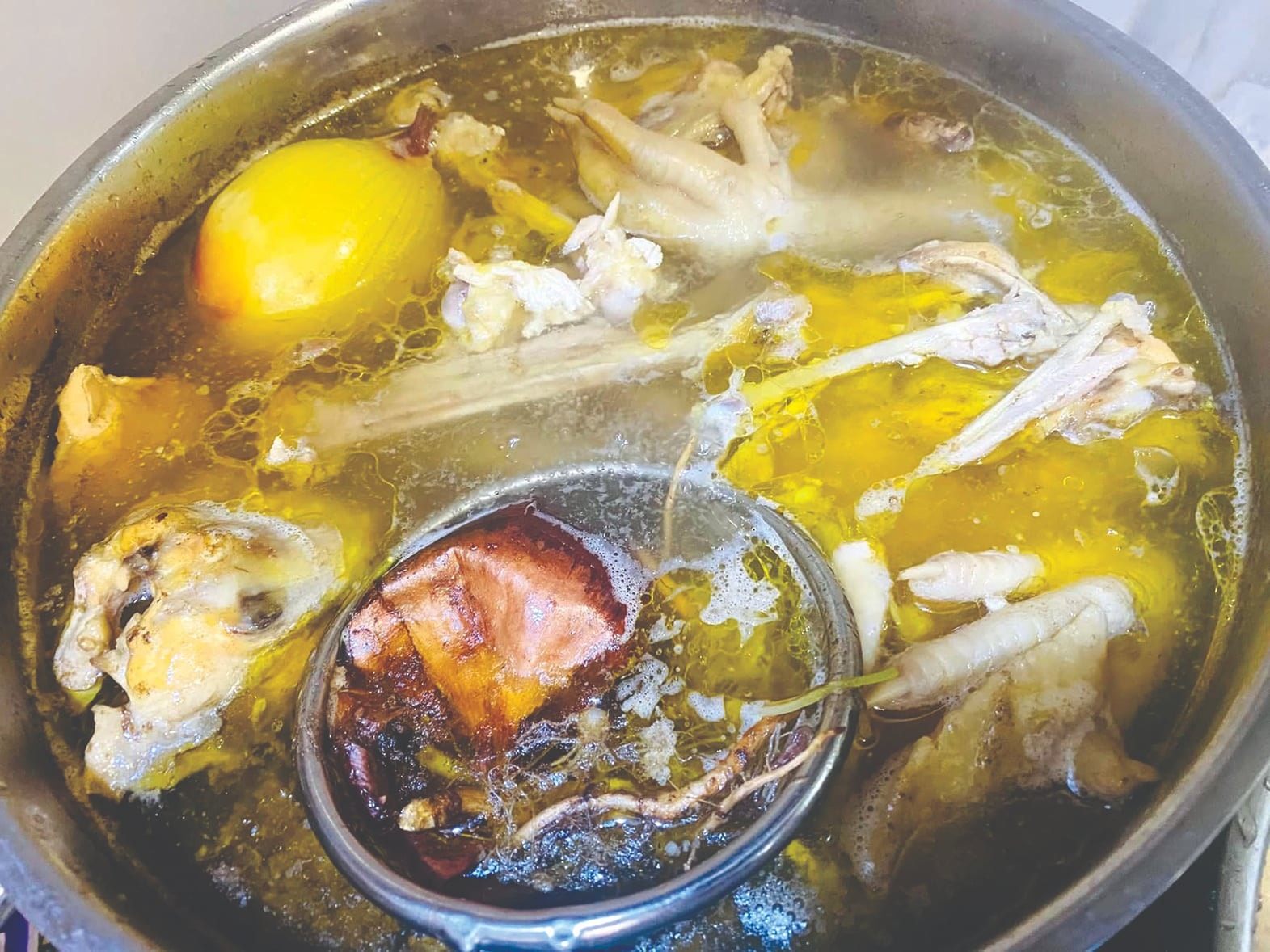
To make the broth: Cut the sea worms in half and wash them thoroughly, checking for any sand inside. Rinse and drain, then roast them until golden brown. Roast the ginger and onion in an air fryer until fragrant. Wash the spring onion roots and coriander roots and put them in a basket for simmering. Wash the chicken bones and feet, blanch them in boiling water, then cover them completely with water to simmer the broth along with the filtered chicken bones. Add the roasted sea worms, roasted ginger, spring onion roots, spring onion peel, and coriander roots to the pot. When the pot boils vigorously, skim off the foam and reduce the heat. Add a teaspoon of salt and keep the lid open to keep the broth clear. Simmer for about half an hour, then add the onion and simmer for another 30 minutes before turning off the heat and letting it cool slightly. Remove the bones and discard them. Arrange the chicken feet on a plate to serve with beer. Strain the broth to obtain a clear liquid. Mix the clear broth with the chicken broth, simmer over low heat, and season with two teaspoons of good quality fish sauce and a few pieces of rock sugar. Remember, it's rock sugar, not granulated sugar. Rock sugar makes the broth clear, balances the flavor, and doesn't create the cloying sweetness of granulated sugar or MSG.
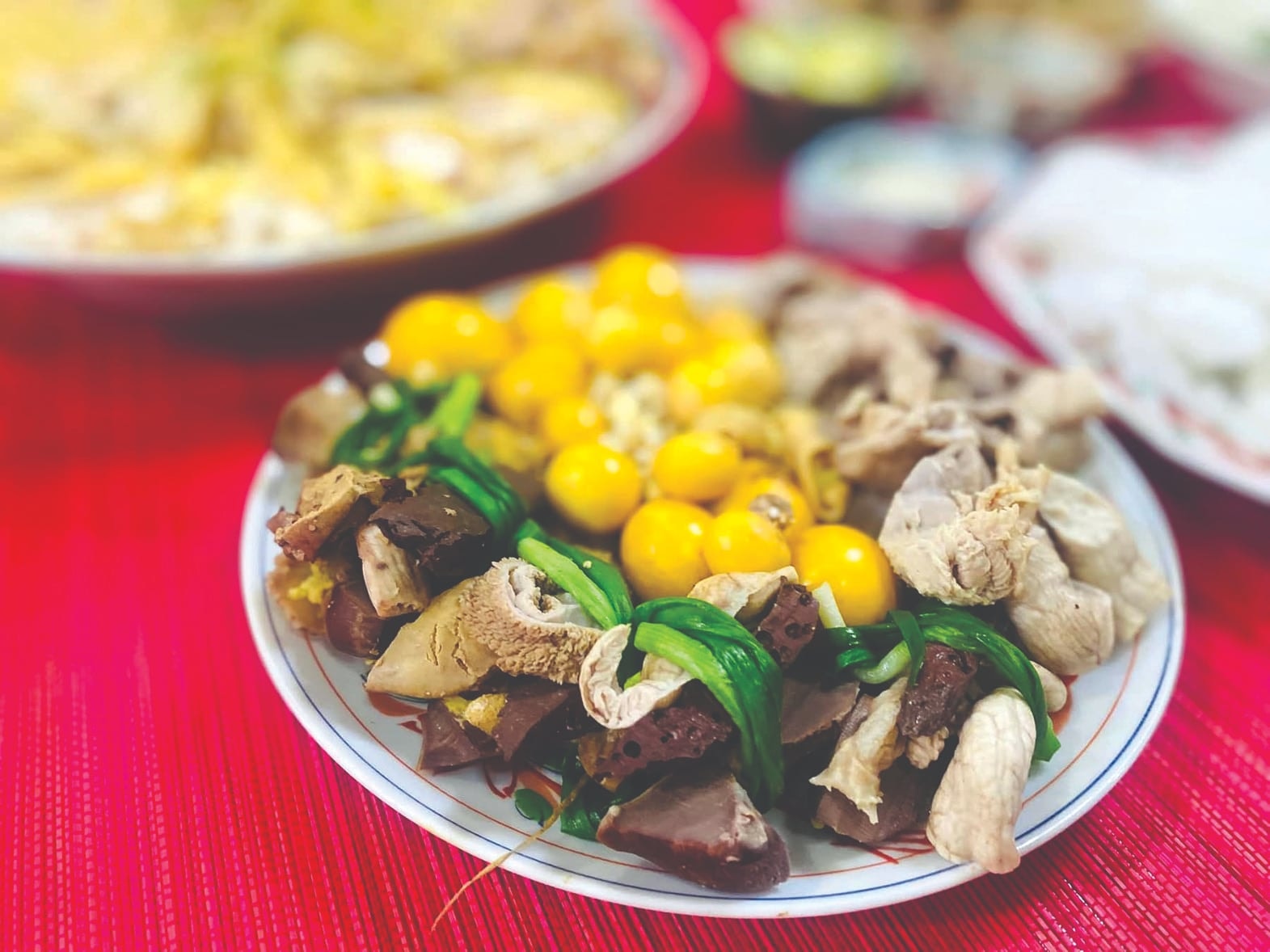
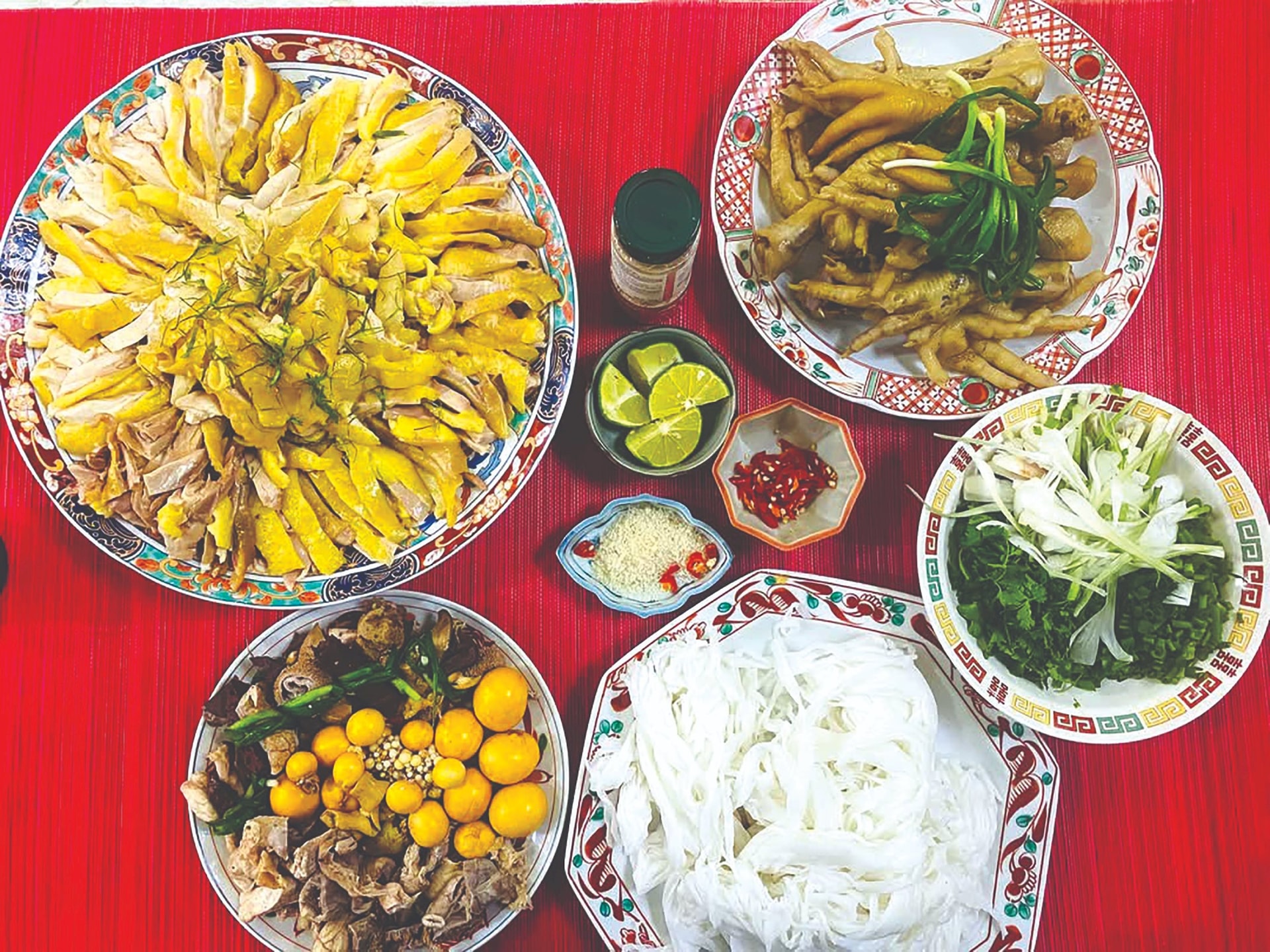
Prepare the other ingredients: While the broth is simmering, wash the onions, scallions, and cilantro. Blanch a few scallions in boiling water. Divide the chicken gizzards and livers into five portions and tie them together with the blanched scallions. Arrange the intestines and eggs on a plate. Slice the onions thinly, chop the scallions finely, and mix them with the chopped cilantro, peeled lime leaves, sliced fresh chili peppers, quartered fresh lime, seasonings, and pepper.
Slicing the chicken : Only slice the chicken just before serving. Cut it into large, evenly sized pieces using a fine-knife; don't slice it as thinly as restaurants do, it won't taste good. Slice it about 2mm thick for best results. When slicing, make sure the skin and meat don't separate, and that the pieces are uniform. Separate the brown meat, white meat, and back meat into different sections.
Blanching the pho noodles: Mix some of the broth with boiling water to blanch the noodles for a richer flavor, instead of blanching them in plain water like in restaurants. Blanch only the portion you're going to eat.
Preparation: Place plates of chicken, egg rolls, chicken feet, lime, chili peppers, salt and pepper, rice noodles, and scallions on the table, ready to serve. Only begin making the pho when everyone is seated, to ensure the bowls are piping hot. While waiting for the pho, nibble on chicken feet or egg rolls as a snack with beer.
To make pho: Turn on the stove and bring both the broth and the water used to blanch the noodles to a gentle boil. Blanch the pho noodles (enough for one bowl) to soften them, then place them in a deep, wide-mouthed, thick bowl. Arrange the chicken on top. The amount of toppings can be adjusted according to personal preference; those who are easygoing can have a mixed bowl with all kinds of meat, plus a quail egg and a piece of chicken gizzard. Add finely chopped lime leaves, cilantro, and chopped scallions, topped with sliced green onions. Be careful to add just the right amount of each ingredient; don't overdo it, as this will result in an bloated meat or an unnaturally green appearance from the scallions.
Pouring the pho broth: The broth must be boiling when pouring. When pouring, don't use a ladle to splash the broth directly into the center of the bowl; this will either cook the onions and herbs or cause them to scatter, making the bowl of pho look unappealing. Pour the broth slowly and evenly around the bowl so that it spreads evenly without crushing the vegetables, and the bowl retains its original shape. Use a ladle to scoop a little of the rich broth and let it gently spread over the pho for a romantic touch.
Eating pho: Use chopsticks to gently mix the onions and cilantro into the broth. Don't add anything yet; use a spoon to scoop up a spoonful of broth and sip lightly to check if the pho broth is seasoned to your liking. Then sprinkle with pepper, squeeze a few drops of lemon juice, and add a slice of fresh chili for a balanced flavor. The pho broth is fragrant with ginger, pepper, onions, and lime leaves; the rice noodles are rich and flavorful; the raw, castrated chicken is succulent and sweet; and the chicken skin is crispy and not greasy. The chicken is golden yellow with hints of white, the rice noodles are opaque white, the young egg is a soft yellow, the onions are pure white, the scallions are vibrant green, the cilantro is a light green, and the broth is clear with a slight sheen of oil.
Finally, to enjoy pho to the fullest, the rules are: One bowl per person; turn off the radio and phone while eating; do not ask for garlic vinegar and bean sprouts as accompaniments; and do not leave any broth uneaten.
Source: https://daidoanket.vn/pho-ga-ha-noi-10298774.html
![[Photo] The Politburo, the Secretariat, and the Central Committee are introduced at the Congress.](/_next/image?url=https%3A%2F%2Fvphoto.vietnam.vn%2Fthumb%2F1200x675%2Fvietnam%2Fresource%2FIMAGE%2F2026%2F01%2F23%2F1769156522913_11.jpeg&w=3840&q=75)


![[Photo] Portraits of the 19 members of the Politburo of the 14th Party Congress](/_next/image?url=https%3A%2F%2Fvphoto.vietnam.vn%2Fthumb%2F1200x675%2Fvietnam%2Fresource%2FIMAGE%2F2026%2F01%2F23%2F1769161873355_z7460119485980-304d85fe10d12298f1db614b0d2aa6bc-jpg.webp&w=3840&q=75)






Comment (0)