

On May 24th, a delegation from the Central Steering Committee on Military Region and Defense Zone Defense, led by Lieutenant General Huynh Chien Thang, Member of the Central Committee of the Communist Party of Vietnam and Deputy Chief of the General Staff of the Vietnam People's Army, inspected the results of the implementation of Government Decree No. 21/2019/ND-CP dated February 22, 2019, on Defense Zones in Military Region 1.
Attending and working with the delegation were: Lieutenant General Nguyen Hong Thai, Member of the Central Committee of the Party, Commander of Military Region 1; and Ho Tien Thieu, Chairman of the People's Committee of Lang Son province.
Over the past four years since the implementation of Government Decree No. 21/2019/ND-CP, the Party Committee and Command of Military Region 1, along with the provinces and agencies in the region, have thoroughly implemented the construction of the defense zone, achieving significant results. A highlight is the focus on building strong armed forces in the Military Region in terms of politics , ideology, and organization; successfully completing the annual political education and legal dissemination programs for all personnel; and ensuring absolute trust among officers and soldiers in the Party's guidelines and policies.
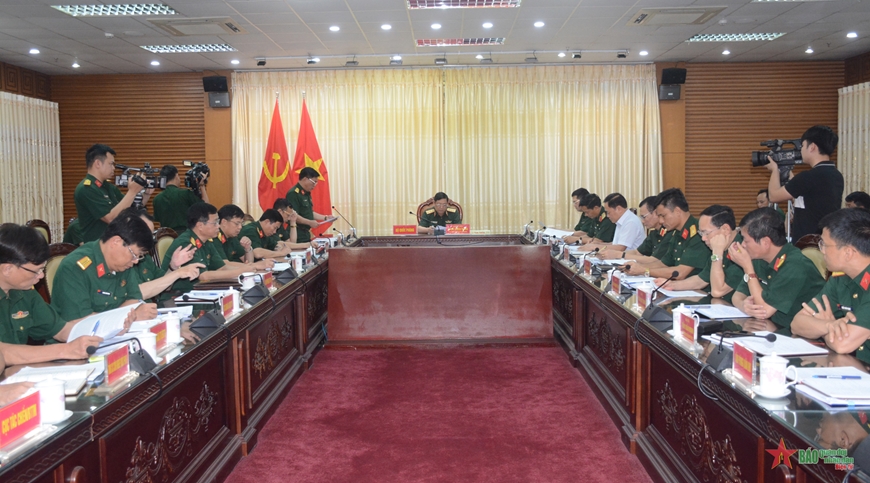 |
Lieutenant General Huynh Chien Thang presided over the inspection of the implementation results of Government Decree No. 21/2019/ND-CP dated February 22, 2019, on Defense Zones in Military Region 1. Photo: KIM NGOC |
Military Region 1 strictly implements regulations on organizational structure and personnel within the army; it regularly strengthens and improves its organization, personnel, weapons, and equipment, ensuring it is capable of handling national defense and security situations in the locality. The militia and self-defense forces are built according to the motto "strong and widespread," prioritizing quality, with over 1,800 militia and self-defense units; the commune-level military officers are trained and have their basic knowledge perfected at military schools, and they operate according to their functions and duties.
The work of building and managing the reserve mobilization force has received attention from leaders and commanders at all levels. To date, the entire Military Region 1 has established 100% of the reserve mobilization units; annually, training and readiness checks for mobilization are conducted with 100% of personnel participating; and a complete system of mobilization documents has been developed. Based on practical surveys, there are 30 enterprises in the military region that meet the criteria for industrial mobilization.
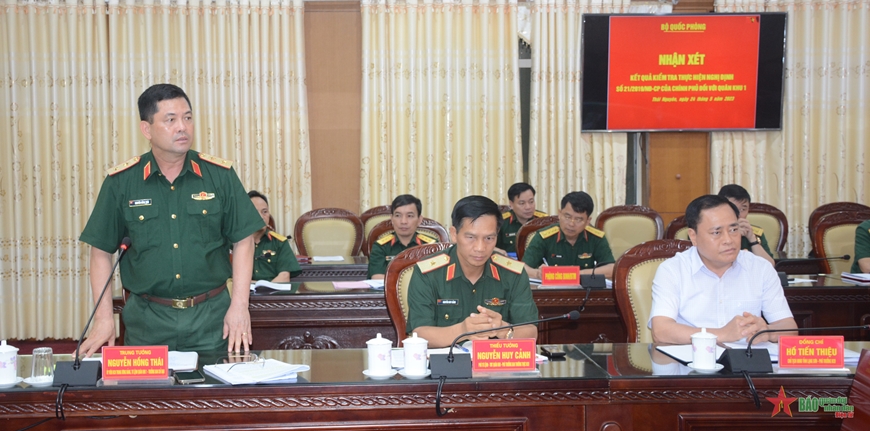 |
| Lieutenant General Nguyen Hong Thai speaking at the inspection. Photo: KIM NGOC |
Along with strictly maintaining regulations and procedures on combat readiness, disaster prevention, and search and rescue; fully developing and promptly adjusting and supplementing the system of operational documents and plans; units organize training and exercises at all levels in accordance with regulations; linking regional defense exercises with campaign exercises and joint military exercises in each area. Through these exercises, the resolve and operational plans are supplemented and refined; military theory and the art of people's warfare are developed in the new combat conditions involving the use of high-tech weapons.
Based on the determination to protect the Fatherland, Military Region 1 has directed the implementation of military strategic planning closely aligned with the defensive combat plans of the Military Region and its units and localities. Priority has been given to strategic and operational projects, while ensuring full and timely logistical and technical support for training, combat readiness, and both routine and emergency tasks. Local funding has been actively and proactively utilized to build and reinforce barracks, and to purchase materials and equipment. From 2019 to the present, the Provincial Military Commands and the Military Commands of districts, towns, and cities have mobilized nearly 287 billion VND for the construction and reinforcement of barracks.
In concluding the inspection, Lieutenant General Huynh Chien Thang highly appreciated the achievements of Military Region 1 in implementing Government Decree No. 21/2019/ND-CP on building defense zones. He also requested the Military Region's Defense Steering Committee and the Military Region 1 defense zone to focus on developing a complete military region defense plan; promptly adjust the Military Region's operational resolve, operational documents of agencies and units, and support plans of various sectors after adjustments to forces, weapons, and equipment according to the Ministry of National Defense's plan on force adjustment and organization.
Strengthen professional military retraining for soldiers preparing for discharge and direct local authorities to coordinate with units to link mobilization areas with annual recruitment areas to improve the professional military quality of reserve mobilization units. Direct the building of permanent militia forces for key localities in national defense and self-defense militia forces in enterprises without Party organizations; continue to direct the construction of national defense projects, including permanent militia posts and offices for commune-level military commands.
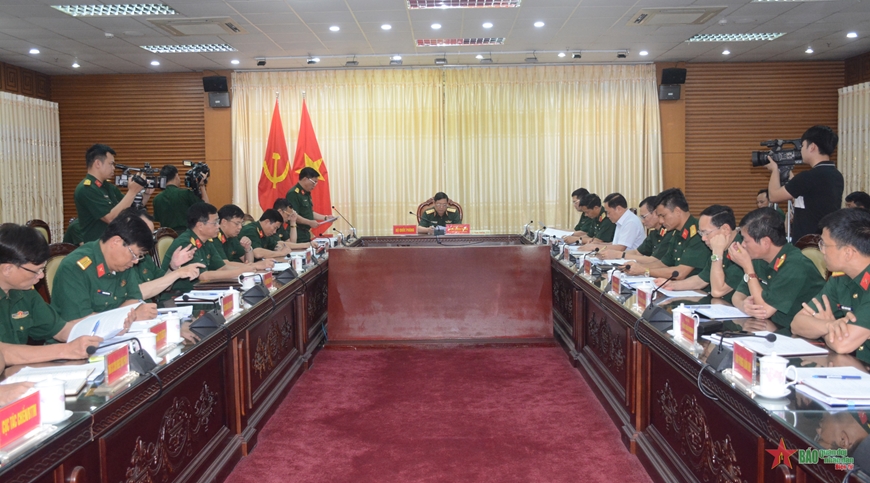 |
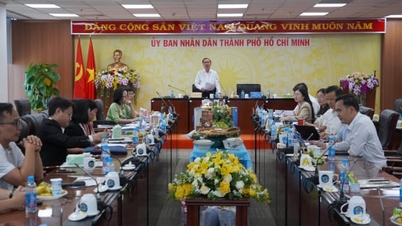
| Scene from the working session. Photo: KIM NGỌC |
Along with strengthening the construction of model defense zones to guide and draw lessons from, local agencies, units, departments, and organizations coordinate and advise on the implementation of the plan according to the schedule. The Military Region continues to direct the construction of operational checkpoints and combat facilities along the border; border patrol roads; organize the clearance of bombs, mines, and unexploded ordnance to serve socio-economic development in the area; and effectively implement the overall plan for national defense deployment, combined with socio-economic development.
General Huynh Chien Thang also requested the Steering Committee for Military Region Defense and the Defense Zone of Military Region 1 to continue to build upon the achievements of the past, focusing on leadership, guidance, and organizing the sharing of lessons learned for subordinate agencies and units to overcome the shortcomings pointed out by the inspection team during the on-site inspection at these agencies and units.
DUY DONG
Source


![[Photo] Prime Minister Pham Minh Chinh attends the Conference on the Implementation of Tasks for 2026 of the Industry and Trade Sector](/_next/image?url=https%3A%2F%2Fvphoto.vietnam.vn%2Fthumb%2F1200x675%2Fvietnam%2Fresource%2FIMAGE%2F2025%2F12%2F19%2F1766159500458_ndo_br_shared31-jpg.webp&w=3840&q=75)



























































Comment (0)