

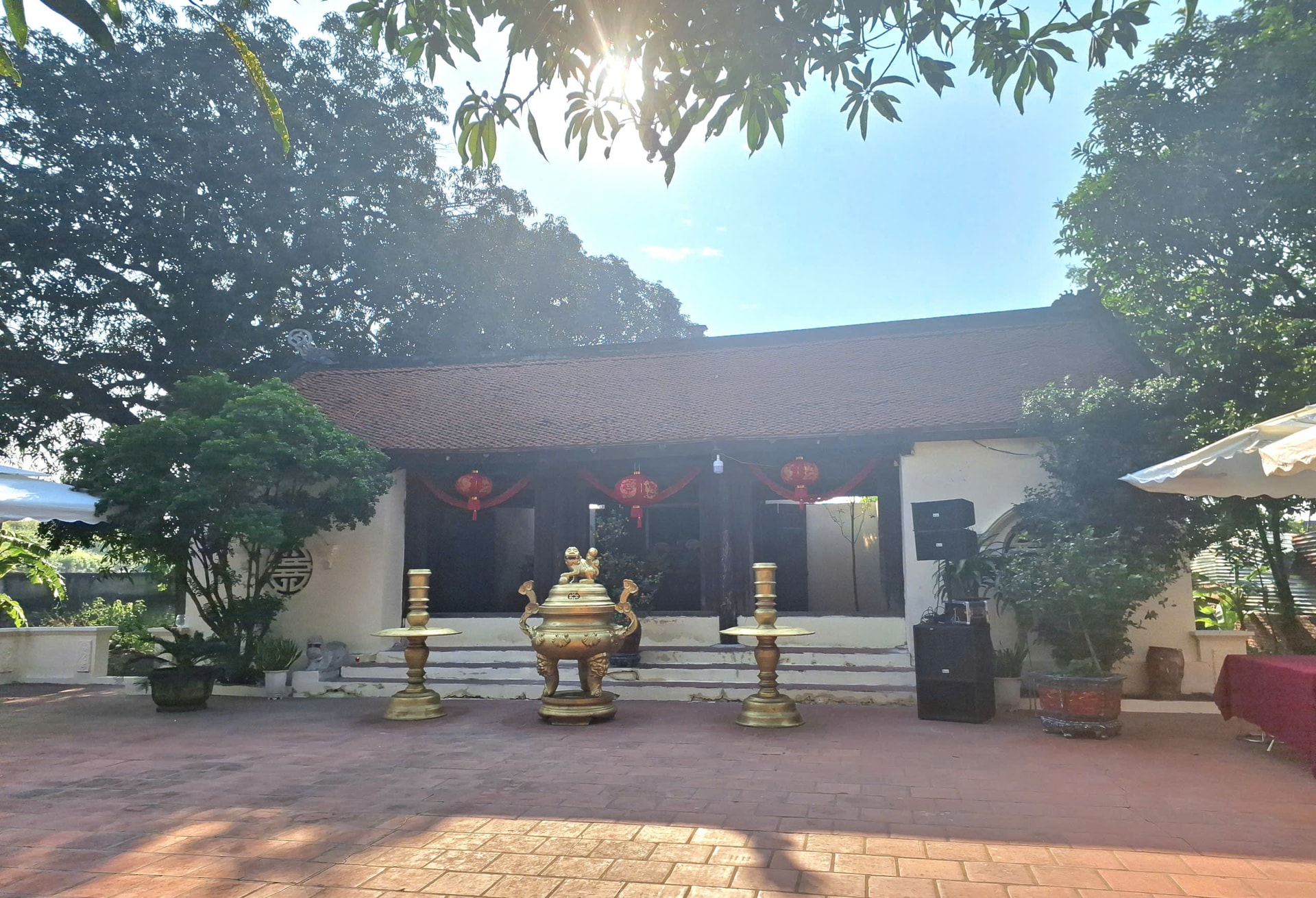
Quán Méo is located in Thống Nhất village, formerly part of Song Phượng commune, now part of Đan Phượng commune. Based on research documents and discovered archaeological artifacts, Song Phượng commune has a history spanning thousands of years. This rich history is partly reflected in its tangible cultural heritage, including religious and belief structures, as well as folk legends.
Quán Méo is located in Thống Nhất village, formerly part of Song Phượng commune, now part of Đan Phượng commune. Based on research documents and discovered archaeological artifacts, Song Phượng commune has a history spanning thousands of years. This rich history is partly reflected in its tangible cultural heritage, including religious and belief structures, as well as folk legends.
Located on land rich in historical and cultural traditions, Quan Meo has been built, renovated, and restored by the people over time, possessing many historical, artistic, and cultural values. Historically, Quan Meo was once a small-scale structure built by the people to worship the god Tich Lich Hoa Quang – a nature deity associated with the "four divine" worship beliefs of the agricultural community.
Quán Méo is simply a cultural structure dedicated to the worship of a "supreme deity" whose merits were recognized by Emperor Khải Định of the Nguyễn dynasty, who bestowed a royal decree and honorary title, allowing the people to worship him. At the same time, Quán Méo serves as a place of religious activity for the people, and does not function like other Taoist or tri-religion temples.
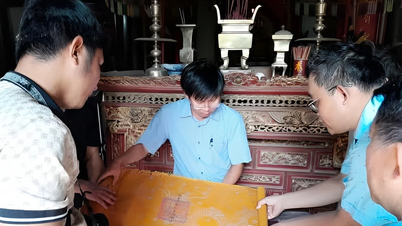
Besides its historical value, Quan Meo also possesses artistic value, evident in its architectural structures and collection of artifacts. Quan Meo includes the Front Hall and Rear Hall, as well as artifacts such as the dragon throne, ancestral tablets, altars, incense burners, and eight precious objects, all intricately carved; stone steles, and imperial decrees from the Nguyen dynasty…
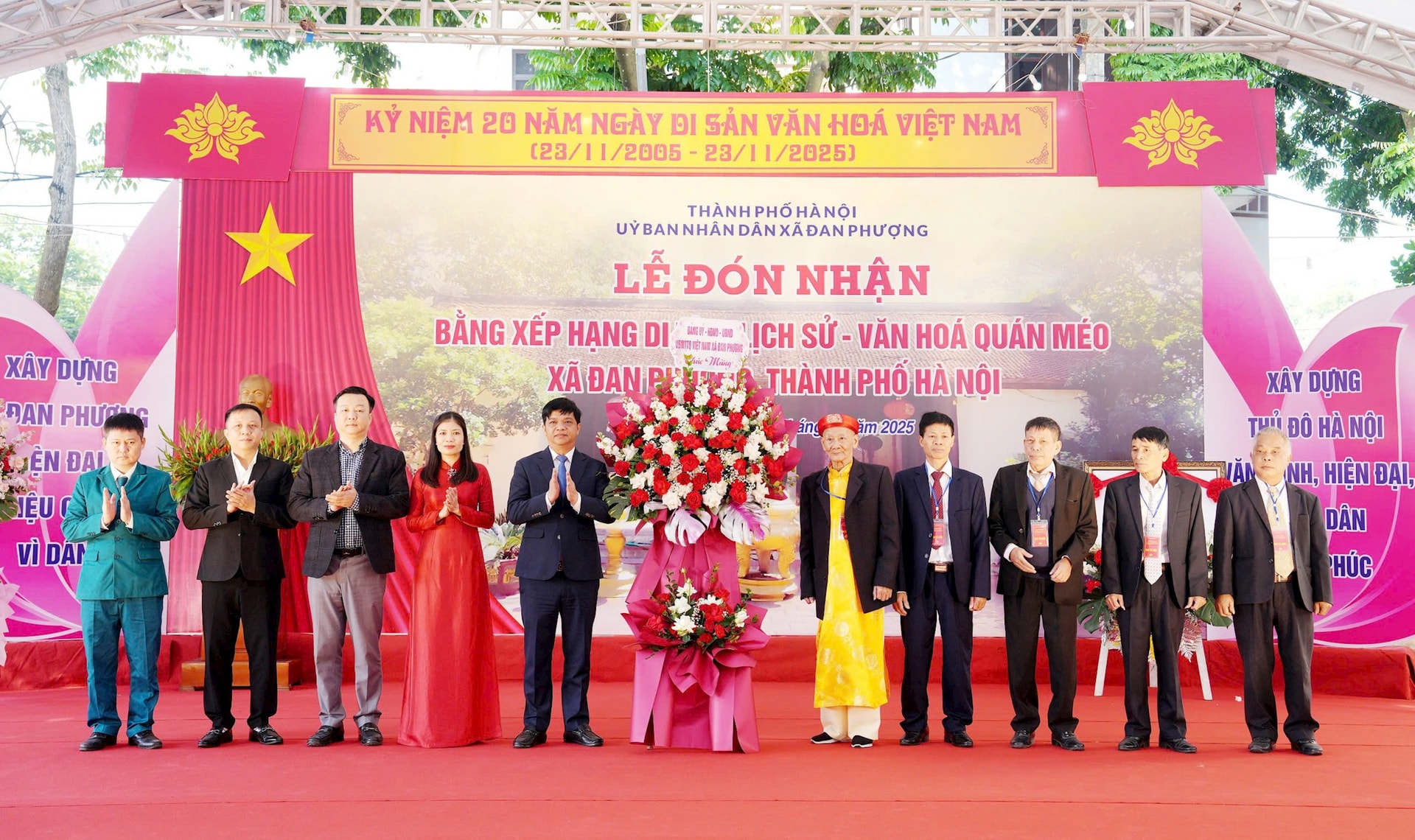
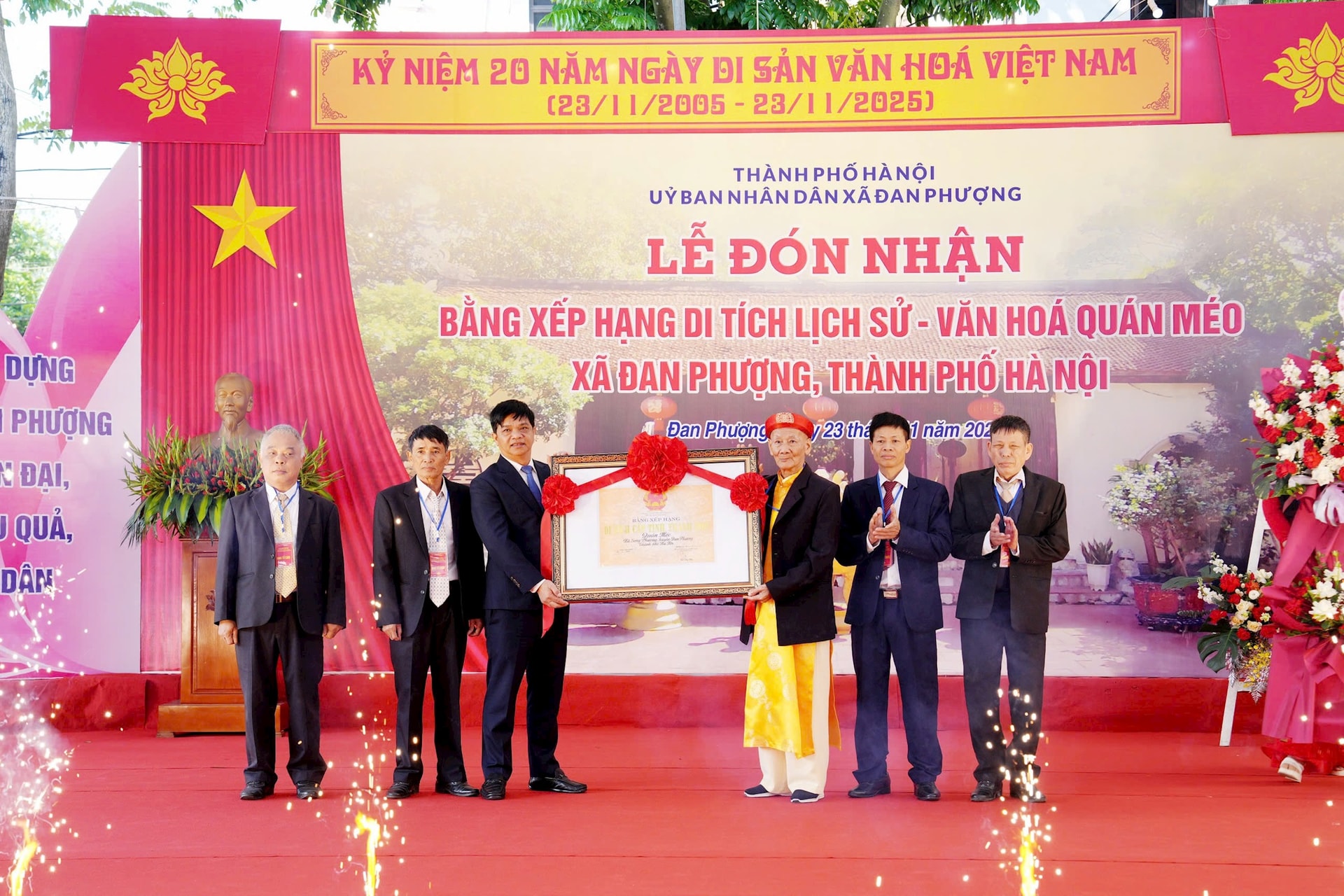
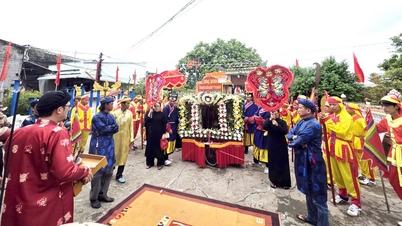
The restaurant has been classified as a city-level historical and cultural relic by the Hanoi City People's Committee.
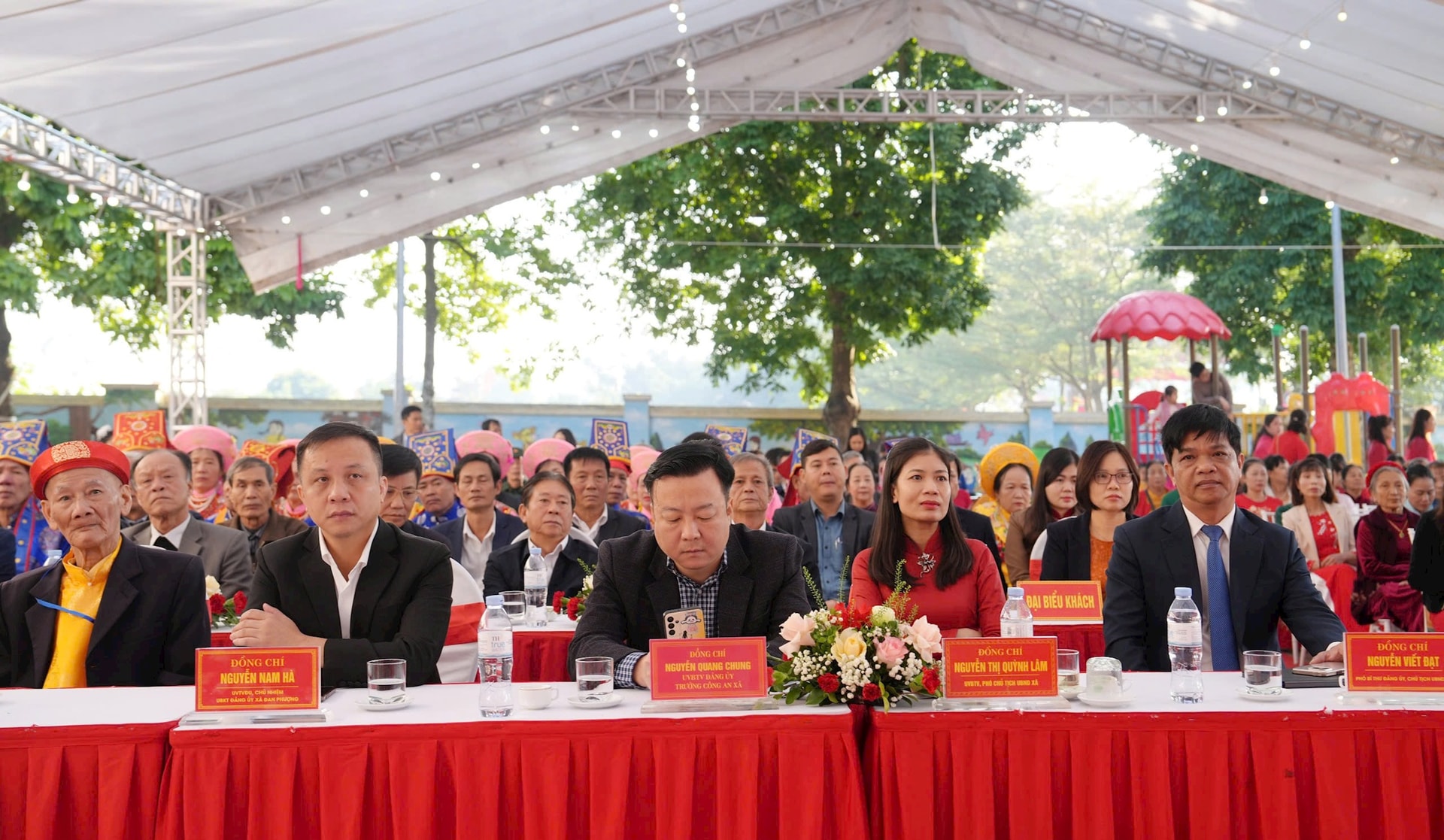
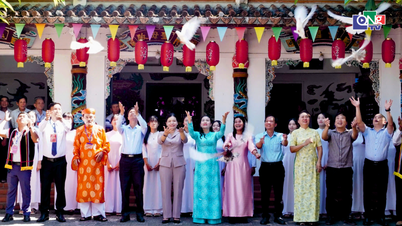
At the ceremony, the Chairman of the People's Committee of Dan Phuong Commune, Nguyen Viet Dat, praised and expressed gratitude to the elderly and the people of Thu Que and Thong Nhat villages – those who, with their hearts, efforts, and wisdom, have preserved every brick, roof tile, tree, and stele, ensuring the monument remains intact. Chairman Nguyen Viet Dat requested the Monument Management Board and the people of Thu Que and Thong Nhat villages to preserve and promote the heritage's value in conjunction with education and socio- economic development. Quan Meo should not only be a place of worship but also become a cultural and spiritual tourism destination, contributing to showcasing the beauty of Dan Phuong homeland. Simultaneously, it should be combined with the promotion and education of traditional values for students.
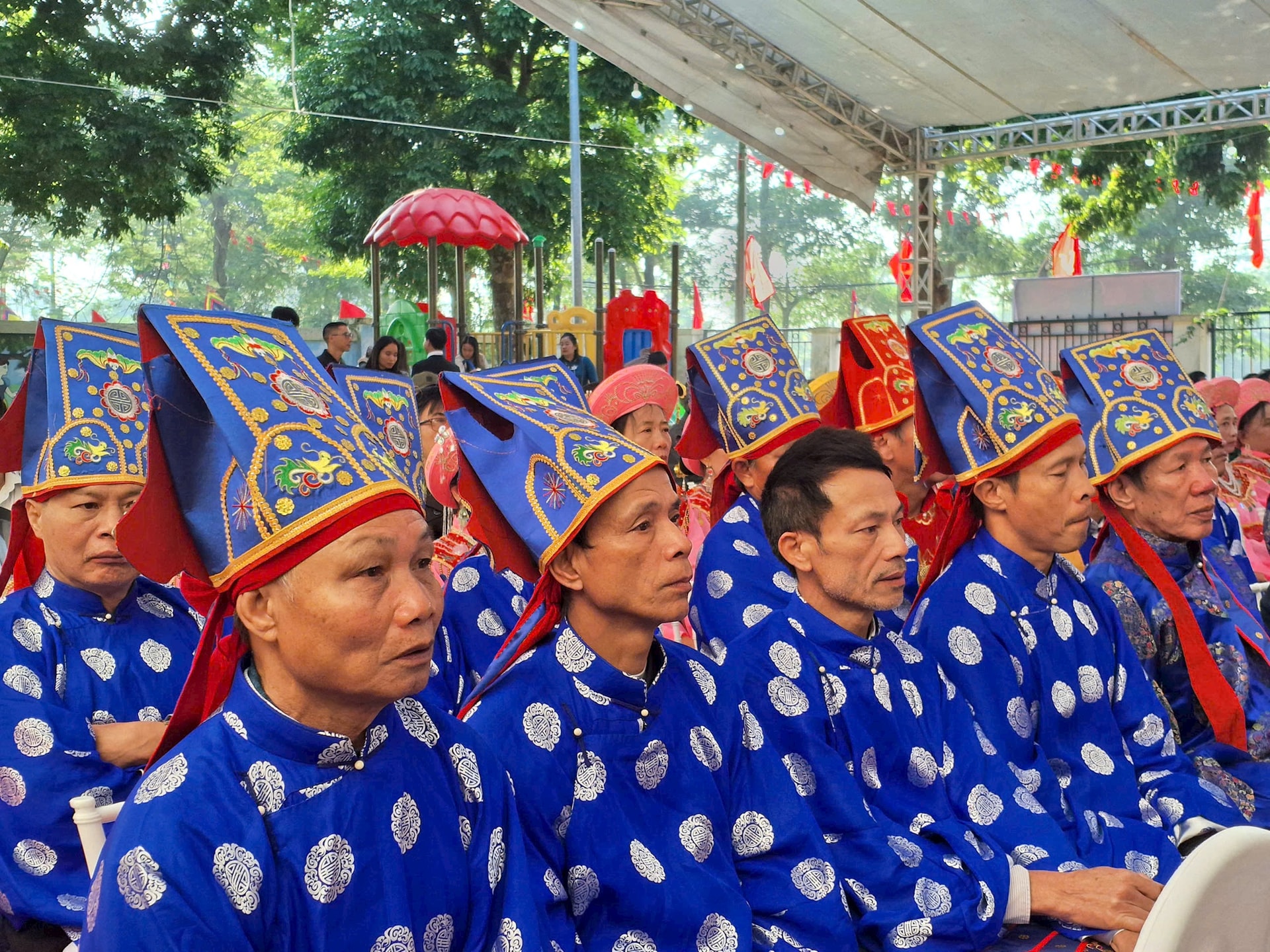
On the part of the local government, the Chairman of the People's Committee of Dan Phuong commune, Nguyen Viet Dat, said that the commune is continuing to complete the dossier and develop a conservation plan; gradually investing in restoration and renovation according to the roadmap and regulations; connecting cultural and educational institutions to transform Quan Meo into a community learning space, a place to pass on traditions to the younger generation. Through this, Quan Meo will become a highlight in the commune's network of historical sites after the merger, contributing to creating a unique identity for Dan Phuong in the new era.
Source: https://hanoimoi.vn/quan-meo-don-nhan-di-tich-lich-su-van-hoa-cap-thanh-pho-724378.html


















![[Photo] Reception to welcome General Secretary and President To Lam and his wife on their State visit to the Philippines](https://vphoto.vietnam.vn/thumb/1200x675/vietnam/resource/IMAGE/2026/06/01/1780295488620_vna-potal-chieu-dai-chao-mung-tong-bi-thu-chu-tich-nuoc-to-lam-va-phu-nhan-tham-cap-nha-nuoc-toi-philippines-8798060-7855-jpg.webp)












































Comment (0)