

To date, Quang Tri province has basically brought the African swine fever outbreak under control. Many localities (communes, wards) declared the outbreak over very early on.
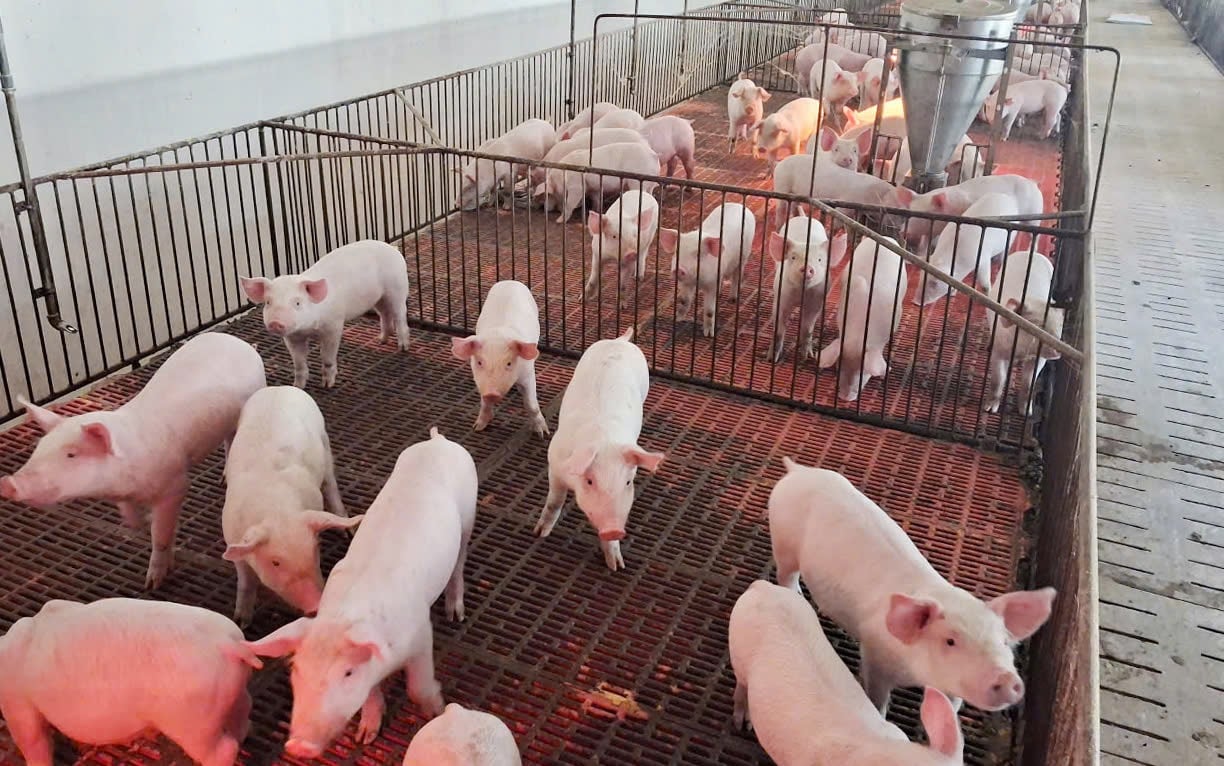
Farmers in Quang Tri have boldly restocked their pig herds while maintaining disease control measures. Photo: T. Phung.
According to projected statistics from Quang Tri province, by the end of 2025, the total livestock and poultry population in the province will continue to remain stable. Specifically, the buffalo herd will reach over 49,000 head; the cattle herd nearly 152,000 head, the pig herd over 460,000 head, and the poultry flock over 10.2 million head.
According to forecasts, the total output of all types of meat is estimated to reach 153,000 tons, exceeding the annual plan by over 17%. With this production capacity, the Quang Tri Department of Agriculture and Environment believes that the provincial supply will basically meet the increased demand of people during the upcoming Lunar New Year.
However, given the unpredictable weather patterns and disease outbreaks, especially African swine fever, a strong resurgence could alter forecasts and cause fluctuations in supply.
According to Mr. Nguyen Phu Quoc, Deputy Director of the Quang Tri Department of Agriculture and Environment, in light of this situation, the key task has been to strengthen monitoring of disease outbreaks, especially the prevention and control of African swine fever.
"In addition, the sector is advising and guiding localities and people to organize controlled restocking and boost the production of products from cattle and poultry to stabilize the food supply during the year-end period," Mr. Nguyen Phu Quoc further shared.
Mr. Duong Viet Phuong Tuan, Deputy Head of the Department of Livestock and Veterinary Medicine of Quang Tri province, said: "The Department requires livestock farmers to carry out controlled restocking. Accordingly, organizations and individuals must declare to the local authorities before carrying out restocking."
Mr. Tuan also stated that, technically, the entire farm must be disinfected and sterilized. The breeding stock must be healthy, have a clear origin, have received all required vaccinations, and must be kept in isolation for at least 14 days before being introduced into the herd.
A key technical step is "indicator rearing." This means that farmers only introduce a reasonable number of pigs, appropriate to the facility's capacity, and must closely monitor the health of this herd for at least 21 days.
"After this period, if the livestock show no signs of disease, we can cautiously restock and gradually increase the scale to 100%," Mr. Tuan added.
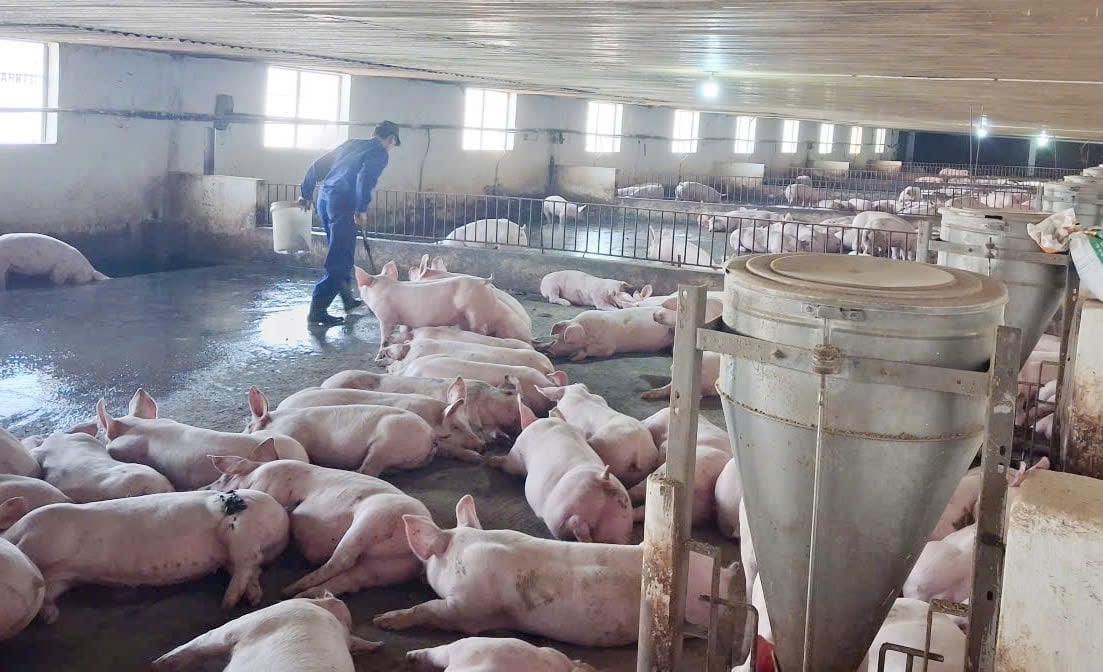
Mr. Ho Thanh Hai's pig farm continues to restock its herd in large numbers while adhering to disease safety regulations. Photo: T. Phung.
According to Mr. Nguyen Van Vuong, Chairman of the Tan My Commune People's Committee, after the African swine fever outbreak ended in the locality, they have been diligently controlling the disease and restocking. “Veterinary officers and village officials are always closely monitoring the situation in the area. For households reporting restocking, the task force inspects the barns and checks nearby areas to ensure disinfection and sterilization have been carried out. They also remind households to follow the correct procedures,” Mr. Vuong added.
The family of Mr. Nguyen Xuan Quan (Nam Thien village) has a long history of pig farming. Each batch, the family typically raises around 100 piglets and commercial pigs. After the local authorities declared the disease outbreak over and ensured proper hygiene in the pigpens, Mr. Quan's family released 60 piglets. The herd is thriving and is now reaching market weight.
"Recently, our family released another flock of 30 pigs. We always follow the correct procedures regarding hygiene in the pens, feed sources, and breeding stock to ensure safe farming and avoid losses," Mr. Quan said.
Similarly, Mr. Ho Thanh Hai's farm (Tan Nam village, Bo Trach commune) is still maintaining a total herd of nearly 2,000 pigs, including nearly 200 breeding sows. Mr. Hai said that the farm always strictly adheres to the principle of "no one goes in, no one comes out" to ensure safety and prevent the spread of disease.
Source: https://nongnghiepmoitruong.vn/quang-tri-tai-dan-lon-co-kiem-soat-d789345.html
![[Photo] General Secretary To Lam visits the exhibition space showcasing books, photo exhibitions, and achievements of digital transformation in journalism.](/_next/image?url=https%3A%2F%2Fvphoto.vietnam.vn%2Fthumb%2F1200x675%2Fvietnam%2Fresource%2FIMAGE%2F2025%2F12%2F19%2F1766110879215_1766110240024-jpg.webp&w=3840&q=75)


![[Photo] Enchanting ancient rose garden on the mountainside in Nghe An](/_next/image?url=https%3A%2F%2Fvphoto.vietnam.vn%2Fthumb%2F1200x675%2Fvietnam%2Fresource%2FIMAGE%2F2025%2F12%2F19%2F1766109900916_vuon-hong-chin-do-thu-hut-du-khach-toi-check-in-o-ha-noi-3-20162778-1671624890024-1671624890104198100259.jpeg&w=3840&q=75)











































































Comment (0)