

1. Which country is the world's largest creditor?
- Older brother0%
- America0%
- Virtue0%
- China0%
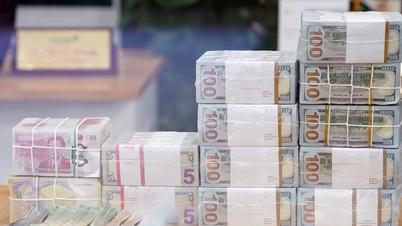
According to data released by Japan's Ministry of Finance at the end of May, the country lost its position as the world's largest net creditor nation for the first time in 34 years. Japan's net overseas assets reached 533.05 trillion yen (approximately $3.7 trillion) at the end of 2024, an increase of about 13% compared to 2023.
Despite this being an all-time high in net worth, Japan is still surpassed by Germany, whose total net worth outside the country reached 569.7 trillion yen. China remains in third place with a net worth of 516.3 trillion yen.
Germany's increase in overseas assets reflects its substantial surplus, which is projected to reach €248.7 billion ($283.2 billion) in 2024, largely thanks to robust trade activity.
2. Is it true or false that this country is known as the "land of beer"?
- Wrong0%
- Correct0%
Germany is considered the "land of beer," with nearly 1,500 breweries in operation, according to Statista . Germans are often proud of their beer culture and the art of enjoying beer.
For them, beer is not just an ordinary refreshing drink, but also a cultural icon of the country. Therefore, it's not surprising that they have the world's largest traditional beer festival - Oktoberfest, held annually in September in Munich.
3. How many countries does this country border?
- 70%
- 80%
- 90%
- 100%
Germany, spanning over 357,000 square kilometers, is located in the heart of Europe. The country borders nine neighboring nations: France, Austria, Switzerland, the Czech Republic, Poland, Denmark, the Netherlands, Belgium, and Luxembourg. The total length of Germany's borders is over 3,700 kilometers.
4. In the summer, how much earlier is this water meter set?
- 30 minutes0%
- 1 hour0%
- 6 o'clock0%
- 12 o'clock0%
Germany was one of the first countries in the world to adopt Daylight Saving Time in 1916. Daylight Saving Time (DST) means "saving daylight," in which countries adjust their clocks forward by one hour at the beginning of spring and back again in the fall to make the most of daylight hours. This regulation aims to reduce the amount of fuel used for lighting and heating.
5. How many times has the capital of this country changed?
- 30%
- 50%
- 70%
- 90%
The capital of modern Germany has changed seven times. During the Carolingian period, Aachen was the capital of Germany, followed by Regensburg, Frankfurt, Nuremberg, Berlin, Weimar, and Bonn. Berlin has been the capital of Germany again since 1990.
Source: https://vietnamnet.vn/quoc-gia-nao-la-chu-no-lon-nhat-the-gioi-2473571.html

















































































Comment (0)