

Childhood story
My great-grandmother, Solemia Ushka, was the last surviving member of a family in Minsk, Belarus, from World War I. Before the war ended, she and her husband, my great-grandfather Dan, fled to the United States and settled in Chicago.
Solemia then had to cope with two more tragedies in her life. Her two-year-old daughter died in a car accident during a picnic, and her husband, a heavy drinker, died of diabetes, leaving her widowed with a son, Paul, penniless and unable to find work.
Solemia didn't speak English either. Being sturdy and strong, she wasn't afraid of manual labor and took a job as a night shift cleaner for the two towers of the Wrigley Building on North Michigan Avenue in Chicago. Her entire working life consisted almost entirely of cleaning hallways and restrooms.
When I was little, Baba, as the grandchildren called him, would give Joe and me $10 each Christmas, along with a small tin box full of Wrigley chewing gum.
After retiring, Baba moved to a single-story brick house on a farm outside the city. My sisters and I would visit her every few months and stay for two weeks during the summer holidays. We would mow her lawn, pick tomatoes and strawberries in the garden, climb trees, and go swimming in nearby Lake Griswold.
Baba's small house was like an oasis. She supported herself with her meager pension, Social Security benefits, and savings from government bonds she regularly bought weekly for 30 years. Baba was a resilient and resourceful woman with a strong survival instinct and a simple philosophy of life: work hard, save as much as possible.
She was also very strong. In 1967, Baba was diagnosed with breast cancer, and doctors predicted she only had six to eighteen months to live. But she lived for ten more years.
 |
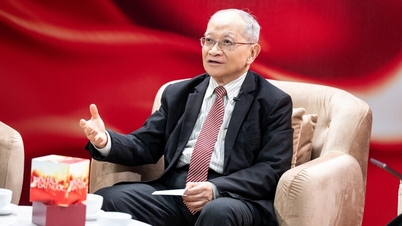
Family tradition forged the CEO's steely resolve. Photo: The Economic Club of Washington DC. |
My maternal grandfather Paul, Baba's son, married a beautiful, strong woman named Mary—my grandmother—and they had a daughter, Arlene, who is my mother. Not long after, my grandfather died of rheumatic heart disease, leaving my grandmother in a tragic yet all-too-familiar situation: she too was a young widow, penniless, uneducated, and with a small child to care for.
Baba and his wife Mary, two women—one a mother, the other a wife—both grieving their loss, decided to move in together to save money and raise Arlene. Baba worked night shifts at Wrigley House, while Mary took on multiple jobs during the day, including work in a sewing workshop, a dangerous place where her hair once got caught in a cutting machine; luckily, she escaped without serious injury.
Mary's grandmother later remarried and moved in with her new husband, Theodore, and they had a daughter together, Diane. Together they started a company that manufactured and sold lamps at home, with Mary's grandmother designing and repairing the patterned lampshades.
Their black-and-white advertisements in the Chicago Tribune touted their “the most diverse collection of handcrafted, washable lampshades and light fixtures, to suit every budget and decor style.” The shop also sold small wooden items and gifts. By 1960, Mary and Ted had moved their business to a two-story house on Belmont Avenue, with the Mary Lamp and Light Fixture shop on the ground floor and their three-bedroom apartment upstairs.
Ted died in 1966 from kidney failure, and my grandmother was widowed again at age 47. She never remarried, continuing her lamp shop business alone – buying materials, sewing, selling, paying bills, and keeping it open from 9 a.m. to 9 p.m. seven days a week. She lived happily upstairs, protected by her large German Shepherd, Cinders.
Just like Baba's suburban home, Grandma's city house soon became a familiar and exciting place for us. Grandma would often give Joe and me a few dollars so we could walk to Woolworth's or the local toy store to buy jigsaw puzzles or toy cars, and we would happily assemble them at her dining table. Sometimes we would buy math workbooks or word puzzles.
Over time, she also taught Annette and me how to sew, a skill that would later prove very useful when I couldn't afford a dress for my graduation prom, or when my sister wanted a pink Gunne Sax dress to wear for her eighth-grade graduation ceremony.
Just like Baba, Grandma never tired of cooking or baking. Whenever we visited, her house was always full of mashed potatoes, cupcakes, pork ribs, and a steaming pot of rice. Every year, by December, her kitchen would be filled with an impressive array of Christmas cookies (the ingredient that was never missing was Imperial margarine).
For Baba and Grandma, cooking and caring for the family was an act of love. For me, food is comfort, especially the main meals and sweet, rich, and hearty snacks. This has remained unchanged throughout my life. I've always been tall and have a large bone structure, sometimes plump and sometimes just slightly full, and maintaining a stable weight has been a lifelong struggle for me.
My maternal grandmother was also diagnosed with cancer in 1961, but like my mother-in-law, she lived almost 50 years longer than the doctor predicted. I come from a resilient family.
These two independent, hardworking women were my first role models. They lived simple, loving lives, but were also incredibly strong and embodied the American work ethic: do what needs to be done and do your best to achieve what you need.
Looking back, I can see that their choices encompassed philosophies of benevolent power. Each of them wholeheartedly served others, primarily their family, but also, in Baba's case, the people working in the office buildings she cleaned, and in Mary's case, the customers of the lamp shop.
When disaster disrupted their lives, they were determined to persevere and rise again with resilience and determination. Each person was a hero in their own story, and my mother was one too.
My parents waited a few weeks before telling everyone that they had eloped together. My mother, Arlene, was only 17 at the time, a high school student living with her mother and stepfather in the apartment above the lamp shop. She had bright eyes, a charming smile, and a radiant personality that attracted everyone.
My father, Salvatore Nicosia, commonly known as Nick, was a rebellious yet attractive 19-year-old. He dropped out of military high school and found work as a salary setter at General Electric, later working with his father in commercial real estate.
Source: https://znews.vn/cau-chuyen-tuoi-tho-cua-nu-ceo-dau-tien-tai-tap-doan-ibm-post1650127.html
![[Photo] General Secretary and President To Lam presides over a working session with the Central Policy and Strategy Committee on the development of the materials industry.](https://vphoto.vietnam.vn/thumb/1200x675/vietnam/resource/IMAGE/2026/05/21/1779359935432_a3-bnd-3129-1412-jpg.webp)

![[Photo] National Assembly Chairman Tran Thanh Man working with the Standing Committee of the Law and Justice Committee](https://vphoto.vietnam.vn/thumb/1200x675/vietnam/resource/IMAGE/2026/05/21/1779378929214_ndo_br_1-4610-jpg.webp)









































































Comment (0)