


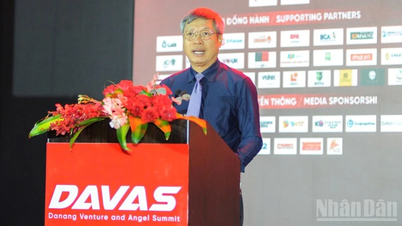
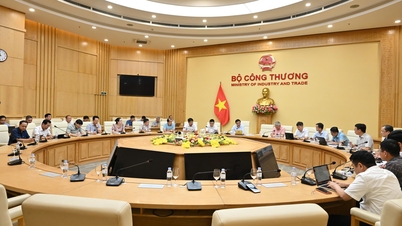
On the morning of May 25th in Hanoi, during a working session with the Standing Committee of the Central Steering Committee on Science , Technology, Innovation and Digital Transformation, and providing feedback on basic scientific research, General Secretary and President To Lam requested delegates to focus on analyzing more clearly the biggest bottlenecks currently facing the country in terms of institutions, governance mechanisms, academic environment, research infrastructure, and scientific data.
This is a particularly important issue for our country in the process of digital transformation and the development of science and technology… because to succeed, we must first frankly and accurately identify the bottlenecks, limitations, and difficulties that need to be overcome.
In reality, immediately after the Politburo 's Resolution No. 57-NQ/TW was issued, bottlenecks and shortcomings in the development of science and technology, innovation, and digital transformation were analyzed and identified by agencies, ministries, and localities to find timely solutions. Although significant progress and achievements have been made in this important process, we are still facing issues that require continued effective and substantive solutions.
Immediately after the Politburo's Resolution No. 57-NQ/TW was issued, bottlenecks and shortcomings in the process of scientific and technological development, innovation, and digital transformation were analyzed and identified by agencies, ministries, and localities to find timely solutions.
The identified bottlenecks are numerous, including a lack of sustainable financial resources for long-term, high-risk research projects and initiatives; weak connections between disciplines and universities, leading to fragmentation of human resources and equipment; and a lack of key research infrastructure.
Although authorities and localities have been urgently researching and issuing policies for recruiting and rewarding talented young scientists, these policies have been slow to be implemented in practice and have not truly reassured scientists so they can dedicate themselves to their work. We still have a heavy bureaucratic burden in managing the scientific research process, with numerous procedures, reports, and financial settlements, which reduces research time and negatively impacts the dedication of scientists…
Notably, the aforementioned bottlenecks have existed for many years, have been fairly well identified, and have been gradually addressed, but the results have been slow. Therefore, these bottlenecks continue to "interlock," becoming a major obstacle to breakthroughs in basic science.
To make basic science a component of national development capacity, as General Secretary and President To Lam desires, the entire political system needs to focus on reforming its approach; continue to analyze and frankly acknowledge limitations; and be bold and decisive in handling specific tasks. This includes focusing on reforming financial mechanisms and ensuring sustainable, long-term investment, with specific policies for high-risk research projects; and encouraging large enterprises to fund basic science research. Government agencies and ministries need to develop their own criteria for basic science, prioritizing academic independence and open science.
In addition, we need to develop data infrastructure, open and shared knowledge infrastructure; and drastically reform administrative procedures in a way that places trust in and creates the most favorable conditions for basic scientific research projects and for scientists and researchers.
One of the most important directions that needs to be implemented effectively and urgently is that the solutions and policies of the Party and State on science and technology, digital transformation, innovation, and creativity need to be implemented synchronously and uniformly across all relevant agencies, ministries, and sectors, with the highest determination, effort, and responsibility.
Source: https://nhandan.vn/quyet-liet-nhin-nhan-and-thao-go-diem-nghen-post964666.html


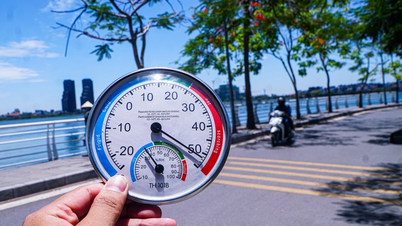
![[Image] Hanoi's urban life under the challenge of a "scorching hot" environment](https://vphoto.vietnam.vn/thumb/1200x675/vietnam/resource/IMAGE/2026/05/25/1779706979265_nang-nong-t5-2026-minh-duy-7-4636-jpg.webp)










































































Comment (0)