

From July 2025, fertilizers will officially be subject to a 5% value-added tax, raising expectations for significant changes in the domestic fertilizer industry.
"Resolving" the bottleneck
For nearly a decade, Vietnam's fertilizer industry has faced numerous difficulties due to inadequacies in the old value-added tax (VAT) policy. On November 26th, the National Assembly approved the amended Value-Added Tax Law, effective from July 2025, officially subjecting fertilizers to a 5% VAT rate, raising expectations for significant changes in the domestic fertilizer industry.
It can be said that fertilizers are the most important agricultural input for agricultural production in our country, as they account for the highest proportion of the cost of crop production, while crop production currently accounts for 64-68% of the total value of agricultural production.
 |
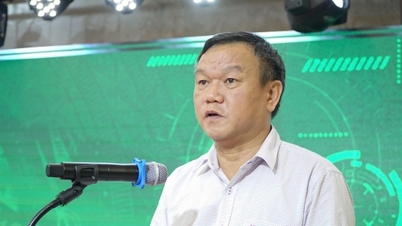
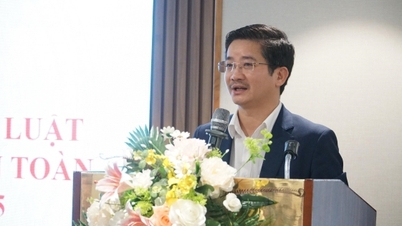
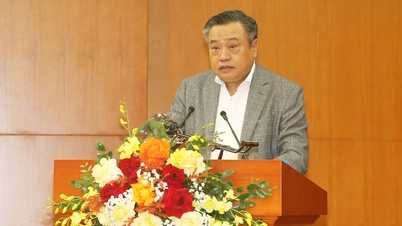
| Dr. Phung Ha - President of the Vietnam Fertilizer Association. Photo: VA |
Speaking with the Industry and Trade Newspaper, Dr. Phung Ha, Chairman of the Vietnam Fertilizer Association, said that the current demand for fertilizers in Vietnam is approximately 10.5 - 11 million tons of various types. This includes: urea around 1.6-1.8 million tons; DAP around 0.9-1 million tons; SA 0.8-0.9 million tons; potassium 0.9-1 million tons; phosphorus-containing fertilizers over 1.2 million tons; and NPK fertilizers around 3.5-4 million tons...
Meanwhile, in 2022, Vietnam imported 3.39 million tons of fertilizers worth $1.62 billion; in 2023, it imported 4.12 million tons worth $1.41 billion; and in the first six months of 2024, it imported 2.5 million tons of fertilizers, with a value of over $838 million.
However, when Law 71/2014/QH13 on Taxation (Law 71) came into effect on January 1, 2015, domestic fertilizer manufacturers were exempt from output VAT from 2015 onwards, but input materials were subject to a tax of 5-10%. This significantly increased production costs, pushing domestic fertilizer prices far above imported products and reducing the competitiveness of domestic businesses.
Citing specific figures, Dr. Phung Ha pointed out that fertilizer manufacturing enterprises of the Vietnam Chemical Group (including those producing urea, DAP, superphosphate, fused phosphate, and NPK) are not allowed to deduct approximately 400-650 billion VND annually. Two urea fertilizer manufacturing enterprises of the Vietnam Oil and Gas Group are also not allowed to deduct between 500-650 billion VND annually.
Statistics from the Vietnam Chemical Corporation show that the amount of non-deductible value-added tax (VAT) included in the business expenses of some units in 2018 was as follows: Ha Bac Fertilizer and Chemical Joint Stock Company over 141 billion VND, Lam Thao Superphosphate and Chemical Joint Stock Company 142 billion VND, Ninh Binh Fertilizer One-Member Limited Liability Company 113 billion VND...
Data from the Petrochemical and Fertilizer Corporation - JSC (PVFCCo) also shows that PVFCCo's input VAT was VND 284 billion in 2016, VND 371 billion in 2017, VND 518 billion in 2018, VND 358 billion in 2019, and VND 326 billion in 2020.
Accordingly, the estimated size of Vietnam's fertilizer industry is hundreds of trillions of VND per year, and with a non-deductible industry tax rate of 5%, the entire industry bears a burden of several trillion VND per year.
Many reports indicate that the shift of fertilizers to the VAT-exempt category has resulted in losses for all three parties in Vietnam: the State loses revenue while still being unable to implement legitimate support mechanisms for agriculture to reduce domestic selling prices when world fertilizer prices rise; farmers do not benefit from price reductions or lower input costs, regardless of whether fertilizer prices increase or decrease, because businesses have to account for non-deductible input VAT and include it in the cost of goods sold to maintain capital; and domestic fertilizer producers are always at a disadvantage in competition with imported fertilizers in both cases of rising and falling world fertilizer prices.
Because fertilizers are exempt from VAT, many fertilizer businesses simultaneously export (to claim input VAT deductions on exported goods as per regulations) and import fertilizers from abroad. This situation will continue if the current VAT regulations on fertilizers are maintained, potentially leading to risks in macroeconomic management.
The regulation exempting fertilizers from VAT and preventing input VAT deductions was implemented precisely during a period when the global fertilizer industry was experiencing oversupply, with world market prices plummeting, making it very difficult for domestic manufacturers to compete with imported fertilizers.
Therefore, the new policy will introduce an important mechanism: input tax deductions, where raw material costs account for 50-70% of the total fertilizer production cost. The refund of input VAT helps businesses reduce their cost burden, while also creating an incentive to lower selling prices and enhance competitiveness.
Some experts believe that the fertilizer industry plays a crucial role in improving crop yields and quality, contributing to food security and agricultural development. Therefore, tax policies are needed to support the sustainable development of the fertilizer industry, harmoniously combining direct and indirect taxes within the tax system such as VAT, environmental protection tax, import and export tax, and corporate income tax.
Currently, many "fertilizer powerhouses" around the world apply VAT to the fertilizer industry. For example, China, the world's largest producer and consumer of fertilizers, currently applies a VAT rate of 11% on fertilizers. At the same time, the country has also implemented several policies to exempt or reduce corporate income tax for fertilizer manufacturers, especially those producing organic fertilizers, bio-fertilizers, environmentally friendly fertilizers, and those that invest heavily in research and development or use advanced technology in production.
Similarly, in Russia – the world's largest exporter of fertilizers – a VAT tax is being applied to the fertilizer industry to improve crop yields and quality, contributing to food security and sustainable agricultural development.
According to MB Securities Joint Stock Company's research team (MBS Research), with a 5% VAT rate, Vietnam will be at an average level compared to other countries. For example, China applies a 13% tax, Russia ranges from 12.5% to 20%, while Germany is flexible from 7% to 19% depending on the type of fertilizer. Brazil has a lower tax rate, increasing from 1% in 2022 to 4% in 2025. Vietnam's policy both protects domestic production and minimizes the impact on consumer prices.
Creating a new growth trajectory for the fertilizer industry.
The 5% VAT policy could become a powerful impetus for the growth of the fertilizer industry. The long-term goal of this policy is to promote sustainable development and enhance the self-reliance of the domestic fertilizer industry. This is not only an advantage for businesses but also good news for farmers, as they will have the opportunity to access quality fertilizers at more reasonable prices.
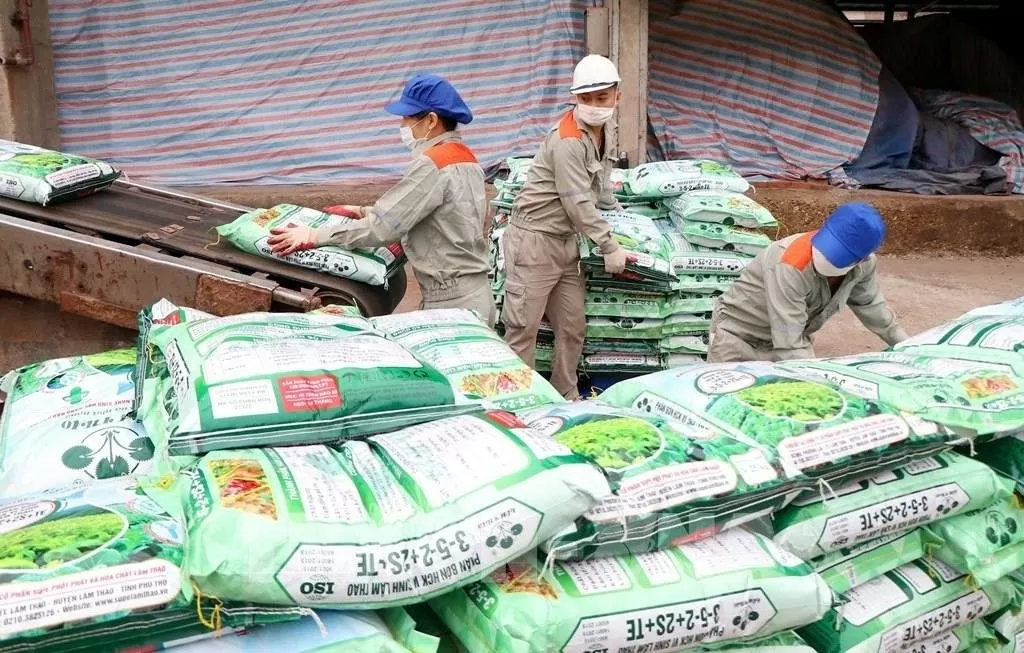 |
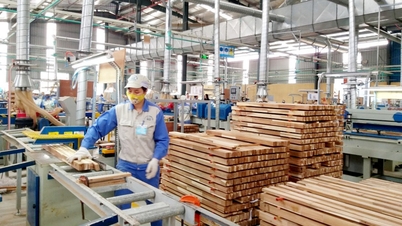
| From July 2025, fertilizers will officially be subject to a 5% VAT, raising expectations for significant changes in the domestic fertilizer industry. Photo: VA |
Dr. Phung Ha also provided an assessment, stating that when fertilizers are subject to a 5% VAT, specifically based on data from the listed financial reports of 9 fertilizer companies (Ca Mau Urea, Phu My Urea, Ha Bac Urea, Hai Phong DAP, Binh Dien Fertilizer, Lam Thao Superphosphate, Van Dien Phosphate Fertilizer, Ninh Binh Phosphate Fertilizer, Southern Fertilizer) representing various fertilizer types (urea, DAP, phosphate, NPK) currently accounting for approximately 60% of total domestic production, the Vietnam Private Sector Competitiveness Enhancement Project has published many detailed figures. These include input VAT for urea production at 9.3%; NPK at 6.4%; DAP at 8.1%; and phosphate at 7.7%.
When fertilizers are exempt from VAT, the cost of goods sold, including input VAT, accounts for 78% of revenue. However, if fertilizers are subject to a 5% VAT, the cost of goods sold/revenue ratio drops to approximately 71-73% (depending on the type of fertilizer).
Therefore, if a 5% VAT is applied to fertilizers, the selling price of finished urea fertilizer has the potential to decrease by 2%; DAP fertilizer by 1.13%; and phosphate fertilizer by 0.87%. For NPK fertilizer production, the selling price of finished products could increase by 0.09%.
For businesses importing fertilizers, the selling price of their products may increase by 5%, due to the lack of input tax deductions.
However, "the total domestic demand for inorganic fertilizers is approximately 10 million tons, of which domestic production meets 6.5 - 7 million tons, accounting for approximately 70% of the demand. Therefore, overall, farmers and the crop production sector still benefit from a 5% VAT rate on fertilizers."
According to the calculations of the aforementioned Project: On the State side, if a 5% VAT rate is applied, budget revenue will increase by an additional 1,541 billion VND, due to the output VAT revenue from fertilizers reaching 6,225 billion VND and the input VAT deduction of 4,713 billion VND.
" The above figures and information show that transferring fertilizers from the VAT-exempt group to the VAT-taxable group at a rate of 5% is reasonable, " the Chairman of the Vietnam Fertilizer Association stated.
According to MBS Research, businesses producing single fertilizers (urea, phosphate) and DAP are the biggest beneficiaries of this policy. The reason is that the input materials for these fertilizers are all eligible for VAT refund.
However, this opportunity comes with many challenges. Businesses need to fully capitalize on cost reductions to reinvest in modern production technology, while simultaneously improving product quality to meet domestic demand and expand internationally. The government also needs to ensure transparency in tax refunds, closely monitor the process to prevent abuse of the policy, and ensure that fertilizer prices remain at a reasonable level.
| Dr. Phung Ha - Chairman of the Vietnam Fertilizer Association: The agricultural sector is currently a crucial pillar of the Vietnamese economy, making a significant contribution to export turnover. It is projected that exports could reach US$60 billion in 2024 (far exceeding the planned US$55 billion and compared to US$54 billion in 2022 and 2023). Therefore, comprehensive support for the agricultural sector (in which fertilizers account for 30-60% of the value of agricultural inputs) is essential. This policy change will open up many expectations regarding the growth prospects of the Vietnamese fertilizer industry. |
Source: https://congthuong.vn/ap-thue-vat-5-quyet-sach-dung-va-trung-tao-dot-pha-tang-truong-cho-nganh-phan-bon-viet-nam-361522.html







































































Comment (0)