

This event has made Vietnam one of the top 10 countries in the world applying this robot (mostly European and American countries), as announced and reported at the 2023 Scientific Conference on "Applications of Artificial Intelligence in Healthcare " on May 28th at Tam Anh General Hospital in Ho Chi Minh City.
Distinguished physician, Master of Science, Specialist Doctor Level 2 Chu Tan Si - Head of Neurosurgery Department, Neurological Center, Tam Anh General Hospital, Ho Chi Minh City, known as the "golden hand" in neurosurgery and cranial surgery, and his colleagues are the only team in Vietnam with the expertise and experience in operating and mastering this robotic technology.
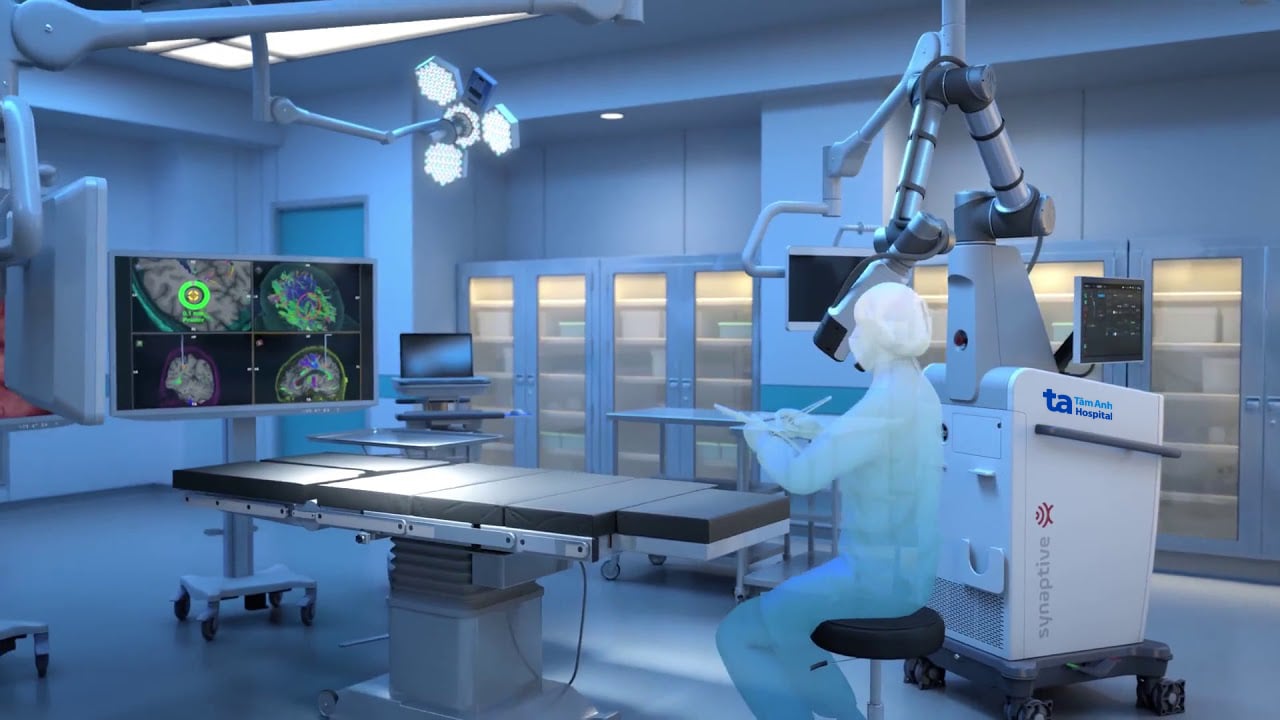
The first next-generation intelligent brain surgery robot in Vietnam. Photo: Tam Anh General Hospital.
Robots specialize in treating difficult brain tumor cases.
At the conference, experts and neurosurgeons from Tam Anh General Hospital in Ho Chi Minh City reported on typical brain tumor surgeries performed by the Modus V Synaptive robot, including a case reported and published in the prestigious American medical journal Medicine.
Four years ago, patient Phung Kim Minh, born in 1952 in Hanoi , was diagnosed with a grade 4 trigeminal neuralgia (V) tumor. The tumor was large, elongated, located in a highly dangerous functional area, and compressing the brainstem structures. Many major hospitals in Hanoi refused to operate due to the potential risks of causing paralysis of cranial nerves IX, X, XI, XII… if operated on using traditional methods. The consequences could include loss of independence, choking while eating, pneumonia, infection, and shock, potentially leading to death.
After living with the tumor for four years, the patient underwent brain surgery using the Modus V Synaptive robot, performed by Dr. Chu Tan Si and his team. "This was a challenging and stressful case; the patient had a very large tumor in a dangerous location," Dr. Chu Tan Si stated.
Thanks to robotics, the surgery is simulated on a computer beforehand, allowing doctors to proactively choose the path to the tumor without damaging nerve fibers. The actual robotic surgery is performed a day later. The patient is operated on while lying on their side, with one arm hanging down under the operating table, and electrodes are placed to control the seventh cranial nerve, thus preventing one-sided facial paralysis after surgery.
The surgery lasted 4 hours, during which the doctors successfully removed the tumor and relieved the compression. The patient was fully conscious, with significantly reduced dizziness, and able to walk after a night of intensive care. The patient recovered quickly thanks to robotic guidance and supervision, which prevented damage to nerve fibers and healthy brain tissue during the surgery, resulting in no postoperative complications. Exactly one week after the surgery, the patient was discharged and flew back to Hanoi.
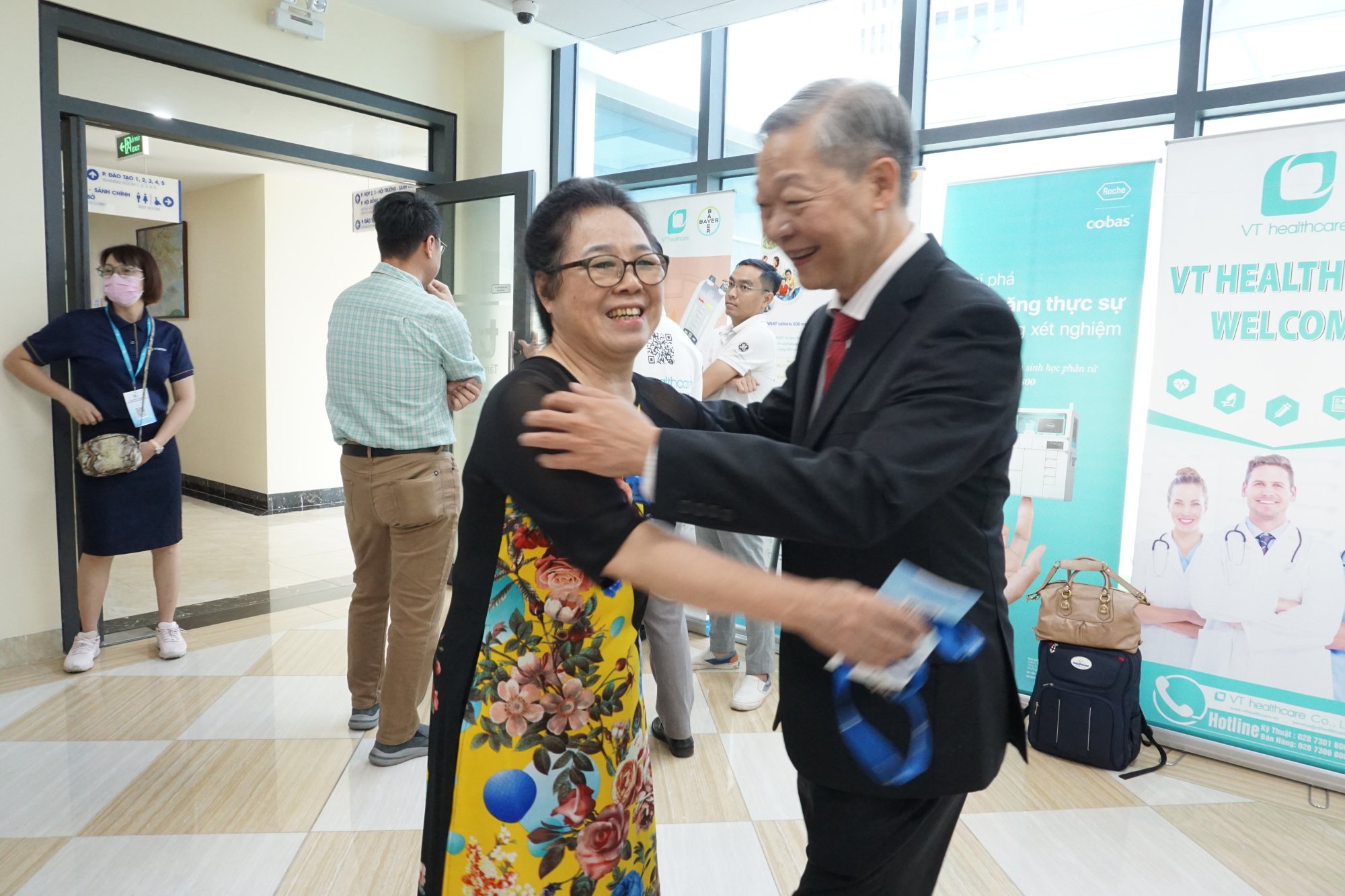
Ms. Minh was delighted to meet Dr. Chu Tan Si again at the seminar announcing typical brain tumor surgery cases using the Modus V Synaptive robot. Photo: Tam Anh General Hospital.
Dr. Chu Tan Si and his colleagues also used the Modus V Synaptive intelligent robot to surgically remove a 6x5cm brain tumor, equivalent to a duck egg, from a 22-year-old woman from An Giang province who had been completely paralyzed for six months prior to the surgery. The patient subsequently recovered well and was able to walk again. Last April, the team performed surgery on a 21-year-old male student from Ho Chi Minh City who had a cavernous hemangioma that was compressing and rupturing blood vessels in the brain, leading to complications such as hemorrhage and epilepsy.
Another robotic surgery using the Modus V Synaptive system was performed on a 26-year-old male from Ho Chi Minh City with a brain tumor located deep within the left ventricle. The tumor was friable, easily ruptured, prone to bleeding, had multiple blood supply sources, and was particularly deep within the brain, causing damage, obstructing cerebrospinal fluid flow, and significantly increasing intracranial pressure. The surgery lasted 2 hours, during which the surgeons simultaneously removed the tumor and restored cerebrospinal fluid flow. Post-surgery, the patient's symptoms of tremors, weakness in the limbs, and headaches decreased. After 3-4 days, the patient was able to walk and was discharged on the 5th day.
According to Doctor Chu Tan Si, approximately 20 typical brain tumor surgeries have been successfully performed using the Modus V Synaptive robot at Tam Anh General Hospital in Ho Chi Minh City.
X
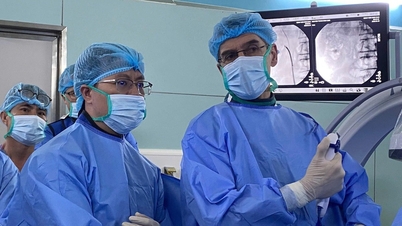
Doctors are performing brain surgery using the Modus V Synaptive robotic system.
The revolution in neurosurgery in Vietnam.
At the conference, leading experts and doctors in the field of neurosurgery and cranial surgery assessed the appearance of the Modus V Synaptive brain surgery robot as a revolution in brain surgery in Vietnam.
Neurological and cranial diseases such as brain tumors, meningiomas, pituitary tumors, hemorrhagic stroke, cerebral edema, etc., are among the most dangerous diseases due to their severe impact on patients' health. Surgical treatment of these conditions presents significant challenges for global medicine in terms of effectiveness and minimizing post-operative complications, as the brain and central nervous system control almost all bodily functions, from mobility, language, and vision to thinking, reasoning, and memory.
Previously, conventional brain surgery methods such as navigation systems and surgical microscopes could not visualize nerve fiber bundles before or during surgery, leading to a high risk of injuring, severing, or damaging surrounding healthy brain tissue. This could result in severe long-term consequences for patients. Robots, utilizing sophisticated artificial intelligence, overcome these limitations. Compared to conventional brain surgery methods, robots offer optimal treatment effectiveness with superior advantages that traditional methods lack.
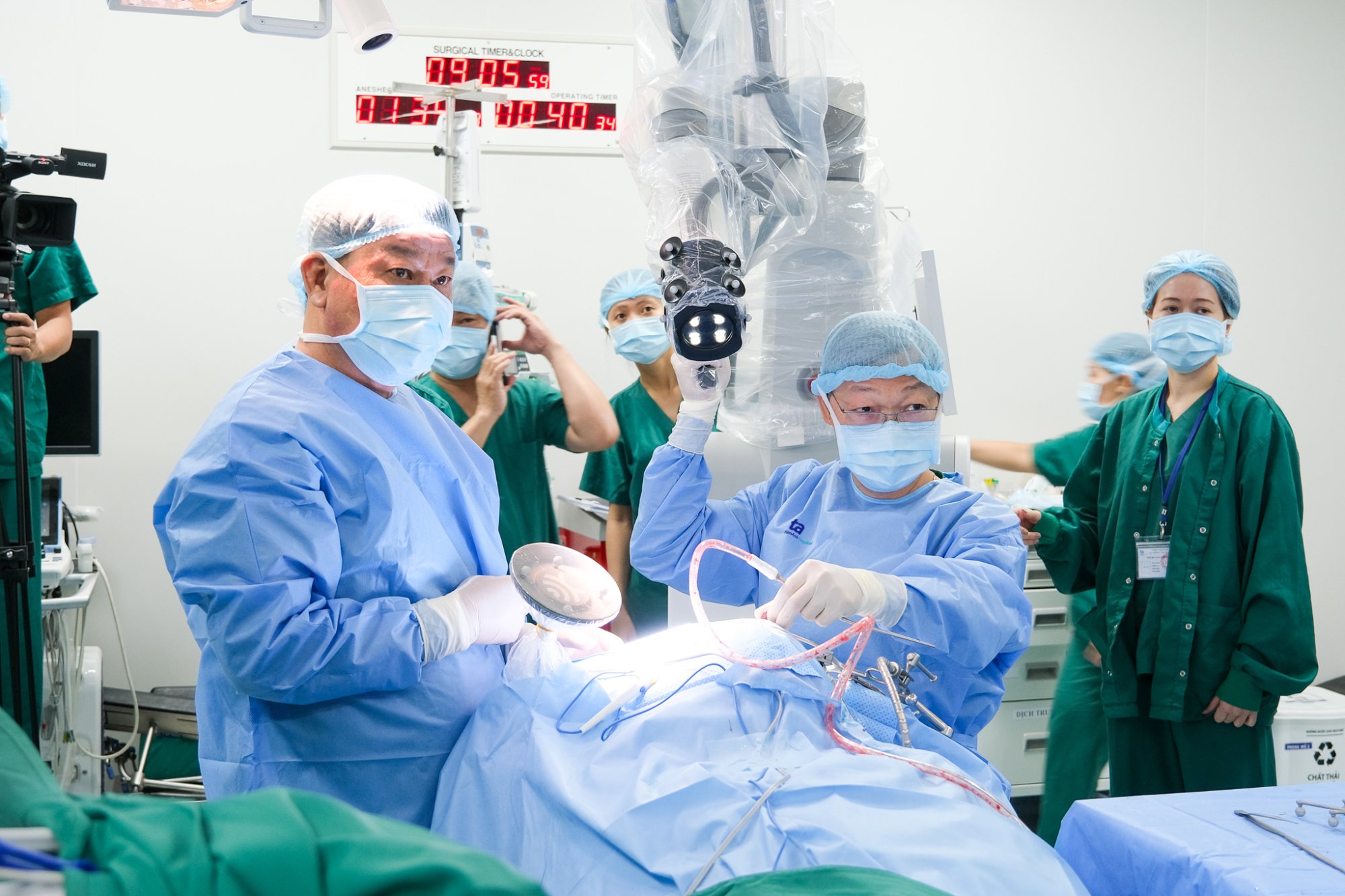
Dr. Chu Tan Si and his team are performing a robotic brain tumor surgery at Tam Anh Hospital. Photo: Provided by the hospital.
The new generation of robots allows surgeons to comprehensively observe the brain's spatial structure, clearly seeing nerve fiber bundles and healthy brain tissue surrounding the tumor... all on a single 3D image before, during, and after surgery. This helps doctors make a comprehensive assessment and choose the most effective and safest approach to the tumor. This is a difference that no other brain surgery machine has been able to achieve.
With specialized software, doctors can perform 3D simulations of the surgery before the actual operation, proactively choosing the location for opening the skull, selecting the most effective surgical approach to the tumor or pathological area, minimizing damage to nerve fibers and impacting healthy brain tissue. This unique capability has not been achieved by any conventional brain surgery equipment before.
The robot monitors the entire surgical process, providing warning signals with indicator lights if the access path and surgical instruments deviate, and allows the surgeon to access existing MRI, CT, CTA, DSA, and other data directly on the robot's screen without having to access data from multiple different devices. This enables the surgeon to make timely decisions.
Robotic surgery offers superior results, faster patient recovery, and significantly lower treatment costs compared to brain tumor surgery using the same technology abroad.
"Thanks to the Modus V Synaptive robotic brain surgery system, a neurosurgeon with 30 years of experience like myself can see the nerve fiber bundles throughout the surgery to avoid damaging them," said Distinguished Physician, Master of Science, Specialist Doctor Level 2 Chu Tan Si.
In particular, this AI-powered robot is highly effective in performing complex neurosurgery cases, especially those involving brain lesions deep within the brain or near vital brain structures that are difficult or impossible to access using conventional surgical methods due to the high risk of complications.
Hoai Thuong
Source























































































Comment (0)