


Read deeply to understand, not just to know.
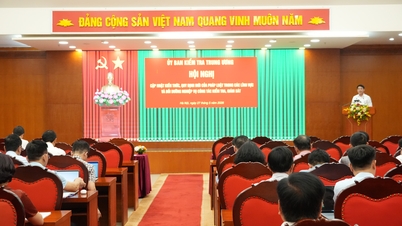
At the "Reading Science Books in the Age of Information Explosion" exchange event recently held in Hanoi on Vietnam's Book and Reading Culture Day (April 21st) and to celebrate the 45th anniversary of Tre Publishing House, a question was raised: When the Internet and AI can provide almost any information, is reading science books still necessary?
The answer, according to the speakers—translators and scientists who have been involved with the "Science and Discovery " book series for many years—is yes, and it lies in two words: depth.
Translator Pham Van Thieu, Deputy Secretary General of the Vietnam Physics Society and Editor-in-Chief of the magazine "Physics and Youth," believes that if readers only need to grasp scientific events, they can quickly find the information on the Internet. However, popular science books offer a different experience: Science books not only provide knowledge but also tell the story behind the inventions, failures, struggles, and thought processes of scientists.
Mr. Thieu also pointed out what makes this series of books so appealing: Readers not only understand a theory or an invention, but also the process of knowledge formation, the mistakes, experiments, and persistent efforts behind each discovery. This not only helps in acquiring knowledge but also nurtures scientific thinking and inspires a passion for research, especially for young people. "The path of science is glorious but very challenging, and a young person who wants to enter science must have extraordinary patience and effort," Mr. Thieu emphasized.
Meanwhile, according to speaker and biomedical physicist Vu Cong Lap, science and technology books currently account for about 10-15% of the total number of books published annually in Vietnam. This segment not only provides scientific information but also reveals the origins and future impact of scientific achievements. Importantly, these specialized books are engaging and not dry, and the author's insightful writing style is a prerequisite for disseminating knowledge.
"Therefore, what matters is not how much you read, but what you understand and transform from what you have read," Mr. Lap emphasized, adding that reading is a process of training thinking: "Deep reading helps develop the ability to think, learn, and remember, and directly impacts the development of the brain."
Given the current state of information overload, he frankly pointed out: "Previously, when information sources were limited, reading was more focused. Now, social media and digital platforms make information dense and multifaceted, but also easily lead to confusion. Readers easily fall into a state of information overload, not knowing where to start, what to read, or how to read."
On another note, translator Nguyen Van Lien, formerly a Theoretical Physics expert at the Institute of Physics, emphasized the foundational role of this book series, stating that the "Science and Discovery" book collection contains many titles closely aligned with basic science – which helps readers build a solid foundation of knowledge, rather than just accessing superficial information.
Persistently "going against the current"
Driven by the need for in-depth reading in an increasingly fast-paced world, the "Science and Discovery" series by Tre Publishing House is seen as a persistent effort to bring scientific knowledge closer to general readers.
Launched in 2008, the series now boasts over 50 titles, spanning physics, mathematics, biology, technology, and cosmology. Among them, many seemingly niche books have achieved remarkable longevity, such as "A Brief History of Time," which has been reprinted over 30 times – a number even many literary works struggle to reach. Other notable titles include "The Universe in a Nutshell," "Five Equations That Changed the World," and "The Holographic Universe" (winner of the 2019 National Book Award) – all familiar titles to science enthusiasts.
The translation and publication of scientific books with full copyright also contributes to enhancing Vietnam's reputation in the international publishing market. Many authors, such as Paul J. Steinhardt and Mehmet C. Oz, have directly added supplementary articles and dedicated them specifically to the Vietnamese versions after discussions with the translators.
According to the editors, maintaining a popular science book collection for nearly 20 years is a significant effort in a book market facing considerable pressure from trends like speed reading and entertainment reading.
Beyond simply providing knowledge, the "Science and Discovery" series helps readers access knowledge systematically, from fundamental concepts to contemporary issues, thereby gradually developing a scientific approach.
In the context of rapidly developing technology, where AI and search engines can provide answers almost instantly, the role of humans is no longer about knowing more information, but about the ability to understand deeply and think independently.
And it is precisely at this point that reading scientific books remains irreplaceable.
Concerns about a shortage of translators for science books.
Regarding the current availability of popular science and technology books, translator Pham Van Thieu stated that there is no shortage, and the number is even increasing and becoming more attractive. “The worrying thing isn't the availability of books, but whether we have enough translators to translate them. Our generation is already over 80 years old, and we don't have much time or health left,” Mr. Thieu expressed, emphasizing that one of the major difficulties in translation is the terminology system. To translate accurately, translators need not only expertise and passion but also sufficient credibility and connections to reach experts in each field, even monks, working in various parts of the world.
Source: https://daidoanket.vn/sach-khoa-hoc-khac-gi-google-va-ai.html































































































Comment (0)