

In response to the aggressive marketing by the e-commerce platform Temu, which advertises many products with discounts of up to 90%, a member of parliament issued a warning to the public and businesses.
Although not yet licensed to operate in Vietnam (as of October 25, 2024), the aggressive marketing tactics of Chinese e-commerce platforms like Temu have piqued consumer curiosity and caused considerable concern among domestic businesses.
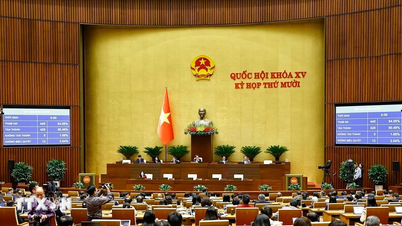
The rampant advertising and marketing, along with surprisingly cheap products, was also a "hot" topic that many reporters questioned National Assembly delegates about on the sidelines during the first week of the 8th Session of the 15th National Assembly.
There is a need for control mechanisms to ensure a level playing field for businesses.
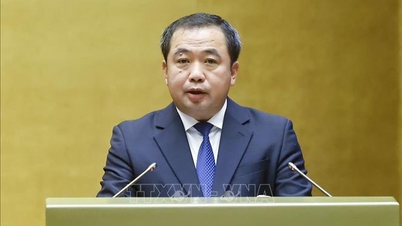
Speaking on the sidelines of the National Assembly session on the afternoon of October 25th, National Assembly representative Tran Hoang Ngan (from Ho Chi Minh City) stated: E-commerce is a trend of the times, but if we lack strict inspection and management regulations, it will cause serious damage to the socio -economic sector.
 |
| Delegate Tran Hoang Ngan - Ho Chi Minh City delegation - shared with reporters about the "phenomenon" of the Temu platform and the e-commerce management mechanism, as well as the responses of businesses and citizens. Photo: Thu Huong |
In the era of the Fourth Industrial Revolution, e-commerce is a particularly vibrant and dynamic activity, especially in Vietnam's market of 100 million people. Vietnam's e-commerce growth rate in recent years is considered the fastest in the region.
However, some e-commerce platforms operating in Vietnam, such as Temu, are unregistered, sell goods at low prices, and engage in aggressive advertising and marketing, creating unfair competition for domestic businesses and affecting a fair and equitable investment and business environment.
Representative Tran Hoang Ngan argued that we need to quickly codify regulations to combat tax evasion and protect consumers from receiving goods of good quality and clear origin. Therefore, this time, the National Assembly will pass many laws, including the Law on Tax Administration, which includes this content to ensure that state agencies coordinate with each other to collect taxes on e-commerce platforms.
" If we don't ensure a fair competitive environment, it will negatively impact businesses that respect and enforce the law, and they will be at a disadvantage, " Representative Ngan emphasized.
For consumers, Mr. Tran Hoang Ngan advises that they should be extremely cautious when buying goods on unverified e-commerce platforms, especially cheap goods of unknown origin, as substandard quality can affect their health.
At the same time, delegates also noted that regulatory agencies need specific regulations to best protect consumers and prevent commercial fraud, counterfeit goods, and imitation products in the e-commerce environment.
According to delegate Tran Hoang Ngan, e-commerce is a trend of the times, and we must adapt to civilized commerce. The question is how the state should manage to ensure a transparent environment and a fair market, not only in Vietnam but also in many other countries during this period of rapid scientific and technological development.
We are perfecting our institutions, and domestic businesses themselves must become familiar with this model. Delegates suggested that businesses should accelerate digital transformation and green transformation, and that regulatory agencies should have policies to support and train businesses and production and trading establishments in online business and e-commerce sales skills. Because Vietnamese retailers are sometimes accustomed to traditional methods of selling in markets, now that they are moving to e-commerce platforms, we must assist them.
Mr. Ngan also advised consumers to be extremely vigilant in choosing low-priced goods that are guaranteed in terms of quality and origin. Media outlets should also publish articles to help shoppers on e-commerce platforms be cautious in choosing goods, suppliers, and even regarding the provision of personal data.
Concerns arise that cheap Chinese goods will be "stockpiled" in the domestic market.
Regarding the Temu e-commerce platform incident, speaking to a reporter from the Industry and Trade Newspaper on the sidelines of the National Assembly session on the afternoon of October 25th, Representative Hoang Van Cuong from the Hanoi delegation stated that the impact of Chinese goods is not limited to individual small-scale purchases. Representative Hoang Van Cuong expressed concern that these goods could be concentrated at a single point, warehouse, or distribution center within the country, before being distributed further.
 |
| Representative Hoang Van Cuong expressed concern about cheap Chinese goods being stockpiled in warehouses domestically. Photo: Thu Huong |
" If each individual citizen placed an order on the other side, and then each order was shipped from China, it wouldn't amount to a large quantity. Therefore, the issue of managing goods brought from the border into the domestic market is what truly deserves attention, " the representative stated.
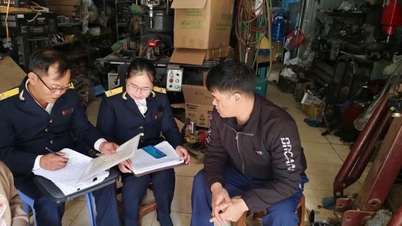
Representative Hoang Van Cuong stated: Currently, we do not have a mechanism to control the quality of goods on e-commerce platforms. The quality of goods depends on the management of the e-commerce platforms themselves. Market management agencies are assigned the task and will have to manage and inspect these e-commerce platforms.
Regarding the regulation that does not yet tax goods imported into Vietnam with a value under 1 million VND through e-commerce, Representative Hoang Van Cuong argued that sometimes the cost of processing tax collection for these activities is higher than the amount of tax collected by the tax authorities, not to mention that many items are just ordinary goods for daily life. Currently, we are not considering taxing these transactions. However, at some point, when the import of goods in small orders becomes too widespread and our technology for control and management allows it, we will need to reconsider.
When asked about the mechanisms to support domestic businesses and e-commerce platforms, Representative Hoang Van Cuong stated that e-commerce is developing very strongly; however, in reality, the percentage of goods transactions on platforms owned by Vietnamese businesses accounts for less than 10%, while the remaining 90% are on foreign platforms, which almost dominate the e-commerce market in Vietnam.
 |
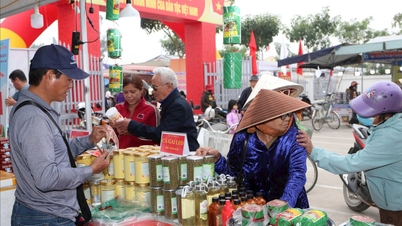
| Vietnam is one of the fastest-growing e-commerce countries in Southeast Asia. Photo: Thu Huong |
Delegates argued that Vietnamese businesses have their own advantages; domestic businesses, if they have a well-organized distribution network, will find it easier to reach domestic customers due to their understanding of psychology, culture, and transaction methods.
“ If well-organized, e-commerce platforms of Vietnamese businesses can build credibility with domestic consumers thanks to mechanisms for controlling the origin and quality of goods… However, the difficulty is that the goods traded on these platforms are not only domestic but also international. Foreign platforms have networks operating in many countries, clearly offering a large volume of goods… Therefore, Vietnamese businesses must strengthen their capabilities, ” said delegate Hoang Van Cuong.
| Vietnam is one of the countries with an average e-commerce growth rate of 25% per year, ranking among the top in Southeast Asia. The e-commerce retail market is estimated to reach US$20.5 billion in 2023, with the number of online shoppers currently exceeding 61 million and the average online purchase value per person around US$336. In the context of current international economic integration, along with the rapid and dynamic development of e-commerce, Vietnam has become a new destination for cross-border e-commerce platforms, including Temu. Temu is a cross-border e-commerce platform with Vietnamese language support and falls under the scope of Government Decree No. 52/2013/ND-CP dated May 16, 2013 on e-commerce (amended and supplemented by Decree No. 85/2021/ND-CP). The emergence of Temu has caused concern among governments in many countries regarding the competitiveness of domestic retailers and small and medium-sized manufacturing businesses. Recently, the Indonesian government issued a ban on Temu to protect domestic businesses and prevent cheap Chinese goods from flooding the country. The Thai government is also studying measures to tax Temu to prevent cheap Chinese products from flooding the market. Currently, Temu is also under scrutiny by the US government due to concerns related to user data security and product origin. However, no official ban has been issued on the application. |
Source: https://congthuong.vn/san-temu-ban-hang-gia-re-dai-bieu-quoc-hoi-khuyen-cao-354844.html
















































































Comment (0)