


By September 2025, the province will have 637 educational institutions from preschool to university (including 56 private schools) with a total of approximately 400,000 children, students, and trainees (accounting for over 28% of the province's population); of which 13.03% study at private schools, with 35.97% at the high school level (the highest in the country). Public educational institutions include 579 schools/centers under the management of commune-level People's Committees, the Department of Education and Training, the Provincial People's Committee, and central ministries/agencies.
Following the restructuring of the local government model into a two-tier system, there are 522 public kindergartens, primary schools, and secondary schools under the management of the communes across the 54 commune-level administrative units. Due to the regional characteristics of the province, the number of kindergartens, primary schools, and secondary schools is unevenly distributed in each area: 10 commune-level units have no more than 5 educational institutions, while 7 units have more than 15. In some commune-level units, the total number of groups/classes in public educational institutions is relatively small, not exceeding the maximum size of an educational institution. Specifically: 12 units have fewer than 30 kindergarten groups/classes; 11 units have no more than 40 primary school classes; and 33 units have no more than 45 secondary school classes. Therefore, in practice, it may be considered to consolidate each commune into a single kindergarten/primary/secondary school.
Public schools and educational institutions throughout the province currently lack nearly 4,000 administrative staff, teachers, and employees compared to the established quota, with the most notable shortage being over 2,600 teachers. The reality is that school sizes are still scattered and small, coupled with a shortage of classroom teachers and an unbalanced structure, creating significant pressure on schools. This necessitates a restructuring of the school network, streamlining the administrative apparatus, effectively utilizing the existing workforce, and restructuring human resources according to a two-tiered local government model.
According to the plan for reorganizing and merging public schools and educational institutions under the two-tiered local government model in the province, for educational institutions under the People's Committee at the commune level, the entire province will reorganize 520 schools into 251 schools, a reduction of 269 schools. Specifically, the number of preschools will be reduced by 97 (out of a total of 185); primary schools by 104 (out of a total of 152); and secondary schools by 68 (out of a total of 183). The reorganization was carefully planned, avoiding the merger of preschools with general education schools; merging of continuing education institutions with general education schools; and only merging schools and school branches within the same commune-level administrative unit. Priority will be given to the combined primary and secondary school model in sparsely populated areas and areas with difficult access.

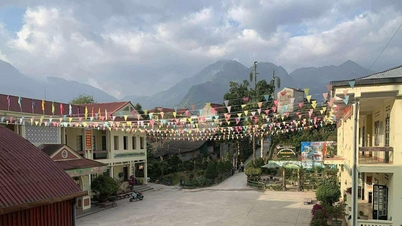
Currently, Mong Duong ward has 6 preschools, primary schools, and secondary schools with 12 school locations. In accordance with the Provincial People's Committee's policy on streamlining the school network to improve management efficiency, rationally utilize resources, and meet the requirements of educational reform, the local government and educational institutions in the ward have actively implemented the merger and reorganization of the school structure. After the reorganization, the ward now has only 3 schools, with 12 school locations remaining unchanged.
Mong Duong Kindergarten and Duong Huy Kindergarten have merged and are now named Mong Duong Kindergarten. This merger contributes to streamlining the organizational structure, improving management efficiency, optimizing the use of facilities and equipment; and simultaneously creates a favorable foundation for investment and upgrading of facilities in a comprehensive manner, aiming towards building a school that meets higher national standards.
Ms. Pham Thi Van Anh, Principal of Duong Huy Kindergarten, said: "Recognizing that the merger is necessary, reasonable, and strategically significant for the development of education in the new phase, the school's staff and teachers have fully understood the concept, agreed, and are ready to accept the assigned tasks. The school has actively coordinated with the People's Committee of the ward to develop and appraise the project, focusing collective intelligence and advising on objectives to ensure the project is feasible and scientific . Most importantly, we have proposed solutions to address issues in centralized management, reduce leadership layers, improve operational capacity; enhance the quality of childcare and education, ensuring that it meets the requirements of early childhood education reform, especially arranging the staff in a rational, fair, and transparent manner according to their abilities, job positions, and the actual needs of the merged unit."
Mong Duong Primary School merged with Nguyen Trai Primary School, and all primary school students from Duong Huy Primary and Secondary School were merged into Nguyen Trai Primary School. The staff will be reorganized to be more streamlined and efficient. Ms. Pham Thi Tin, the principal of Mong Duong Primary School, a teacher with 32 years of dedication to education, including 9 years as a school administrator with a wealth of achievements and experience, volunteered to relinquish her position as head of the school to a younger staff member. Ms. Tin shared: "Although I have been associated with Mong Duong Primary School for more than 25 years, including 9 years in a management position with a wealth of personal and collective achievements, when the merger was implemented, I felt I needed to be proactive and take the lead to create consensus." To demonstrate exemplary conduct, a high sense of responsibility, and prioritizing the common good over personal gain, I voluntarily volunteered to take on the position of Vice Principal after the school merger, creating opportunities for young administrators to develop their abilities and continue the school's traditions. I believe that, for the sake of the collective and our beloved students, I will dedicate myself and contribute my best to the local education system, regardless of my position.

The educational institutions under the Department of Education and Training and the Provincial People's Committee will merge Tien Yen Ethnic Boarding Secondary and High School with the Provincial Ethnic Boarding Secondary and High School; and merge Cua Ong High School with Le Hong Phong High School in the same Cua Ong ward. In addition, 14 vocational training and continuing education centers will be merged into the Provincial Vocational Training and Continuing Education Center, serving as a basis for conversion into vocational high schools as directed by the central government. According to representatives of the educational institutions, the mergers bring many advantages, especially in school management.
Overall, after the restructuring is completed, Quang Ninh province is expected to reduce 284 preschool, primary, and continuing education institutions, equivalent to a streamlining rate of approximately 50%. The merger and reorganization of schools and educational institutions will not reduce or affect students' learning compared to before, but will simply align with the operational realities of the two-tiered local government model. Teaching by teachers, and especially student learning, will continue as normal at the current school locations, without changes to classes, teachers, or schedules. This is a strategic step that both streamlines the administrative apparatus, improves management efficiency, and creates conditions for concentrating resources and investing in education to meet the requirements of rapid and sustainable development of the locality in the new phase.
Source: https://baoquangninh.vn/sap-xep-mang-luoi-truong-lop-dong-bo-hieu-qua-3380498.html


















![[Photo] Reception to welcome General Secretary and President To Lam and his wife on their State visit to the Philippines](https://vphoto.vietnam.vn/thumb/1200x675/vietnam/resource/IMAGE/2026/06/01/1780295488620_vna-potal-chieu-dai-chao-mung-tong-bi-thu-chu-tich-nuoc-to-lam-va-phu-nhan-tham-cap-nha-nuoc-toi-philippines-8798060-7855-jpg.webp)


















































Comment (0)