


Extreme heat is becoming a "killing machine" for Asia, with numerous countries recording record temperatures, prolonged droughts, widespread wildfires, and water crises. Against the backdrop of increasingly severe climate change, the risk of a strong return of El Niño in 2026 is causing particular concern among scientists .
From India, Pakistan, and Bangladesh to Thailand, Indonesia, and Vietnam, hundreds of millions of people are enduring unprecedentedly prolonged heatwaves. More than just a weather issue, the heatwave has become a crisis affecting health, the economy , food security, and the resilience of nations.
Experts warn that the combination of human-induced climate change and El Niño could create the most severe period of extreme weather in decades, with consequences far exceeding the current response capabilities of many Asian countries.
Asia plunged into crisis.
According to data from the World Weather Attribution (WWA) research group, in the first four months of the year alone, wildfires have burned more than 150 million hectares globally – about 20% higher than the previous record. In Asia alone, approximately 44 million hectares have been devastated by fire, an increase of nearly 40% compared to the worst year on record in 2014.
The countries most severely affected include India, Myanmar, Thailand, Laos, and China. Scientists believe the cause stems not only from rising temperatures but also from extreme weather patterns alternating between periods of heavy rainfall and prolonged droughts.
Theodore Keeping, a wildfire expert at Imperial College London and a member of the WWA, warned that the world could be entering "an exceptionally harsh year" if a strong El Niño develops as predicted.
According to him, the heavy rainfall in the preceding period caused dense vegetation growth. When hot weather and drought arrived, all this dry grass and trees became a huge "fuel" for forest fires.
The World Meteorological Organization (WMO) says sea surface temperatures in the equatorial Pacific are rising rapidly, increasing the likelihood of El Niño returning from mid-2026.
Meanwhile, the US National Oceanic and Atmospheric Administration (NOAA) forecasts a 62% probability of El Nino forming between June and August 2026, with about a one-third chance of developing into a strong El Nino by the end of the year.
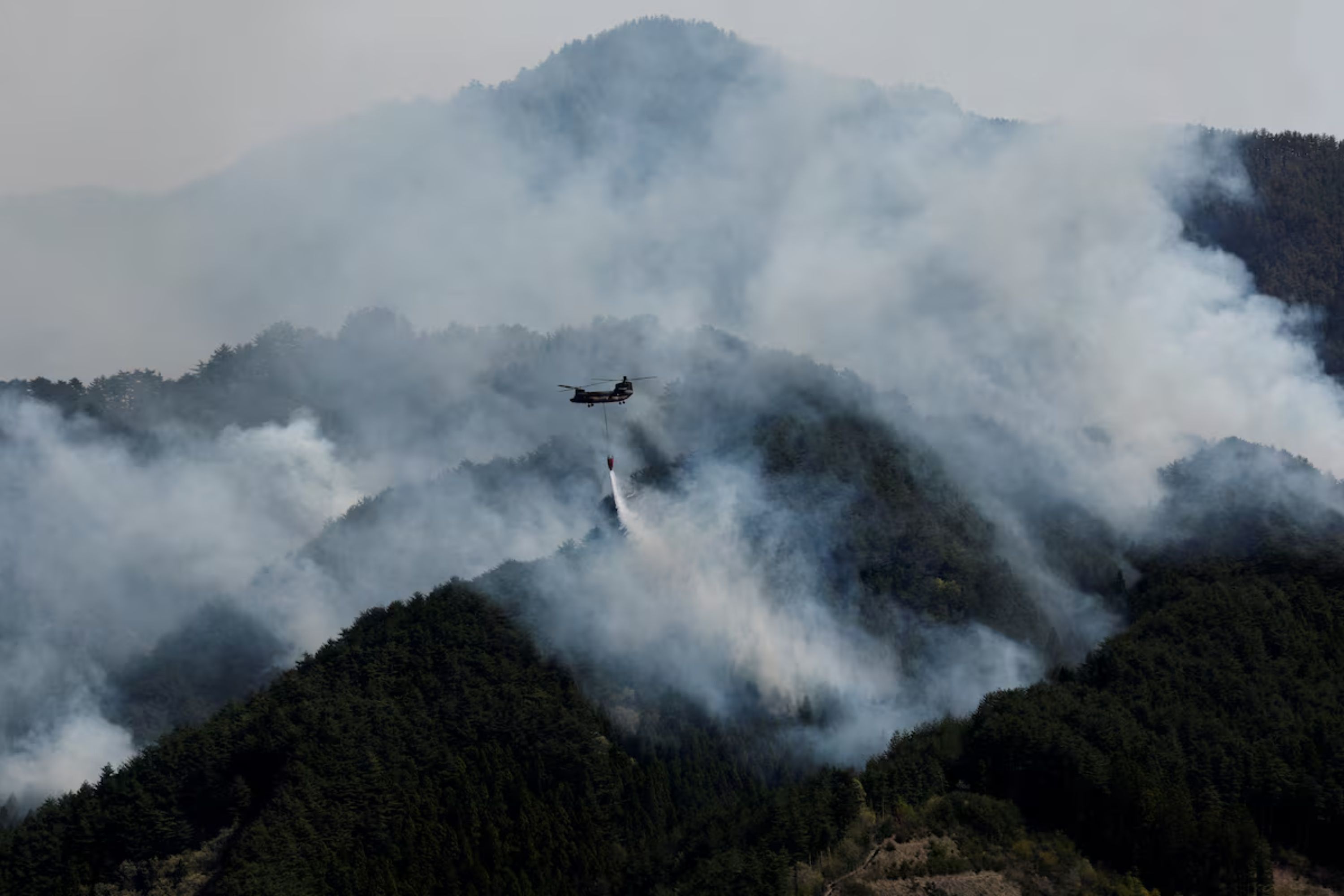 |
A helicopter fights fires as successive forest fires rage in Otsuchi, Iwate Prefecture (Japan) on April 26. Photo: Reuters. |
If this scenario unfolds, Southeast Asia risks facing severe droughts, widespread water shortages, crop failures, and prolonged forest fires. Countries heavily reliant on agriculture, such as Thailand, Vietnam, and Indonesia, are considered the most vulnerable.
Not only are ecosystems threatened, but the lives of hundreds of millions of people are also being disrupted by extreme temperatures.
In South Asia, many areas in India, Pakistan, and Bangladesh recorded temperatures near or exceeding 45-50 degrees Celsius. Pakistan has reported numerous heat-related deaths, while several regions in India have issued red alerts due to temperatures exceeding 46 degrees Celsius.
Experts say the intensity of this year's heatwave is unprecedented. Anjal Prakash, research director at the Bharti Institute for Public Policy (India), noted that high-pressure systems are holding hot air masses close to the ground like a "lid," preventing heat from escaping.
Meanwhile, Kartikeya Bhatotia, a researcher at the South Asia Mittal Institute at Harvard University, said that extreme heat is affecting people in many different ways.
Excessively high temperatures can impair the body's ability to regulate its own temperature, increasing the risk of cardiovascular disease, kidney damage, insomnia, and exacerbating chronic conditions such as diabetes and respiratory illnesses. The elderly, young children, pregnant women, and those with underlying health conditions are the most vulnerable groups.
However, the impact of heatwaves is not equitable across all social classes. Low-income workers, those living in poorly ventilated housing, or those who work outdoors are often far more severely affected.
In India, approximately 380 million people are employed in jobs that expose them directly to the heat. When temperatures rise too high, working hours decrease, leading to reduced income, making it even more difficult for many families to access food, clean water, and healthcare.
Experts also warn that extreme heat is increasing the risk of transboundary smog and PM2.5 pollution in Southeast Asia, particularly in areas with forest fires and slash-and-burn agriculture. This could trigger another public health crisis in the region.
Long-term adaptation
In the face of the threat of a "super El Niño," many experts believe that satellite technology and space data are becoming crucial tools for countries to respond to the climate crisis.
The Thailand Geoinformatics and Space Technology Development Agency (GISTDA) stated that satellite imagery can help monitor reservoirs, surface water sources, and detect drought risks in near real-time.
In agriculture, geospatial data can support crop health analysis, helping farmers adjust planting plans earlier before droughts occur. Satellites can also detect wildfire hotspots and open burning activity, supporting fire control and monitoring of transboundary haze.
However, experts emphasize that technology is only part of the solution.
According to scientists, the most important thing remains the synchronized preparation of the entire system, from water resource management, healthcare, urban planning to labor protection.
 |
Malaysia has relaxed its dress code to help workers feel more comfortable in the hot weather. Photo: Andre Malerba/Bloomberg. |
Countries are advised to proactively store water during the rainy season, promote water conservation, and develop plans for the rational allocation of water resources for domestic, agricultural, and industrial use.
The agricultural sector also needs more drastic changes to adapt to the new climate. Experts suggest switching to crops that require less water, shortening cultivation cycles, adjusting planting schedules according to weather forecasts, and expanding crop insurance to reduce risks for farmers.
At the regional level, ASEAN is considered to need to strengthen cooperation on controlling transboundary haze and tightening regulations on open burning. This is one of the reasons why PM2.5 pollution worsens each dry season.
Meanwhile, public health systems also need to prepare for an increase in heat-related illnesses such as heatstroke, dehydration, heat exhaustion, and respiratory illnesses caused by air pollution.
In Thailand, where temperatures in many areas have exceeded 40 degrees Celsius in recent weeks, the government has instructed public sector offices to adjust air conditioning temperatures to 26-27 degrees Celsius to reduce energy strain.
Many workers reported having to buy extra electric fans or seek cooler areas like convenience stores to escape the heat. Meanwhile, the Philippines and Malaysia have implemented similar regulations, while also relaxing dress codes to help workers feel more comfortable in the harsh weather.
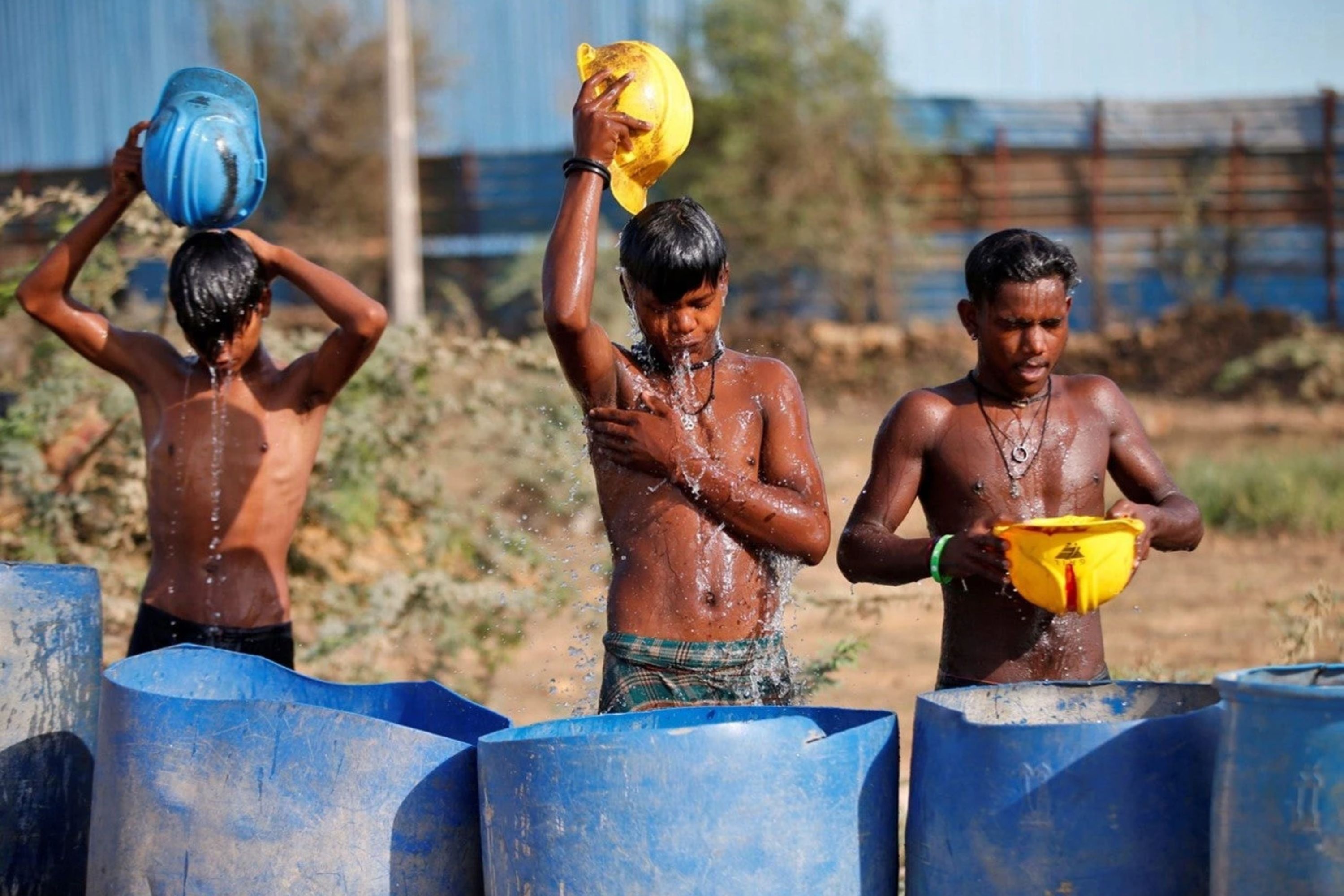 |
Heatwaves are becoming increasingly common and dangerous. Photo: Amit Dave / Alamy. |
Experts believe this may only be the beginning of a long-term adaptation period, as Southeast Asia must learn to live with longer, more frequent, and more energy-intensive heatwaves than before.
Experts believe that the current crisis is no longer a problem of the distant future. What is happening in South Asia and Southeast Asia shows that climate change has begun to directly impact the daily lives of hundreds of millions of people.
Although El Nino is a natural phenomenon, many scientists emphasize that the damage could be significantly reduced if governments, businesses, and the public had prepared earlier, provided more transparent data, and acted more decisively in coordination.
"Without systemic changes, the risks posed by heatwaves will continue to far exceed current response capabilities," a climate expert warned.
Source: https://znews.vn/sat-thu-tham-lang-can-quet-chau-a-post1651461.html




![[Photo] National Assembly Chairman Tran Thanh Man working with the Standing Committee of the Law and Justice Committee](https://vphoto.vietnam.vn/thumb/1200x675/vietnam/resource/IMAGE/2026/05/21/1779378929214_ndo_br_1-4610-jpg.webp)
![[Photo] General Secretary and President To Lam presides over a working session with the Central Policy and Strategy Committee on the development of the materials industry.](https://vphoto.vietnam.vn/thumb/1200x675/vietnam/resource/IMAGE/2026/05/21/1779359935432_a3-bnd-3129-1412-jpg.webp)

















































































Comment (0)