Gradually shift the entire international flight network from now until 2030.
In a report recently submitted to the Ministry of Construction , the Vietnam Civil Aviation Authority assessed that: Choosing a plan to divide the operation of Tan Son Nhat International Airport and Long Thanh International Airport is a complex decision requiring thorough analysis based on many criteria and consensus from state management agencies, airlines, and the community. In particular, the infrastructure connecting Long Thanh International Airport with Ho Chi Minh City and other localities is a prerequisite for guiding and determining the plan to divide operations between the two airports.
Based on that, the Vietnam Civil Aviation Authority proposed principles and a plan for dividing operations into two phases. Essentially, both airports will retain their role in international operations. However, in phase 1, from 2025 to 2030, no new international flights will be licensed, and no additional flights to the Ho Chi Minh City area will be permitted for airlines operating for the first time or those currently operating at Tan Son Nhat International Airport. These airlines will be required to relocate their operations to Long Thanh International Airport.
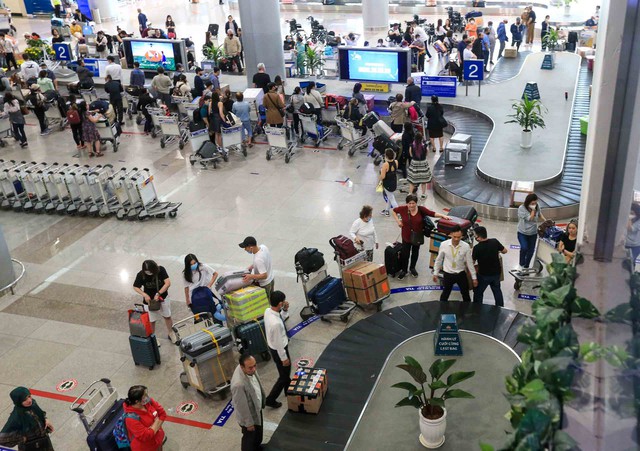
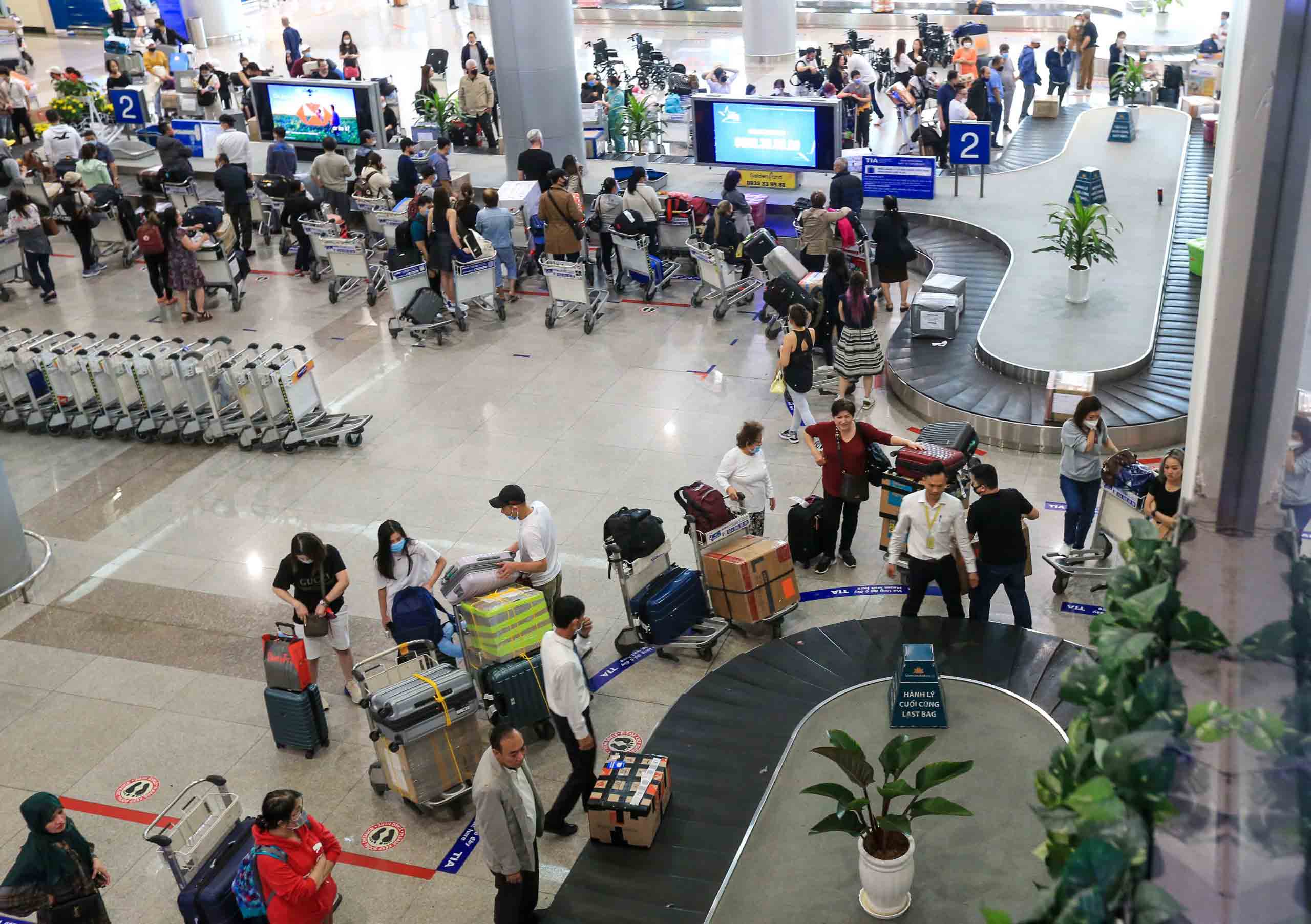
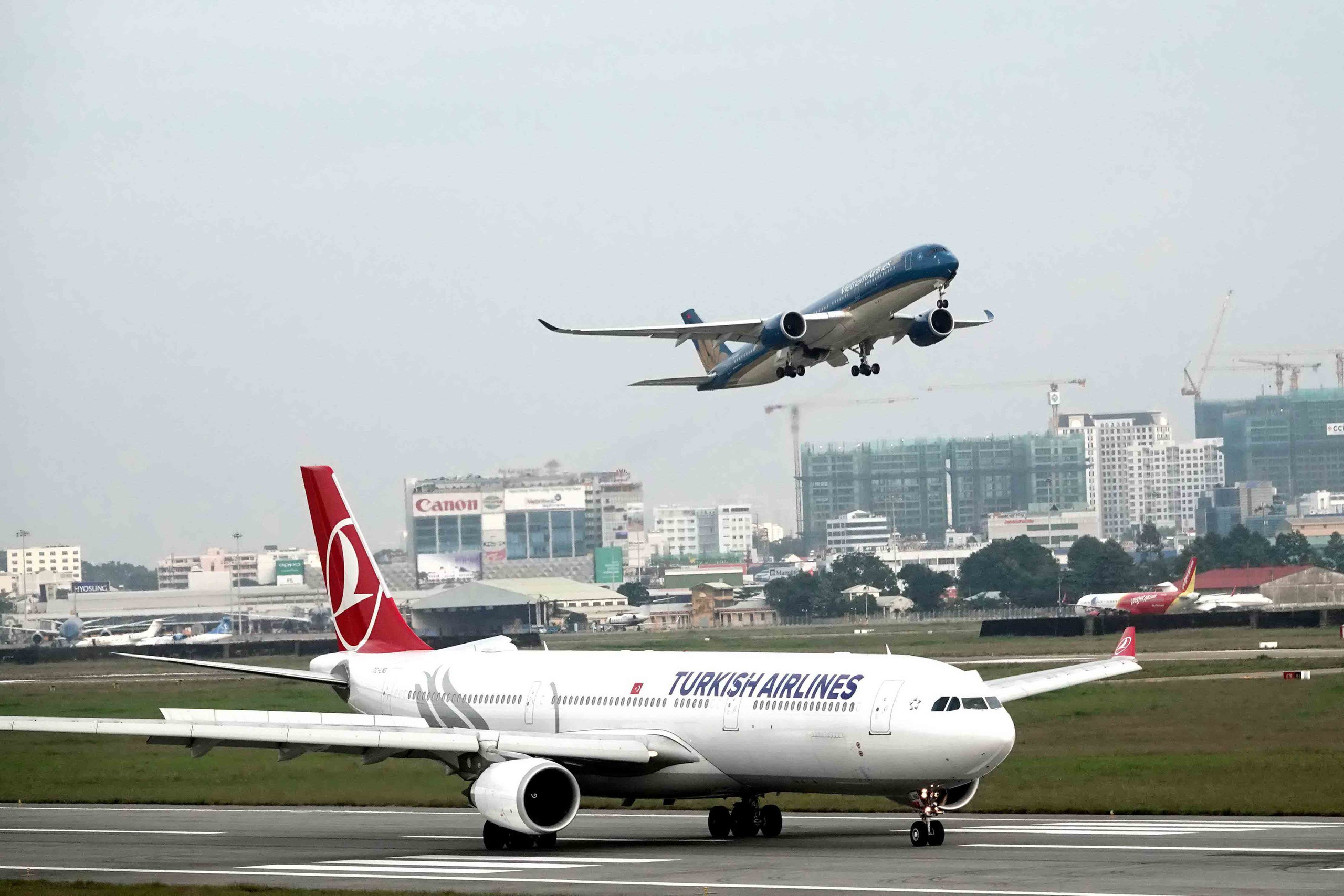
If the Civil Aviation Authority's proposal is approved, Tan Son Nhat may no longer have an international terminal.
PHOTO: NHAT THINH
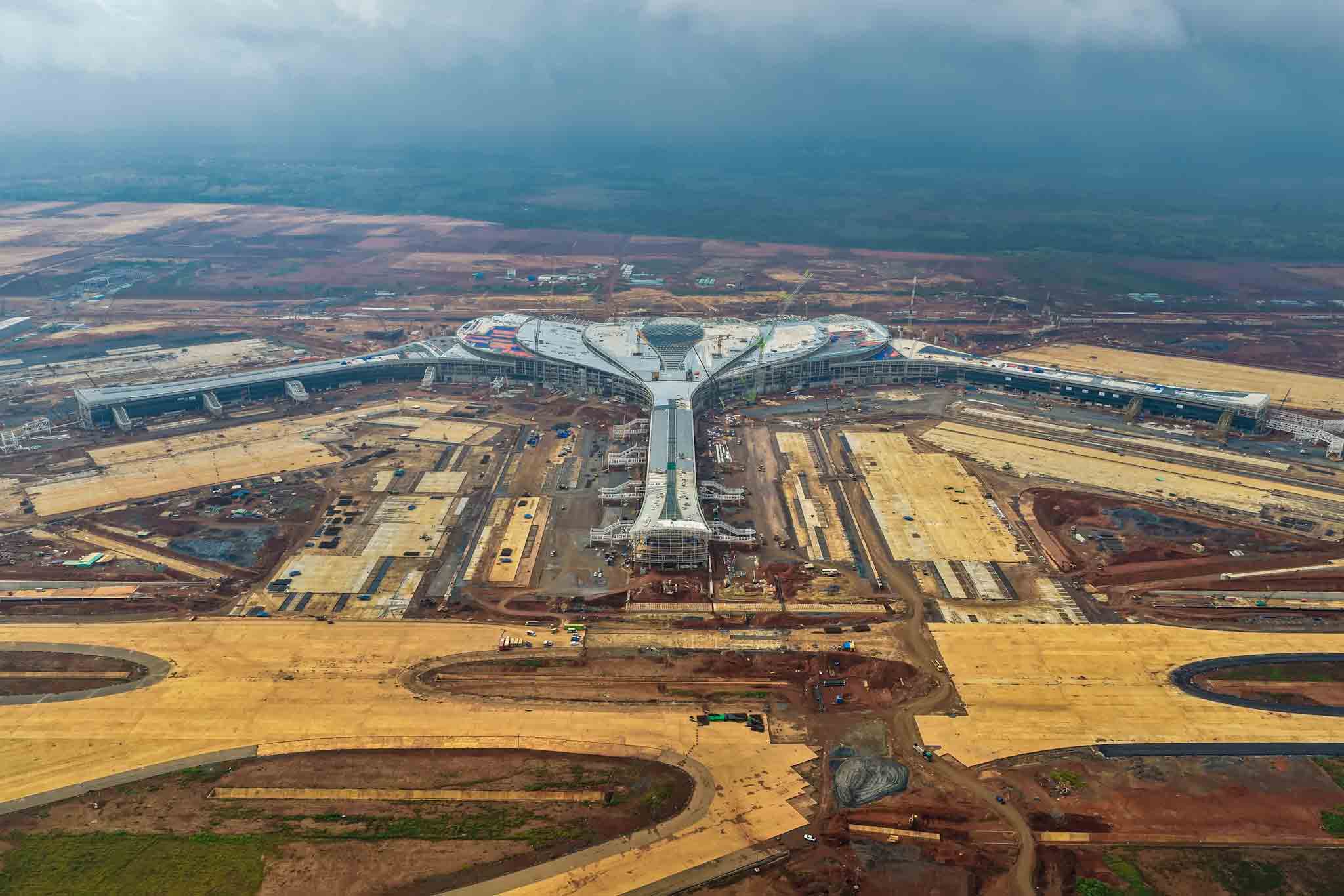
The Long Thanh International Airport is expected to officially begin operations between June 2026 and October 24, 2026. Airlines (especially Vietnamese airlines) are encouraged to relocate their international routes to/from Europe, America, and Oceania from Tan Son Nhat Airport to Long Thanh Airport. New international routes and increased flights to/from the Ho Chi Minh City area, operated by airlines making their debut or those currently operating at Tan Son Nhat, as well as non-scheduled international commercial flights and charter flights serving organizations and individuals, will also be transferred to Long Thanh Airport.
Next, from October 25, 2026 to March 27, 2027, Long Thanh Airport will operate additional international routes to/from Africa, the Middle East, South Asia, and Central Asia. Tan Son Nhat Airport will continue to operate non-scheduled international commercial flights; and charter flights serving organizations and individuals.
From March 28th to October 30th, 2027, international flights to/from Northeast Asia will continue to be transferred from Tan Son Nhat Airport to Long Thanh Airport. Subsequently, international flights to/from Southeast Asia and other regions will be gradually transferred, except for international flights with a distance of less than 1,000 km. By 2030, all international routes and flights, except for short international routes with a distance of less than 1,000 km operated by Vietnamese airlines, will be transferred to Long Thanh Airport.
This means that from October 30, 2027, until the end of 2030, Tan Son Nhat Airport will only operate regular international flights with a length of less than 1,000 km by Vietnamese airlines. This means passengers from Ho Chi Minh City will only be able to fly to neighboring countries such as Laos, Thailand, and Cambodia.
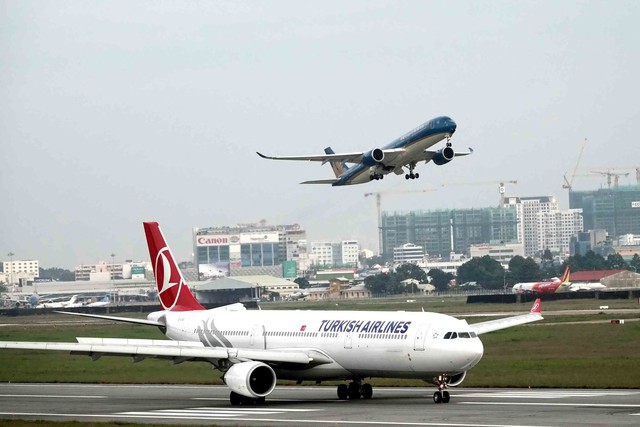
According to the plan proposed by the Vietnam Civil Aviation Authority to gradually withdraw international flights from Tan Son Nhat Airport to Long Thanh Airport, after 2030 Tan Son Nhat will only operate domestic flights.
PHOTO: INDEPENDENT
The Vietnam Civil Aviation Authority (CAA) believes that after 2030, with the completion of regional transportation infrastructure (road and rail), Long Thanh will become a leading aviation hub, integrated with an airport city, free trade zone, and a network of expressways and metro lines, similar to the models of Singapore or Amsterdam (Netherlands). Therefore, the CA recommends that all regular international flights be transferred to Long Thanh International Airport to establish a regional-level international air transport hub in the Ho Chi Minh City area. Tan Son Nhat Airport will only handle domestic flights and irregular international commercial flights, as well as charter flights serving organizations and individuals.
Difficult for both airlines and passengers.
In reality, even if the Vietnam Civil Aviation Authority's transition roadmap is based on the most important characteristic—transport connectivity—the plan to relocate all international flights to Long Thanh airport would still create obstacles for both airlines and passengers.
In the "ideal" scenario previously presented by the Vietnam Airports Corporation (ACV), once the connecting expressways are completed and a reasonable traffic flow plan is in place, passengers from the center of Ho Chi Minh City (Ben Thanh Ward, Saigon Ward, etc.) to Long Thanh Airport could travel in about 40-45 minutes under normal conditions, equivalent to the travel time to Tan Son Nhat Airport during peak traffic hours (which can take almost an hour). However, in reality, regardless of how many roads are built, the distance from the center of Ho Chi Minh City to Long Thanh Airport remains about 40 km, 4-5 times the distance to Tan Son Nhat (about 8-10 km depending on the area). Along with the reduced congestion at Long Thanh Airport once it becomes operational, a series of urban road and bridge projects and urban railway projects are underway, so the travel time from the city center to Tan Son Nhat Airport will certainly be significantly reduced. At that time, people in Ho Chi Minh City flying short routes to Laos, Thailand, Cambodia, etc., instead of just taking a taxi to the nearest airport in 10-15 minutes, would have to call a car to travel over 40 km or change multiple modes of transportation (in the case of rail or metro) to get to an airport in another province. This would add to the cost and time spent on check-in and waiting, equivalent to the entire flight time.
For airlines, foreign airlines' planes arrive at Vietnamese airports and then return to their home countries, while each Vietnamese airline's plane is used for both domestic and international flights. Therefore, dividing the narrow-body fleet (which accounts for about 90% of the total number of Vietnamese airlines' aircraft) for domestic flights at Tan Son Nhat and the wide-body fleet for international flights at Long Thanh would be extremely complicated and costly. Not to mention, Long Thanh airport still needs several domestic routes to serve a significant number of international passengers requiring connecting flights. The "triangle" of routes between Hanoi , Ho Chi Minh City, and Da Nang is projected to have high demand.
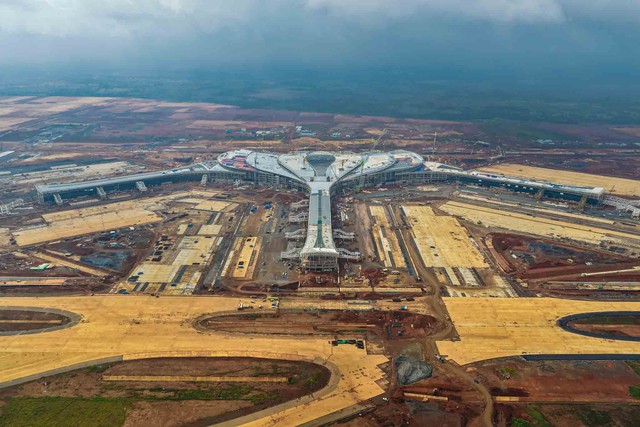
Long Thanh Airport is expected to begin operations in June 2026, at the same time that international flights from Tan Son Nhat Airport will gradually be relocated there.
PHOTO: ACV
In its comments to the Civil Aviation Authority, Vietnam Airlines, the national airline, also stated its position: Operating two airports simultaneously makes operational organization more complex. Practical lessons show the irreplaceable importance of airports located near city centers in terms of location and convenience, especially for business travelers, high-revenue tourists, and passengers flying medium and short-haul routes. For Vietnam, the routes connecting Tan Son Nhat to Southeast Asian countries mostly serve business travelers and short-stay tourists; it would be very inconvenient for passengers if travel time from the airport to the city center was too long. Furthermore, the ASEAN region has implemented the Open Skies Agreement, and countries have close diplomatic, trade, and tourism relations, resulting in a high proportion of Vietnam Airlines' flights to these countries.
Concerns about significant losses for Ho Chi Minh City.
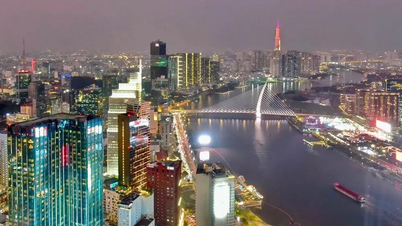
The prospect of Ho Chi Minh City no longer having an international airport after 2030 raises significant concerns for the city's key economic goals. Following the merger, the megacity of Ho Chi Minh City is determined to realize its dream of becoming an international financial center, a maritime hub, a logistics hub for the continent, a magnet for tourism and trade with the free trade zone… Can these “dreams” become a reality if international tourists and global investors cannot fly directly to Ho Chi Minh City?
Economist Tran Anh Tung (Head of Business Administration Department, Faculty of Business Administration, Ho Chi Minh City University of Economics and Finance) asserted that relocating the entire international flight network to Long Thanh Airport would lead to the loss of Ho Chi Minh City's position as an international transit hub, and would also have many negative economic consequences for Ho Chi Minh City in particular and the whole country in general.
The tourism and service sectors (hotels, food, retail) will suffer immediate losses. Mr. Tung estimates that each international visitor spends an average of $1,200-$1,500 per flight. If the number of visitors decreases by 10-20% due to the distance barrier, Ho Chi Minh City could lose hundreds of millions to billions of USD in revenue annually from this economic sector. Strategically, the city's position as a financial and economic center will also be severely affected. International investors and experts highly value convenience. The 40-50 km distance from Long Thanh airport to the center of Ho Chi Minh City is a major obstacle compared to centers like Bangkok or Singapore, where the airport is located within the city. This reduces its attractiveness in attracting multinational company headquarters and large-scale events.
Based on the above analysis, Mr. Tung proposed retaining international routes within Southeast Asia at Tan Son Nhat Airport, considering this as a strategic market share protection. Routes within ASEAN are the "backbone" of Vietnam's airline network, accounting for a high proportion of operations and revenue. The ASEAN Open Skies Agreement facilitates high-frequency operations. Transferring all these routes to Long Thanh Airport risks disrupting operations, increasing operating costs for airlines, and reducing attractiveness to passengers, potentially leading to competition from foreign airlines. Furthermore, foreign business travelers and those on short trips (3-4 days) have limited time and packed schedules. Having to travel an additional 60-90 minutes from Long Thanh Airport to the center of Ho Chi Minh City would significantly reduce trip efficiency and customer satisfaction. "Keeping flights short at Tan Son Nhat helps maintain competitiveness in terms of time compared to other hubs in the region," Mr. Tran Anh Tung emphasized.
Dr. Nguyen Van Dien, Head of the Department of Political Economy at the Regional Political Academy II, also agrees that if Tan Son Nhat Airport completely abandons all international flights, it will have a localized impact on budget revenue. However, in the context of the country's recent restructuring to open up broader development opportunities, the development of Ho Chi Minh City needs to be considered within the context of the entire Southeast region.
According to Mr. Dien, the Southeast region's economy is a major growth pole, requiring broader development space, regardless of which province or city strategic infrastructure is located in. The principle is to relocate airport infrastructure to underdeveloped areas for restoration and revitalization according to the TOD (Transit-Oriented Development) strategy – a strategy that uses transportation to build infrastructure and boost services and the economy. Long Thanh Airport will be a driving force for the entire Dong Nai and Binh Duong (formerly) region. Ho Chi Minh City will then become the core development area. For Ho Chi Minh City, the airport is merely an infrastructure component, a transit point. Even if all international flights are transferred to Long Thanh Airport, Ho Chi Minh City will still maintain its strong appeal thanks to its central location as a cultural and political hub, a center for high-quality services, tourism, and resorts, and will continue to thrive thanks to high-quality financial services upon completion of the financial center and free trade zone… Diplomatic and investment visitors will still transit through Long Thanh Airport to return to Ho Chi Minh City. On the other hand, if Vietnam wants to become an Asian transit hub and a world-class logistics hub, it must concentrate its efforts on a major aviation center, which is Long Thanh.
While affirming this as a long-term strategy for sustainable development, Dr. Nguyen Van Dien noted that the key factor is a synchronized infrastructure system with multimodal connectivity, corresponding to the level of planning and the practical needs of the people. Only when residential planning and satellite cities are balanced and harmoniously linked can a coherent plan for international and domestic airport infrastructure be considered. In the short term, it is still necessary to maintain parallel international operations at both airports or study international experience to retain some specific flight routes for Tan Son Nhat.
Vietnam Airlines suggested that at Long Thanh Airport, all flights should be operated by foreign airlines, while Vietnamese airlines should operate international flights outside of Southeast Asia. At the same time, some other international and domestic flights should continue to be operated at the airlines' discretion, provided that connecting flights and aircraft turnaround times are ensured. Regarding Tan Son Nhat Airport, Vietnamese airlines should operate domestic and international flights within Southeast Asia.
The gradual transition (by 2030) allows airlines and travelers time to adapt. A prerequisite is that the transportation infrastructure connecting Long Thanh Airport to Ho Chi Minh City (such as highways and railways) must be completed before large-scale conversion. Otherwise, the inconvenience will reduce the competitiveness of both Tan Son Nhat and Long Thanh. The scenario of infrastructure delays needs to be considered. If roads are slow, increased travel costs and time will push a segment of passengers, especially transit/international travelers, to airports in neighboring countries such as Bangkok or Singapore. Airlines may also object due to concerns about reduced passenger numbers.
Economist Tran Anh Tung
Thanhnien.vn
Source: https://thanhnien.vn/sau-2030-tphcm-se-khong-con-san-bay-quoc-te-185250930221311739.htm




![[Image] Hanoi's urban life under the challenge of a "scorching hot" environment](https://vphoto.vietnam.vn/thumb/1200x675/vietnam/resource/IMAGE/2026/05/25/1779706979265_nang-nong-t5-2026-minh-duy-7-4636-jpg.webp)


![[Image] Close-up view of the interchange connecting the two expressways and Long Thanh Airport.](https://vphoto.vietnam.vn/thumb/1200x675/vietnam/resource/IMAGE/2026/05/25/1779703378210_ndo_br_z7863716673926-224453a31600126cce10622af6290afd-4549-jpg.webp)











































































Comment (0)