

In less than two months, this agency has repeatedly issued official documents, held system-wide meetings, and demanded inspections and strict handling of banks that have increased deposit interest rates contrary to established guidelines.
On March 30, 2026, the State Bank of Vietnam issued Circular 2342, requesting credit institutions to stabilize market interest rates. On April 9, the agency held another meeting with the entire banking system to request a reduction in deposit and lending interest rates to support businesses and individuals.
Following the resurgence of some banks raising deposit interest rates, the State Bank of Vietnam (SBV) continued to tighten discipline in the monetary market. On May 14th, Circular 3972 was issued, requiring inspections of the implementation of interest rate reductions at commercial bank branches. Just one week later, on May 21st, the SBV issued Circular 4190, further requiring the entire system to be thoroughly briefed and violations to be strictly dealt with.
The frequency and intensity of these actions demonstrate the strong determination of the authorities to keep capital costs stable for the economy .
This is not difficult to understand.
In an economy where credit currently amounts to approximately 150% of GDP, interest rates are practically the "input price" for all investment and production activities. As Vietnam aims for double-digit growth, the demand for capital for investment and production expansion will increase dramatically.
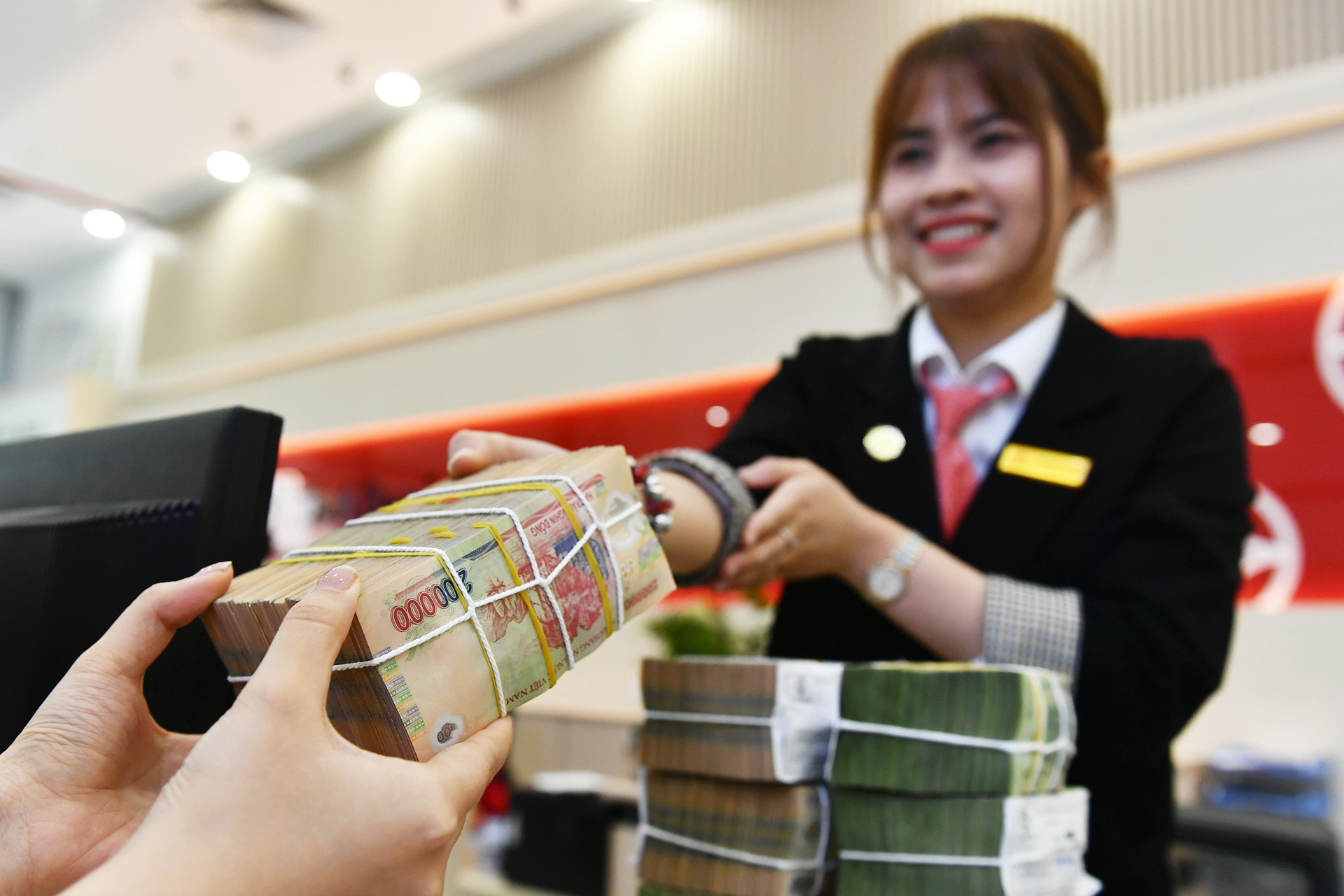
In this context, maintaining stable interest rates becomes crucial for reducing capital costs for businesses and sustaining growth.
However, behind the goal of keeping interest rates low lies considerable liquidity pressure on the banking system.
According to a representative of the State Bank of Vietnam, by the end of April 2026, outstanding credit in the entire system had exceeded 19.4 million billion VND, an increase of more than 18% compared to the same period last year.
SSI Research reports that the actual loan-to-deposit ratio (LDR) has now reached approximately 112%, far exceeding the 85% threshold. In other words, the difference between lending and deposits has reached about 2 trillion VND.
Even the Big4 firms are approaching liquidity regulatory thresholds.
It is worth noting that the majority of the capital mobilized by the banking system today is still short-term capital, while the demand for medium and long-term loans, especially for real estate and infrastructure, is very large. This makes the financial system much more sensitive to interest rate fluctuations.
These figures show that the money supply in the banking system is stretched to meet the enormous capital needs of the economy, as credit continues to grow sharply but capital mobilization is not keeping pace.
That is also why the State Bank of Vietnam has continuously had to inject liquidity through OMO operations, supporting VND liquidity for the system, while requiring banks to maintain low interest rates instead of letting the capital mobilization race heat up again.
But perhaps the real concern isn't the State Bank of Vietnam's efforts to maintain low interest rates, but rather the fact that the economy's cash flow is still heavily skewed towards assets rather than production.
In its updated report on the Vietnamese economy, the World Bank stated that real estate credit is projected to increase by 42% in 2025, many times higher than the overall credit growth rate of the entire system. Currently, approximately 25.5% of total outstanding credit is in the real estate sector; about half of this credit is granted to real estate development companies.
Meanwhile, credit extended to the industrial and agricultural sectors increased by only 12.1% and 9.1%, respectively.
In other words, the economy's capital flows are heavily skewed toward the asset sector rather than the sector that creates real wealth.
Vietnam is embarking on an unprecedented wave of "mega-cities." By 2025 alone, 27 mega-cities are expected to be launched, implemented, or have their investment plans approved, with a total capital of approximately US$115 billion.
According to the Ministry of Construction , by the end of 2025, the whole country will have approximately 5.9 million houses in real estate projects with a total investment of up to 7.42 trillion VND. This capital scale is even much larger than the total social investment capital of the entire economy in 2025.
This partly reflects the enormous scale of urbanization and wealth accumulation taking place in Vietnam. But it also raises a big question about how effectively the economy's money is being used.
A huge amount of money is currently tied up in financial assets and real estate instead of flowing strongly into production and consumption as before.
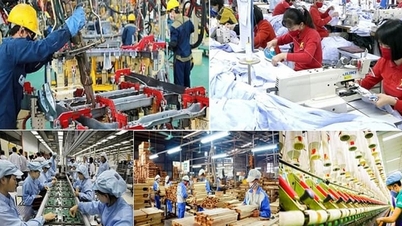
That's the big paradox of the current economy: credit is increasing very rapidly, but the manufacturing sector is still starved for capital, while housing prices in major cities are increasingly beyond the affordability of many young people.
In fact, this is also the biggest challenge facing Vietnam's current growth model transformation.
The economy is shifting from a model heavily reliant on credit, assets, and exports to one that relies more on productivity, technology, and the domestic private sector.
But that transition is happening precisely at a time when Vietnam needs to maintain very high growth rates, invest in large-scale infrastructure, and face numerous global geopolitical shifts.
That is also the main reason why monetary policy is currently in a precarious position, walking a tightrope.
If interest rates surge again, pressure will immediately mount on businesses, asset markets, and the entire banking system.
But if cheap money is maintained for too long, capital could continue to flow strongly into land and make the economy increasingly dependent on credit and real estate.
Meanwhile, there is not much room left to lower interest rates as sharply as in the previous period, because exchange rate pressure still exists as USD interest rates globally remain high and the VND-USD interest rate differential is narrowing.
However, maintaining high growth does not mean sacrificing macroeconomic stability. Given the continued pressure on exchange rates and significant global volatility, maintaining monetary stability and strengthening the resilience of the financial system remain fundamental conditions for long-term growth.
Perhaps the biggest question today is no longer whether the economy has enough cheap money, but whether the financial system is capable of channeling that capital into sectors that generate real productivity and wealth.
In the long term, Vietnam will find it difficult to continue relying primarily on bank credit to fuel all of its economic growth needs.
Further development of the capital market, especially the corporate bond market, and upgrading the stock market are crucial conditions for reducing pressure on the banking system and creating more long-term capital for the manufacturing, technology, and innovation sectors.
Another approach is to create mechanisms to channel more low-cost capital into social housing, affordable housing, and manufacturing sectors, instead of primarily flowing into speculative assets.
Programs such as the social housing credit package or the plan to develop one million affordable apartments demonstrate efforts to adjust capital flows towards serving the real needs of the economy.
In the context of an economy pursuing very high growth targets, the State Bank of Vietnam's efforts to maintain stable interest rates are perhaps an unavoidable choice.
But in the long term, the biggest challenge is probably how to get that cheap capital to flow more into technology, manufacturing, and sectors that create real wealth for the economy.
Source: https://vietnamnet.vn/de-tien-re-chay-vao-san-xuat-2519005.html

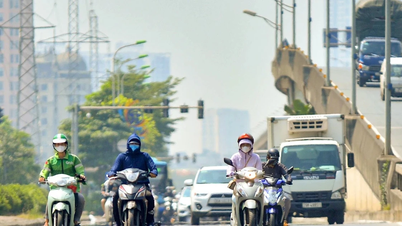
![[Image] Hanoi's urban life under the challenge of a "scorching hot" environment](https://vphoto.vietnam.vn/thumb/1200x675/vietnam/resource/IMAGE/2026/05/25/1779706979265_nang-nong-t5-2026-minh-duy-7-4636-jpg.webp)

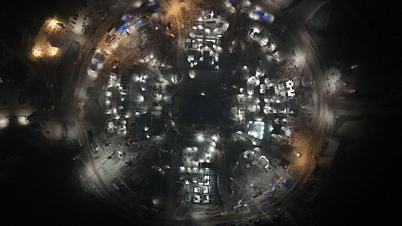
![[Image] Close-up view of the interchange connecting the two expressways and Long Thanh Airport.](https://vphoto.vietnam.vn/thumb/1200x675/vietnam/resource/IMAGE/2026/05/25/1779703378210_ndo_br_z7863716673926-224453a31600126cce10622af6290afd-4549-jpg.webp)

























































































Comment (0)