

Pressure from a new job and new tasks.
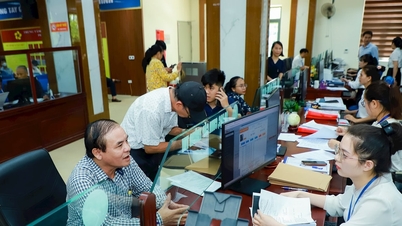
Looking at the crowds filling the waiting area at the Ben Thanh Ward Public Administrative Service Center, and thinking about the recently issued set of administrative procedures for Ho Chi Minh City, which is over 300 pages thick, a civil servant honestly shared: "It's very stressful!" There are many tasks, and they have to constantly update themselves on new documents and policies from the central government and Ho Chi Minh City, while many are still unfamiliar with their new positions and areas of responsibility.
Hoang Thi To Nga, Secretary of the Ben Thanh Ward Party Committee, acknowledged that in the early days after the reorganization, the morale of officials and civil servants was somewhat unsettled, largely stemming from the fragmented infrastructure and changes in administrative operations. To address this, the Ward Party Committee proactively organized visits and provided encouragement, while also assigning tasks to department heads to promptly understand the sentiments of the staff, enabling the Party Committee to respond quickly and appropriately to the right people and tasks.
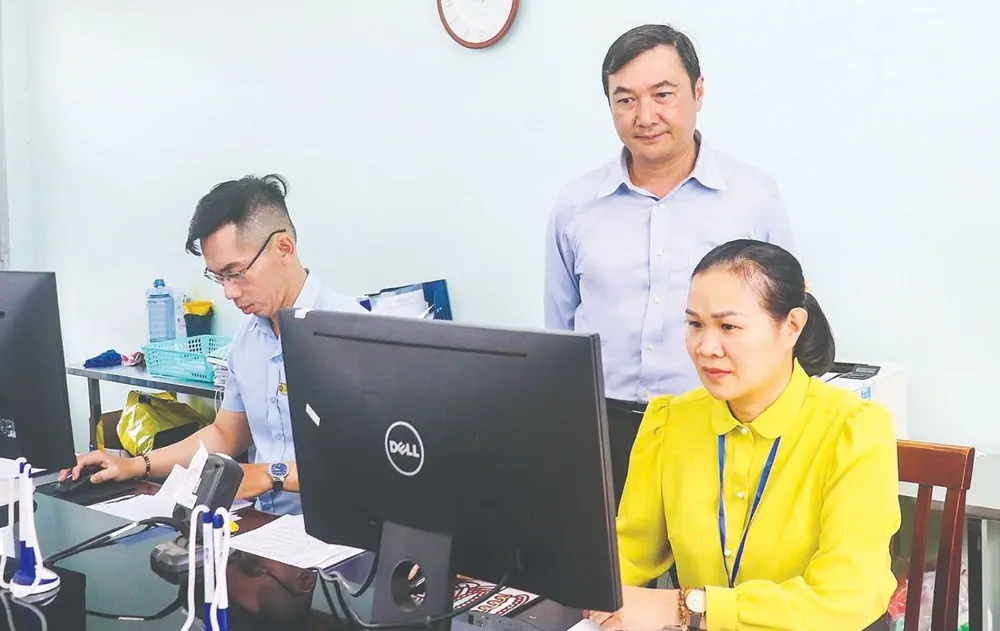
In Hiep Binh ward, several shortcomings arising from practical experience are also clearly reflected. According to Vu Anh Tuan, Secretary of the Hiep Binh Ward Party Committee, some individuals are concerned because their assigned positions do not match their previous strengths and expertise. Therefore, the local Party committee has decided to review and adjust personnel accordingly, ensuring that officials have the opportunity to utilize their strengths and remain committed to their work.
Besides work pressure, a segment of non-specialized officials are also worried about their retirement due after May 31, 2026. If this anxiety isn't addressed promptly, it will negatively impact the quality of service to the public. Based on the experience of Go Vap ward, the Ward Party Secretary, Nguyen Tri Dung, believes that the key factor for ensuring the peace of mind of officials and civil servants is unity and consensus in leadership and management; clarity in assignment and delegation of responsibilities. Along with this, it requires the Party committee and government to show concern, acknowledge, and promptly resolve difficulties for officials and civil servants. When each individual sees that their role and position are respected and appreciated, they will feel secure and continue to contribute, successfully completing their assigned tasks in the new situation.
Strengthening ideology is a continuous requirement.
To ensure the smooth and effective operation of the two-tiered administrative system, the Politburo and the Secretariat issued Conclusion 176-KL/TW, directing the implementation of several key contents and tasks in the activities of grassroots Party organizations in the coming period; and Conclusion 177-KL/TW on continuing to build and operate the two-tiered administrative system to ensure smooth and effective operation. A key requirement emphasized is the need for political and ideological education for cadres and civil servants, and the timely handling of issues arising during the organization and operation of the new apparatus.
Ho Chi Minh City has concretized that requirement through many practical activities. According to Ms. Nguyen Thi Hong Tham, Deputy Director of the Ho Chi Minh City Department of Internal Affairs, the city has organized working groups led by Ho Chi Minh City leaders to directly survey and listen to feedback at the grassroots level. Typical examples include the recent working session of the Chairman of the Ho Chi Minh City People's Committee, Nguyen Van Duoc, in Phu An ward and other wards and communes of the former Binh Duong province; and the monitoring activities of the Head of the Ho Chi Minh City National Assembly Delegation, Nguyen Van Loi, in several newly reorganized wards.
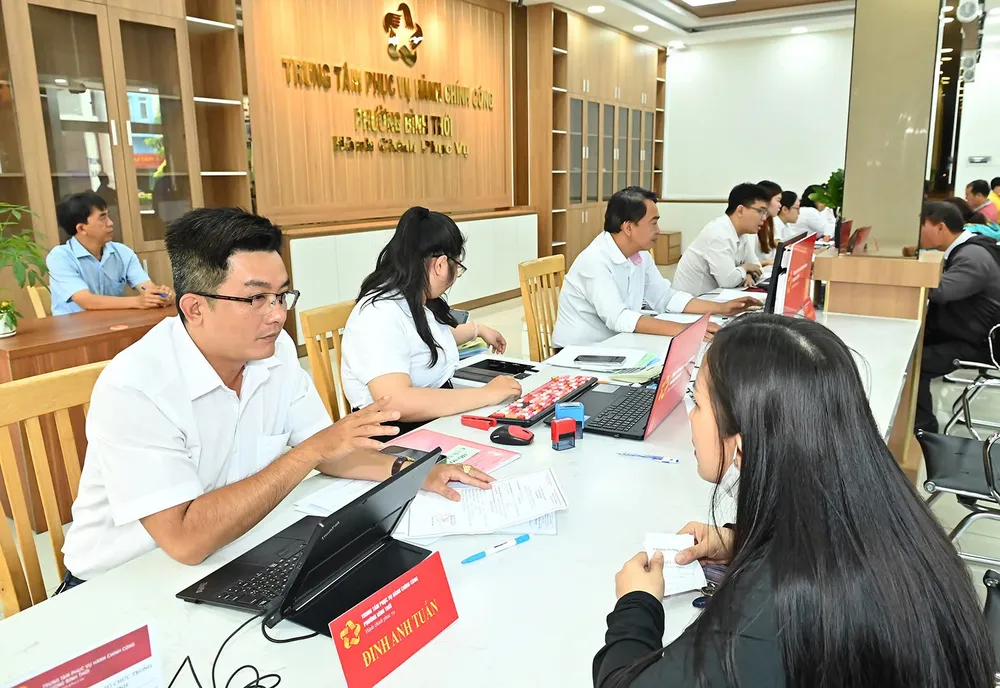
During the survey and working session, Ho Chi Minh City leaders thoroughly emphasized the need to understand the mindset of officials and civil servants, and to promptly address their requests so that the staff can work with peace of mind. Following this directive, Party committees and authorities at all levels have prepared many solutions to promptly receive feedback, handle requests, and reassure the staff at the grassroots level. In some localities, this spirit has spread into concrete actions. For example, on July 7th, Hiep Binh ward awarded one collective and 59 individuals who directly participated in the reorganization of administrative units. This approach serves as motivation, provides moral support, and encourages efforts to overcome difficulties. Ben Thanh ward is also focusing on renovating and upgrading its headquarters to create the best possible working environment for officials and civil servants.
In Go Vap ward, the ward Party Committee promptly organized dialogues, issued work regulations, and assigned clear tasks, helping officials feel secure in approaching their new jobs. The timely attention and recognition from the ward leadership are considered a "key" factor in ensuring officials feel secure in their work.
Maintaining ideological stability among officials and civil servants during the administrative boundary reorganization period is not only a situational requirement but also a sustainable foundation for building an efficient, effective, and effective administrative apparatus. Meanwhile, retaining officials, especially talented ones, is not solely about the system; more importantly, it's about maintaining trust and confidence. Therefore, each Party organization and local government needs to further promote the exemplary role of leaders, ensure transparency in organizational restructuring, clearly assign tasks, and conduct fair evaluations; proactively identify capable individuals for appropriate placement, provide timely encouragement, and promptly protect those who dare to think and act.
* Ms. PHAM THI THANH HIEN, Director of the Department of Internal Affairs of Ho Chi Minh City
(Speech at the session on the socio -economic situation and results of the first six months of 2025 and tasks and solutions for the last six months of 2025):
Assigning work that matches your strengths and is convenient for commuting.
Based on observations and the sentiments of officials and civil servants following the merger of the three provinces and cities, the Ho Chi Minh City area is vast, travel distances are excessively long, and some offices are still inadequate. These factors create certain difficulties for officials and civil servants in arranging family matters to relocate to new workplaces. The Department will advise the Ho Chi Minh City People's Committee to understand the thoughts and aspirations of officials and civil servants, especially those with difficult family circumstances when moving between localities. They will address each case individually, taking into account the officials' wishes, their work expertise, the functions and duties, and the working conditions of their respective units.
* Ms. Nguyen Ngoc Bao Quyen, Head of the Party Building Committee, Hoa Hung Ward Party Committee, Ho Chi Minh City:
Proactively monitor public opinion.
The Party Committee and People's Committee of the ward have always proactively monitored public opinion, thoughts, and feelings of cadres, civil servants, employees, and non-specialized personnel. To date, the morale of cadres and Party members has basically stabilized, they are confident in their work, and have been assigned suitable jobs, positions, and working environments.
The Party Building Committee is also advising on the consolidation of organizations such as: social opinion groups, propaganda groups, and steering committees such as the Steering Committee for the Implementation of Democratic Regulations, the Steering Committee 35, etc., to continue to grasp the thoughts and reflect the aspirations of the people, contributing to the improvement of information channels serving mass mobilization work.
* Dr. Ho Ngoc Dang, Ho Chi Minh City Academy of Cadres:
Ensuring stable living conditions for officials and civil servants.
In reality, the process of organizational restructuring often entails changes in job positions, functions, responsibilities, and authority. This can easily lead to feelings of instability such as anxiety, disorientation, or uncertainty about the future. If not identified and addressed promptly, these manifestations can negatively impact morale and reduce the effectiveness of the Party organization and the state apparatus.
To effectively address this issue, a number of key solutions need to be implemented simultaneously, including improving the effectiveness of political and ideological education. Proactively grasping and promptly addressing ideological developments is crucial, including establishing two-way communication channels between Party committees and cadres and Party members; organizing regular dialogues, listening to and frankly addressing legitimate concerns. Manifestations of wavering and deviations must be identified early and addressed based on logical analysis, strengthening personalized ideological work, and placing cadres at the center. In addition, it is necessary to strengthen Party discipline and improve the quality of the workforce; promptly resolve issues related to benefits and policies, and ensure stable living conditions for cadres, civil servants, and public employees affected by the restructuring of the administrative apparatus and boundaries.
Source: https://www.sggp.org.vn/sau-sap-xep-bo-may-on-dinh-tu-tuong-cho-can-bo-cong-chuc-post803645.html

















![[Photo] Prime Minister Pham Minh Chinh attends the Conference on the Implementation of Tasks for 2026 of the Industry and Trade Sector](/_next/image?url=https%3A%2F%2Fvphoto.vietnam.vn%2Fthumb%2F1200x675%2Fvietnam%2Fresource%2FIMAGE%2F2025%2F12%2F19%2F1766159500458_ndo_br_shared31-jpg.webp&w=3840&q=75)


















































Comment (0)