

The impact of Typhoon Yagi and flooding in the central provinces, which led to increased food prices, contributed to the rise in the Consumer Price Index (CPI) for October and the first 10 months of the year. However, according to Ms. Nguyen Thu Oanh, Head of the Price Statistics Department (General Statistics Office), the target of keeping inflation below 4.5% will be achieved.
The impact of Typhoon Yagi and flooding in the central provinces, which led to increased food prices, contributed to the rise in the Consumer Price Index (CPI) for October and the first 10 months of the year. However, according to Ms. Nguyen Thu Oanh, Head of the Price Statistics Department (General Statistics Office), the target of keeping inflation below 4.5% will be achieved.
 |
| Ms. Nguyen Thu Oanh, Director of the Price Statistics Department (General Statistics Office) |
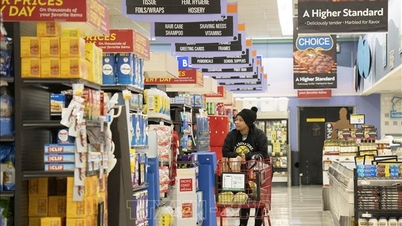
Food and groceries account for a significant weight in the CPI basket. Madam, how have the sharp price increases in these two groups, due to the impact of Typhoon Yagi and flooding in the central provinces, affected the CPI?
The continued increase in food prices due to the impact of storms and heavy rains is one of the main reasons for the 0.33% increase in the Consumer Price Index (CPI) in October 2024 compared to the previous month, a 2.52% increase compared to December 2023, and a 2.89% increase compared to the same period last year. However, the average CPI increase for the first 10 months of 2024 was only 3.78%, so controlling inflation below 4.5% is entirely achievable.
Specifically, the price index for food and beverage services in October 2024 increased by 0.55% (compared to September 2024), contributing 0.18 percentage points to the overall CPI increase. Within this, the food group increased by 0.77%, contributing 0.03 percentage points; the food group increased by 0.66%, contributing 0.14 percentage points. Compared to the same period in 2023, the CPI in October 2024 increased by 2.89%, with the food and beverage group alone increasing by 4.45%, contributing 1.49 percentage points to the overall CPI increase. Conversely, the 13.54% decrease in gasoline and diesel prices alone reduced inflation by 0.14 percentage points.
On November 10, 2024, the average retail electricity price increased by 4.8% (excluding value-added tax), but according to calculations by the General Statistics Office, this 4.8% increase in electricity prices only contributed 0.04 percentage points to the CPI increase in the fourth quarter of this year, thus not putting pressure on inflation.
Many provinces in central Vietnam are struggling to cope with floods, threatening a sharp increase in food prices in the final months of the year. Madam, given these unfavorable developments, what will the inflation trend be like?
In contrast to 2023, the CPI in the first five months of 2024 (compared to the same period) showed a gradual upward trend, reaching 4.44%. This was before the floods and storms, when the weather was very favorable. However, with the start of the rainy season, from June 2024 to the present, inflation has tended to decrease, from a 4.34% increase in June 2024 to a 2.89% increase in October 2024. Therefore, the CPI for the first ten months of this year has only increased by 3.78%.
I believe that the downward trend in inflation since June will continue into the last two months of the year. Therefore, the likelihood of controlling inflation this year below 4.5% as set by the National Assembly is quite high, even though many areas in Central Vietnam are experiencing flooding.
What factors give you the confidence that inflation this year will be below 4.5%?
According to our calculations, if inflation reaches 4.5% this year, the CPI in the fourth quarter would have to increase by 6.4%. This is highly unlikely, as the 2024-2025 school year has already begun, and tuition fees have been set by local authorities for the entire year, so no adjustments will be made. Electricity prices have also increased, and according to regulations, the minimum time between adjustments to average retail electricity prices is 3 months, so electricity prices will certainly not increase from now until the end of the year. The increase in Vietnamese food prices is actually due to world prices, as Vietnam is a major rice exporter. However, India – also a major rice exporter – has just decided to ease rice export regulations after implementing restrictions from mid-2024, so global food prices will no longer be under such pressure.
Global inflation, particularly in major economic centers, has cooled and is approaching its target inflation rate (2% per year), prompting the European Central Bank (ECB) to continuously cut interest rates. The US Federal Reserve (Fed) recently cut its policy interest rate by 50 basis points and is likely to cut another 25-50 basis points this month, reducing pressure on the VND exchange rate against major currencies, especially the USD and euro.
The cooling of global inflation has helped Vietnam reduce pressure from inflationary imports, as machinery, equipment, tools, and spare parts account for 47.3% of total import value, while raw materials and fuels account for 46.4%. When the prices of machinery, equipment, spare parts, raw materials, and fuel do not increase, it greatly helps businesses reduce production costs, thereby lowering product prices.
American voters have chosen their leader for the next four years. How do you think this will impact Vietnam's inflation control efforts?
Donald Trump's previous term showed a tough stance on imports from China. This term, he has declared he will continue this policy. When Chinese goods face difficulties entering the US market due to tariffs, they will be pushed to other markets, with Vietnam being a major market for Chinese goods.
In the first 10 months of 2024, Vietnam imported $117.7 billion worth of goods from China, an increase of 31.6%; while exporting $50.8 billion to the "market of over a billion people," an increase of more than 2%.
Importing raw materials, machinery, equipment, parts, and components from China at low prices facilitates export-oriented businesses, increasing their competitiveness and contributing to inflation control. However, domestic businesses, especially small and medium-sized enterprises (SMEs), face increased competitive pressure from cheap Chinese goods. Furthermore, it is necessary to control the practice of "front companies" – foreign businesses establishing themselves in Vietnam, importing goods from China, and then relabeling them to export to the US, as has happened in the past.
In general, the new US administration will have a significant impact on Vietnam's production, business, investment, trade, and inflation control, both positively and negatively.
The effective control is undeniably greatly contributed to by policies on tax, fee, and land rent exemptions, reductions, and extensions, isn't that right, Madam?
That's right. This year, according to estimates from the Ministry of Finance, the amount of tax exemptions, reductions, and extensions, as well as 36 other fees and charges, is approximately 200,000 billion VND. This amount not only provides timely support for businesses to overcome difficulties, recover, and develop production and business, but also indirectly contributes to controlling inflation because businesses reduce production costs and alleviate financial pressure. In particular, the environmental protection tax on gasoline and diesel has been reduced by 50%, and the registration fee for domestically produced and assembled automobiles has also been reduced.
Therefore, the Government has directed the Ministry of Finance to research and evaluate whether to extend policies on tax, fee, and land rent exemptions, reductions, and extensions to support growth and alleviate difficulties for production and business. Continuing these financial support policies will significantly contribute to controlling inflation next year by reducing pressure on inflation expectations.
However, inflationary pressure is also significant because public investment in the remaining months of this year and in 2025 is substantial to complete the medium-term public investment plan. Increased public investment leads to increased private sector and foreign investment. If there isn't enough supply of construction materials and related equipment, prices of these items will rise, creating a ripple effect of price increases for many other goods. The economy is recovering strongly, leading to increased demand for electricity to serve production and consumption. This poses a significant challenge to inflation control next year and in subsequent years if there isn't enough electricity.
Source: https://baodautu.vn/se-dat-muc-tieu-giu-lam-phat-duoi-45-d229440.html
![[Photo] General Secretary and President To Lam presides over the meeting to approve the draft report on the results of the second inspection by the Politburo of the Standing Committee of the Hanoi City Party Committee.](https://vphoto.vietnam.vn/thumb/1200x675/vietnam/resource/IMAGE/2026/05/26/1779789811432_a2-bnd-4430-9620-jpg.webp)































































































Comment (0)