

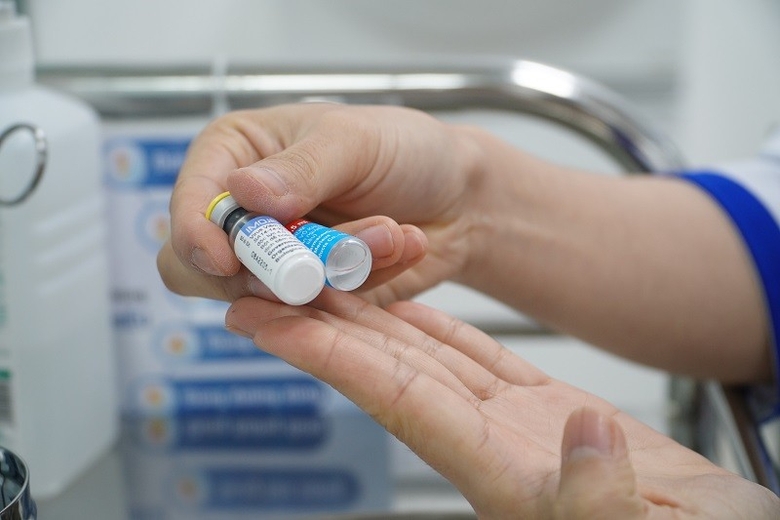
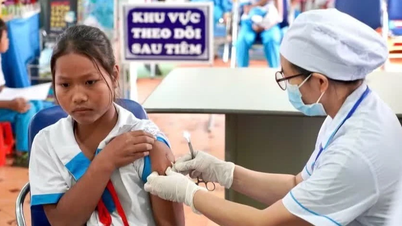
Illustrative image.
Proper vaccine storage and safe vaccination practices.
Recently, the Thang Binh Commune Health Station in Nong Cong District, Thanh Hoa Province, used expired Hexaxim (6-in-1) vaccine (March 31, 2023) to vaccinate children. Two health workers have been suspended from their duties for allowing four young children to be hospitalized after receiving the expired vaccine. The cause is believed to be due to improper vaccine storage and the staff failing to thoroughly check the vaccine before administration, thus not detecting the expiration date.
The Ministry of Health has issued a document requesting localities and the health sector to review the entire vaccination process to rectify vaccination activities; and to retrain staff involved in vaccination work in the area if necessary to ensure safe vaccination practices in accordance with regulations.
Vaccines are biological preparations containing antigens that stimulate the body to produce specific, active immunity to prevent and combat disease-causing agents. Vaccination involves directly introducing a biological product into the body; therefore, ensuring the absolute quality of the vaccine is crucial to guaranteeing its effectiveness in preventing disease.
The Ministry of Health has long issued guidelines on vaccination safety, which include specific requirements for vaccine storage, health screening before vaccination, and post-vaccination monitoring.
First, vaccines must be stored at the correct temperature: Vaccines are only safe for users when stored according to regulations and at the correct temperature. Today, GSP-standard cold storage systems and cold chain systems ensure that vaccines maintain a consistent temperature at all locations, guaranteeing vaccine quality.
Furthermore, for special vaccines requiring storage at extremely low temperatures down to -86 degrees Celsius, a dedicated thawing facility with controlled temperature within standard limits is required to ensure the vaccines are thawed safely and properly before use.
Vaccination facilities need to ensure a reliable power supply for cold storage (ideally, there should always be at least two power sources).
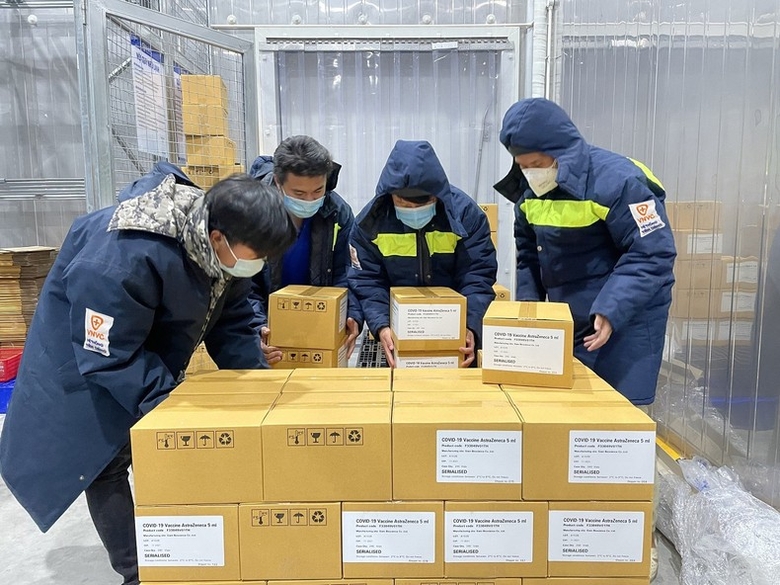
Safe vaccine storage procedures.
Vaccine storage cabinets also need to be specialized, with a synchronized temperature control system, a built-in thermometer, and a surveillance camera. Unused vaccines at the end of the day should be moved to a GSP-certified cold storage facility for enhanced safety monitoring.
Vaccine expiration dates must be monitored: Ms. Ngo Thi Tuyet Suong, Deputy Director of Quality, VNVC Vaccination System, stated that monitoring vaccine expiration dates is crucial right from the storage stage to ensure that all vaccines that are unsuitable for use or have expired are transferred to a cold storage area and processed according to the Ministry of Health's guidelines. Absolutely no expired vaccines should be stored together with valid vaccines to prevent any confusion.
Many vaccination centers now use modern inventory management software. This allows for tracking down to each individual vaccine vial with complete necessary information, including expiration date alerts, and coordinating supply according to inventory and demand. This rigorous process and modern software system prevent expired vaccines from being removed from storage; instead, they must be moved to a quarantine area awaiting return or disposal according to regulations.
Vaccines are biological preparations containing antigens that stimulate the body to produce specific, active immunity to prevent and combat disease-causing agents. Vaccination involves directly introducing a biological product into the body; therefore, ensuring the absolute quality of the vaccine is crucial to guaranteeing its effectiveness in preventing disease.
Ensuring safe vaccination practices: According to Ms. Ngo Thi Tuyet Suong, in some places, vaccines are still being stored in household freezers and refrigerators. While the temperature may be displayed as 2-8 degrees Celsius, it's difficult to guarantee this in reality due to various factors such as frequent opening and closing, power supply, and the density of goods inside.
To ensure safe vaccination practices, several important steps must be taken: First, a screening examination is conducted to detect any abnormalities and ensure the individual is in good health to receive the vaccination, minimizing post-vaccination reactions. The doctor conducting the screening determines whether the individual is eligible for vaccination. This process is then further carried out by nurses, who check and verify the results again in the vaccination room.
Step 2: The vaccine must be checked before injection. To avoid confusion, the person receiving the injection must be asked for their name and date of birth. The vaccine, once retrieved, must be checked, controlled, and compared with the person receiving the injection (or their guardian). This includes verifying the vaccine name, its effectiveness in preventing disease, manufacturer, country of origin, production date, expiration date, and integrity, as well as the dosage and route of administration.
At the same time, healthcare staff guide customers to check and compare the information with their doctor's instructions. This ensures that customers receive the correct vaccine, that the vaccination is safe, and that they have peace of mind regarding the quality of the vaccine and the vaccination process.
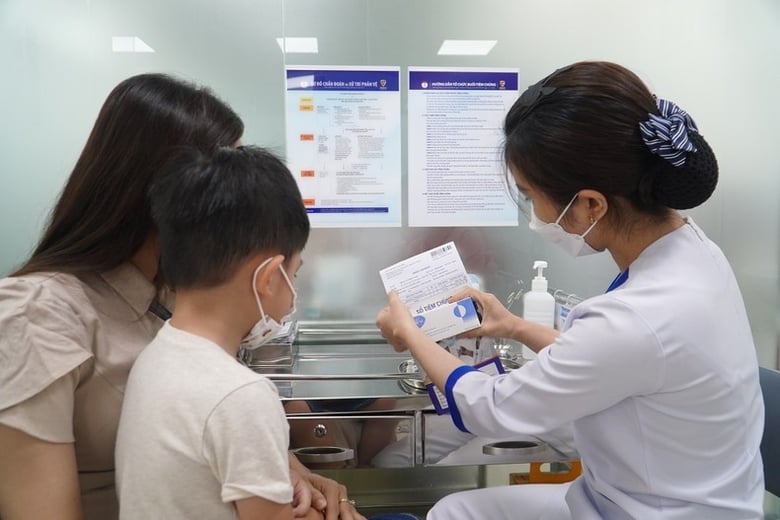
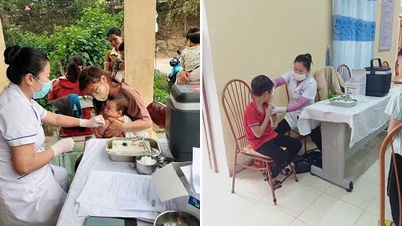
Vaccination staff review the information of the person receiving the vaccine, the type of vaccine, and the expiration date for the child's mother.
Step 3, post-vaccination monitoring: Each individual reacts to the vaccine at different levels, and most only experience mild reactions within 30 minutes of injection. Therefore, children should be monitored for 30 minutes after injection to promptly detect and manage any reactions that may occur. Continue monitoring for reactions at home for 72 hours after vaccination.
Include the Covid-19 vaccine in routine immunization programs.
Regarding COVID-19 vaccination, Associate Professor, Dr. Duong Thi Hong, Deputy Director of the Central Institute of Hygiene and Epidemiology, stated that the total number of doses administered in Vietnam is over 266 million. Vietnam has achieved a high COVID-19 vaccination coverage rate across all age groups, including both primary and booster doses.
According to the World Health Organization's recommendations, although the Covid-19 pandemic is no longer a global public health emergency, it is not over. Therefore, Vietnam still needs to maintain disease prevention and control measures, including Covid-19 vaccination and booster shots for high-risk groups.
Based on the number of people needing vaccination and the booster vaccination schedule, localities will organize Covid-19 vaccination in batches or periodically, eventually integrating it into routine vaccination to ensure full vaccination for all target groups, while saving resources and still achieving vaccine coverage for high-risk groups.
Associate Professor, Dr. Duong Thi Hong, Deputy Director, Central Institute of Hygiene and Epidemiology
According to Ms. Hong, Vietnam will implement Covid-19 vaccination according to the updated recommendations of the World Health Organization. Accordingly, priority groups for booster shots against Covid-19 include: elderly people at high risk of severe Covid-19 infection, immunocompromised individuals, and people with underlying or chronic diseases who need to receive the full basic dose and booster shots, with booster shots given 6 to 12 months after the last dose.
Currently, there are updated bivalent Covid-19 vaccines available worldwide that protect against both the original virus strain and the Omicron strain.
According to the US Centers for Disease Control and Prevention (CDC), all individuals 6 years of age and older who have received all the basic doses should receive an additional booster dose of the vaccine. Additionally, individuals 65 years of age and older should receive a second booster dose at least four months after their first dose, and immunocompromised individuals should also receive a second booster dose at least two months after their first dose.
"Vietnam will update its guidelines in accordance with the World Health Organization's recommendations, and through the Advisory Council on Vaccine Use, the Ministry of Health will issue appropriate Covid-19 vaccination guidelines for high-risk groups in the near future," Ms. Hong said.
Given the recent increase in the number of Covid-19 cases, people should implement disease prevention and control measures as recommended by the Ministry of Health. They should receive all basic and booster doses as currently guided by the Ministry of Health: Individuals aged 18 and over should receive all basic and booster doses; children aged 12-17 should receive all basic and booster doses; and children aged 5 to under 12 should receive all basic doses.
In particular, those at high risk of contracting Covid-19, such as immunocompromised individuals and those with underlying or chronic diseases, need to receive all three and four doses of the vaccine according to the schedule and guidelines of the Ministry of Health.
Source link




![[Image] Nearly 125,000 Hanoi students completed the Literature exam for the 10th grade entrance exam.](https://vphoto.vietnam.vn/thumb/1200x675/vietnam/resource/IMAGE/2026/05/30/1780117233041_ndo_br_thiet-ke-chua-co-ten-2-png.webp)
























































































Comment (0)