

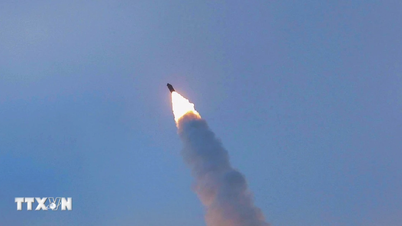
On May 24, Russia launched Oreshnik hypersonic missiles, capable of carrying nuclear warheads, in the largest airstrike against Kyiv since the conflict began, according to Ukrainian officials.
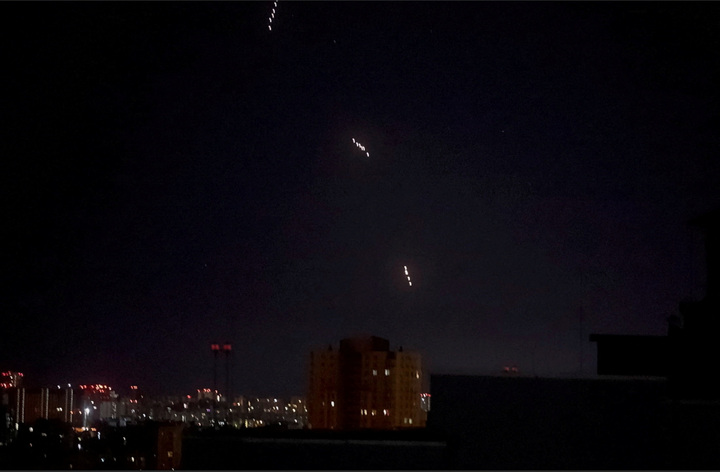
A Russian missile, identified by the Ukrainian Air Force as an Oreshnik hypersonic ballistic missile, flies over Kyiv during a Russian missile and drone strike against Ukraine on May 24, 2026. (Photo: Reuters/Gleb Garanich)
This marks the third time this type of medium-range ballistic missile has been used in Ukraine since 2024, demonstrating Moscow's increasing willingness to deploy its most powerful experimental weapons in the conflict.
Although Russia has used various types of missiles during more than four years of conflict, military analysts believe that none possess the range, speed, and destructive power equivalent to the Oreshnik.
What is Oreshnik?
Oreshnik, named after the hazelnut tree in Russian, is an intermediate-range ballistic missile (IRBM) capable of striking targets at distances ranging from 3,000 km to 5,500 km. According to CNA , this means that the whole of Europe is within its range.
Ukrainian military officials stated in 2024 that the missile could reach speeds of Mach 11, equivalent to approximately 13,580 km/h, 11 times the speed of sound.
Russian state media once claimed that the Oreshnik missile takes only 11 minutes to reach an air base in Poland and 17 minutes to reach NATO headquarters in Brussels. According to the Kremlin, this is a state-of-the-art weapon that cannot be intercepted.
President Putin said in 2024 that the destructive components of the missile could reach temperatures close to that of the Sun's surface.
"So everything at the epicenter of the explosion will be broken down into tiny pieces, into fundamental particles, basically into dust," he said.
Most notably, according to military experts, the Oreshnik could be equipped with a nuclear warhead. The US Department of Defense describes the Oreshnik as an “experimental” medium-range ballistic missile, believed to be developed from Russia’s RS-26 Rubezh intercontinental ballistic missile.
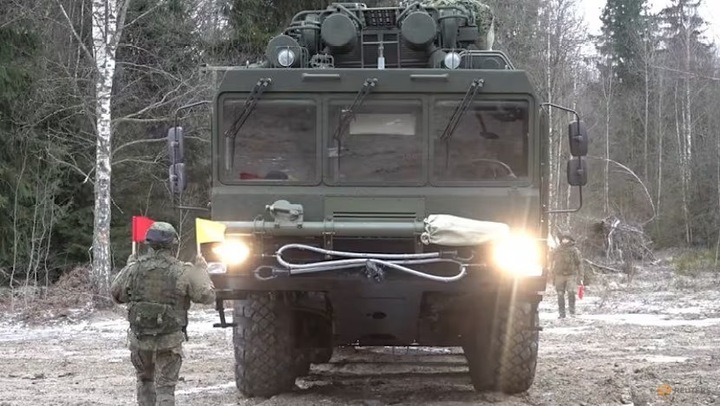
Russian soldiers participate in the deployment of the Oreshnik hypersonic missile system, capable of carrying nuclear warheads, in Belarus, as shown in a video released by the Russian Ministry of Defense on December 30, 2025. (Photo: Reuters/Russian Ministry of Defense)
Why is Oreshnik particularly dangerous?
Experts believe that the Oreshnik's strength lies in the combination of its speed, range, and warhead design.
This is a MIRV (Multiple Independently Reactive Armor) system, meaning each warhead can separate and strike multiple different targets in a single attack.
According to Ukrainian military intelligence, the Oreshnik has six warheads, each carrying six submunitions, meaning it can create up to 36 separate strikes on a target area, according to Dr. Nah Liang Tuang, a researcher at the S Rajaratnam School of International Studies (RSIS).
Nah argued that this makes the Oreshnik an "extremely destructive" weapon even without a nuclear warhead.
"Even if each warhead only carries conventional explosives, multiple targets could still be flattened, making it a missile capable of producing an effect equivalent to a major airstrike with a single launch ," he said.
He also emphasized that the Oreshnik was traveling at hypersonic speeds, making interception "extremely difficult or nearly impossible" with Ukraine's current missile defense capabilities.
Putin once claimed that the Oreshnik system could destroy bunkers located "three, four, or more levels underground" and was immune to any missile defense system.
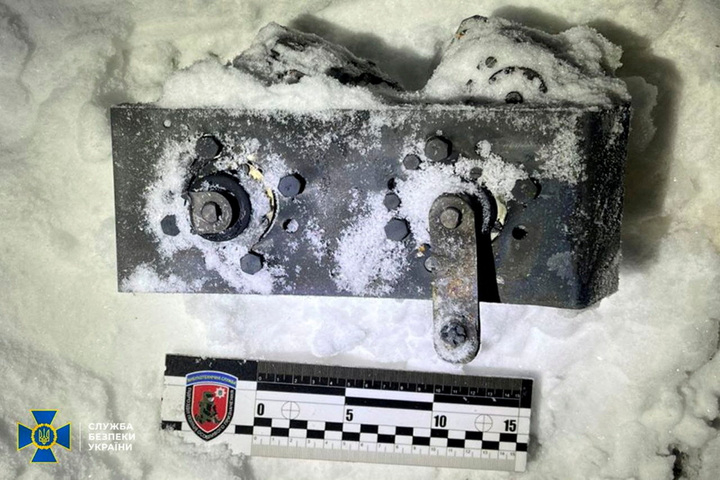
A section of Russia's Oreshnik hypersonic missile system, capable of carrying nuclear warheads, is seen at the scene of a missile attack in the Lviv region of Ukraine on January 9, 2026. (Photo: Ukrainian Security Service/Reuters)
In addition to Oreshnik, Russia also uses Kinzhal air-launched hypersonic missiles to target particularly important objectives.
The Kinzhal missile has a speed of up to Mach 10 and high maneuverability in the air, allowing it to evade air defenses, although Ukraine claims to have shot down several of them.
According to assessments, the Oreshnik is even more difficult to intercept than the Kinzhal. However, some experts argue that despite achieving hypersonic speeds, this missile lacks the maneuverability of other typical hypersonic weapons.
"Like other medium-range and intercontinental ballistic missiles, the Oreshnik's warheads plunge into the atmosphere and reach hypersonic speeds as they approach their target," Marcin Andrzej Piotrowski, an expert at the Polish Institute of International Affairs (PISM), stated in 2024.
"However, unlike true hypersonic weapons, the Oreshnik warhead does not perform maneuvers at hypersonic speeds, which would make missile defense more difficult," he added.
What damage did Oreshnik inflict on Ukraine?
In all three instances of its deployment against Ukraine, the Oreshnik did not carry a nuclear warhead.
The first attack took place at Dnipro in 2024 with limited tangible damage, suggesting the missiles may have been equipped with dummy warheads.
AFP reported that a roof was blown off and many trees were scorched, while residents described the sound as "terrifying" and saw bright flashes of light.
In January of this year, the missile struck a large gas storage facility in the Lviv region of western Ukraine, according to local officials.
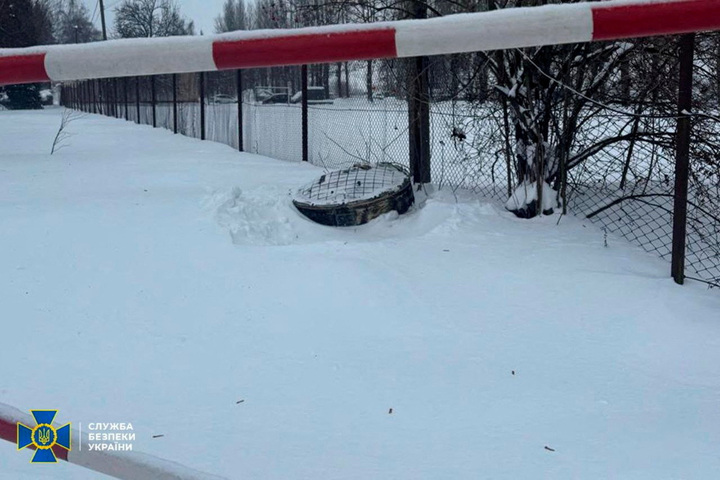
Part of Russia's Oreshnik hypersonic missile system, capable of carrying nuclear warheads, at the scene of a missile attack in the Lviv region of Ukraine, January 9, 2026. Photo: Ukrainian Security Service/Reuters.
In the May 24th attack on the Kyiv area, involving both drones and various types of missiles, four people were killed. Rescue forces had to extinguish fires and search through the rubble of many severely damaged buildings, including residential houses, shopping centers, museums, theaters, schools, and universities.
A Ukrainian resident said the subway ceiling "collapsed" as people took shelter underground.

The scene at an apartment building hit by Russian missiles and drones during recent attacks in Kyiv, Ukraine, May 25, 2026. (Photo: Reuters/Valentyn Ogirenko)
Unlike most Russian weapons used on the battlefield, the Oreshnik's range allows it to reach all of Europe, including US bases on the continent. This makes the Oreshnik a tool that allows Moscow to threaten strategic targets without formally using nuclear weapons.
At the same time, experts note that it is impossible to determine whether a flying Oreshnik missile is carrying a nuclear or conventional warhead until the moment of impact. This increases uncertainty in any subsequent escalation scenario.
According to analysts, Oreshnik is not only a battlefield weapon but also a tool for psychological pressure. Mr. Nah argues that this is a form of threatening "show of military strength" aimed at putting pressure on the enemy.
The deployment of Oreshnik signals Moscow's willingness to expand attacks deep into Ukrainian territory using conventional warheads with destructive power equivalent to nuclear weapons.
Source: https://vtcnews.vn/sieu-ten-lua-oreshnik-cua-nga-nguy-hiem-the-nao-ar1019939.html
![[Image] Hanoi's urban life under the challenge of a "scorching hot" environment](https://vphoto.vietnam.vn/thumb/1200x675/vietnam/resource/IMAGE/2026/05/25/1779706979265_nang-nong-t5-2026-minh-duy-7-4636-jpg.webp)







































































































Comment (0)