

SpaceX's Starship V3 rocket is now standing on the launch pad, fully fueled, ready for the first test flight of its most powerful upgraded version to date.
However, just seconds before takeoff, billionaire Elon Musk's company was forced to cancel the mission due to a technical malfunction that occurred during the final countdown.
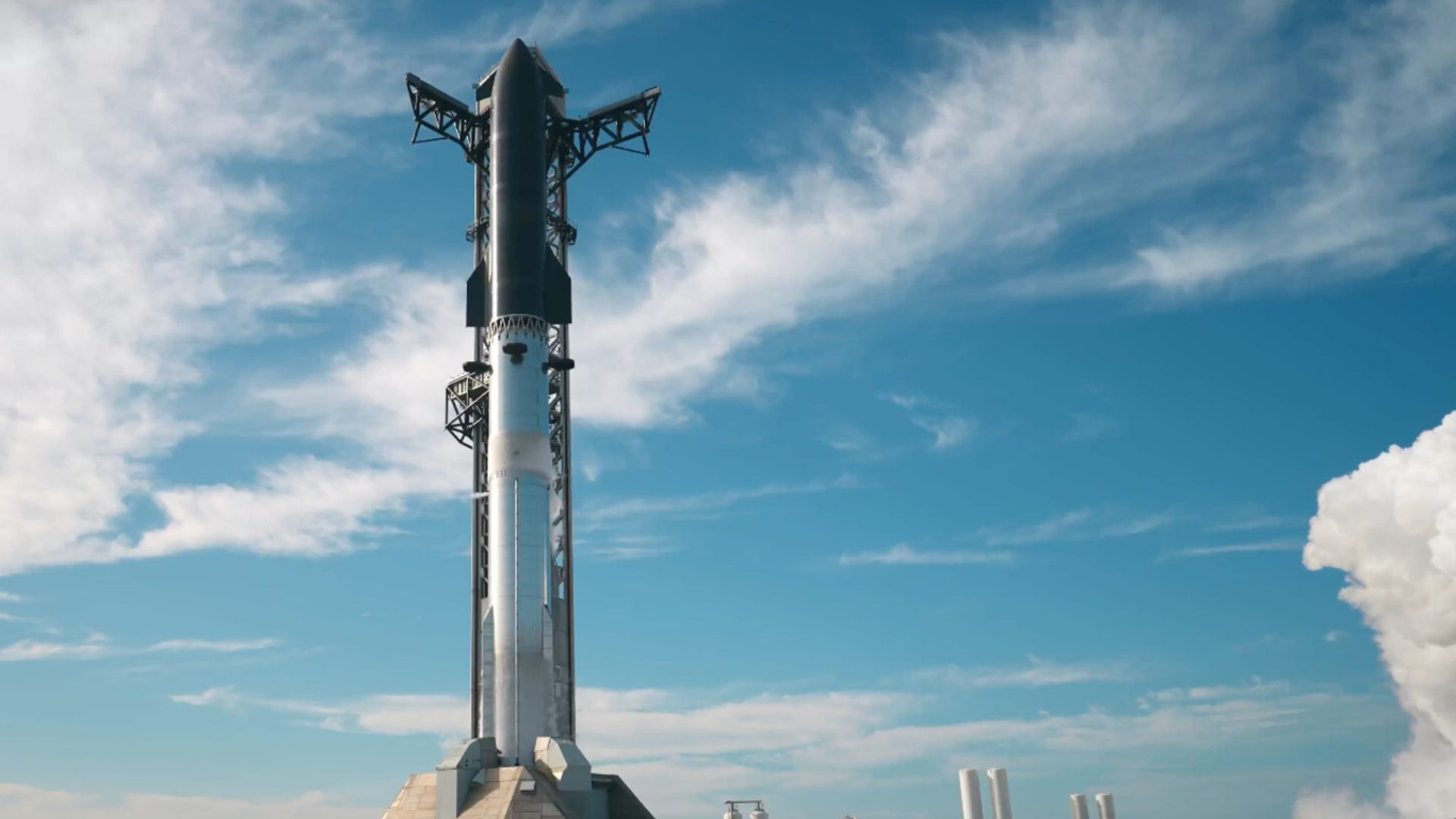
The countdown timer unexpectedly stopped at T-40 seconds. The system then restarted, but then stopped again.
According to SpaceX's explanation, a hydraulic latch holding the launch tower arm failed to retract properly, forcing engineers to rush in for an emergency fix while millions were watching the Starship V3 launch live.
Prior to the canceled launch, SpaceX had completed refueling the giant rocket and evacuated the entire launch pad area at its test facility in Texas.
However, a malfunction related to the ground support system forced the company to temporarily halt the countdown.
A few minutes later, SpaceX officially announced the cancellation of the mission and postponed the first flight of Starship V3 to a later date.
During the live stream, SpaceX commentator Dan Huot said, "New rocket, new launch pad, and we're learning a lot about these completely new systems." He also revealed that the company expects to be able to repeat the launch as early as the following day.
A last-minute error brought the entire system to a halt.
This was considered the 12th test flight of the Starship program, and also the first demonstration of the completely new V3 configuration.
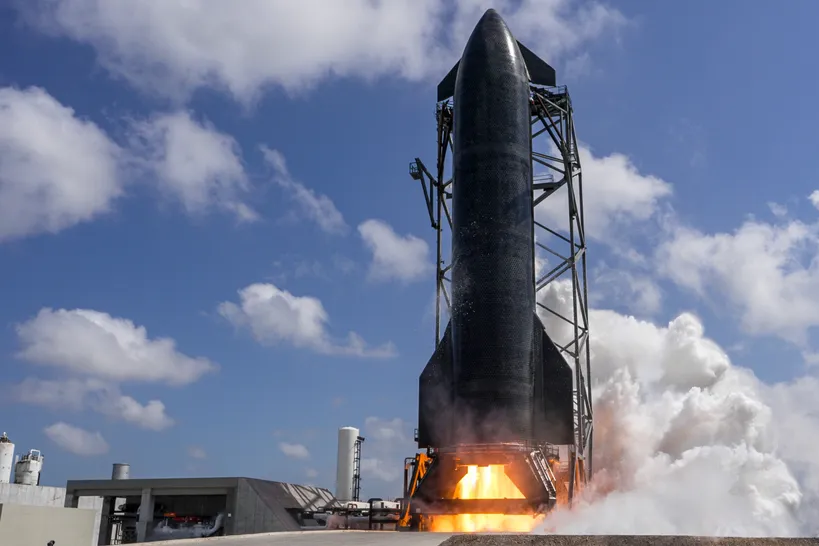
The countdown had entered its final minutes before the system automatically activated the emergency stop mode.
Dan Huot then explained that it was the water diversion system beneath the launch system that caused the process to be temporarily halted.
Shortly after, Elon Musk posted on social media that the hydraulic locking pin securing the launch tower's arm had failed to retract as planned.
According to Musk, if SpaceX can fix the problem overnight, the company could try launching again the following day at the same timeframe.
If all goes well, the rocket will launch at approximately 6:30 PM Eastern Time.
Starship V3: The largest and most powerful rocket ever built.
When fully assembled with the Super Heavy booster stage, Starship V3 reached a height of 124 meters. This further solidified its title as the tallest and most powerful rocket ever built by humans.
In the new version, SpaceX has made a series of major upgrades. The system uses the latest generation Raptor V3 engines, with 33 engines located on the Super Heavy booster stage and an additional 6 engines on the Starship spacecraft.
The new engines not only generate more thrust but also simplify the overall system design.
The engineering team also reduced the number of aerodynamic control wings on the booster stage from four to three in order to optimize weight and performance.
Another notable change lies in the “hot-stage” ring – the component that assists in separating stages while the engine is still running.
Previously, this structure would be discarded after the stage separated. But in the new version, SpaceX keeps it attached to the booster so it can be reused after flight.
The "hot-stage separation" technology is a defining feature of Starship. This process allows the Starship to activate its engines even before completely separating from the Super Heavy booster stage, improving operational efficiency and saving fuel.
A crucial test for the ambitious Mars expedition.
Unlike some previous flights, Flight 12 will not attempt to recover both the booster and the Starship. Instead, SpaceX wants to focus on evaluating the takeoff and re-entry capabilities of the upgraded version.
According to the mission plan, Starship will separate from Super Heavy and continue its journey in near-space orbit. During the flight, the spacecraft is expected to deploy 20 simulated Starlink satellites.
In addition, SpaceX is preparing two operational satellites tasked with photographing Starship's heat shield during flight and transmitting the image data back to Earth.
This is a crucial test to assess the spacecraft's ability to withstand heat during its re-entry into the atmosphere.
After re-entering the atmosphere, Starship will perform a series of complex maneuvers, including a controlled flip, before descending into the Indian Ocean. Meanwhile, the Super Heavy booster stage will fall into the Gulf of Mexico.
Although it was only a test flight, this mission held immense significance for SpaceX and Elon Musk's long-term ambitions.
Recent financial filings related to SpaceX's future IPO plans show that the company spent approximately $3 billion on the Starship program in the past year alone. The total development cost of the project is now believed to have reached around $15 billion.
(According to Interesting Engineering, CNN)
Source: https://vietnamnet.vn/sieu-ten-lua-starship-v3-bat-ngo-bi-hoan-phong-o-giay-cuoi-2518155.html



![[Image] Close-up view of the interchange connecting the two expressways and Long Thanh Airport.](https://vphoto.vietnam.vn/thumb/1200x675/vietnam/resource/IMAGE/2026/05/25/1779703378210_ndo_br_z7863716673926-224453a31600126cce10622af6290afd-4549-jpg.webp)
![[Image] Hanoi's urban life under the challenge of a "scorching hot" environment](https://vphoto.vietnam.vn/thumb/1200x675/vietnam/resource/IMAGE/2026/05/25/1779706979265_nang-nong-t5-2026-minh-duy-7-4636-jpg.webp)































































































Comment (0)