

(QBĐT) - The Department of Construction has focused on reforming public finance, particularly implementing the mechanism of autonomy and accountability at public non-business units. As a result, the quality of public services provided by these units has improved.
Currently, the Department of Construction has 5 affiliated public service units, including: the Provincial Project Management Board for Investment and Construction of Transportation Works, the Passenger Bus Station Service and Management Center, the Motor Vehicle Inspection Center, the Construction Planning Institute, and the Construction Quality Inspection Center. These units operate under the financial autonomy regime according to Decree No. 60/2021/ND-CP, dated June 21, 2021. Units that are financially self-sufficient (Group 2) are granted 100% financial autonomy by decision of the Provincial People's Committee.
The Institute of Urban Planning and Construction has an organizational structure consisting of 1 director, 3 deputy directors, and 6 specialized departments, with a total of 60 staff members. The Institute began implementing financial autonomy on December 24, 2021, according to Decision No. 4283/QD-UBND of the Provincial People's Committee.
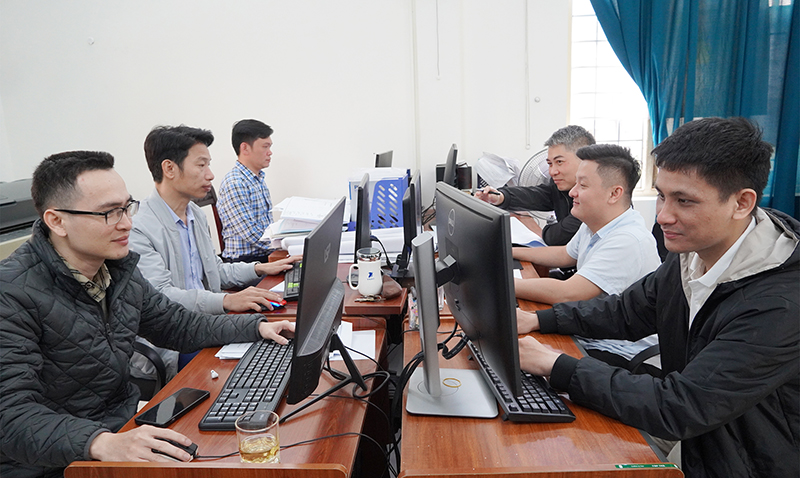 |
According to Pham Xuan Thao, Director of the Institute of Urban Planning and Construction: “When granted autonomy and financial responsibility, the unit has proactively used financial resources for professional activities to improve efficiency and service quality. At the same time, it has rationally allocated production expenses, applied measures to save money and combat waste to generate additional income for staff and employees; and established funds for reinvestment and development. In today's market economy , the unit needs to be creative, dynamic, and constantly innovate in its production plans and methods, seeking new projects to generate revenue for the unit...”
Besides the advantages, the Institute of Urban Planning and Construction still faces some difficulties in implementing financial autonomy. These include having to find ways to increase revenue due to the complete cut in state budget funding. Some regulations on public financial management are still inflexible and restrictive, making it difficult for the institute to expand its services or cooperate with external parties. When achieving financial autonomy, the institute faces fierce competition from private enterprises, which have many advantages in terms of more open mechanisms and flexible operating methods.
To overcome these difficulties, the Institute of Urban Planning and Construction will implement several solutions in the coming period, such as: diversifying revenue sources, expanding production and business activities, and expanding markets beyond the province; promoting public-private partnerships and linking with other businesses and units to enhance competitiveness and job opportunities; improving product reputation and quality to increase competitiveness; developing a rational revenue and expenditure plan, practicing frugality, and cutting unnecessary expenses… This will ensure regular expenditures, benefits, and income for staff and employees, and enable the completion of assigned tasks and plans.
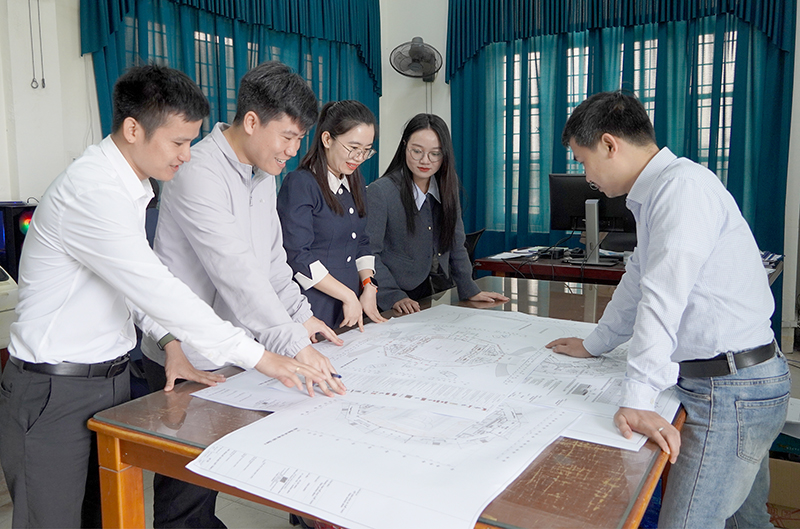 |
The Provincial Project Management Board for Investment and Construction of Transportation Projects currently has 59 officials and employees. According to Director Nguyen Ngoc Quy, with a 100% financial autonomy mechanism, the unit has developed internal spending regulations and regulations for managing public assets; these are supplemented and amended annually to comply with current regulations. During its operation, the board has closely followed the contents of the regulations and financial regimes to ensure compliance with state regulations. Notably, to avoid difficulties in the autonomous mechanism and management of revenue from projects, the board has proposed the need for a unified regulation to create conditions for public service units with autonomous mechanisms to ensure effective operation and regular expenditure.
| According to the Department of Construction's report, thanks to efforts in implementing the financial autonomy mechanism at public service units in recent years, the income and living standards of officials have increased over the years, and the rights and benefits of employees have been ensured and stabilized. The income of officials and employees has increased steadily each year, with an average increase of 10-30% from 2022-2024. |
According to the assessment of the Department of Construction's leadership, the policy of granting autonomy to public service units is necessary and correct. This has contributed to improving operational efficiency and maximizing the initiative and creativity of these units. When granted autonomy, these units have greater independence in their production, business, and service activities, and are more proactive in allocating and utilizing their financial resources to improve the efficiency and quality of their services.
In addition, the units have proactively sought out work and innovated in their production plans and methods to increase revenue. The mechanism of autonomy and self-responsibility has also contributed to encouraging units to be proactive and creative in reorganizing their organizational structure, and in assigning and utilizing cadres and civil servants in accordance with the functions, tasks, powers, and organizational structure of each unit. Most units have established internal spending mechanisms and regulations for managing public assets, thus creating conditions for managing and using funds efficiently and economically; the regulations on allocating additional income to cadres and civil servants are implemented openly, transparently, and democratically…
In particular, the autonomy mechanism has fostered a heightened sense of personal responsibility among officials and employees within the unit, always prioritizing collective interests, consciously safeguarding common assets, and using budget expenditures appropriately to ensure transparency and democracy in budget revenue and expenditure... This is also a prominent achievement in the administrative reform efforts of the Construction sector in recent times.
Le Mai
Source: https://www.baoquangbinh.vn/chinh-polit/202504/so-xay-dung-nang-cao-tu-chu-tai-don-vi-su-nghiep-cong-lap-2225595/
![[Live] 2025 Community Action Awards Gala](/_next/image?url=https%3A%2F%2Fvphoto.vietnam.vn%2Fthumb%2F1200x675%2Fvietnam%2Fresource%2FIMAGE%2F2025%2F12%2F16%2F1765899631650_ndo_tr_z7334013144784-9f9fe10a6d63584c85aff40f2957c250-jpg.webp&w=3840&q=75)

![[Image] Leaked images ahead of the 2025 Community Action Awards gala.](/_next/image?url=https%3A%2F%2Fvphoto.vietnam.vn%2Fthumb%2F1200x675%2Fvietnam%2Fresource%2FIMAGE%2F2025%2F12%2F16%2F1765882828720_ndo_br_thiet-ke-chua-co-ten-45-png.webp&w=3840&q=75)
![[Image] The tenacious fighting spirit of Vietnamese women's football](/_next/image?url=https%3A%2F%2Fvphoto.vietnam.vn%2Fthumb%2F1200x675%2Fvietnam%2Fresource%2FIMAGE%2F2025%2F12%2F17%2F1765990260956_ndo_br_4224760955870434771-copy-jpg.webp&w=3840&q=75)
![[Photo] Prime Minister Pham Minh Chinh receives Lao Minister of Education and Sports Thongsalith Mangnormek](/_next/image?url=https%3A%2F%2Fvphoto.vietnam.vn%2Fthumb%2F1200x675%2Fvietnam%2Fresource%2FIMAGE%2F2025%2F12%2F16%2F1765876834721_dsc-7519-jpg.webp&w=3840&q=75)
![[Photo] Prime Minister Pham Minh Chinh receives the Governor of Tochigi Province (Japan)](/_next/image?url=https%3A%2F%2Fvphoto.vietnam.vn%2Fthumb%2F1200x675%2Fvietnam%2Fresource%2FIMAGE%2F2025%2F12%2F16%2F1765892133176_dsc-8082-6425-jpg.webp&w=3840&q=75)









































![[Live] Closing Ceremony and Award Presentation for the "Impressive Vietnam Tourism" Video/Clip Creation Contest 2025](https://vphoto.vietnam.vn/thumb/402x226/vietnam/resource/IMAGE/2025/12/17/1765974650260_z7273498850699-00d2fd6b0972cb39494cfa2559bf85ac-1765959338756946072104-627-0-1338-1138-crop-1765959347256801551121.jpeg)















Comment (0)