

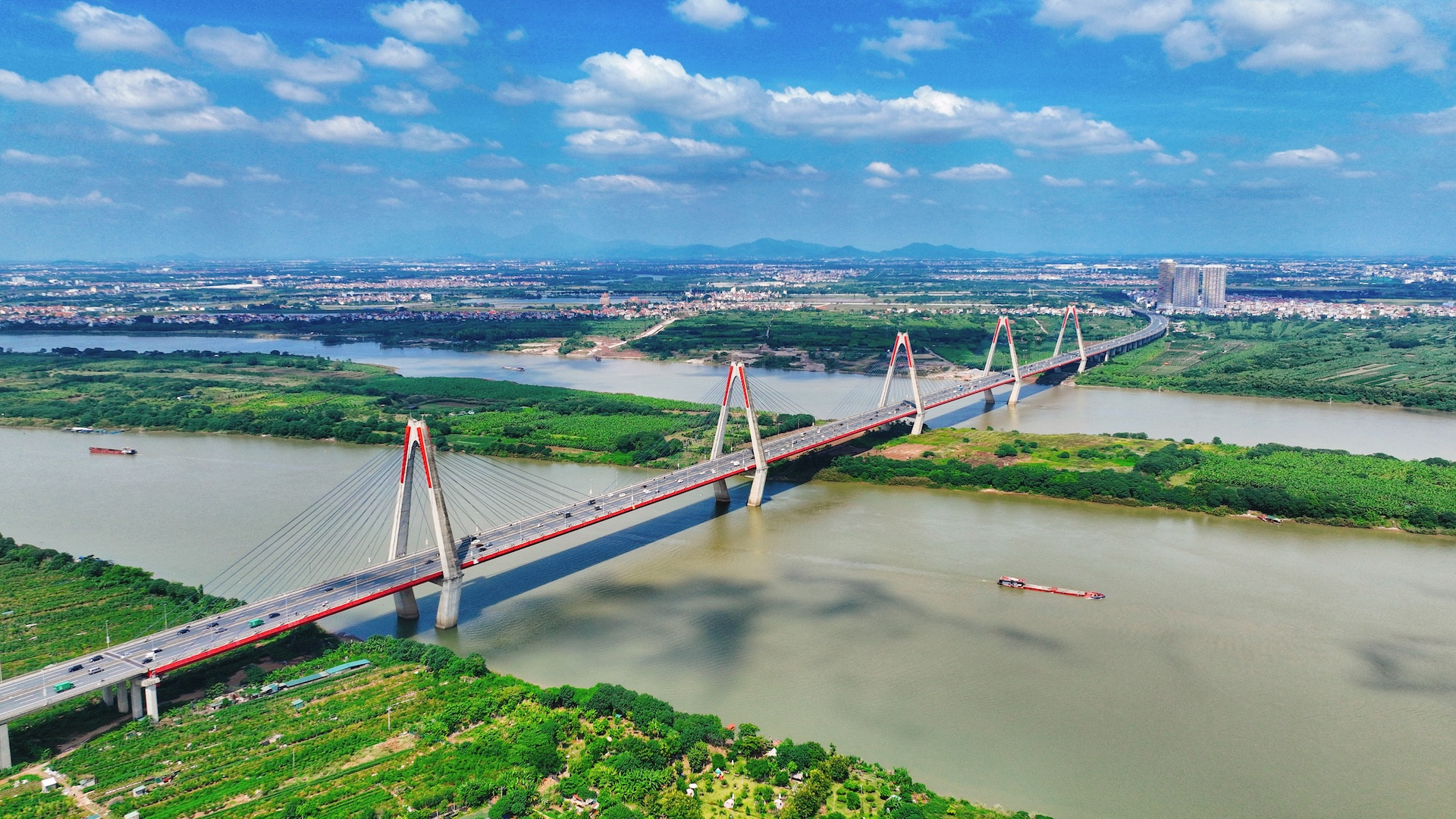
On the morning of May 11th, the Hanoi City People's Council approved a Resolution on the investment policy for the construction project of the Red River Scenic Boulevard in Hanoi.
Spanning over 11,000 hectares and stretching approximately 80km along both banks of the Red River, with an estimated preliminary investment of over 736,000 billion VND and affecting around 200,000 people, this could be the largest urban redevelopment project in modern Hanoi's history.
Hanoi appears to have made a landmark choice: restoring the Red River to a central position in the city's development structure.
In other words, these moves demonstrate Hanoi's strong and unquestionable commitment to the project.
The Red River is the choice.
First, this project needs to be placed in its current context to fully appreciate the scale of the political will behind it.
Vietnam is entering a new phase of development with the goal of achieving very high growth for many consecutive years, and as the country's leading economic hub, Hanoi can hardly remain unaffected by this pressure.
However, the problem is that Hanoi's current urban core has gradually reached its development limit.
Land in the inner city is increasingly scarce, infrastructure is overloaded, traffic is congested, and public spaces are lacking. If Hanoi wants to continue its very rapid growth in the coming years, it has almost no other option but to open up a new development area.
And the Red River is almost the last large enough space within the city for Hanoi to reinvent itself.
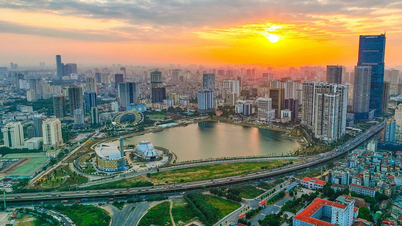
Looking at a map, it's quite interesting to see that the river, located right in the heart of Hanoi, has resembled a "development-free zone" for decades. Meanwhile, many major cities around the world have transformed their appearance by returning to the life of their rivers.
Hanoi is now looking to do the same with the Red River, to make it the waterfront of the capital city.
Hanoi's new power
For many years, Hanoi's grand ideas have often been hampered by overlapping planning, fragmented authority, lengthy investment procedures, regulations related to dikes, land, land clearance, and financial mechanisms.
But the situation is different today: the amended Capital City Law, along with a stronger decentralization and delegation mechanism, is giving city governments much greater autonomy in urban governance and development.
For the first time in years, Hanoi has the authority to pursue a large-scale urban development project like the Red River project.
Now, the city has more decision-making power. The Hanoi People's Council has approved the investment plan with 100% of its delegates voting in favor. The city has also agreed with the Ministry of Agriculture and Environment on an approach to hydrology, flood control, and river flow regulation.
Even Hanoi's acceptance of project adjustments, reducing the cost by nearly 120,000 billion VND, narrowing the scope from 19 to 16 communes and wards, and dividing the project into two phases extending to 2038, shows that the city is shifting from a "symbolic mega-project" mindset to a more practical and long-term urban reconstruction program.
The consortium undertaking the project includes THACO, Dai Quang Minh, and Hoa Phat — large private enterprises that are rapidly expanding into infrastructure and urban development.
THACO is the largest automotive industrial group in Vietnam, Hoa Phat is the largest steel company in the country, and Dai Quang Minh previously participated in infrastructure and urban development in Thu Thiem.
How to treat the river, how to treat people.
The approach to residential areas outside the dike also reveals the scale of the change. For the first time, the strong language of "gradual relocation, rearrangement, and replanning of the entire residential area outside the dike" suggests that Hanoi is preparing for an unprecedented large-scale urban reconstruction along the Red River.
But when undertaking a project of such magnitude, Hanoi faces an even greater challenge in achieving social consensus.
Approximately 200,000 people are projected to be affected by the project. It's not just a matter of land clearance; it's also about the displacement of communities, livelihoods, and urban memories that have existed for decades along the Red River.
For many people in Bat Trang or Nhat Tan, the area outside the dike along the river is not just a place to live. It is also a place of livelihood, a craft village, a riverside land, a tourist destination, and a community where relationships have accumulated over generations.
Therefore, what people worry about most is probably not just losing their homes (having to move elsewhere), but losing their future in the very city where they once lived.
In many urban development projects in Vietnam, people often receive a one-time compensation payment and then leave, while the value of the land after planning can increase many times over. This leaves many feeling left out of the development process taking place on the land that once belonged to them.
Therefore, many experts believe that large-scale projects like the Red River project need to go beyond the 'land clearance' mindset.
The important thing is not just how much compensation is provided, but whether the people share in the benefits of that urbanization process.
A modern city cannot develop simply by moving people away from areas where land value is increasing.
It must also create a sense that people still have a place in the future of that city.
If Hanoi truly wants to transform the Red River project into a new symbol of 21st-century development, then perhaps the city must also adopt a new philosophy: the people should not only be considered as subjects of relocation but also as participants in that development process.
A solution is needed to address the challenge of reconciling the interests of the State, businesses, and the people; and how to simultaneously develop the city while preserving the natural space of the river that has shaped Hanoi for thousands of years.
After decades of turning its back on the Red River, Hanoi is facing its greatest opportunity in decades to redefine itself with the river that gave birth to the capital.
But a modern and civilized city is not measured by the number of avenues or the height of its buildings, but by how it treats its river and the people who live along it.
Source: https://vietnamnet.vn/song-hong-phai-la-mat-tien-cua-thu-do-2514771.html




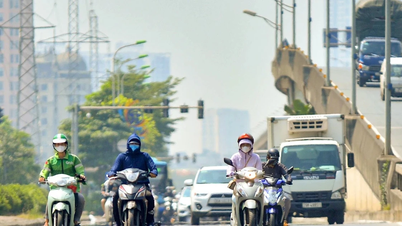
![[Image] Hanoi's urban life under the challenge of a "scorching hot" environment](https://vphoto.vietnam.vn/thumb/1200x675/vietnam/resource/IMAGE/2026/05/25/1779706979265_nang-nong-t5-2026-minh-duy-7-4636-jpg.webp)
![[Image] Close-up view of the interchange connecting the two expressways and Long Thanh Airport.](https://vphoto.vietnam.vn/thumb/1200x675/vietnam/resource/IMAGE/2026/05/25/1779703378210_ndo_br_z7863716673926-224453a31600126cce10622af6290afd-4549-jpg.webp)

![[Infographic] Key points in the Hanoi Master Plan with a 100-year vision](https://vphoto.vietnam.vn/thumb/402x226/vietnam/resource/IMAGE/2026/05/26/1779750297385_quyhoach100nam-97685526052946271833906-43228536014852394887250.webp)








































































Comment (0)