

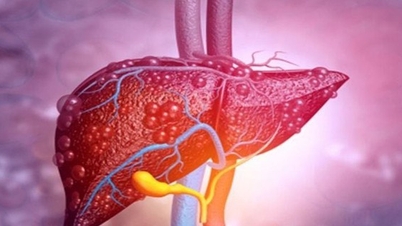
Many people think fatty liver disease only occurs in overweight individuals or those who drink heavily. However, in reality, an increasing number of people with normal weight are being diagnosed with non-alcoholic fatty liver disease (NAFLD).
Studies show that fructose from sugary drinks, ultra-processed foods, and refined carbohydrates can promote fat accumulation in the liver even if the body is not obese.
- Being thin doesn't necessarily mean you have good metabolism.
- Why are fructose and refined carbohydrates dangerous?
- 1. Review the “hidden sugar” in your meal checklist.
- 2. Replace refined carbohydrates with slow-absorbing ones.
- 3. Increase physical activity even if you are at a normal weight.
- 4. Check your waist circumference instead of just looking at your weight.
- 5. Regular health check-ups
- Fatty liver disease is no longer a disease exclusive to overweight people.
Despite not being overweight, not drinking alcohol, and not having a large belly, many people are surprised when they receive their health checkup results – fatty liver disease.
It is noteworthy that non-alcoholic fatty liver disease can occur in thin individuals . These individuals have a normal BMI but still accumulate fat in their liver, potentially progressing to hepatitis or cirrhosis if left uncontrolled.
Interestingly, the cause sometimes lies not in the overall calorie count but in the quality of carbohydrates , especially fructose and refined starch.

Even people with normal weight are at risk of fatty liver disease if they regularly consume sugary drinks and processed foods.
Being thin doesn't necessarily mean you have good metabolism.
Imagine the liver as an energy processing unit. When you consume too much of: soft drinks, bubble tea, pastries, white bread, bottled juices, ultra-processed foods, etc., the liver has to metabolize large amounts of sugar, especially fructose.
Unlike glucose, which is used by many tissues, fructose is primarily processed in the liver . If too much is ingested, the liver begins to convert it into fat through de novo lipogenesis. Over time, fat accumulation in the liver increases.
That's why:
- Even thin people can develop fatty liver disease.
- Your blood lipid test results may not be too bad.
- The abdomen wasn't enlarged, but the metabolism was already disordered.
Why are fructose and refined carbohydrates dangerous?
Fructose: "Sweet sugar," but it comes at a price for the liver.
Common sources:
- Soft drinks contain sugar.
- Milk tea.
- Industrial confectionery.
- Corn syrup is high in fructose.
- Sports drinks.
Studies show that excessive fructose consumption is associated with increased liver fat, insulin resistance, and NAFLD.
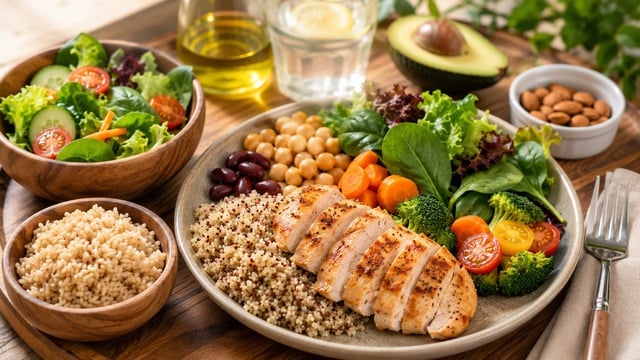
Meals rich in green vegetables, whole grains, and protein help support metabolic control associated with fatty liver disease.
Refined carbohydrates: Cause a rapid increase in blood sugar.
For example:
- White bread.
- Too much white rice.
- Cookies.
- Cereals are high in sugar.
Regularly consuming large amounts of refined carbohydrates can promote inflammation and lead to greater fat accumulation in the liver.
What can you do today to reduce your risk of fatty liver disease even if you're not obese?
There's no need to wait until you gain weight to make changes.
1. Review the “hidden sugar” in the meal checklist:
- Limit your intake of soft drinks and bubble tea.
- Reduce your consumption of bottled juices.
- Read food labels.
- Note: Corn syrup, added sugar.
2. Replace refined carbohydrates with slow-absorbing ones.
| Should be limited | It should be prioritized. |
|---|---|
| White bread | Whole wheat bread |
| Too much white rice | Whole grains |
| Cake | Seeds, whole fruits |
| Fast food | Green vegetables, beans |
Consumption of whole grains has been shown to be associated with a lower risk of NAFLD in several population studies.
3. Increase physical activity even if you are at a normal weight.
In fact, exercise helps improve insulin sensitivity and reduce fat accumulation in the liver.
Simple goals: Walk briskly for 30 minutes a day. Exercise 2–3 times a week. Reduce time spent sitting continuously.
4. Check your waist circumference instead of just looking at your weight.
Some people have a normal BMI but high visceral fat accumulation. Visceral fat is more strongly associated with NAFLD than appearance (thin or obese).
5. Regular health check-ups
Early-stage fatty liver disease often has no symptoms.
Things to check:
- Liver enzymes
- Liver ultrasound
- Blood sugar
- Blood lipids
Fatty liver disease is no longer a disease exclusive to overweight people.
Being thin doesn't necessarily mean having a healthy liver.
If a diet high in sugary drinks, ultra-processed foods, and refined carbohydrates persists, the liver can silently accumulate fat for years before it's detected. Growing evidence suggests that reducing added sugar and fructose may play a crucial role in improving NAFLD .
Sometimes, the biggest change to protect your liver isn't about losing weight, but about reducing the types of sugar your body absorbs each day.
Source: https://suckhoedoisong.vn/su-that-ve-fructose-va-tinh-bot-tinh-che-khien-gan-nhiem-mo-169260527101326429.htm




































































































Comment (0)