

Time-wasting tactics
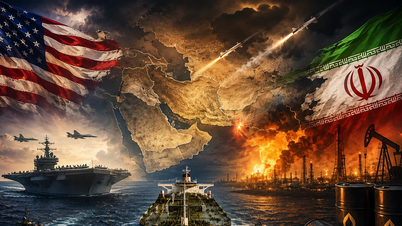
According to RT, the world is in a state of anticipation ahead of what increasingly appears to be a second round of confrontation between the US and Iran.
The negotiations in Pakistan in April did not prevent the conflict – they only underscored its inevitability.
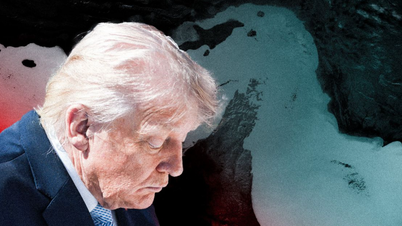
US President Donald Trump recently stated that he had planned to attack Iran on May 19th but withdrew the plan at the request of the Gulf monarchies.
Reports indicate that Iran's proposal demands compensation from the U.S. while also emphasizing Iran's sovereignty over the Strait of Hormuz, or more precisely, demanding that the U.S. recognize Iran's dominance over the strait.
For the U.S., such terms are essentially unacceptable, because accepting them would not be the surrender that Trump seems to expect from Iran, but rather a strategic withdrawal by the U.S. from one of the world's most important energy corridors.
When one side makes demands that the other can never accept, the process ceases to be genuine diplomacy . It becomes a way to buy time while preparing for the next attack.
It appears that Iran is using this lull not to prepare a comprehensive peace agreement, but to restore internal coordination, assess damage, regroup its forces, and prepare for another round of confrontation.
Meanwhile, the US is maintaining diplomatic channels to continue issuing ultimatums, while still keeping the military option open should negotiations ultimately fail.
Blame Iran.
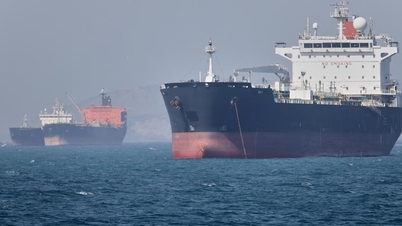
In this conflict, the Strait of Hormuz has long ceased to be merely a narrow shipping lane on the map. For Iran, it is its most powerful leverage point.
Completely closing the strait would affect all parties. Meanwhile, for the US, freedom of navigation through the Strait of Hormuz is essentially a matter of who will set the rules in the Middle East.
That is why the positions of both sides are fundamentally incompatible. The US demands the full opening of the strait and the removal of highly enriched uranium from Iran.
In reality, these were not terms of negotiation but terms of surrender disguised in diplomatic language.
Accepting them would require Iran to publicly admit defeat and voluntarily relinquish its two main tools of leverage. No Iranian leader could realistically agree to that.
Meanwhile, it seems that Trump is not steering the negotiations toward a sustainable compromise. Instead, he appears to be laying the political and diplomatic groundwork for another round of conflict.
Formally, both Trump and U.S. Secretary of State Marco Rubio continue to talk about negotiations and the possibility of reaching a new agreement in the near future. But the content of the U.S. demands suggests otherwise:
The U.S. did not offer Iran an equal deal, but rather a framework of surrender – fully aware that the Iranian leadership would be unlikely to accept this without serious domestic political consequences.
That's the key logic driving the current situation: Unrealistic demands can not only be used as a pressure tactic, but also as a way to preemptively blame Iran for failures in negotiations.
The pretext for attack
Equally noteworthy is the vague language surrounding the call to end the conflict on multiple fronts, including Lebanon:
There are no specific enforcement mechanisms, no solid security guarantees, and no clear understanding of who will be responsible for de-escalation or how to do so.
According to Reuters, conversely, Iran has attempted to link any agreement to a complete cessation of hostilities on all fronts, the withdrawal of US troops from areas near Iran, and reparations for damages.
As a result, Iran was essentially informed that its conditions were not considered a valid basis for negotiation. In this form, the negotiation process increasingly resembled an attempt to impose a settlement model favorable to the U.S. rather than an effort to find common ground.
For Iran, such a framework is unacceptable not only in practical terms but also symbolically: It would mean limiting its nuclear capabilities, continuing to impose partial sanctions, and abandoning its compensation demands without receiving commensurate concessions.
That is precisely why Trump's actions could be seen as preparation for another war.
First, the U.S. created the impression that it had offered Iran a "reasonable way out" through diplomacy. Then, when Iran refused as expected, the U.S. could argue that Iran itself had sabotaged the diplomatic process.
At that point, the White House had the political justification to resume the attacks. This strategy allowed President Trump to project a conciliatory tone while still retaining the ability to escalate militarily.
According to this logic, the likelihood of another round of confrontation remains very high. The initial phase of the conflict has not resolved any of the core issues.
Conversely, both sides emerged from the initial phase believing that concessions would be perceived as weakness. And in such situations, negotiation rarely becomes the path to peace.
The main conclusion is that the current situation is not a stable ceasefire, but a strategic pause. Both Iran and the US are contemplating the next phase of confrontation.
Iran is exaggerating its demands to avoid being seen as a failure and to buy time. The U.S. is signaling its willingness to negotiate, while remaining unable to accept terms that would undermine its regional standing.
That is why the growing sense of an impending second round of war doesn't stem from individual statements by Trump or prominent Iranian figures, but from the very structure of the conflict.
Source: https://giaoducthoidai.vn/su-tinh-lang-truc-con-bao-post778953.html



![[Image] Close-up view of the interchange connecting the two expressways and Long Thanh Airport.](https://vphoto.vietnam.vn/thumb/1200x675/vietnam/resource/IMAGE/2026/05/25/1779703378210_ndo_br_z7863716673926-224453a31600126cce10622af6290afd-4549-jpg.webp)
![[Image] Hanoi's urban life under the challenge of a "scorching hot" environment](https://vphoto.vietnam.vn/thumb/1200x675/vietnam/resource/IMAGE/2026/05/25/1779706979265_nang-nong-t5-2026-minh-duy-7-4636-jpg.webp)






















































































Comment (0)