

- Gia Rai Ward: Towards a dynamic urban development
- Tan Thuan is determined to make a breakthrough and build a comprehensive, modern coastal city.
- Gia Rai is developing into a dynamic ward, befitting its status as a satellite city.
Bustling and vibrant
The family of Mr. Nguyen Van Quan, residing in Hamlet 3, Song Doc Commune , has been prosperous for generations thanks to the fishing industry. Following in his father's footsteps, they initially operated small boats for inshore fishing, then gradually expanded to larger vessels for offshore fishing. Thanks to abundant marine resources, Mr. Quan's family fleet has continuously grown, now comprising 10 boats, including both fishing and purchasing vessels, each valued at several billion dong.
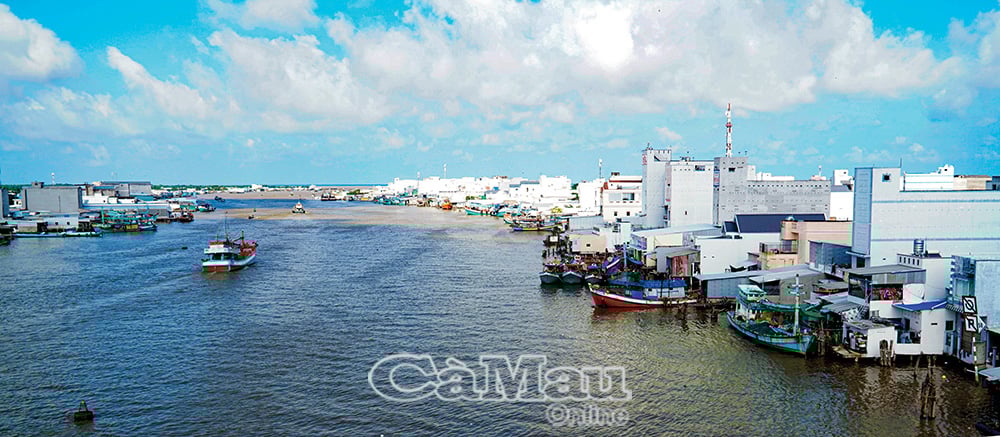
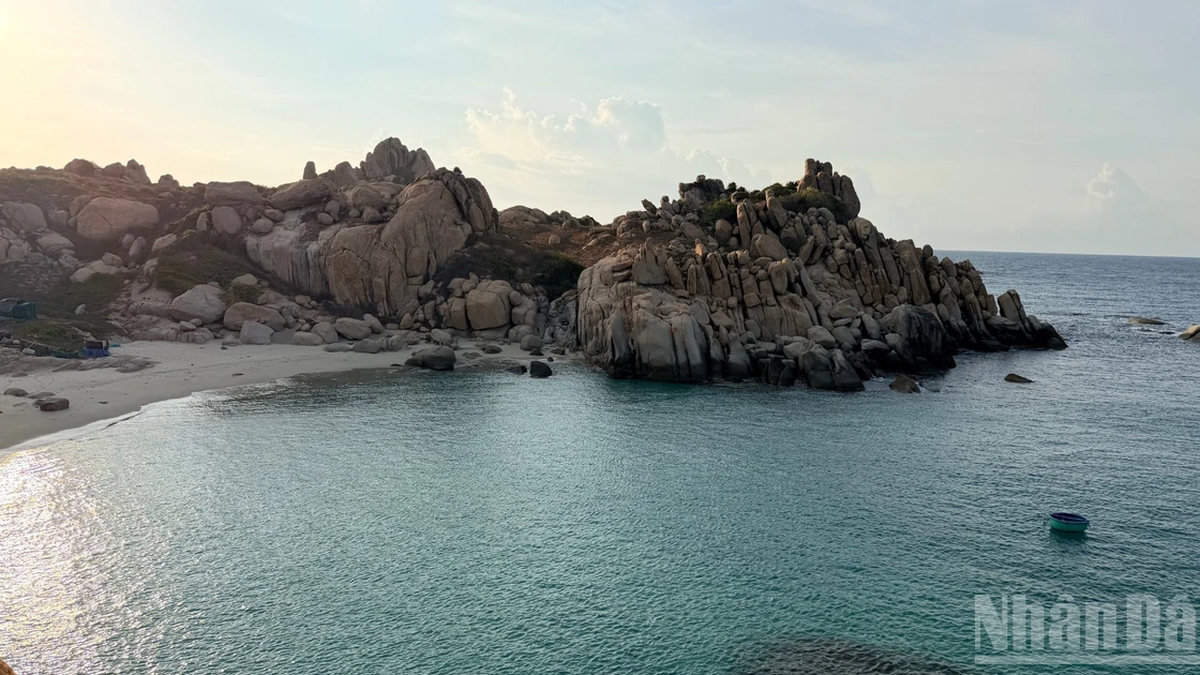
Like Mr. Quan's family, thanks to effectively utilizing the advantages of the fishing industry, many families in the Song Doc coastal area have become millionaires over the past decades, starting from nothing. Over time, small villages with a few dozen houses made of local wood and leaves have gradually been replaced by numerous factories, enterprises, companies, production and business establishments, high-rise buildings, and villas with gardens... lining both banks of the Ong Doc River, creating the bustling and vibrant coastal city we see today.
In his recollections, Mr. Quan still remembers: "Before, although they called it a house, it was really just a series of shacks where fishermen could stay after a fishing trip. Life was hard and full of hardships."
From its humble beginnings, and after more than 40 years of construction and development since its establishment (dating back to the town of Song Doc before its merger), Song Doc is now one of the province's dynamic urban centers, a gateway to the national waterway corridor connecting directly to the Western Sea. Before becoming a vibrant economic hub in peacetime, Song Doc was rich in revolutionary traditions, boasting the National Historical Monument of the Northward Assembly Site in late 1954 and early 1955 on the southern bank of the Song Doc River – a place marking a significant milestone in the revolutionary history of the Ca Mau army and people during the resistance war against the US for national liberation.
Like Song Doc, Ganh Hao, Rach Goc, or Cai Doi Vam , the Khanh Hoi area was initially just a small coastal village with a sparse population of fishermen. However, thanks to its favorable geographical location and abundant resources, it has increasingly attracted residents, developed over the years, and become the dynamic coastal city it is today.
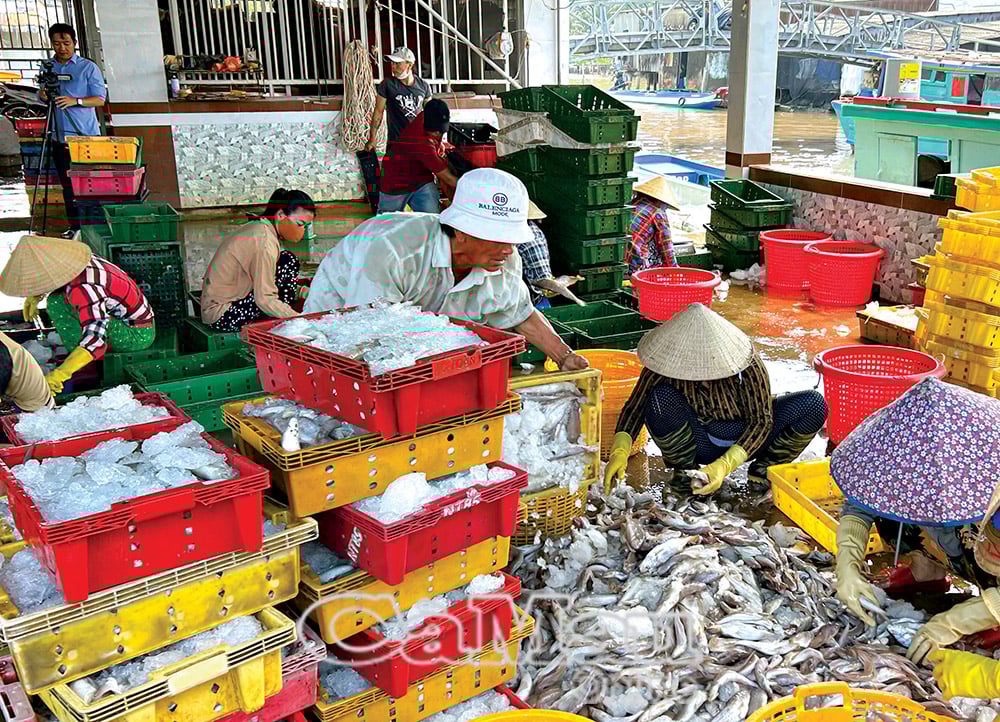
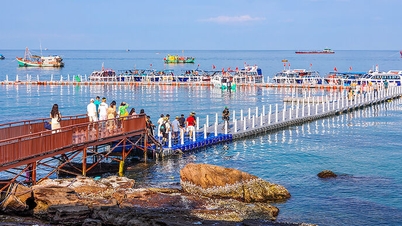
Mr. To Tan Nghiep, Vice Chairman of the People's Committee of Cai Doi Vam commune, shared: "To continue creating breakthroughs in the key economic sector of aquaculture and fisheries exploitation, the commune has determined that in the coming time, it will focus on mobilizing resources to invest in infrastructure to create inter-commune and regional connections, especially with coastal communes like Song Doc..., to not only develop the economic sector rapidly, but also open up new directions for the development of tourism and services, especially ecotourism and beach tourism - a potential that Cai Doi Vam still has abundant and promising prospects."
Creating breakthroughs by leveraging transportation infrastructure advantages.
To develop coastal cities into economic, industrial, service, and tourism centers, the province has mobilized resources to invest in many important projects such as: the Ong Doc River bridge connecting the two banks of the Ong Doc River, the Ganh Hao bridge connecting trade at the Ganh Hao estuary, the Cai Doi Vam bridge; and the East-West arterial road, the only road in the country connecting the East and West coasts.
In particular, the East-West axis connects the two most bustling coastal cities in the province, Song Doc and Ganh Hao. From here, not only will the key marine economic sector have the conditions to develop more strongly, but it will also open up many opportunities for breakthroughs in tourism and services. The two most important coastal economic zones of the province not only have advantages in exploitation, processing, and logistics services, but also possess natural landscapes with both forests and seas, associated with cultural and historical relics, folk festivals, and unique traditional craft villages.
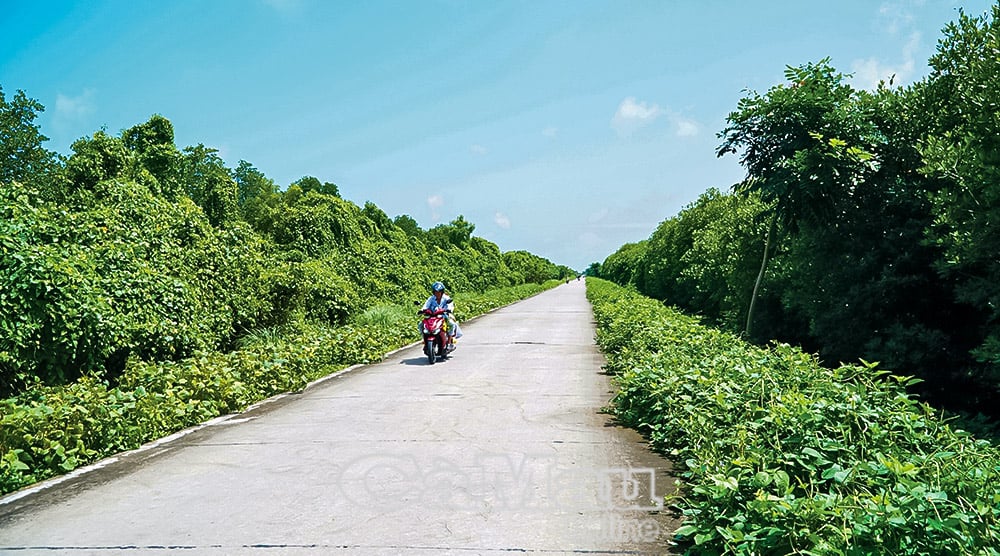
On August 19th, Ca Mau province simultaneously commenced construction on many key projects, including the Ca Mau - Dat Mui expressway. Soon, the East-West arterial road and many other transportation routes in the province will be connected to this expressway, creating a comprehensive transportation network. At that time, not only will goods, especially the products of Ca Mau's coastal region, reach many regions throughout the country and abroad more quickly, but it will also open up significant opportunities and impetus for the province to attract investment and promote local socio-economic development.
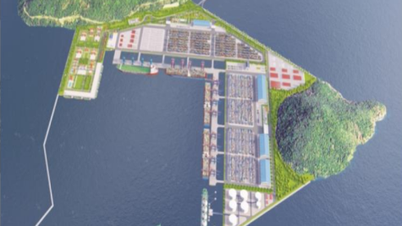
Besides its economic advantages, Ca Mau province – the southernmost tip of Vietnam – also holds a crucial position in the national defense and security strategy. The recently commenced national key projects, including the road to Hon Khoai Island and the Hon Khoai dual-use general port, further solidify this.
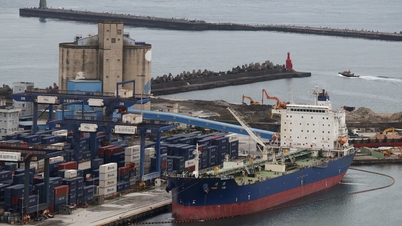
The Ca Mau - Dat Mui expressway project, the road to Hon Khoai island, and the Hon Khoai dual-use general port, upon completion, will create a seamless connection between the Eastern North-South expressway and Dat Mui, linking the mainland and Hon Khoai island to implement the orientation of marine economic development, opening up opportunities for comprehensive, rapid, and sustainable breakthroughs for Ca Mau, especially for coastal economic zone cities.
Nguyen Phu
Source: https://baocamau.vn/suc-song-moi-do-thi-ven-bien-a121792.html
![[Photo] General Secretary and President To Lam presides over a working session with the Central Policy and Strategy Committee on the development of the materials industry.](https://vphoto.vietnam.vn/thumb/1200x675/vietnam/resource/IMAGE/2026/05/21/1779359935432_a3-bnd-3129-1412-jpg.webp)


![[Photo] National Assembly Chairman Tran Thanh Man working with the Standing Committee of the Law and Justice Committee](https://vphoto.vietnam.vn/thumb/1200x675/vietnam/resource/IMAGE/2026/05/21/1779378929214_ndo_br_1-4610-jpg.webp)























































Comment (0)