

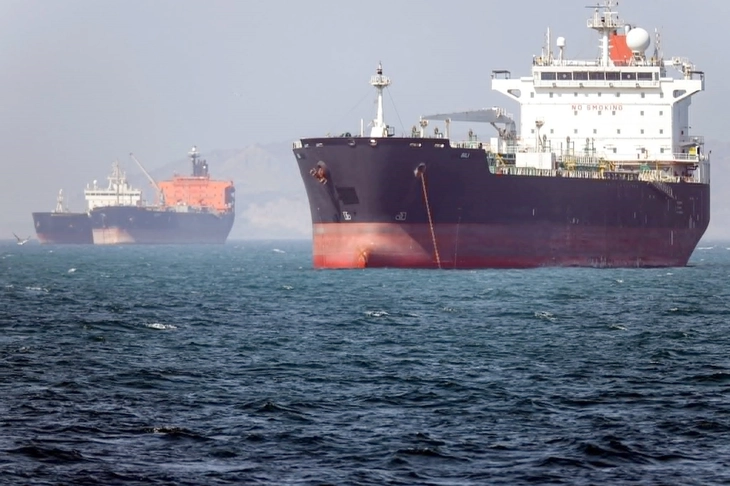
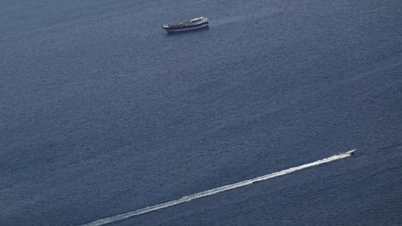
The Gambian-flagged oil tanker Bili is anchored in the Strait of Hormuz off Bandar Abbas, Iran, on May 2nd - Photo: AFP
Nevertheless, negotiators are still discussing and have not yet reached an agreement on the Strait of Hormuz and Iran's stockpile of highly enriched uranium – which are considered the two most difficult issues on the negotiating table.
"The agreement is 95% complete."
"We will not compromise. We have not reached a final agreement yet. We will not sign an agreement today or tomorrow," an official emphasized, adding that US President Donald Trump might "give Iran another 5, 6, or 7 days" to finalize the deal.
The official said Iran "in principle agrees to the framework agreement and we are 95% complete," but Tehran has not yet commented.
Sources reveal that the US and Iran have reached an agreement on nuclear stockpiles and the Strait of Hormuz, but are still negotiating the wording. Accordingly, Washington has a chance to reach an agreement that reduces costs for Americans while ensuring Tehran does not possess nuclear weapons.
Conversely, Iran's Tasnim news agency reported on May 24 that Iran emphasized that an agreement to end hostilities with the US must include an end to the war on all fronts. In addition, Washington must waive sanctions on Iranian oil during the negotiations.
Regarding the Strait of Hormuz, Tehran stated that the agreement must provide a 30-day deadline for procedures related to this shipping lane. An agreement reached between the US and Iran must stipulate that the number of ships allowed through the Strait of Hormuz will return to pre-war levels within 30 days. Furthermore, the naval blockade must be completely lifted within this one-month period.
Despite conflicting statements from both sides, an exclusive report by Axios reveals that the US and Iran are preparing to sign an agreement to extend the ceasefire for another 60 days. This agreement would help avoid escalating the war and ease pressure on global oil supplies.
According to sources, the Strait of Hormuz will be reopened free of charge, provided Tehran agrees to clear the mines it has laid in the strait so that ships can pass through freely. In return, the US will lift its blockade of Iranian ports and issue several sanctions waivers to allow Iran to freely sell oil.
There are still many differences.
The near-term agreement between the US and Iran to reopen the Strait of Hormuz is good news for the global shipping industry. However, the actual implementation is a completely different story. Both sides will need to resolve many issues, including when shipping through the strait can resume and when oil prices will begin to fall.
Economist Carl Weinberg of High Frequency Economics stated, "Nobody knows what will happen next." However, he emphasized that one thing is certain: oil prices will not fall rapidly and return to a stable state after the conflict.
According to Al Jazeera, naval mines are also a concern for ships passing through the Strait of Hormuz.
According to a May report by the International Energy Agency (IEA), the US and other naval powers would need weeks just to deploy ships and mine-clearing equipment to the strait region.
The IEA also forecasts it will take at least two to three months for export activity to return to stability.
Until the mines are cleared, insurance companies may require vessels to be escorted and other safety measures implemented.
This would increase costs and cause delays to shipping operations, thereby impacting global oil supply.
Furthermore, some Iranian media reports suggest that Tehran is likely not yet ready to completely relinquish control of the Strait of Hormuz, following the establishment of the Persian Gulf Straits Administration (PGSA). Iran's Fars news agency reported that any agreement would have to retain Iran's managerial role in this strategic waterway.
According to the latest developments, AFP reported on May 25th that Iranian Foreign Ministry spokesman Esmaeil Baqaei rejected accusations that Iran is "seeking to collect transit fees" for maritime activity through the Strait of Hormuz. Instead, he asserted that Tehran is only collecting "service fees."
Analysts believe this is a clear signal that, despite progress in negotiations, the two sides' perspectives on the nature of the agreement remain significantly different. Washington views it as a crucial milestone for the full reopening of the Strait of Hormuz, while Tehran sees the agreement as merely a sharing of control over the strait, which is under its sovereignty .
World oil prices have fallen sharply.
According to Reuters, world oil prices fell by more than $5 on May 25, reaching their lowest level in two weeks amid promising developments in peace negotiations between the US and Iran.
Specifically, the international benchmark Brent crude oil price fell by $5.09, or 4.9%, to $98.45 per barrel, while the price of US WTI crude oil dropped to around $91.38 per barrel, a decrease of 5.4%. Both reached their lowest levels since May 7th, but are still up more than 30% from the period before the US-Israel attack on Iran on February 28th.
Source: https://tuoitre.vn/tai-mo-eo-bien-hormuz-ra-sao-20260525221319527.htm































































































Comment (0)