

For Ho Chi Minh City to continue its upward trajectory, it's time to innovate its approach to attracting and retaining talent, transforming human resources into the greatest driving force for breakthroughs.
Experience and reality
Economic growth cannot be achieved solely through capital, land, or technology. These material and technical factors only reach their full potential when organized, operated, and creatively developed by people. This is the greatest limitation, but also the greatest opportunity, for all developing nations. World history has proven a fundamental rule: every economic leap begins with the quality of its people.
Japan rose to economic power thanks to its excellent engineering and management workforce, not its mineral resources. South Korea, once poor and lacking resources, quickly realized that global competitiveness required building human capacity. Its giant technology corporations were built on a foundation of rigorous training systems closely aligned with national needs. Singapore, though lacking resources, derives its strength from its ability to organize its people, attract international talent, and possess a high-level management system.
Human quality is the upper limit of growth. The economy cannot exceed the capacity of its leaders, engineers, entrepreneurs, civil servants, and workers. When the quality of human resources fails to keep pace with development aspirations, growth will inevitably reach its ceiling.
The worrying issue is that, despite the widespread acknowledgment that "talented individuals are the lifeblood of the nation," most current organizational models lack the capacity to identify and nurture talent at the right time. The biggest limitation is that the selection process still heavily relies on qualifications, seniority, and administrative procedures rather than actual competence. True competence is demonstrated in the ability to solve problems flexibly, think creatively, learn quickly, and produce results. This biased evaluation system overlooks talent and inadvertently selects only those who fit the mechanical system.
The lack of synchronization in human resource development is also a bottleneck. Schools provide training but lack market understanding. Businesses need people but are not deeply involved in training. Management agencies lack real-time data on labor market changes. As a result, there is a huge lag between the talent needed and the trained workforce. When the economy needs semiconductor engineers, artificial intelligence, smart logistics, digital finance, or international nurses, the education system will still need many years to adapt. The current model is passive, with many organizations simply waiting for outstanding individuals to emerge. Furthermore, the system often suppresses those with different perspectives. Excellent individuals are critical thinkers, question things, and are less accepting of the illogical, so they are easily judged as "not fitting in with the culture."

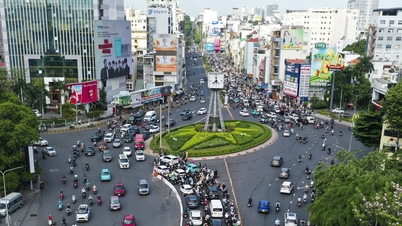
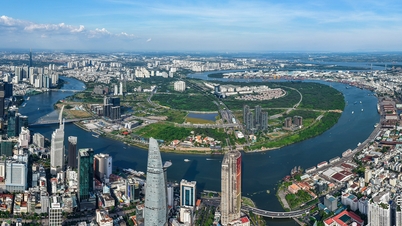
Innovating the way it attracts and retains talent to unleash human potential is the springboard for Ho Chi Minh City to reach further. (Photo: HOANG TRIEU)
We need a "brain" to coordinate the workforce.
Given these structural limitations, the regional talent development center should not be viewed merely as a conventional educational project, but must be a new strategic institution for growth. It should not be a school, research institute, or expanded department, but rather become the "strategic human resource brain" for the entire Southern economic region, similar to how port systems or financial centers are planned. If transportation infrastructure facilitates the movement of goods, then talent infrastructure must facilitate the flow of knowledge, skills, and innovation.
The most appropriate solution is to establish a regional, interdisciplinary institution, under the direct guidance of the city government but operating semi-autonomously. This institution needs the co-management participation of the state, businesses, universities, research institutes, and international corporations. It must be a central hub coordinating the future workforce of the entire Southern economic region and new development centers. The core objective is not simply to train a large number of people, but to identify, select, accelerate, and accurately allocate strategic talent. In other words, this center must continuously answer a crucial question: In the next ten or twenty years, what kind of skilled workers will Ho Chi Minh City need to sustain double-digit growth? Instead of mass training followed by job placement, the center must research and forecast demand before beginning training, aiming to produce human resources according to strategic orders.
If operated correctly, this center will serve as a sensitive radar for identifying national talent, a reliable labor market forecasting center, and a specialized acceleration academy for exceptionally talented individuals. It will also be a place to build a digital talent map, create strong connections with global businesses, and test groundbreaking mechanisms in education and training. Above all, it will be an open environment that allows truly exceptional individuals to advance further and faster than the rest of the system.
Looking deeper, this is precisely a "breakthrough within a breakthrough." Most current growth strategies still revolve around material factors: capital, land, infrastructure, and preferential policies. However, these resources are finite. The only thing with the potential for infinite, exponential growth is human intelligence. An outstanding expert can create value far exceeding that of dozens of ordinary workers. A brilliant manager can improve the performance of an entire large organization. A talented scientist can open up a new economic sector. Therefore, a talent development center is where people are created who know how to operate and provide the inexhaustible fuel for the growth engine. This is the shortest path to raising the ceiling of competitiveness for decades to come.

Source: https://nld.com.vn/lang-nghe-nguoi-dan-hien-ketai-thiet-chien-luoc-nhan-tai-196260525191608428.htm




































































































Comment (0)