A new way of thinking about resources.
Working with the Central Committee's Policy and Strategy Board and relevant agencies on assessing national development resources linked to the goal of double-digit economic growth and establishing a new growth model, General Secretary and President To Lam frankly pointed out the reality that many national resources are "stuck" in procedures, disputes, a fear of responsibility, and a lack of coordinated efforts. Traditional drivers such as increasing investment capital, expanding credit, exploiting land, cheap labor, and attracting foreign direct investment (FDI) through incentives are gradually revealing their limitations as the country transitions to a new stage of development requiring high-quality growth based on productivity and sustainable competitiveness.
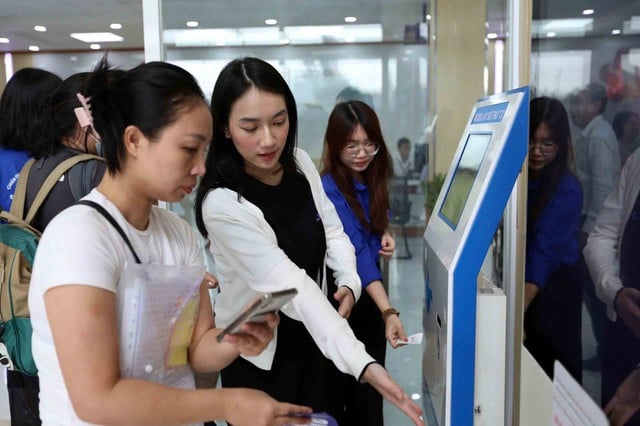
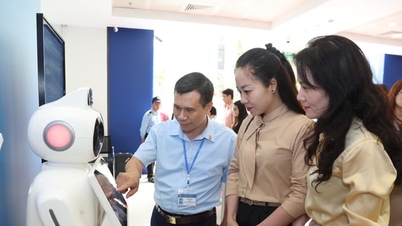
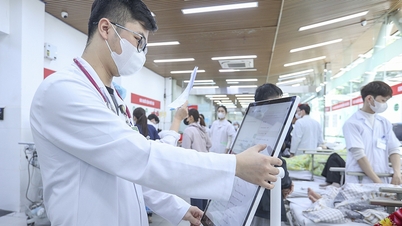
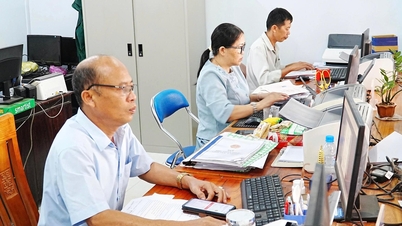
The country's resources include creativity, innovation, and a spirit of daring to act and take responsibility. ( In the photo: Ho Chi Minh City's Public Administration Center)
PHOTO: NGOC DUONG
Previously, in his directive speech at the National Conference on studying, understanding, and implementing the Resolution of the Second Plenum of the 14th Central Committee of the Communist Party of Vietnam, General Secretary and President To Lam also clearly stated: For a long time, in many places and at many levels, there has been a prevailing mindset of development primarily based on existing resources, using state budget, land, and public investment as the main pillars. Essentially, this is an approach that views development resources as finite and static, leaning towards allocation rather than creation. If not adjusted in time, this mindset will become a major obstacle to the development process in the new phase.
Based on the above perspectives, the General Secretary and President requested the digitalization and liberation of tied-up resources; focusing resources on growth poles, projects, and industries with high spillover effects, avoiding dispersion and equalization; developing businesses, capital markets, and resources within the population; and using productivity, science and technology, data, and high-quality human resources as the main driving forces.
Highly impressed by the new resource-based thinking of General Secretary and President To Lam, Dr. Tran Van Khai, Vice Chairman of the National Assembly's Committee on Science, Technology and Environment, affirmed that this is a strategic policy and decision, in line with the trends of the times and the urgent demands of our country's development in the new period. Placing science and technology, innovation, and digital transformation at the center of the development strategy shows our determination to build a new development model, reducing dependence on traditional advantages such as cheap labor or resource exploitation. After nearly 40 years of Doi Moi (Renovation), we have achieved many great accomplishments, but the old growth model based on capital and simple labor is gradually revealing its limitations. Our labor productivity remains low compared to developed countries, the rate of productivity growth shows signs of stagnation, and the risk of falling into the middle-income trap still exists. To move forward, we must rely on new driving forces: knowledge and innovation. This is the key for Vietnam to break through and avoid the risk of falling behind in the next decade.

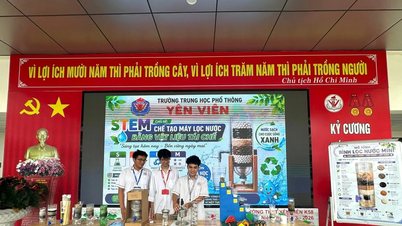
Creative and innovative activities are promoted, contributing to the synergistic strength of economic development. ( In the photo : Robotics & IoT Club of the Faculty of Science, Vietnam National University Ho Chi Minh City)
PHOTO: NHAT THINH
This viewpoint is not only correct in principle but also has a solid scientific and practical basis. Globally, science and technology and innovation have long been the primary drivers of economic growth. Countries that have risen strongly have all relied on technological and knowledge-based strength.
Mr. Khai cited the example of South Korea, which transformed from a poor country into an industrial powerhouse thanks to strong investment in research and development (R&D). South Korea currently spends over 5% of its GDP on R&D, among the highest in the world. Singapore is also among the global leaders in innovation (ranked 5th out of 139 economies according to the Global Innovation Index 2025), demonstrating the importance of high-quality human resources and policies encouraging innovation. Recently, China has identified a strategy of technological self-reliance to enhance its long-term competitiveness. The country is continuously increasing investment in science and technology, with R&D spending projected to reach 2.68% of GDP in 2024 (up from 2.38% in 2021). This focus aims to promote technological self-reliance, create new growth drivers, and compete for superpower status in the future.
"The international lessons above show that to achieve rapid and sustainable development in the digital age, there is no other way than to vigorously develop science and technology and innovation. For Vietnam, the transition to a growth model based on knowledge, technology, and digitalization is even more vital. The period from now until 2030 presents new development requirements: we must accelerate to strive for double-digit growth and enhance resilience against global uncertainties. In the context of unpredictable trade and geopolitical risks, our core challenge is that public investment must be faster, but most importantly, "smarter," prioritizing digital infrastructure, energy infrastructure, and innovation infrastructure, creating a foundation for sustainable growth and improving people's lives sustainably," emphasized Dr. Tran Van Khai.
Leveraging resources to strengthen the nation.
According to Associate Professor and National Assembly representative Tran Hoang Ngan, Chairman of the Advisory Council on Breakthrough Development at Saigon University, General Secretary and President To Lam has pointed out that the new growth model must rely more on productivity, science and technology, innovation, digital transformation, and data… In other words, it is necessary to thoroughly mobilize the country's resources to achieve the high growth target in the coming period as set forth in the Resolution of the 14th National Congress of the Party. The country's resources are not only material resources such as capital and land, but also include other non-material resources, such as creativity, innovation, and a spirit of daring to act and take responsibility.

Creative activities, innovation, and the application of science and technology need to be promoted to create a synergistic force for economic development.
PHOTO: NHAT THINH
At the same time, the thorough mobilization of resources also includes making the most of time, not delaying, meaning everything must be resolved thoroughly and quickly. For example, the delay in land use is a huge waste of resources. But in many localities, officials are afraid to act for fear of responsibility, passing the buck and only waiting for superiors to decide, thus delaying the use of resources, which is also a waste.
Simultaneously, Vietnam aims for high, sustainable, and substantial growth, which must be based on science and technology, and increased labor productivity through innovation, creativity, and digital transformation. As the scientific and technological content and knowledge content increase, so does the harm to natural resources and national resources. For the national economy to achieve high growth, all localities must grow, mobilizing all resources in society and encouraging the development of all economic sectors. Vietnam must fully utilize the potential and advantages of each economic region and each locality, from lowlands to mountainous areas.
Associate Professor Tran Hoang Ngan emphasized that to gather and leverage the resources of the entire country, each household and each region must demonstrate determination. Every civil servant and official in state agencies must participate in digital transformation and apply technology to streamline administrative procedures for citizens and businesses. Even the nationwide push to invest in transportation infrastructure, from expressways to inland waterways, urban railways, and high-speed rail, is a way to connect resources from different localities. Localities and regions will interact and support each other better, thereby creating a combined resource and collective strength to fully exploit the potential and advantages of the entire country.
Further analyzing the concept of resource synergy recently mentioned by General Secretary and President To Lam, Dr. Nguyen Viet Hung, former Head of the Department of Party Building and Ho Chi Minh Thought at the Ho Chi Minh City Academy of Cadres, stated that national resources and strength must be considered holistically across all aspects: from material strength to spiritual strength; connecting traditions from the past, through the characteristics of the present, and looking towards forecasting future values. Comprehensive national strength is the combination of politics, economics, culture, society, defense, security, domestic and foreign affairs. It is the totality of values, also known as the soft power of a nation.
To usher the country into a new era – an era of rapid and sustainable development – the General Secretary and President have identified science and technology, knowledge, and digital transformation as the main pillars. When we base our development on the foundation of science and technology and knowledge, it is essentially a form of spiritual strength. Therefore, Vietnam must combine material resources with spiritual resources. The core strength is spiritual, but it always needs accompanying material strength to ensure and determine success.
For example, during the era of nation-building and national defense of our ancestors, alongside the cultural traditions of Van Lang or Dong Son, we were always closely associated with the rice civilization. It was the rice grain and the potato in that agricultural production method of the Red River Delta that became the solid foundation for the flourishing strength of the Dai Viet era.
Historical practice has also proven that national resources include both material and spiritual elements. Of these, material resources always play a decisive role, but spiritual resources are extremely important. There are countries and nations that, in terms of material resources and potential, may be inferior to a rival nation, yet they have remained independent and self-reliant for thousands of years without being invaded, colonized, or assimilated.
"Today, Vietnam is a developing country embracing a great national ambition: to enter an era of rapid and sustainable development. We are taking innovative scientific and technological advancements and promoting digital transformation as the main driving force for development. If we know how to combine all material and spiritual strengths – with the spirit as the source of 'upliftment,' creating enthusiasm for the entire nation – it will bring about a powerful motivation and unleash a very high level of endogenous resources. Every Vietnamese citizen will be ignited with the aspiration to become wealthy, independent, self-reliant, and to elevate the country to become a powerful nation," Dr. Nguyen Viet Hung clearly stated.
Resource allocation based on a new mindset.
General Secretary and President To Lam has called for a focus on building an institutional package to unlock resources. In institutional building, the mindset of "if you can't manage it, ban it" must be decisively abandoned. At the same time, resources should be concentrated on growth poles, projects, and industries with high spillover effects, avoiding scattered and egalitarian approaches; developing businesses, capital markets, and resources within the population; and using productivity, science and technology, data, and high-quality human resources as the main driving forces.
According to Associate Professor Tran Hoang Ngan, the allocation of national investment resources should generally be based on efficiency criteria. Simultaneously, leading growth localities must be strengthened and promoted through special institutions. For example, Ho Chi Minh City and Hanoi must have compatible institutions to fully utilize their potential and advantages, as well as allocate resources proportionally. The government has issued many resolutions to reduce business conditions in various sectors and simplify administrative procedures. This also concretely institutionalizes the Party's policy of making strong institutional breakthroughs to unlock, liberate, and effectively utilize all resources. Implementing these strategies with a new mindset also means eliminating the "if you can't manage it, ban it" mentality that still exists in some places. Only when each locality and all citizens work together to effectively utilize the potential and advantages of each area, truly maximizing internal resources, can the whole country achieve high and sustainable economic growth.
Dr. Nguyen Viet Hung also believes that Vietnam does not lack resources, nor does it lack ambitious human resources, as well as having a foundation built over 40 years of reform and a stable international environment. However, these resources have been hampered by various factors in recent times.
First, there is the institutional bottleneck. The regulatory system, policies, and administrative procedures are overlapping and inadequate. This "institutional obstacle" is restricting democratic rights in society and preventing the self-development of economic sectors. In addition, the nation's abundant resources are being exploited inefficiently and managed loosely, leading to significant losses…
Based on the above analysis, Mr. Hung emphasized the need to correctly understand the core shift in thinking about "resources" in the new spirit of the General Secretary and President. That is, what already exists must be unlocked for development; what works well should be promoted, and what doesn't work well should be learned from. For what doesn't exist, research, innovation, and experimentation are necessary; in that spirit, a breakthrough in thinking should shift from resource allocation to creating an environment where resources can synergize. For resources currently constrained by institutions, the first thing to do is to break through institutions in a constructive direction, to "create wind for the sails" of development. Along with that, eliminate prejudices and awaken the "gene of aspiration" in all strata of the population so that they can all work together to become wealthy, self-reliant, and lead the country forward.
The evaluation of individuals and economic sectors, such as the private sector, must be fair and impartial, even in the areas of emulation and reward. Innovations and aspirations for wealth creation must be protected by strict, open, transparent, and fair laws; they must be nurtured within a favorable and encouraging legal and administrative environment that inspires people to use their talents to serve the country. This is a tremendous resource for driving high economic growth.
Determination to act and effective implementation.
The new phase demands higher levels of innovative thinking, resolute action, and effective implementation. Vietnam needs to build and perfect a transparent institutional framework and a fair, transparent, and easily compliant legal system. Only by creating a truly attractive, fair, and sustainable investment environment can we attract strong capital flows from both domestic and foreign sources, thereby accelerating socio-economic development in the new phase. With the achievements already made and the clear direction set by the 14th National Congress, the country is facing a great opportunity to realize its aspiration for prosperous and happy development.
Associate Professor, PhD, Member of Parliament Tran Hoang Ngan , Chairman of the Advisory Council for Breakthrough Development of Saigon University
The combined effect of both internal and external forces.
We leverage our internal strengths through advanced science and technology, while simultaneously "rolling out the red carpet" to attract external resources (capital, new technologies) in the spirit of international cooperation and partnership, but maintaining independence and self-reliance. Thus, removing institutional bottlenecks and building a democratic, disciplined, and innovative institution is the key to harnessing all national resources. I believe that the transformation of the Party and its pioneering leaders will create strong political inspiration, leading the entire nation to confidently enter an era of progress.
Dr. Nguyen Viet Hung , former Head of the Department of Party Building and Ho Chi Minh Thought, Ho Chi Minh City Academy of Cadres.
Source: https://thanhnien.vn/tam-nhin-khai-mo-nguon-luc-quoc-gia-185260523205914508.htm






















































































Comment (0)