

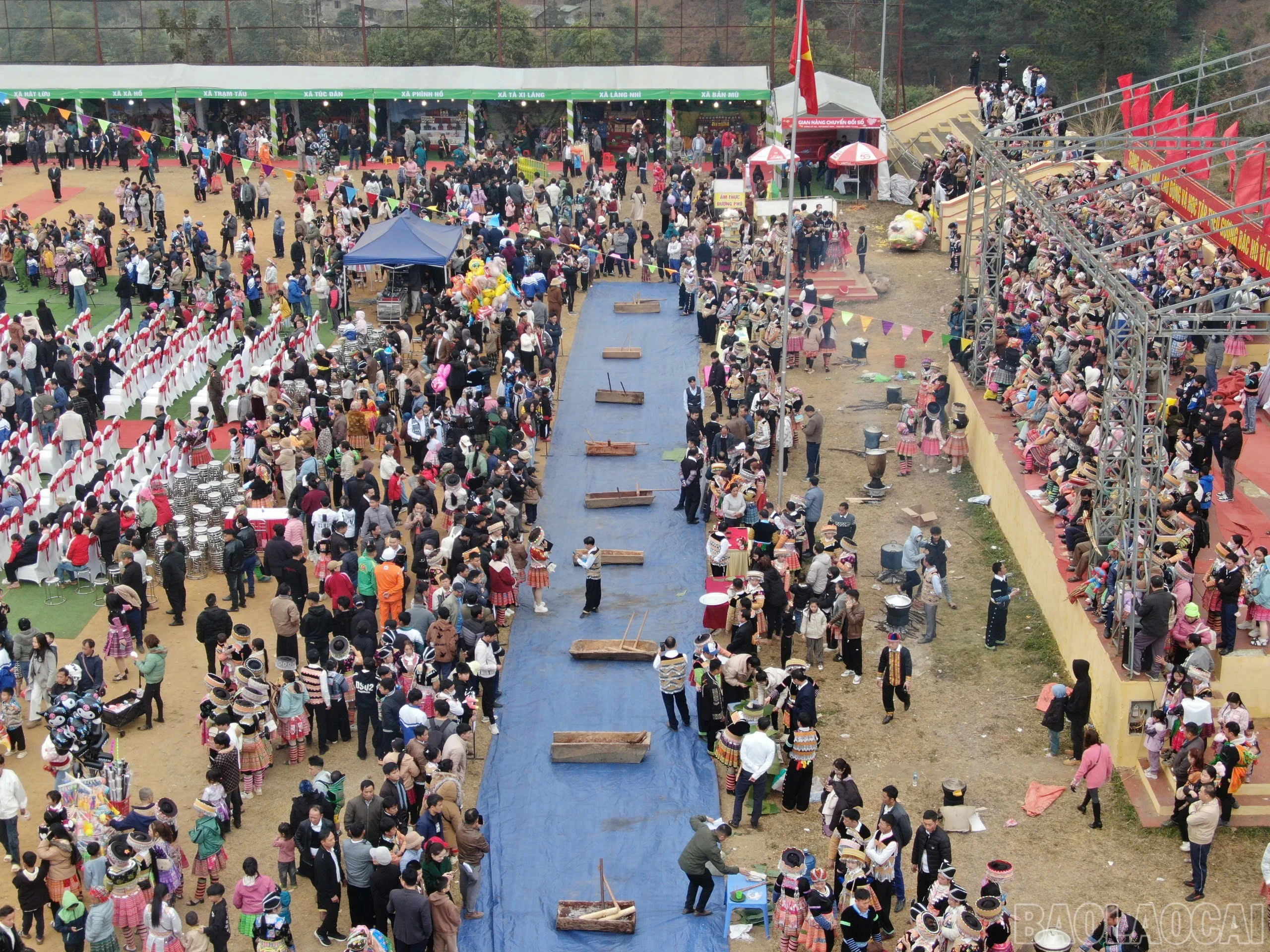
In the first three months of the year, Lao Cai welcomed approximately 3.4 million visitors, reaching 30.5% of the annual plan; of which, international visitors were estimated at over 515,000. Total revenue from tourism reached approximately 12,872 billion VND.
These figures not only reflect the growing appeal of the locality but also affirm Lao Cai's position on the national tourism map, with its advantages of unique natural landscapes and diverse cultural identities of its ethnic groups.
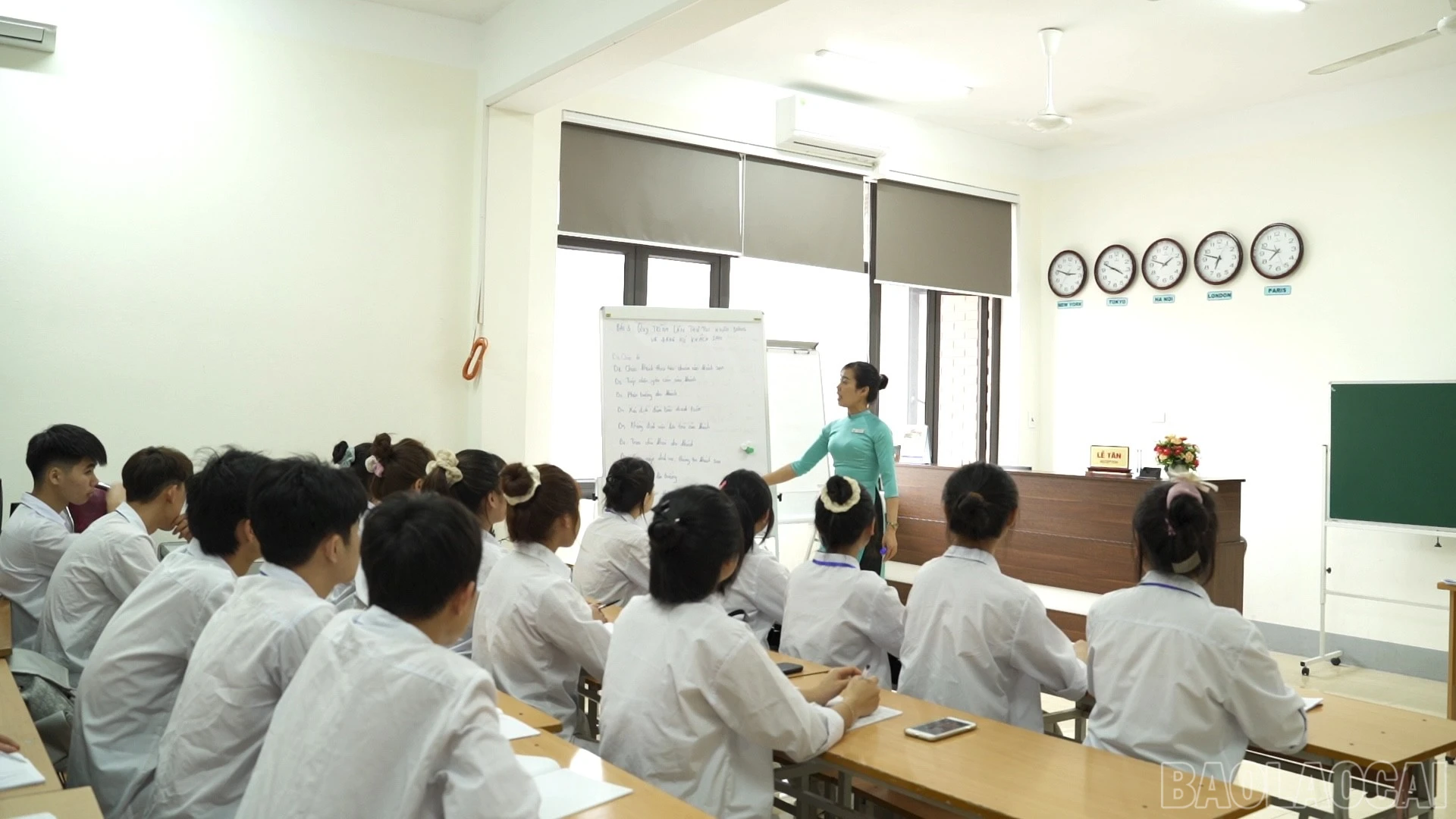
However, behind this impressive growth lies increasing pressure on the tourism workforce.
In reality, the local workforce is still lacking in quantity, limited in skills, and uneven in quality.
In particular, with tourism shifting towards professionalism, modernization, and international integration, the increasing demands for foreign languages, service skills, adaptability, and service-oriented thinking pose significant challenges for training institutions and local authorities.
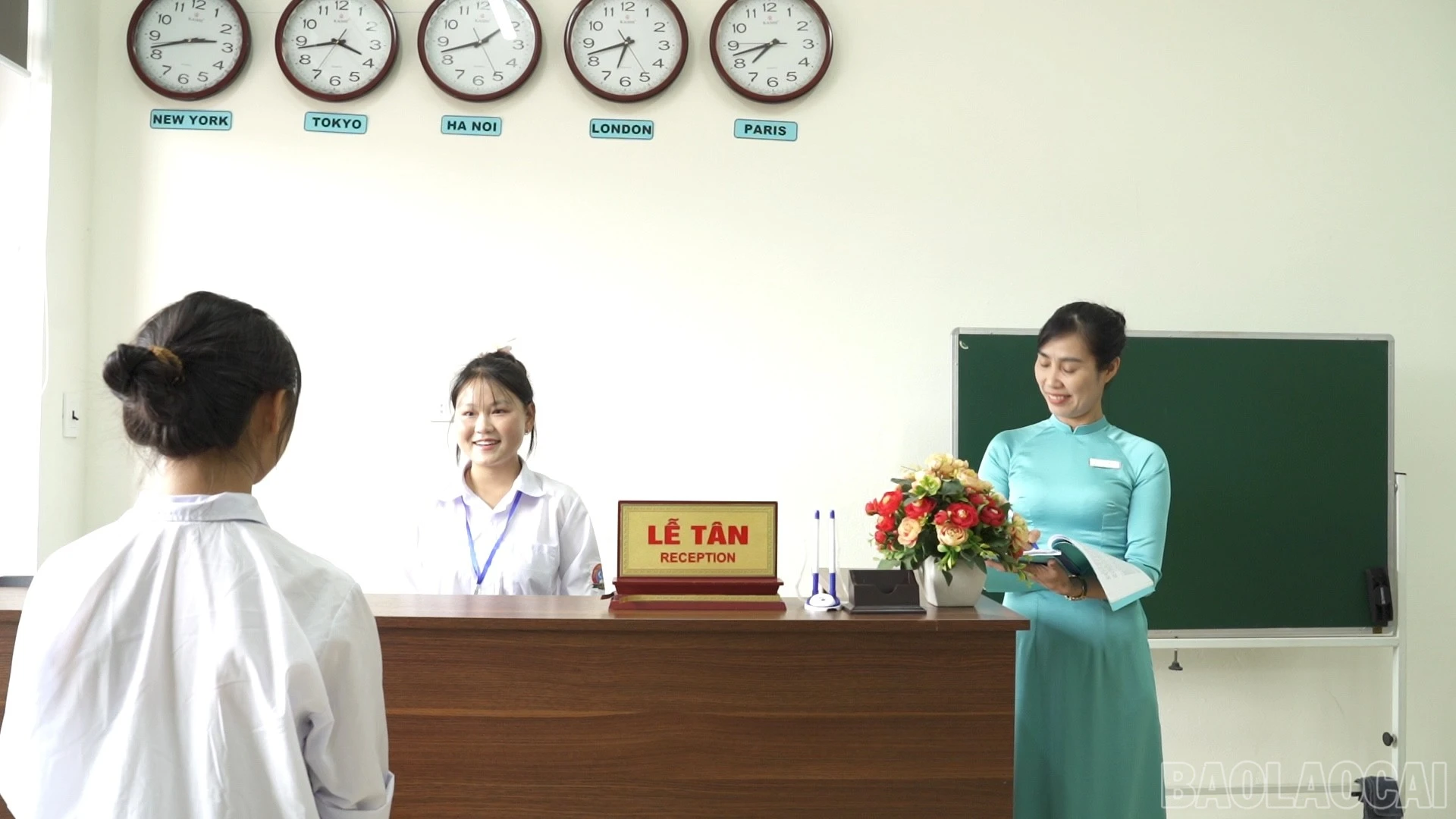
In response to this demand, vocational education institutions in the area have proactively reformed their training methods, enhanced practical relevance, and forged closer ties with businesses.
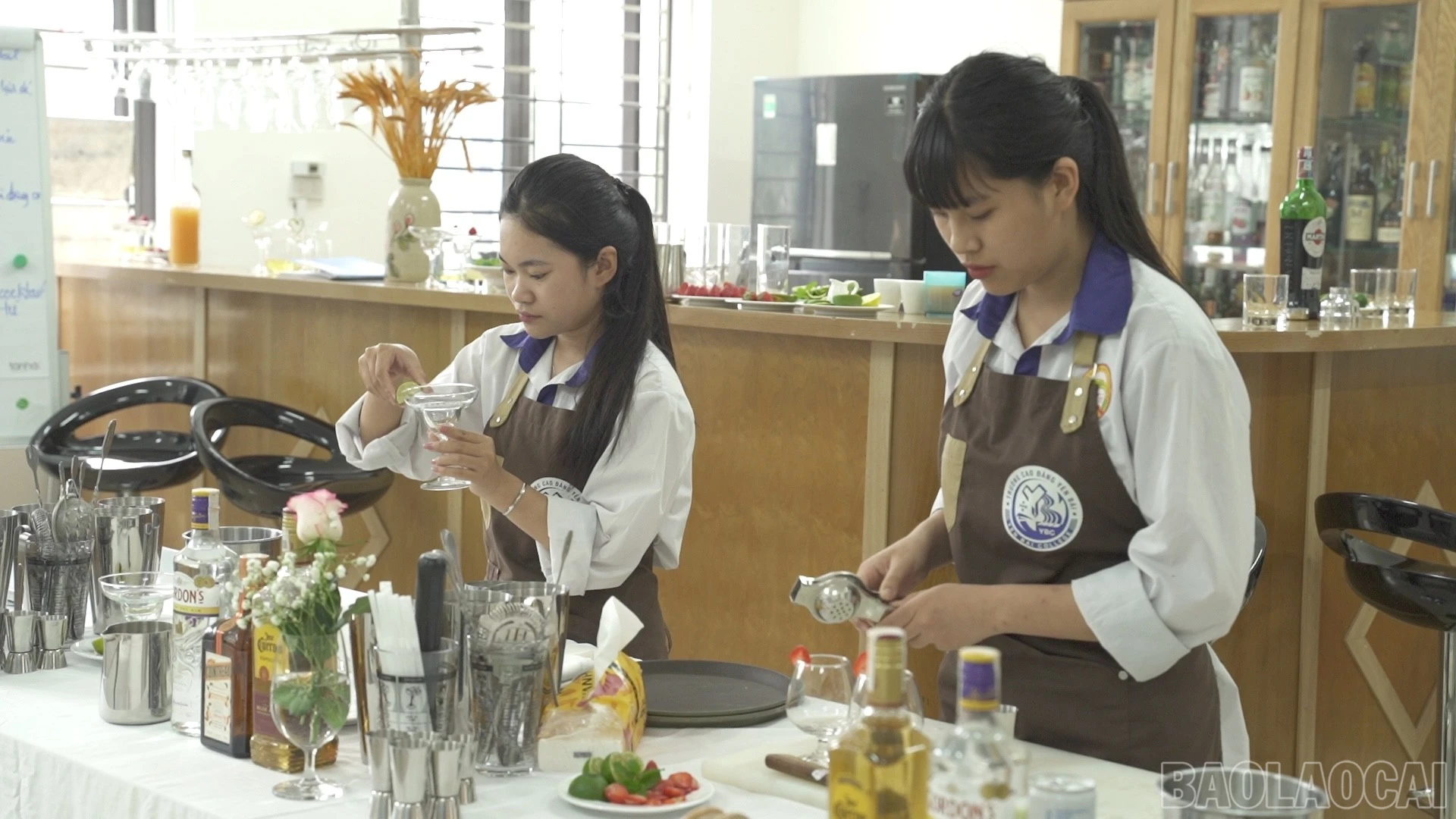
At Yen Bai Vocational College, the training program in culture and tourism is designed to be open and flexible, focusing on practical application and professional skills, rather than solely on theory as in the past.
The tourism industry is booming, creating many job opportunities – this isn't just the opinion of Sung A Lu, a student from the Faculty of Culture and Tourism, but it accurately reflects the reality of the labor market, as the demand for recruitment in the tourism and service sector is increasing rapidly, especially in key destinations like Lao Cai.
Beyond simply hoping for employment, many young people in mountainous regions are proactively shaping their future with an entrepreneurial mindset. Recognizing the potential for community-based tourism development in their areas, they choose to receive formal vocational training, viewing it as a foundation for sustainable livelihood development right in their hometowns.
Driven by a desire to acquire more knowledge and skills for tourism development in her hometown, Ly Thi Hong chose to study at the Faculty of Culture and Tourism. Hong's story is not unique, but reflects a new trend among young people in mountainous regions – instead of leaving their hometowns to work elsewhere, they seek to "get rich locally" by exploiting the cultural values and tourism potential of their area.
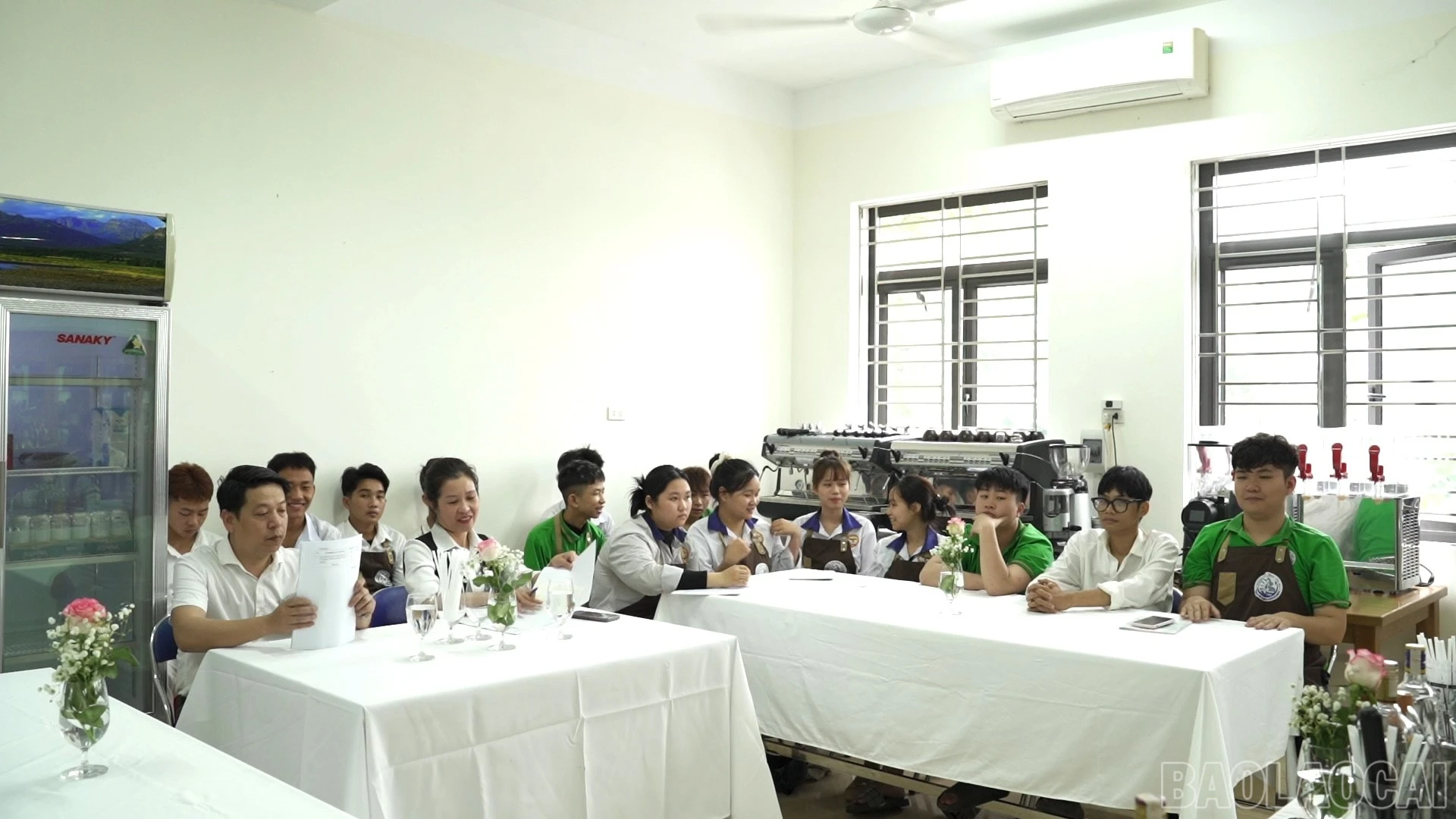
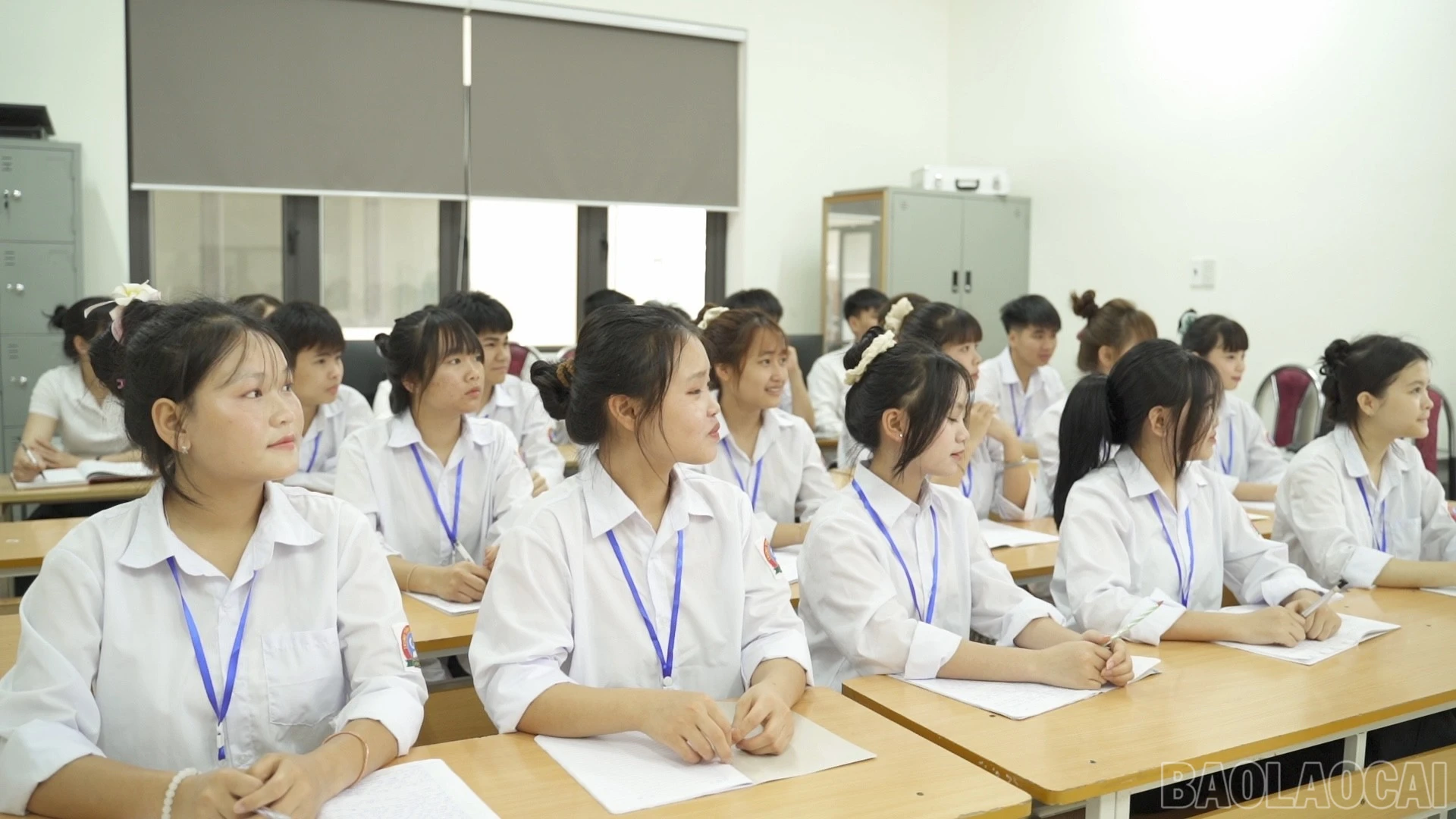
Group learning activities help students develop soft skills and a professional work ethic.
The collaboration between schools and businesses is considered crucial in improving the quality of training. Experience shows that only when students have access to a real-world work environment and hone their professional skills during their studies can they quickly meet the demands of the labor market after graduation. This is also a general trend in modern vocational training, moving towards a "dual training" model – combining theory and practice.
However, to fundamentally address the tourism workforce problem, a coordinated effort from multiple parties is needed. First and foremost is the guiding and supportive role of local authorities in developing policies for training, attracting, and utilizing labor.
In addition, training institutions need to continue innovating their programs, updating them with the latest industry trends, especially digital transformation in tourism, the experiential economy, and green tourism.
Another important issue is raising workers' awareness of the value of the tourism industry. For many years, a significant number of workers in mountainous areas have considered tourism a secondary occupation, lacking proper investment. This has led to unprofessional services, negatively impacting the image of the destination. Therefore, changing mindsets and building a professional tourism culture is crucial.
From a long-term perspective, tourism human resource training needs to be linked to the local sustainable development strategy. It should not only focus on vocational skills training, but also emphasize educating people about cultural preservation, environmental protection, and maintaining national identity. These values are the "core assets" that create the attractiveness of tourism in Lao Cai.

It is clear that, in the development of the tourism industry, human resources are the decisive factor in determining the quality and competitiveness of a destination. When workers are equipped with sufficient skills, possess a modern service mindset, and have a desire to contribute, they are not only tourism professionals but also "cultural ambassadors" who help promote the image of the locality.
Therefore, strengthening tourism human resource training is not only an immediate task to meet market demands, but also a strategic solution for Lao Cai to develop tourism in a professional, sustainable, and integrated manner. In this journey, the collaboration of the State, schools, businesses, and the workers themselves will be the "key" to unlocking potential and propelling local tourism further on the regional and international map.
Source: https://baolaocai.vn/tang-cuong-dao-tao-nguon-nhan-luc-du-lich-post897612.html


![[Photo] The General Secretary, President and his wife lay flowers at the Ho Chi Minh Monument in Manila.](https://vphoto.vietnam.vn/thumb/1200x675/vietnam/resource/IMAGE/2026/05/31/1780219759477_anh-man-hinh-2026-05-31-luc-16-29-07.png)








![[Video] Sunset at Lap An Lagoon – Where the sun sets over the fishing nets](https://vphoto.vietnam.vn/thumb/340x192/vietnam/resource/IMAGE/2026/05/31/1780192137701_beach-landscape-sea-water-nature-grass-745871-pxhere-com.jpeg)




































































Comment (0)