

Removing language barriers
In the educational landscape of border regions, one of the biggest barriers faced by ethnic minority students is language. Many children are accustomed to speaking their mother tongue from a young age, and only begin to learn Vietnamese when they start school. This unfamiliarity can easily lead to shyness and reluctance to communicate, directly affecting their learning. Therefore, before the start of the new school year, many schools in the province have organized enhanced Vietnamese language classes for preschool students, considering this an important first step in overcoming the language barrier.
This year, at Loc Hoa Primary and Secondary School in Loc Thanh commune, 64 ethnic minority students are participating in enhanced classes. In the first few days of class, most of them were shy, even afraid to talk to their classmates and teachers.
Ms. Nguyen Thi Hien, a teacher at Loc Hoa Primary and Secondary School, shared: “Most students before entering first grade were only familiar with their mother tongue and had never used Vietnamese. Therefore, when they came to school and met teachers and friends, they were often shy and hesitant to communicate. Thanks to the Vietnamese language enrichment class, they have changed significantly, learning to greet, converse, and become more confident every day. The good news is that they are no longer afraid to go to school and have begun to feel excited and enthusiastic about learning.”
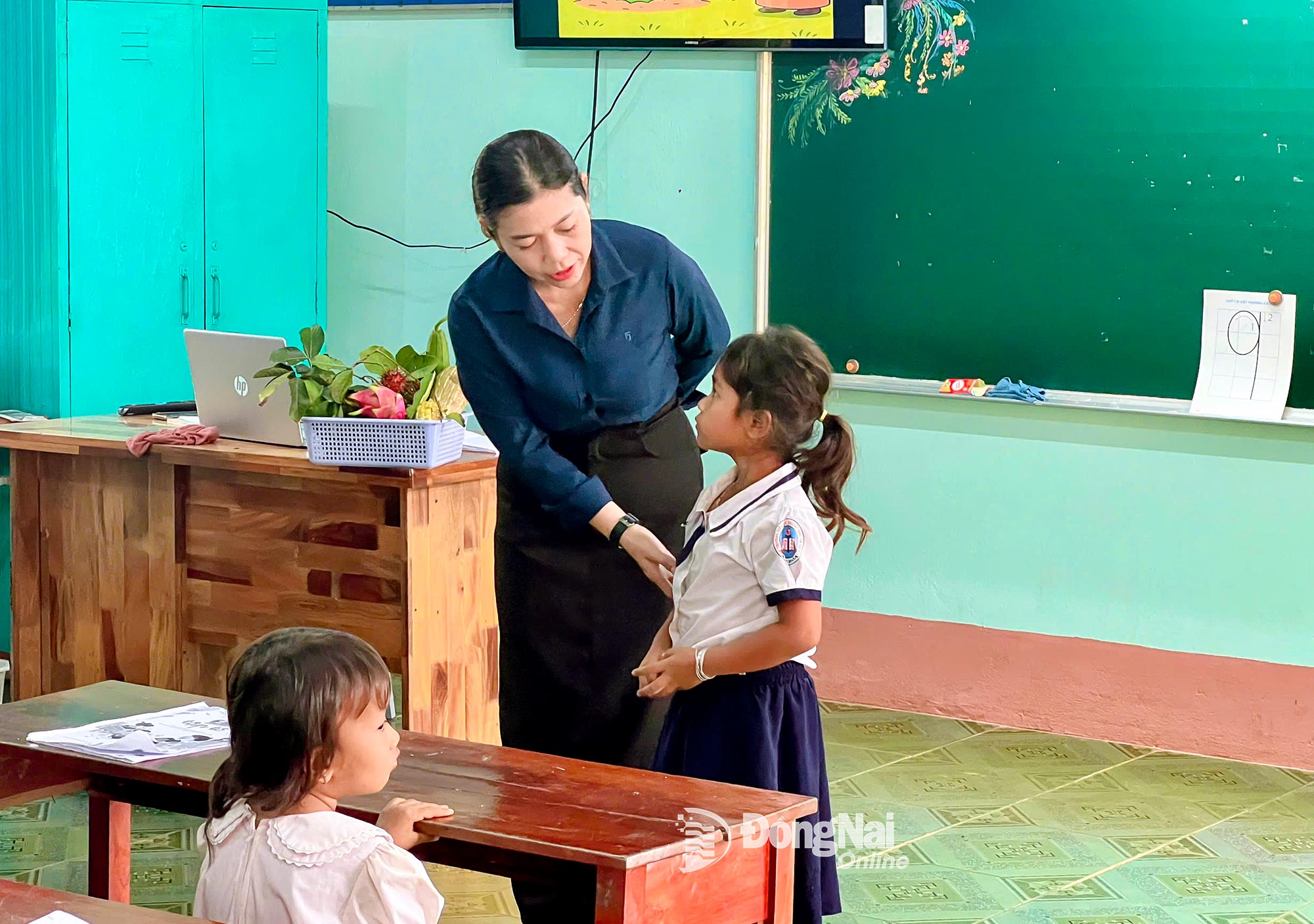 |
| Teacher Nguyen Thi Hien from Loc Hoa Primary and Secondary School, Loc Thanh commune, teaches ethnic minority students how to tell fairy tales. Photo: Thanh Thao |
After just one or two weeks, the change gradually became apparent: shy glances were replaced by smiles, nods gave way to greetings and conversations. This increased confidence is not only a positive sign of learning, but also proof of the effectiveness of a consistently implemented educational method.
Ms. Hoang Thi Anh Hong, Deputy Principal of Loc Hoa Primary and Secondary School, affirmed: “Ethnic minority students are often shy and have limited communication skills. When entering first grade, they easily feel bewildered and lag behind their peers in more privileged areas. Therefore, organizing an enhanced Vietnamese language class before the start of the school year is extremely necessary. In just 1-2 weeks, the children get acquainted with the primary school environment, meet teachers, and practice greeting and communicating. This not only helps them become more confident from the first day of class, but also creates a foundation for better knowledge acquisition throughout their future studies.”
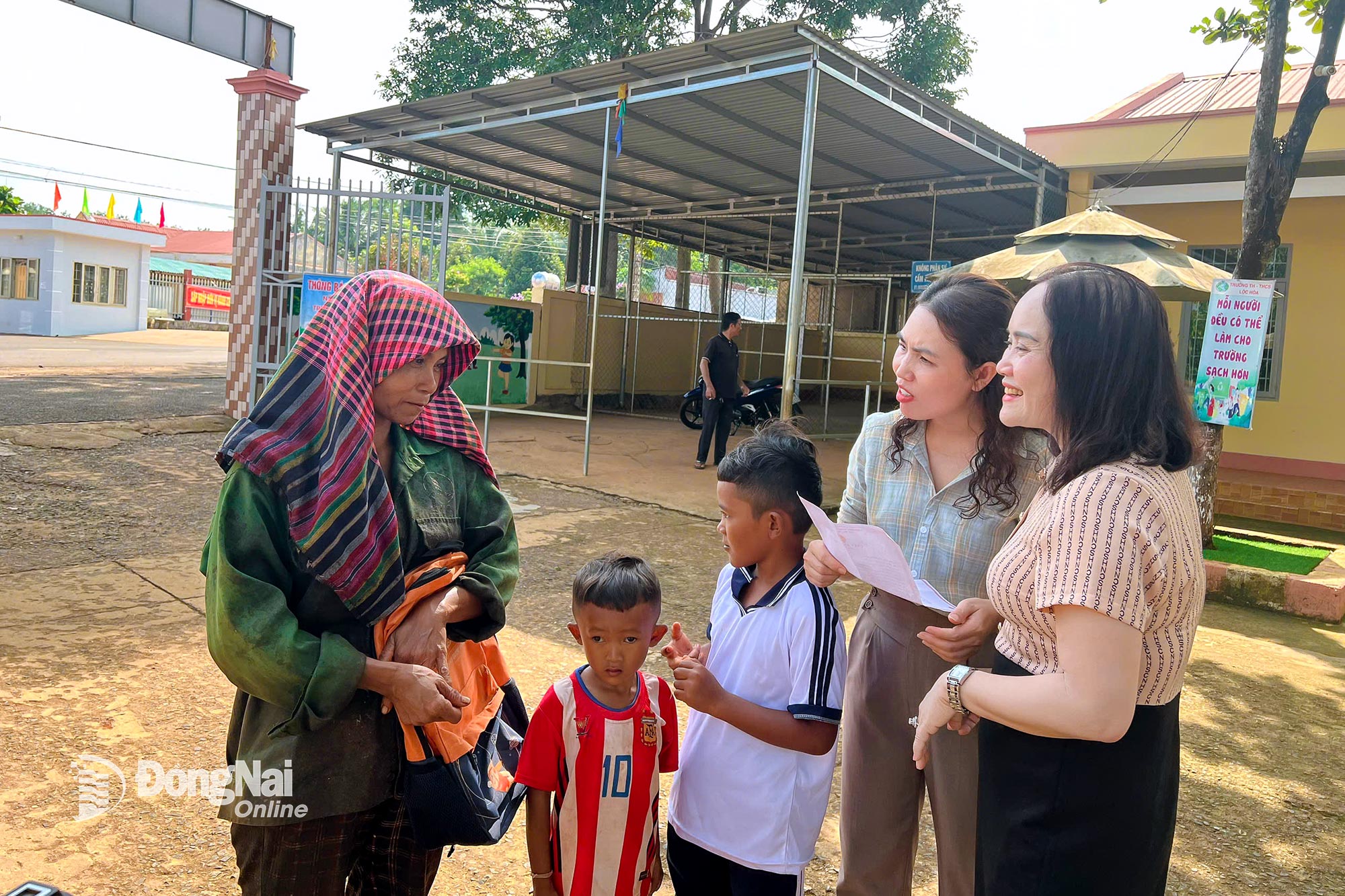 |
| At Loc Hoa Primary and Secondary School in Loc Thanh commune, alongside teaching, teachers are actively implementing efforts to encourage students to attend classes. (Photo: Thanh Thao) |
Beyond simply teaching literacy, strengthening Vietnamese language skills also contributes to maintaining student enrollment. Many children who were at risk of dropping out to follow their parents to work in the fields have become more attached to school thanks to the persistent efforts of teachers. Clearly, removing language barriers is not just the responsibility of a single classroom, but a strategic solution to retain students and build a solid foundation for future school years.
It all starts with life lessons.
If the Vietnamese language is the key that unlocks the door to knowledge, then these supplementary classes are the first step for ethnic minority students to firmly grasp that key in their hands.
At Loc Phu Primary and Secondary School (Loc Quang commune), 44 ethnic minority students were divided into three separate school locations to participate in an intensive Vietnamese language class before the start of the new school year. Here, the lessons not only revolve around written words but also connect with everyday things such as greetings, self-introductions, getting acquainted with the blackboard and chalk, and basic concepts.
Teacher Truong My Hanh, who directly teaches enhanced Vietnamese language skills to ethnic minority students, shared: “We start with seemingly small things like greetings, proper posture, and recognizing height and length. Then, the children practice introducing themselves, their families, and their homes. Besides that, teachers introduce them to the blackboard, chalk, and the first strokes of letters. Most importantly, they are trained in basic communication skills so that when they enter first grade, they can confidently speak and keep up with the curriculum.”
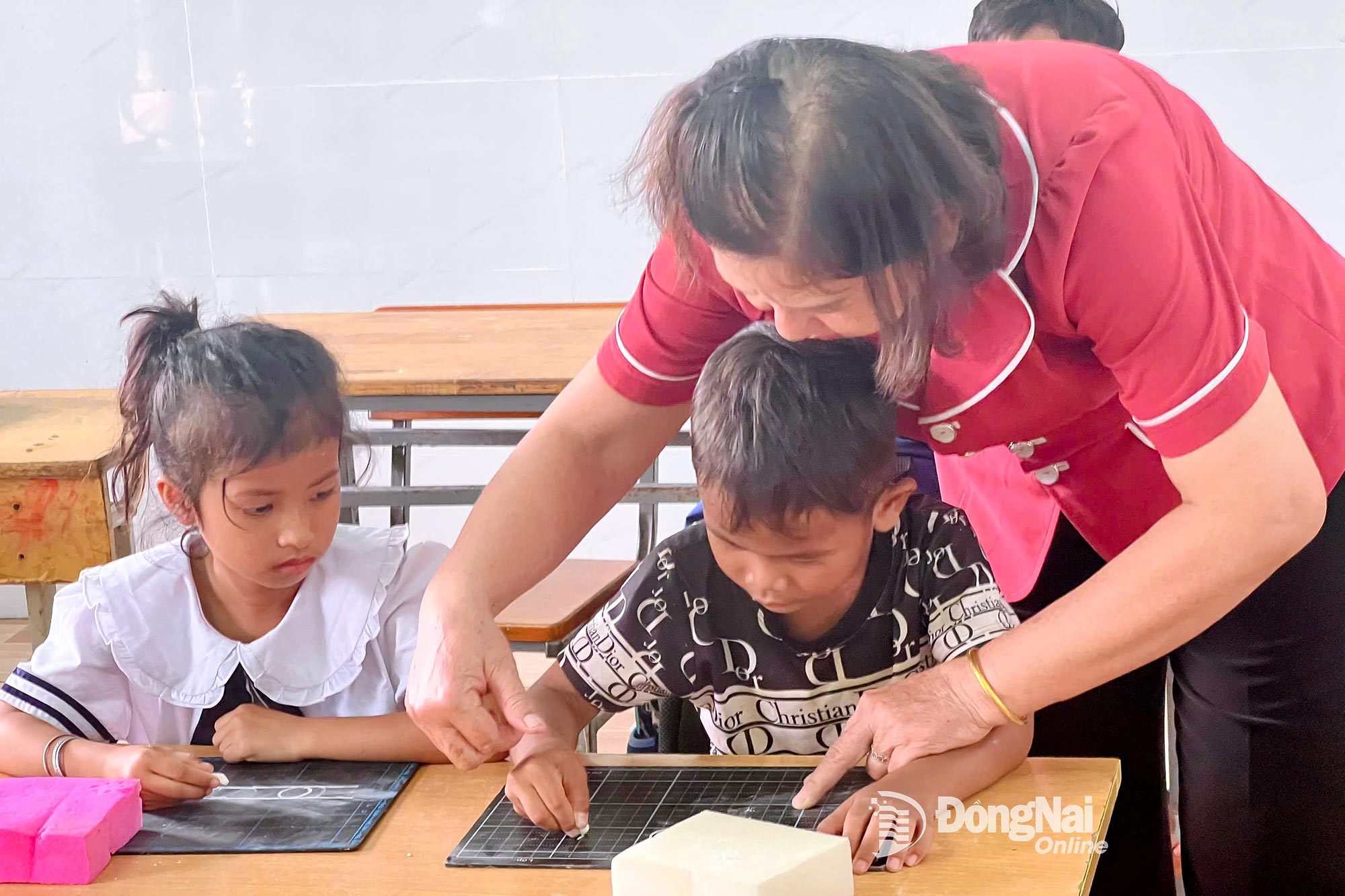 |
| At the Bu Linh branch of Loc Phu Primary and Secondary School (Loc Quang commune), teacher Truong My Hanh is teaching students how to use small blackboards and chalk. Photo: Thanh Thao |
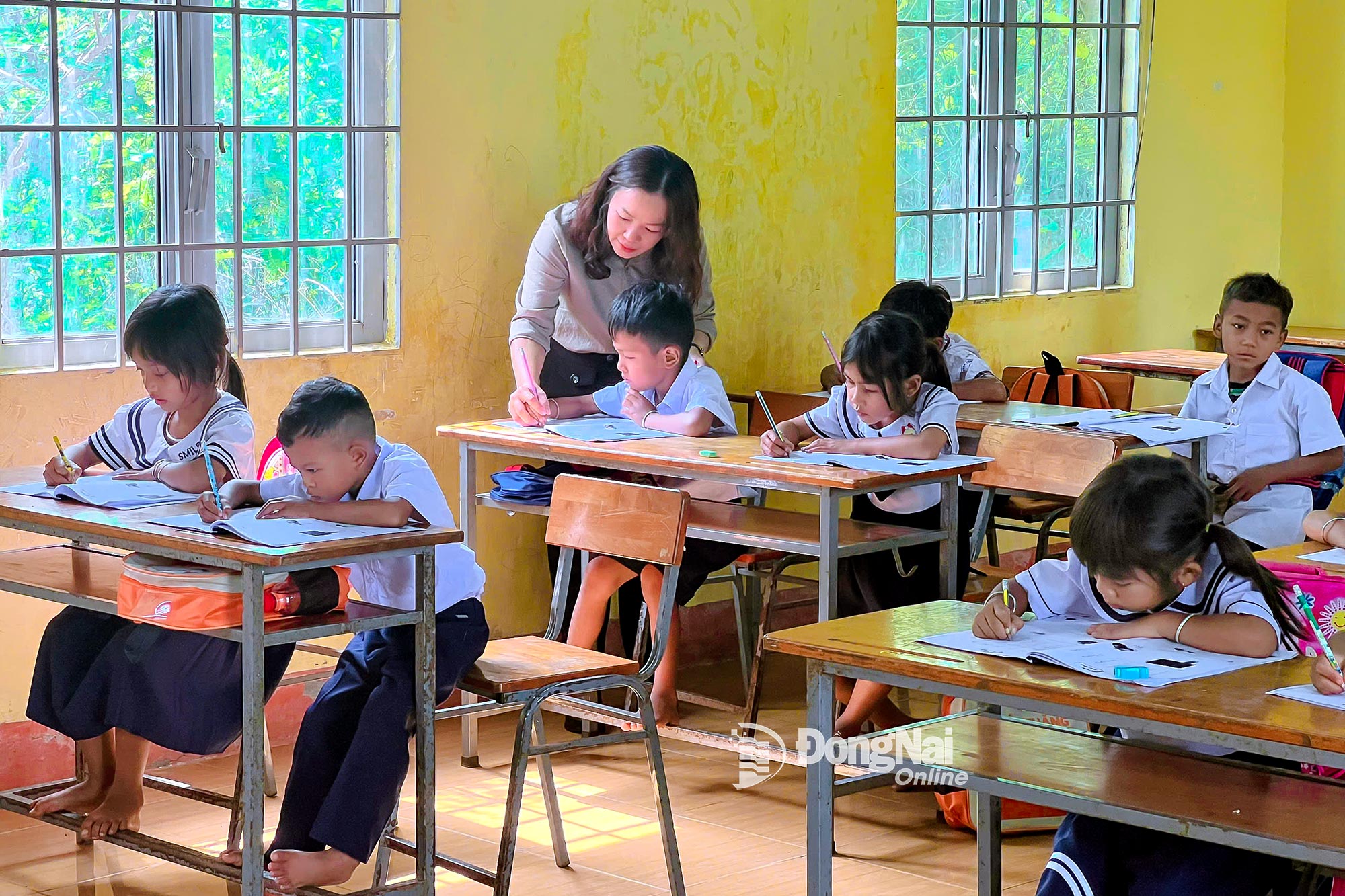
Beyond just handwriting practice, these Vietnamese language enrichment classes create a learning-through-play environment. Teachers utilize pictures, stories, folk games, and children's songs to transform lessons into engaging and enjoyable experiences. Each song and group game not only brings joy but also helps students naturally and intimately memorize Vietnamese.
Ms. Mai Thi Phuong, Deputy Principal of Loc Phu Primary and Secondary School, said: “The school proactively develops a pre-primary program that is very close to the children's daily lives, incorporating many visual aids, games, and songs so that learning becomes natural, like learning through play. Simultaneously, the school assigns teachers who are both professionally qualified and knowledgeable about local culture, and who are dedicated to their profession. As a result, teaching Vietnamese is not only more effective but also helps children feel familiar, comfortable, and more enthusiastic about going to school.”
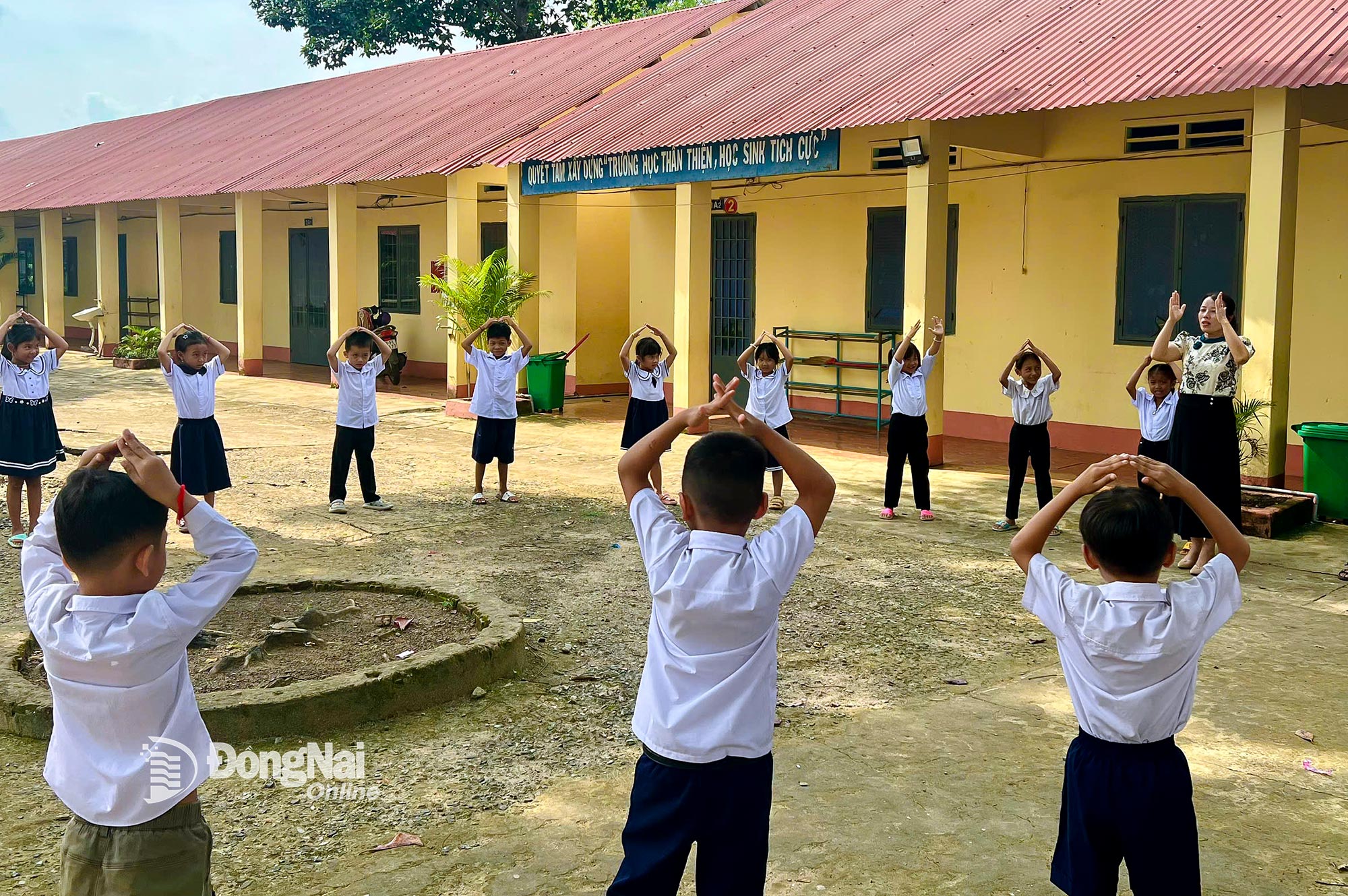 |
| At Loc Phu Primary and Secondary School (Loc Quang commune), the Vietnamese language enrichment classes, in addition to handwriting practice, create a learning-through-play environment, fostering enthusiasm and a love for school among students. Photo: Thanh Thao |
In reality, these classes not only teach knowledge but also ignite a love of learning. Students who were previously hesitant and unfamiliar with Vietnamese now proactively raise their hands to speak, confidently greet teachers, and chat with friends. This change, though small, lays a solid foundation to ensure that these students are not left behind from their very first year of school.
Alongside this, teachers also actively encouraged students to attend classes. Many teachers traveled long distances to individual homes to persuade parents to send their children to school regularly. This perseverance helped maintain student enrollment, ensuring that the seeds of knowledge were not missed from the very beginning.
 |
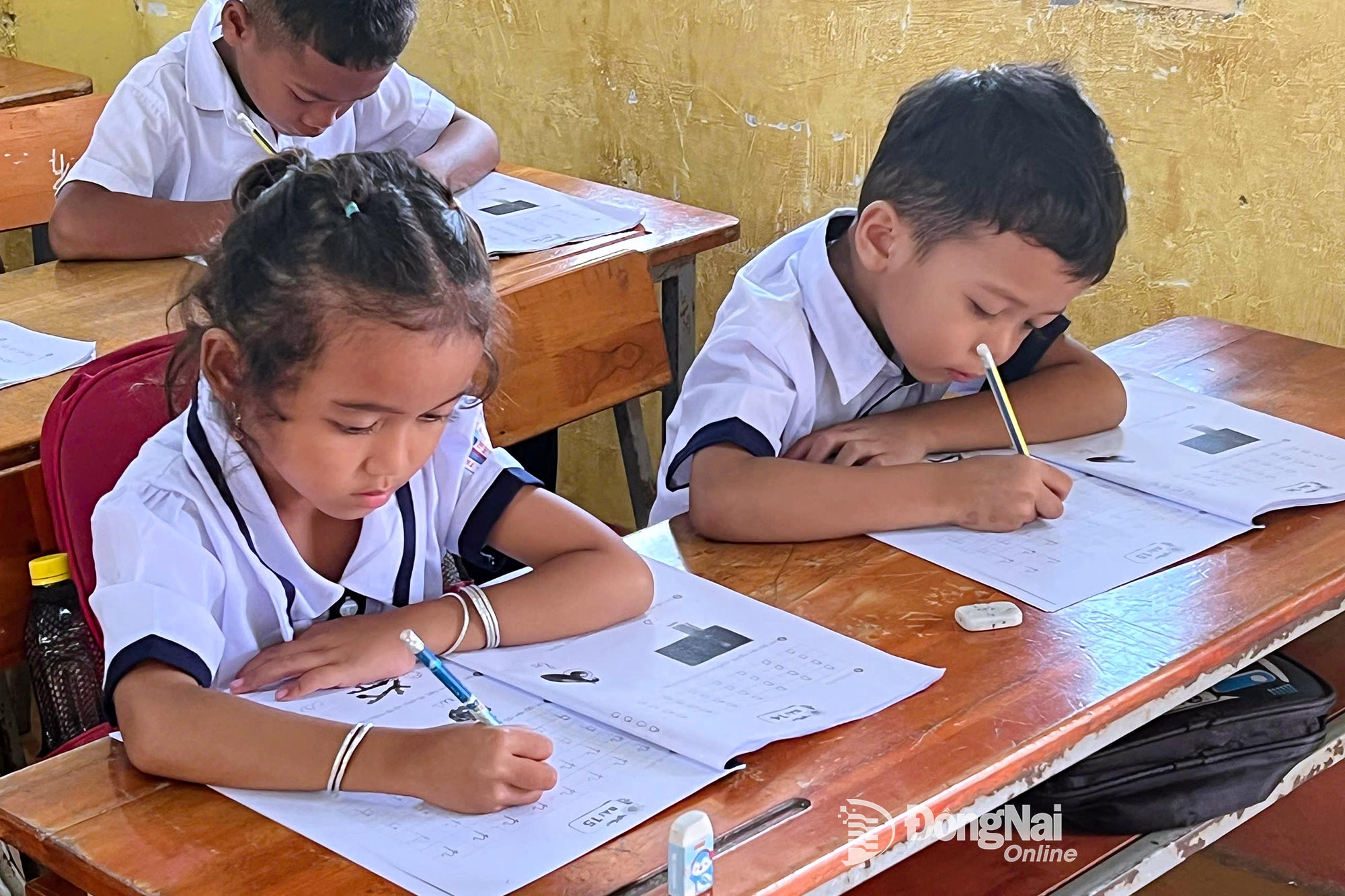 |
| The project to enhance Vietnamese language skills is a key strategy, helping students develop all four skills—listening, speaking, reading, and writing—and become familiar with the learning environment early on. Photo: Thanh Thảo |
These Vietnamese language enrichment classes in remote areas, though simple, embody a persistent journey of imparting knowledge. Through the nurturing hands of their teachers, Vietnamese is not just a language for communication, but also a bridge leading ethnic minority students into the world of knowledge. From these early lessons, hope is sown, so that in the future, these children will grow up strong, continue their intellectual journey, and contribute to enriching and beautifying their homeland.
Thanh Thao
Source: https://baodongnai.com.vn/xa-hoi/202508/tang-cuong-tieng-viet-cho-hoc-sinh-dan-toc-thieu-so-tien-tieu-hoc-43a0149/



![[Photo] The General Secretary, President and his wife lay flowers at the Ho Chi Minh Monument in Manila.](https://vphoto.vietnam.vn/thumb/1200x675/vietnam/resource/IMAGE/2026/05/31/1780219759477_anh-man-hinh-2026-05-31-luc-16-29-07.png)

















![[Video] Sunset at Lap An Lagoon – Where the sun sets over the fishing nets](https://vphoto.vietnam.vn/thumb/340x192/vietnam/resource/IMAGE/2026/05/31/1780192137701_beach-landscape-sea-water-nature-grass-745871-pxhere-com.jpeg)







































































Comment (0)