

Creating a breakthrough for the economy in the "era of national resurgence"
Developing the aviation economy, or exploiting outer space, has been affirmed as one of the new driving forces for the country's development. To effectively utilize this space, it is necessary to attract appropriate investment in infrastructure, especially the participation of the private sector.
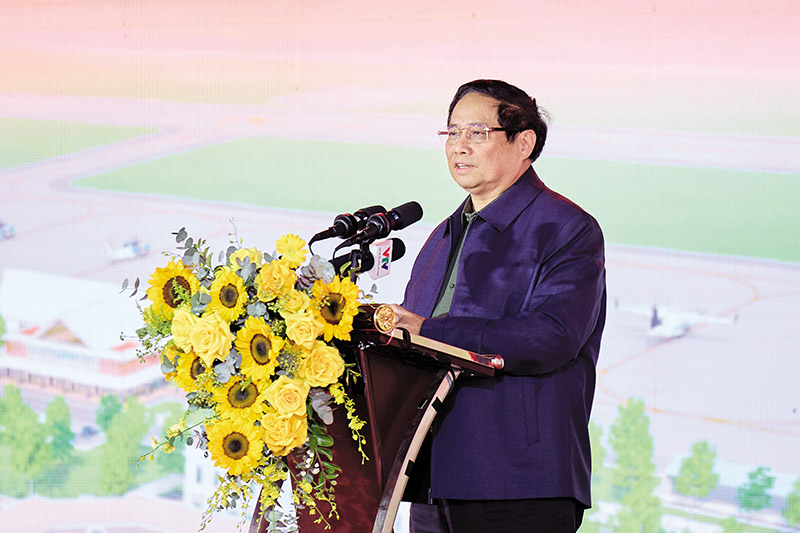 |
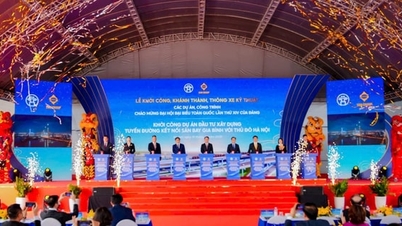
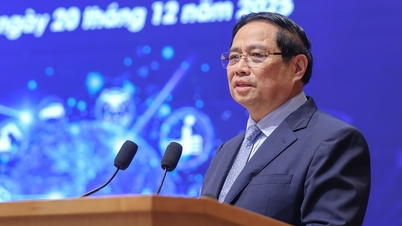
| Prime Minister Pham Minh Chinh emphasized the importance of building an airport system. |
Vietnam's "eagles" could build an airport in just one year.
Twelve months is the "astonishing" timeframe committed to completing Gia Binh Airport ( Bac Ninh ). If completed, this will set a new record for an airport project in Vietnam. Not only is it the fastest completion time, but the airport is also guaranteed to be of the highest quality and at the lowest cost.
Officially commenced in early December 2024, the Gia Binh Airport Project is invested in by the Mobile Police Command. The "three firsts" of Gia Binh Airport are entirely feasible because the construction contractor is Sun Group – the first private enterprise in Vietnam to successfully build the high-class, quality Van Don International Airport in less than two years.
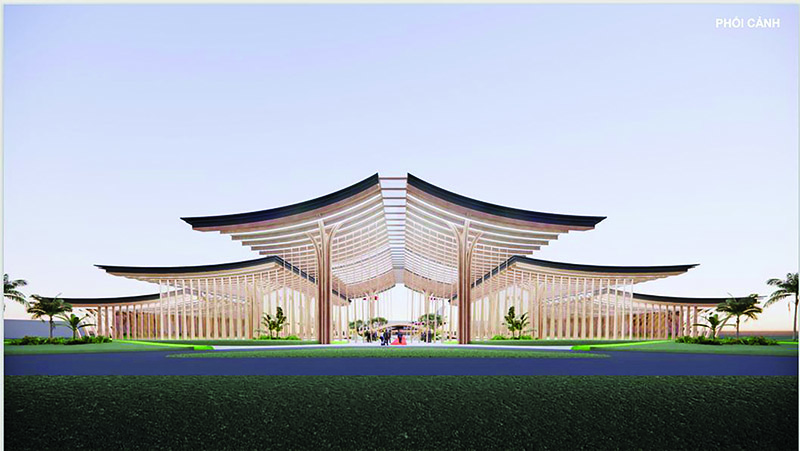 |
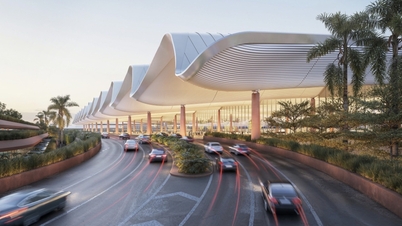
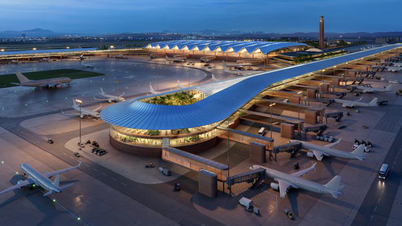
| Perspective view of Gia Binh Airport terminal. |
Not only is it a crucial defense and security project, but after the commencement of Phase I, Bac Ninh is focusing on developing a supplementary plan to upgrade Gia Binh Airport into a fully operational airport, serving international diplomatic delegations, passenger and cargo transport, and extending the runway from 3.05 km to 4.5 km to accommodate the world's largest aircraft.
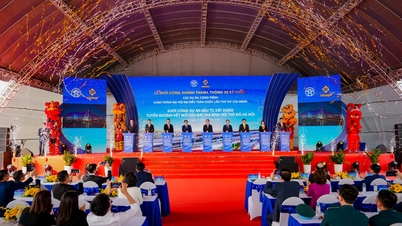
Speaking at the groundbreaking ceremony for Gia Binh Airport, Prime Minister Pham Minh Chinh affirmed that developing an airport system to serve the development of the aviation economy, or exploiting outer space, is one of the new driving forces for development, contributing to promoting new productive forces. Vietnam needs to focus on exploiting outer space, maritime space, and subsurface space. These are very important spaces, forming an ecosystem for the country's economic development.
The head of government stated that the construction of airport systems across the three regions of North, Central, and South Vietnam, in addition to its economic significance, also contributes to ensuring national security and defense, with dual-use airports (serving both civilian and defense/security purposes).
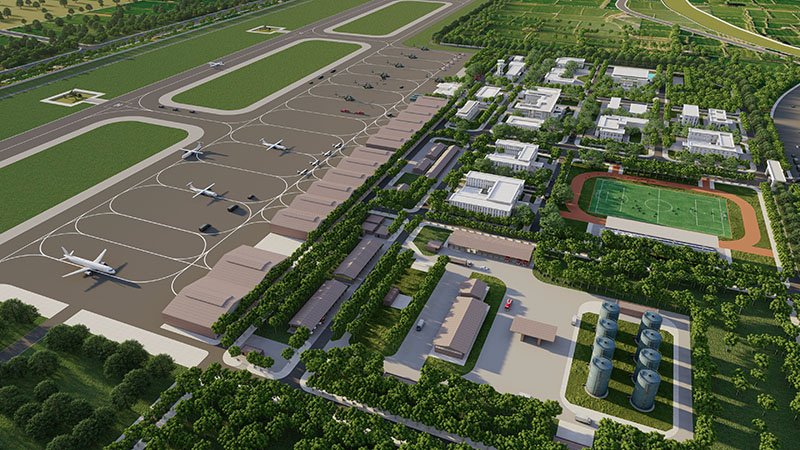 |
| Sun Group is committed to building Gia Binh Airport within 12 months. |
Mobilizing the private sector to develop airports is a growing trend.
Airports are vital economic entities. According to one study, US airports generate $1.4 trillion in economic activity annually and provide 11.5 million jobs. In Australia, a country with a relatively small population but vast geographical distances making air travel essential, the nation's airports contributed A$105 billion in added value to the national economy in 2022, or approximately 5% of GDP and 690,000 equivalent full-time jobs (Deloitte Access Economics Report, 2023).
The above statistics are not difficult to explain, as airports today are crucial transit points for the flow of people and goods. Convenient trade contributes to attracting investment, developing the economy, import and export, tourism, and creating momentum for the economy. Especially in areas with complex and rugged terrain such as mountainous regions and islands, the presence of an airport shortens geographical distances, develops the economy of remote areas, and ensures national security and defense.
According to the Center for Airport Acquisition and Development Authority (CAPA), construction activity at airports slowed during the Covid-19 pandemic, but committed investment still amounted to hundreds of billions of US dollars. Asia Pacific led in the number of airport projects and committed investments in existing and new airports.
Regarding investment resources, in the current challenging context, opening the way for private investment in airports is a trend. For example, in the United States, which has more airports than any other country, many new airport construction projects have been opened up to private investment. According to the Federal Aviation Administration (FAA), the US has a total of 19,633 airports nationwide, of which 14,551 are privately owned.
Vietnam has 22 airports, serving 100 million passengers annually. The vision for 2050 is to have 33 airports. In addition, many localities have also proposed adding more airports to develop socio-economic activities and meet the travel needs of the people.
 |
| Van Don International Airport – Vietnam's first privately owned airport – was invested in and built by Sun Group. |
In a report to the National Assembly in October 2023, the Ministry of Transport stated that, in addition to Van Don Airport (Quang Ninh), nine more airports are expected to be open for private investment in the near future, including both newly built and existing airports for expansion. Private enterprises building airports will help optimize costs, avoid cost overruns, and prevent corruption.
The government has assigned the Ministry of Transport to develop a plan for the socialization of investment and operation of airport infrastructure, including an assessment of the results of socialized investment in transport infrastructure; and to propose comprehensive solutions based on science and practice to mobilize social capital for investment in airports.
According to leaders of the Ministry of Transport, with 22 existing airports and 33 planned airports all designated for dual military-civilian use, the airport network demonstrates its unique characteristics and important role in creating momentum for socio-economic development.
Given that 58% of the world's tourists travel by air (according to the World Tourism Organization – UNWTO) and 40% of the world's export value is generated through air transport (according to the Air Transport Action Group – ATAG), it is clear that the role of aviation infrastructure for countries, including Vietnam, in creating a springboard for economic breakthroughs is undeniable.
A network of interconnected airports will create the "lifeblood" of the economy. The denser the network, the more convenient trade will be between regions and between Vietnam and the world. For Vietnam to become a global air transit hub, as directed by the Prime Minister, attracting social resources to invest in airport infrastructure is crucial, thereby creating a breakthrough for economic growth in this "era of national development."


![[Photo] Prime Minister Pham Minh Chinh presides over a meeting on private sector economic development.](/_next/image?url=https%3A%2F%2Fvphoto.vietnam.vn%2Fthumb%2F1200x675%2Fvietnam%2Fresource%2FIMAGE%2F2025%2F12%2F20%2F1766237501876_thiet-ke-chua-co-ten-40-png.webp&w=3840&q=75)














































































Comment (0)