

Israel's Jericho ballistic missile system was launched in 1963 as part of a collaboration with the French aircraft manufacturer Dassault, marking Tel Aviv's first steps in building an independent strategic deterrence capability.
From the very beginning, the Jericho program chose to develop solid-fuel ballistic missiles, deployed on highly mobile launch vehicles, to increase survivability and operational flexibility.
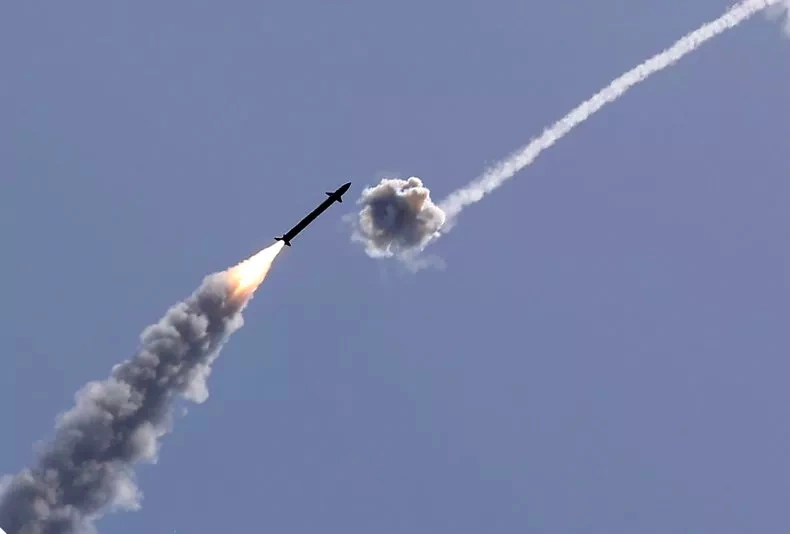
Through generations of development, Jericho reflects how Israel has progressively built its defense capabilities.
Although Israel has never officially acknowledged possessing nuclear weapons, the Jericho is considered by the international intelligence community to be the primary nuclear warhead delivery system, playing a central role in the country's deterrence strategy.
Based on that technology, the Jericho I was the first version with a range of approximately 500 km, put into service in 1973, followed by the Jericho II, launched in 1977, with an extended range of thousands of kilometers, allowing Israel to cover a large part of the strategic area in the region.
However, in the early 2000s, amidst profound changes in the Middle Eastern security environment and the rapid development of missile technology in the region, Israel continued to push forward with the development of the Jericho III, the most modern version of this missile series, aiming to upgrade its deterrence capabilities to a new level, beyond purely regional boundaries.
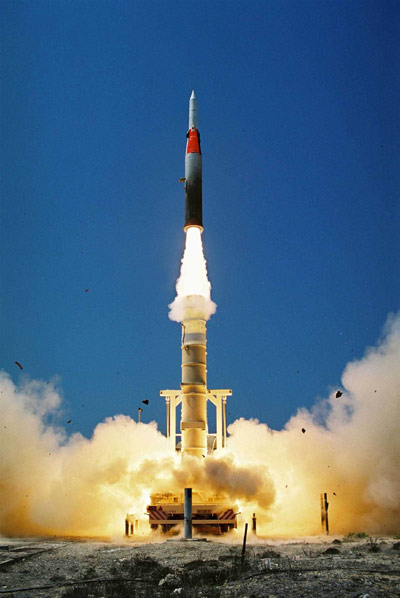
Jericho serves as a quiet strategic message, contributing to the maintenance of a delicate balance in the region.
Israel's Jericho missile family comprises three main versions, clearly reflecting the phased upgrade of its strategic deterrence capabilities. Jericho I was the first version, developed and deployed from the late 1960s, using solid fuel. This was an experimental beginning that helped Israel master ballistic missile technology and laid the foundation for independent deterrence capabilities, but it has since been decommissioned.
Building upon that foundation, the Jericho II was developed in the late 1980s and became the backbone of Israel's strategic missile forces for decades. This version is a medium-range ballistic missile with an estimated range of 1,500-3,500 km, carrying a payload of approximately 1,000 kg, and is believed to be capable of carrying a nuclear warhead. The Jericho II allows Israel to cover the entire Middle East and reach parts of Europe, thereby significantly strengthening its strategic deterrence.
The latest phase is Jericho III, which began testing around 2008, with an estimated minimum range of 4,800 km and a potential range of 6,500-7,000 km, approaching the capabilities of intercontinental ballistic missiles.
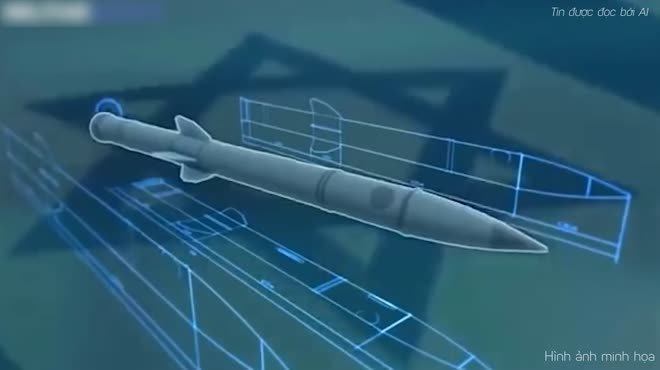
The development of Jericho illustrates how Israel chooses silent deterrence as a core part of its security strategy.
Jericho III is considered the biggest leap forward in Israel's missile program, marking a shift from regional deterrence to long-range, global strategic deterrence. Jericho III utilizes a multi-stage solid-fuel engine, allowing for shorter launch preparation times, increased survivability against preemptive strikes, and alignment with the immediate strike doctrine.
A key aspect of the Jericho III lies in its warhead carrying capacity. Although Israel has not released official information, the Jericho III is assessed to be capable of carrying high-yield nuclear warheads, and it is not ruled out that it can integrate multiple independently targetable warheads or penetration measures such as decoys and jamming devices. If equipped with these capabilities, the Jericho III would significantly increase the complexity of modern missile defense systems, including multi-layered interceptor networks.
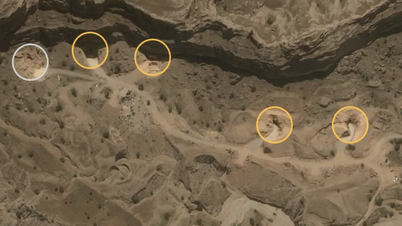
In terms of deployment and operation, Jericho III is believed to be deployed at fortified missile bases within Israeli territory, possibly combining highly protected fixed launchers with mobile launchers. This deployment ensures survivability and the ability to retaliate in any serious conflict scenario, consistent with Israel's deterrence philosophy based on reliable retaliation.
Please visit the Defense Industry section to view related news and articles.
Source: https://congthuong.vn/ten-lua-jericho-quan-bai-bi-mat-dinh-hinh-the-can-bang-trung-dong-435261.html






























![[Photo] Reception to welcome General Secretary and President To Lam and his wife on their State visit to the Philippines](https://vphoto.vietnam.vn/thumb/1200x675/vietnam/resource/IMAGE/2026/06/01/1780295488620_vna-potal-chieu-dai-chao-mung-tong-bi-thu-chu-tich-nuoc-to-lam-va-phu-nhan-tham-cap-nha-nuoc-toi-philippines-8798060-7855-jpg.webp)








































































Comment (0)